Mystery
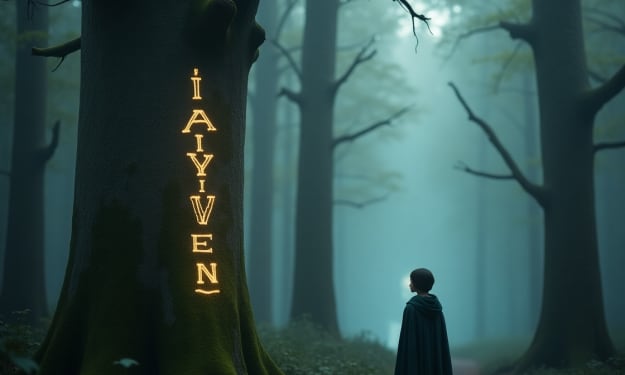
The Forest That Remembers
In the quiet village of Dareth, surrounded by misty hills and fields of golden rye, there stood a forest unlike any other. The villagers called it The Forest That Remembers—a place where the trees whispered names, the wind carried old secrets, and the roots seemed to know your past.
By Ahmad shahabout a year ago in Fiction
The Lighthouse That Called My Name
It was supposed to be a quiet weekend. I was tired. Burned out. Too many long nights in the city. Too many deadlines. So I packed my duffel, left my buzzing phone on the kitchen counter, and drove east… straight to the edge of the map. It was a coastal village called Gorseby, where the wind always howled like it had something urgent to say. A single inn stood at the edge of the cliffs, facing the ocean like a stubborn old man daring the sea to come closer. I checked in, unpacked my books and blanket, and was just settling down by the fireplace when I saw it. The lighthouse. It stood alone on a narrow ridge, half a mile from the shore, rising from the rocks like a broken tooth. The odd part? It wasn’t lit. No warm glow. Just a cold, dark silhouette. “Old Marrow Point,” the innkeeper muttered when he caught me staring. “Hasn’t worked since ’78. Shipwreck, they said. Took six souls with it. No one’s touched it since.” Six souls. That night, I dreamt of waves crashing and a voice calling my name. --- Next morning, against every instinct, I walked down the jagged path to the lighthouse. Rusted gate. Cracked windows. The scent of salt and secrets in the air. As I reached the door, something strange happened. It opened. On its own. No wind. No hand. Just… opened. I stepped inside. The air was thick, like breathing through history. Dust danced in the sunlight, and every creak of the floorboards echoed like a whisper. I climbed the spiral stairs, slowly, feeling like I was being watched — not with hostility, but familiarity. At the top, I found an old logbook, half-burnt and brittle. I flipped it open and froze. My name was written inside. Not once. Dozens of times. Page after page. My name, written in different hands… over decades. "Elias. Elias Moore. Elias." I felt dizzy. My name is Elias Moore. But I’d never been here before. --- Then… the light turned on. Without electricity. Without anyone touching it. The entire room glowed, bathing me in golden light — and from that light stepped a man. Tall. Weathered. Familiar. He looked like… me. “Elias,” he said, gently. “You came back.” I stumbled back. “Who—who are you?” “I’m the keeper,” he said. “And so are you. Always have been.” --- What followed was a blur of voices, images, memories not mine — but somehow… deeply mine. I saw the shipwreck of ’78. I saw a man — me — locking the lighthouse doors as the storm approached. I saw villagers shouting, running, blaming. I saw fire. And then silence. I wasn’t a visitor. I was a returning soul. --- The lighthouse, you see, doesn’t just guide ships. It remembers. It keeps time differently. It binds those who died in duty… to come back, again and again. The name in the logbook? Mine. Every time I returned. Every life. A cycle. A loop. And this time… I broke it. As dawn lit the sea, I knew what I had to do. I walked to the controls. Turned the wheel. And let the light shine again — for the first time in 47 years. --- When I got back to the inn, the innkeeper stared. “You… you look different,” he said slowly. “You okay?” I nodded. “Just tired. Had a strange dream.” He didn’t respond. Just stared behind me. When I turned around, the lighthouse… was gone. Not dark. Not broken. Gone. As if it had never existed. --- I left Gorseby that afternoon. Never went back. Never spoke of it. But sometimes, when I close my eyes, I see the waves. And hear the wind calling my name.
By Kausar Hayat about a year ago in Fiction
The American Robin: A Song of Hope, Survival, and Spring
When you think of spring in North America, what comes to mind? Blossoming trees? Morning light? Perhaps, above all, the familiar call of the American Robin — that cheerful, whistling song that gently reminds us: "Winter is over. Life begins again."
By Newztweet Online Toolsabout a year ago in Fiction
The Stranger Who Paid for My Silence
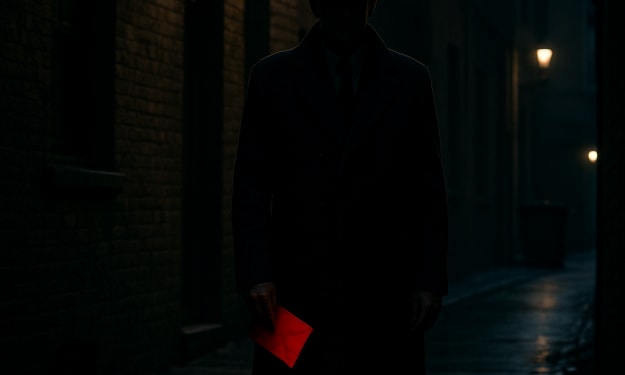
It began with a knock. Not the polite kind. Not the impatient kind either. This one was deliberate. Soft. Three slow taps that echoed louder than they should’ve in the stillness of 2:17 a.m. I sat up in bed, heart thudding louder than the knock itself. I live alone in a small flat above a closed electronics shop. Nobody visits me. Not at this hour. Not ever, really. I peered out the window and saw nothing. The narrow alley was swallowed in shadows, lit only by a flickering streetlamp that gave off more buzz than brightness. Another knock. I hesitated, then opened the door. A man in a black overcoat stood still as stone. No emotion. No urgency. Just... stillness. He held out a thick envelope and said, “Forget what you saw.” I stared at him. “I didn’t see anything.” His eyes narrowed. “Not yet.” Before I could say another word, he dropped the envelope into my hands and walked away, swallowed by the shadows as quickly as he had appeared. --- Inside the envelope were five crisp one-hundred-pound notes. No message. No instructions. I waited until morning before I told anyone — which is to say, I didn’t. Instead, I walked the alley where he had vanished. Nothing unusual. No blood, no signs of a struggle, no footprints. Just a quiet street pretending nothing had happened. I told myself to ignore it. Maybe it was a prank. Maybe it was a mistake. But the next night, I saw it. --- I had stepped outside for air, trying to convince myself the whole thing had been a dream. That’s when I noticed the blinking red light — a small security camera I never installed, positioned just above the alley exit. It wasn’t there before. I followed its line of sight. And saw the stain. Blood, dark and dried, partially hidden behind a dumpster. I moved closer, and that’s when I saw the shoe — just one. Women’s. Red, with a broken strap. There was no body. Just silence and the growing certainty that I had stepped into something far beyond coincidence. --- The next day, I received a letter in my mailbox. No name. No return address. “Keep quiet. Or we’ll come for what we paid for.” --- I told myself it wasn’t worth the risk. I didn’t know anything for certain. I wasn’t involved. Maybe someone else already called the police. Maybe the shoe meant nothing. But I couldn’t sleep. I started checking the alley every night, waiting for something to return. Or disappear. One night, I noticed the shoe was gone. The blood, too. And the camera? Disconnected. Like it had never been there. I stopped receiving letters. No more money. No more knocks. Just a deep, slow unraveling of my peace. --- Weeks passed. I went back to work, pretending I wasn’t watching every stranger’s face on the street, wondering if one of them knew. Or was watching me. Then the dreams began. A woman, face hidden, standing at the foot of my bed. Silent. Pointing to the door. Sometimes she cried. Other times, she held an envelope in her hand. A red shoe dangling from her fingers. One night, I followed her. In the dream, the door opened to the alley. I stepped outside. The man in the black coat waited for me. But this time, his hands were empty. “You kept the money,” he whispered. “Now pay the price.” I woke up screaming. --- I started carrying the envelope with me everywhere. As if holding it gave me control. As if I could reverse what I hadn’t done. And then one evening, while walking past a charity shop, I froze. In the window display was a familiar red shoe. Not a pair. Just one. Broken strap. Faded sole. I rushed inside. “Where did this come from?” I asked the old woman behind the counter. “Oh, people drop things off all the time,” she replied. “That one came in a black bag last week. Anonymous donation.” I bought it for 50p. And placed it next to the envelope on my nightstand. --- I never did go to the police. Not because I was afraid of being accused — but because I knew, deep down, they’d find nothing. No camera. No man in black. No record of anyone disappearing. Just me. And my silence. --- It’s been six months now. Sometimes, I hear footsteps outside my door, but when I check, there’s no one. Other nights, I wake up to see the red shoe has moved an inch closer to the edge of the nightstand. I push it back. But every time I do, I feel like I’m pushing her further away. --- You might ask why I never spent the money. Maybe I’m waiting for him to come back. Maybe I’m hoping someone else will knock on my door, this time asking me to speak — not to stay silent. Or maybe, deep down, I know the truth: Some payments don’t settle the debt. They only buy the quiet. And silence, I've learned, has a sound all its own. ---
By Muhammad Riazabout a year ago in Fiction
Where We Left the Watch – Part 3: The Room With No Clock
Where We Left the Watch – Part 3: The Room With No Clock By Mahboob Khan It took me six days to text her after the call. Not because I didn’t want to. But because I did — more than I realized. And when something feels that important, you start to hesitate. You wonder if maybe the magic was in the distance, in the waiting, in the not-quite.
By Mahboob Khanabout a year ago in Fiction
The Last Light
The Last Light – A Story of “Luminous” There was once a village wrapped in quiet hills and thick, whispering woods. It was a place time had mostly forgotten. The world beyond it rushed ahead with noise and invention, but the people of Velden lived slowly, holding onto rhythms older than clocks.
By Terence Lisherabout a year ago in Fiction
Where We Left the Watch
Where We Left the Watch By Mahboob Khan It started with a coincidence. Three years ago, I was digging through a box of old postcards at the Sunday flea market when a girl leaned over, picked one up, and said, “You’re holding the best one.”
By Mahboob Khanabout a year ago in Fiction