Mystery
The Memory Merchant. AI-Generated.
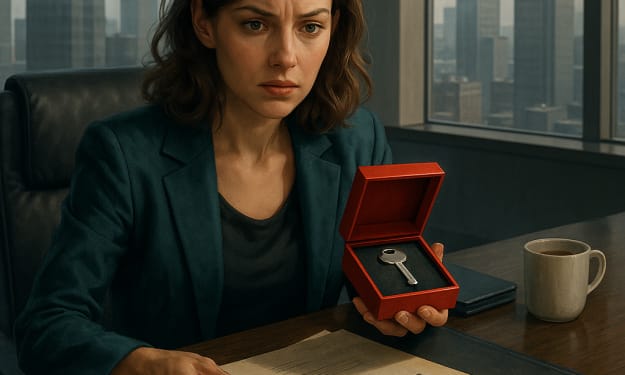
Some memories hurt too much to keep—others hurt too much to lose. No one ever asked to remember. They came to forget. Heartbreaks. Accidents. Regrets that gnawed at the edges of sleep. People lined up around the block to step into a shop that promised peace—not truth. The kind of peace that comes not from healing, but from absence.
By Ahmet Kıvanç Demirkıranabout a year ago in Fiction
Echoes of room 313
It was supposed to be just another hotel stay. Adeel was a travel writer—his job was to observe, experience, and move on. He had stayed in over 80 cities, written about rainstorms in Kerala, food markets in Morocco, and forgotten railways in Eastern Europe. But this time, he found himself in a lesser-known Pakistani town, Mehrabad, where his editor asked him to cover a story on “the cultural soul of small places.” He checked into Hill View Lodge, a modest two-star hotel standing on the edge of an old colonial-era hill. The receptionist, a young boy who looked about seventeen, barely glanced up. "Room 313, third floor,” he mumbled, sliding the key. Adeel took the elevator—one of those clunky iron ones with a caged door—and made his way to the room. Room 313 was like any other: beige walls, a creaky ceiling fan, a cracked window overlooking the misty road, and a bed that groaned under its own weight. He tossed his bag onto the chair and collapsed on the mattress. The journey had been long, and his head pounded from the heat. But just as his eyes began to shut, he heard it—a knock. Soft. Repeating. Three times. He opened the door. Nobody. Only the dim corridor stretching into silence. He shook his head, blaming it on tiredness, and closed the door. That night, strange things started happening. At exactly 3:13 AM, the ceiling fan stopped. His laptop screen flickered. And the air turned icy cold. He wrapped himself in the thin blanket but felt a whisper near his ear: > "Find me." He jumped up, turned on all the lights, and searched the room. Empty. He laughed nervously. Maybe it was a dream. Maybe it was jetlag. But it wasn’t. The next morning, Adeel asked the receptionist, “Has anyone complained about Room 313?” The boy looked up sharply, then glanced around. “No sir,” he said quickly, “it’s just an old room.” Adeel paused. “Anyone ever… die there?” The boy hesitated. “Sir, all rooms have stories. But we don’t speak about that one.” Now curious—and slightly obsessed—Adeel began to dig. He visited the local archives. The town library. He interviewed old shopkeepers and chai walas. And then he found it. A small newspaper clipping from April 13, 2013: > “Girl Found Dead in Hill View Lodge Room 313. Seventeen-year-old Sana Rehman was found hanging from the ceiling fan of Room 313 under mysterious circumstances. No signs of forced entry. Her diary was never recovered. Police ruled it suicide.” Adeel’s blood ran cold. The date? 13th April 2013. The time of events? 3:13 AM. The room? 313. Too many patterns. That night, he sat at the room desk, staring at the fan, waiting. At 3:13 AM, it happened again. The fan stopped. The air turned ice. And the whisper came, louder. > "I'm here. Find the pages." His instincts as a writer kicked in. He began searching the room. Behind the cupboard. Under the mattress. In the bathroom tiles. And finally—behind a loose wall panel—he found it. A torn, dusty diary. The first page read: > "My name is Sana. And if you're reading this, I did not kill myself." The diary revealed everything. Sana had been a brilliant student who came to Mehrabad for a scholarship exam. She stayed in Room 313. But on her second night, she noticed someone following her. A man in the hotel. She wrote how she complained but was ignored. Then one day, the diary stopped mid-sentence. The last line read: > “If something happens to me, it was never my choice.” Adeel sat frozen. This wasn’t a haunting. It was a cry for justice. He scanned the diary, added it to his story, and titled it: “The Girl in Room 313: A Voice That Was Never Heard.” He published it. Not just in his magazine—but on every blog, platform, and forum he had access to. The story went viral. One Week Later... The hotel was sealed. A retired staff member confessed anonymously that the manager at that time was dismissed quietly after the incident. No police action. No real investigation. But now, with public outrage, the case reopened. Adeel returned to Mehrabad to attend a town memorial for Sana Rehman. Her family wept as they saw the diary pages printed in full, finally heard after 12 years. And Room 313? It was locked forever. One Year Later... Adeel stood on a TEDx stage, invited to speak on “The Power of Stories.” He said: > “Sometimes stories don’t just entertain. They reveal. They shout when others whisper. Sana’s story wasn’t just words—it was justice delayed. But not denied.”
By Muhammad Abbas about a year ago in Fiction
The One Who Warned Them
I told them not to go. The wind was already wrong that night—too warm for autumn, too quiet for the ridge. I could feel it, in my bones and behind my eyes, that strange kind of pressure before something happens. But when I told them, they laughed. Like always. Like I was the joke.
By Ahmad shahabout a year ago in Fiction
Where the Waves Remember Us. AI-Generated.
Some loves are not lost—just carried away. The sea did not keep time as humans did. But he did. Every year on the same day—August 17th—he returned to the shoreline where the cliffs curled like question marks and the wind never remembered to rest.
By Ahmet Kıvanç Demirkıranabout a year ago in Fiction
A Spooky Siege
At only 20 years of age, Sylvie Hanson didn't expect to be the owner of a castle. It happened via tragic circumstances; it was passed down by her father, Sebastian Hanson, who passed on two months prior. The castle was known as Gladstone Manor, a quaint yet spooky domicile, but it was Sylvie's--lock, stock, and barrel.
By Clyde E. Dawkinsabout a year ago in Fiction
The Night I Met Myself
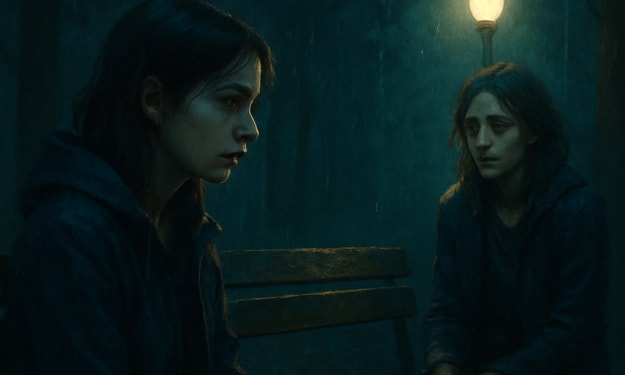
Not the kind of Tuesday where everything goes wrong, just the kind where everything feels... off. The coffee tasted bitter even though I swore I added sugar. The train was late, but only by a few minutes. People spoke to me, but their voices passed through me like wind through an open window. I smiled. I nodded. I laughed when I was supposed to. But I wasn’t there. That night, I walked home instead of taking the usual bus. I needed air, I told myself. What I didn’t say was that I couldn’t stand the noise—the weight of other people’s lives brushing against mine, demanding interaction. I needed stillness. I needed something I couldn’t name. I passed familiar buildings I barely noticed in the daylight. Laundromats humming with fluorescent life, corner stores that never seemed to close, windows with cracked blinds and flickering TVs. The city was alive, but in a quieter, lonelier way. It wasn’t until I reached the edge of the park that I stopped. The lamplight didn’t reach beyond the entrance. It looked like a void. I hesitated—then stepped inside. There’s something sacred about a park at night. The silence is different. It doesn’t just surround you; it enters you. It asks you to be honest. I sat on a damp bench, stared into the trees, and let the quiet seep in. I didn’t expect anything. I just wanted a break from pretending. And that’s when I heard it. Not a sound, exactly. More like a presence. A shift in the air. When I turned, she was sitting on the other end of the bench. I didn’t hear her arrive. She looked like me—but not exactly. Her hair was longer, messier. Her eyes looked tired but clear. Like someone who had cried, and finally stopped. “Who are you?” I asked. She smiled, gently. “I’m you. The part you’ve been avoiding.” I laughed nervously. “Great. I’m officially losing it.” “Or maybe,” she said, “you’re finally finding it.” We sat in silence for a while. I don’t know how long. Time felt irrelevant. The trees moved slightly in the breeze, but everything else held still. “Why are you here?” I finally asked. “To remind you of what you’ve forgotten.” “Which is?” She looked at me with something like compassion. “That you’re allowed to feel things. That being strong doesn’t mean being silent. That pretending you’re okay isn’t the same as being okay.” I swallowed hard. My throat felt tight. “I don’t know how to stop pretending.” She nodded. “I know. That’s why I’m here.” We talked for what felt like hours. About the things I hadn’t said out loud. About the weight I’d been carrying for years—grief I’d never given a name, fears I buried beneath a busy schedule, dreams I called impractical just to protect myself from the sting of failure. She listened. Fully. Like no one ever had before. And then she spoke. Not in advice, but in memory. She reminded me of who I used to be—before I learned how to shrink myself to fit inside other people’s expectations. She told me about the child who wrote poems in the dark, the teenager who stared at the stars and believed she was meant for something more, the girl who cried easily but loved fiercely. “She’s still in there,” she said. “She’s just waiting for permission.” I didn’t realize I was crying until I felt the tears on my hands. They didn’t come with heaving sobs—just slow, steady release. Like the body finally exhaling after holding its breath for too long. “Will you stay?” I asked her. “I can’t,” she said. “But I’ll be here every time you choose to listen.” When I blinked, she was gone. The bench was empty. But I didn’t feel alone. I walked home in silence, but it wasn’t the kind that screamed. It was peaceful. Like I’d made space for something new. Or maybe, finally, for myself. --- That night didn’t fix everything. I still have bad days. I still forget. But sometimes, when the noise gets too loud, I find my way back to that quiet park—back to that moment where I first met myself. And I remember: healing doesn’t always come with fireworks. Sometimes, it arrives on a damp bench in the dark, wearing your face, asking you to stop hiding. That was the night I met myself. And I’ve been learning how to love her ever since.
By Muhammad Umarabout a year ago in Fiction
Where the Silence Slept
Silence had a home here. Not the kind of silence that follows loud noise—the pause in conversation, the hush of an empty room—but a deeper, heavier kind. The silence that settles into the bones of a place, wrapping itself around the walls and the furniture, curling in corners like a sleeping animal that refuses to be disturbed.
By Jawad Khanabout a year ago in Fiction
How To Disappear: Part Two
Part One: - “Jayce, you’re being ridiculous.” Jayce doesn’t make excuses. It’s starting to become exhausting to do so. He doesn’t tell his mother about anything that happened yesterday, or today. He doesn’t mention the cigarette he smoked by the lake, or the way the fish glittered under the gleaming sun.
By angela hepworthabout a year ago in Fiction