Mystery
One Last Ride: The Taxi Driver’s Secret
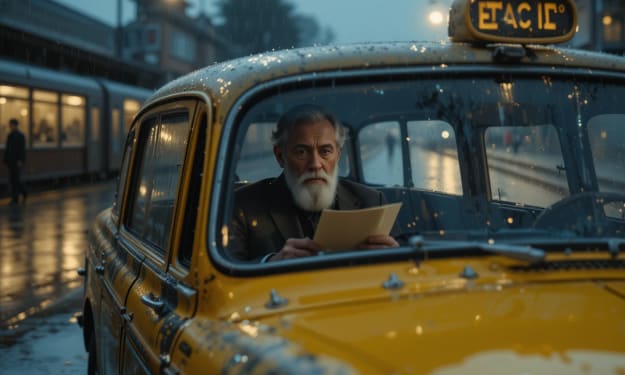
One Last Ride: The Taxi Driver’s Secret Written by Mirza Nobody knew his full name—everyone just called him “Baba Taxi.” For more than thirty years, Baba Taxi drove the streets of Lahore, weaving through its dust, chaos, and colors. His old yellow-and-black cab was a familiar sight—scratched, dented, but somehow proud. His back slightly hunched, white beard trimmed, and smile always kind, Baba was the silent companion of countless passengers. To the world, he was just another aging driver. But behind the wheel, Baba held a secret, one he never revealed in a word but lived in every journey he took. He wasn’t just driving people from point A to point B. He was looking for someone. Every evening before ending his shift, Baba would drive to the railway station and wait near the exit gate. For twenty years, he would sit silently, eyes scanning the faces as passengers disembarked. Some looked at him curiously, some asked for a ride, and many just passed by. But none were the face he was looking for. People joked that Baba was obsessed with the station. Some drivers whispered he was waiting for a lost love, others said he was senile. Baba never explained. Then, one rainy Thursday in July, everything changed. A young woman named Meher flagged down Baba's taxi near Liberty Market. Her eyes were red from crying. She clutched a backpack and held a folded letter in her hand. “Railway Station,” she said quietly. Baba glanced at her in the rear-view mirror. Something in her expression—something broken yet familiar—caught his attention. The silence in the cab was heavy, except for the hum of the engine and occasional splashes from puddles. Baba didn't ask questions. He never did. But as they neared the station, she broke the silence. “My mother used to tell me a story,” Meher said suddenly, voice cracking. “About a taxi driver who used to take her to college every day. She said he never charged her a rupee. Just asked her to promise him something.” Baba's hands stiffened slightly on the steering wheel. “She said he made her promise that one day, when she had a daughter, she'd tell her about him. About his kindness. About how he saved her life one night when she almost ran away from home after a fight with her parents.” The girl smiled faintly through tears. “She never told me his name. Just called him ‘Baba Taxi.’” The car stopped. Meher opened the letter and held it toward him. “She passed away last month. Cancer. But she left this... for you.” Baba’s fingers trembled as he took the letter. Dear Baba Taxi, If Meher finds you, it means she listened. I never forgot that ride. You talked me out of leaving home that night. You said I would regret losing my family, and you were right. Because of you, I went home and reconciled with my parents. Because of you, I stayed. I married, I raised my daughter, and I lived a full life. If you're reading this, please take care of her. Like you did with me. Just this once. She’s lost right now. She needs you. With all my heart, Zoya. Baba’s eyes glistened. It had been her. For all these years, he'd returned to that station, hoping. Not to find her again, but to return a photo he’d found under the backseat the night she almost ran away. A photo of her and her parents. He kept it, in case one day, someone came looking. Baba reached into the glove compartment and pulled out a small, creased photo. Meher gasped. “That’s... my nani and nana,” she whispered. He handed it to her with the gentleness of a grandfather. For a few moments, silence wrapped the cab like a blanket. The rain outside had softened to a drizzle. “You’ll stay with me tonight,” Baba said quietly. Meher nodded. For the first time in weeks, she felt safe. Epilogue Meher did stay. She spent a few nights at Baba’s small home. He cooked daal and parathas, told her old tales of Lahore, of love lost and found, of how every rider in his taxi left a story behind. She shared stories of her mother, listened to songs from Baba’s dusty cassette tapes, and slowly, something inside her began to heal. A few weeks later, Meher left for Islamabad, where she had been accepted into an arts program. But she promised to call every week—and she did. Baba didn’t wait at the railway station after that night. He didn’t need to anymore. He had finally completed the ride he’d waited a lifetime for.
By Moonlit Lettersabout a year ago in Fiction
The Birthday Gift She Left for Every Year After Her Death
The Birthday Gift She Left for Every Year After Her Death Written by Mirza Written by Mirza My mother passed away on a cold Tuesday morning in November—two days before my 17th birthday. She was 48. It was breast cancer. She fought like hell. And then one day, the fight was over. Grief didn’t hit me all at once. It came in slow, painful waves. At first, I felt like I was walking through a fog, and then came the crashing silence in the kitchen, the empty seat at the table, the sound of my dad crying behind closed doors. But what I didn’t know was that my mother had left something behind—something that would reach across years of silence and fill my birthdays with a love I thought I’d lost forever. The First Birthday I didn't want a cake. I didn’t want to celebrate. But my father came into my room on my birthday morning holding a small, white envelope. His eyes were red, but he smiled the kind of smile you give when you’re trying not to cry. “This was left for you,” he said, and handed me the envelope. In my mother’s handwriting, it said: "For Maddie. Birthday #17." Inside was a letter. Not a long one, but long enough to shatter the wall I’d built around my heart. It was written months before she died. > "Happy 17th, sweetheart. I wish I could see your face today. I know you're hurting, and I know the world feels unfair right now. But I want you to know that even though I won’t be with you physically, I’m with you in every moment. I’m so proud of you. Go do something kind for yourself today—eat your favorite cake. I love you, forever. —Mom" I sobbed. My dad sat beside me, holding my hand like I was five again. That letter brought her back for a moment, and for the first time since she died, I smiled through my tears. A Tradition Beyond the Grave Every year after that, another letter came. On my 18th birthday: > "Happy 18th, my grown-up girl. You’ll make mistakes. It’s okay. Be gentle with yourself." On my 19th birthday: > "I hope college is treating you well. Or whatever you're doing. I’m proud, no matter what path you choose." On my 21st birthday: > "Don’t drink too much! But have fun. Today is about joy, and you deserve all of it." Each letter came with a small gift: a necklace I’d seen in her drawer when I was younger, a favorite scarf she used to wear, a photo of us at the beach with a note that simply read, “My sunshine.” I later learned she’d spent months writing and packaging these gifts with my aunt. There were 30 letters in total. Thirty years of love, sealed in envelopes and stored in a cedar box in my aunt’s attic, ready to be handed over one by one. The Letter That Changed Everything When I turned 25, life was a mess. I’d just gone through a painful breakup. I’d lost my job. I was living back home with my dad, feeling like a failure. That birthday morning, I didn’t want a letter. I didn’t feel like reading anything from a mother who had never seen me as the adult mess I’d become. But I opened it anyway. > “Maddie, I know this year may be hard. I have no idea what you’ll be facing when you read this. But I want to tell you something I wish someone had told me when I was your age: You are allowed to fall apart. You are allowed to not have it all figured out. The world won’t always be kind, but you must be kind to yourself. That is how you survive the storm. You’re stronger than you think. And if today you don’t believe that—believe in me, believing in you.” I cried so hard, I forgot what I was upset about. She didn’t even know what I was going through, but somehow, she did. It felt like she was still guiding me, still reminding me how to stand when all I wanted to do was fall. A Gift That Keeps Giving On my 30th birthday, I found a second note tucked inside the usual envelope. > “If you’re reading this, and if you’ve found happiness—then this is the year I want you to pay it forward. Give someone else a reason to smile on their birthday. A letter. A hug. A cupcake. Anything. And tell them, it’s from someone who knows birthdays can be hard sometimes.” That year, I baked cupcakes and brought them to a local shelter. I slipped little notes into each one: > “You are loved. You matter. Someone is thinking of you today.” It changed something inside me. Her gift was no longer just for me. It was alive in others, too. The Final Letter (But Not Really) On my 31st birthday, the letter felt heavier. The handwriting looked shakier. > “Maddie, This is the last one I wrote. I don’t know where life has taken you, but I hope it’s beautiful. I hope you’re still laughing at things that don’t matter and crying over things that do. I hope you’ve found love—not just romantic, but the kind you find in friendships and quiet mornings and books you don’t want to end. I hope you’ve become the woman you were always meant to be. And if you ever forget who you are— Just close your eyes. And remember this: You were loved so fiercely, by someone who would have carved thirty more letters if she had the time. Happy Birthday, my heart. I’ll always be with you.” I didn’t feel sadness that day. I felt full. I felt seen. The Legacy Now, I write letters too. To my own daughter. She’s five. She loves coloring and asking big questions about the moon and why cats don’t talk. I don’t know how long I’ll be around. None of us do. But I know one thing for sure— Love doesn’t end with the body. It lingers in ink, in paper, in little acts of kindness passed from one hand to the next. And somewhere, in a quiet cedar box at the back of my closet, there are envelopes. Sealed. Stamped. Waiting.
By Moonlit Lettersabout a year ago in Fiction
The Silence in Room 17
Sara never believed in ghosts. She believed in hard work, science, and what she could see with her own eyes. As a nurse in a small-town hospital, she had seen pain, joy, and even death. But never anything strange—until the night she walked into Room 17. The hospital was quiet that evening. Rain tapped on the windows, and wind howled outside like a warning. The power had gone out earlier for a few minutes, and the backup lights made the halls glow in a dull yellow. Sara was on the night shift, walking her usual rounds. Most patients were sleeping, and everything seemed normal. She walked past the rooms: 12, 13, 14… then stopped at Room 17. Room 17 was supposed to be empty. The last patient had been moved out three days ago, and no new patient was assigned. She remembered clearly that it was cleaned, and the bed had fresh sheets. But the door was slightly open. Sara paused. She thought maybe someone had left it open by mistake. She gently pushed it, and it creaked. The room was dark, but she could see the bed was not made. The sheets looked used. There was something about the air—it felt cold and thick, like walking into a place full of smoke, but there was no smoke. She whispered, “Is someone here?” No answer. She stepped in and turned on the light. No one was in the room. She looked around. The window was closed. The chairs were in place. But something wasn’t right. The bed looked like someone had just gotten up from it. And on the pillow... a small notebook. It was old, with a faded brown cover. She picked it up. The first page was blank. She flipped to the second page. In messy handwriting, it said: > “I was here. I never left.” Her hands went cold. She looked behind her, then back at the page. The writing looked rushed, like someone had scribbled it quickly. The letters were shaky, uneven. She rushed out of the room and went straight to the nurse’s desk. Her hands were shaking. She told the head nurse, Mr. Akram, what she had found. He listened quietly, then said something that made her heart sink. “You don’t know?” he asked. “A girl died in that room two years ago. Sixteen years old. Her name was Fariha. It was ruled an accident… but it never felt right.” Sara asked, “What kind of accident?” He looked away. “They said she fell from the bed. Broke her neck. But some nurses said they heard her screaming before it happened. The CCTV stopped working that night.” Sara wanted to throw the notebook away, but when she looked in her hands—it was gone. She ran back to the room. Searched everywhere. Nothing. No notebook. No sign of anything strange. Just silence. Later that week, Sara spoke to the cleaning staff. One of them, an old woman named Safia, nodded quietly when Sara mentioned Room 17. “I clean that room every week,” she said. “But the bed always looks used, even if no one goes in. I stopped asking questions.” Sara thought maybe it was all in her head. Maybe she had imagined it because she was tired. But her heart told her something else. That same night, while trying to sleep at home, Sara kept hearing soft whispers. Not words—just a voice. Like someone asking for help but too afraid to speak clearly. She tried to forget it. Days passed. Weeks. But the memory of that room, that notebook, and that strange feeling would not go away. Then, one year later, another nurse saw something. Late at night, while passing by Room 17, she saw a shadow moving inside. She opened the door quickly. The room was empty. Except for one thing on the bed: A notebook. Brown cover. First page blank. Second page: the same message. > “I was here. I never left.” --- Some say Fariha’s spirit still stays in the hospital, not angry… just waiting. Waiting for someone to ask what really happened. Waiting for someone brave enough to listen.
By Hazrat Bilalabout a year ago in Fiction
Before I Knew His Name. Content Warning.
Rebecca sat on the nice, dark leather couch. It looked almost Victorian style but still had that modernized feel to it. She scrolled through Facebook as she waited for him. The man who would supposedly ‘change her life.’
By Mak Wintersabout a year ago in Fiction
Njabiya Bate: The Man with Horns on His Head
Njabiya Bate: The Man with Horns on His Head Written by: Kashif Ali On a sweltering afternoon in the summer of 1934, an English anthropologist and field researcher named Ghost Freeman made his way through the thick forests of Central Africa. His destination was Fiang, a secluded village nestled deep in the Mayo-Kebbi region of Chad. Freeman had traveled thousands of miles, not to study landscapes or wildlife, but to investigate a story so strange, it seemed to belong more to legend than science.
By Furqan Elahiabout a year ago in Fiction
The Girl at Platform Nine
The Girl at Platform Nine Written by Javeed 🚉 Prologue: A Glimpse in the Fog Platform Nine at the old city station was quieter than usual. The mist curled through the iron beams and drifted low around the benches, wrapping everything in a sleepy gray veil. Most people passed by without noticing the girl sitting alone at the far end. But I did.
By Moonlit Lettersabout a year ago in Fiction
"He Bought a $70 Couch—Then Found $300,000 Hidden Inside"
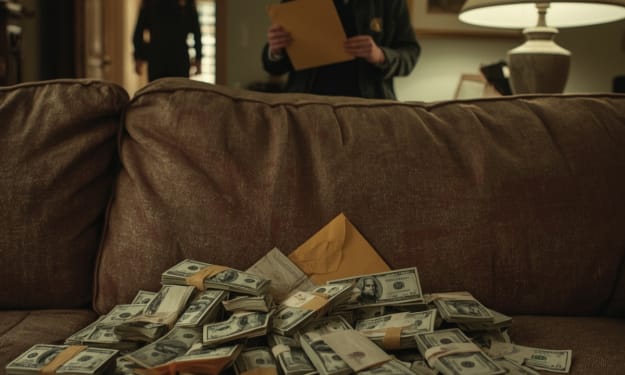
When 28-year old Max Fletcher walked into a dusty secondhand furniture store in northern Michigan, he was just looking for something cheap and decent enough to replace the battered futon in his studio apartment. What he walked out with—well, he had no idea his $70 purchase would become the most bizarre and life-altering decision of his life. “I just thought, hey, this old couch is ugly, but it's sturdy,” Max says. “The springs were still good, and I could throw a blanket over it. I was broke and needed something fast.” He tossed it into the back of his pickup, hauled it up three flights of stairs, and collapsed onto it that same night with a pizza and a documentary. Everything seemed perfectly normal—until four days later, when he dropped his TV remote behind one of the cushions and went fishing for it. What he pulled out wasn’t the remote. It was a thick yellow envelope. “I thought it was junk mail or old receipts,” Max recalls. “But when I opened it, it was full of cash. Like… a lot of cash. Neatly bundled in $100 bills.” Max quickly found more envelopes stuffed deep within the couch's lining and beneath the cushions. His heart racing, he pulled out envelope after envelope. By the end of the night, he was sitting on a living room floor surrounded by $300,000 in cash. The First Question: Is This Even Real? Max did what most people would—he panicked. “I thought it had to be drug money or something illegal,” he says. “I didn’t even sleep that night. I kept checking my window expecting someone to show up and knock on the door.” The next morning, Max called a lawyer and then the local police. Within hours, officers were at his door, carefully counting and documenting the cash. At first, the situation looked like it might be the start of a criminal investigation. But things took a dramatic turn when the thrift store traced the couch’s origin: an estate sale from a woman who had recently passed away at age 91. A Hidden Fortune, Forgotten by Time According to her family, the woman—Mildred Harrison—was known for being intensely private, almost to the point of paranoia. She didn’t trust banks, and after her husband died in the 1980s, she began hoarding cash in unusual places. Her family had no idea. “We cleaned the house thoroughly,” said her granddaughter, Susan Harrison. “But we never thought to rip apart the furniture.” When contacted by authorities, Susan and the rest of the family were stunned—but also gracious. After confirming the money had belonged to her grandmother, the Harrisons declined to take it all back. The Unexpected Twist: A Generous Offer Instead of demanding every dollar, the family asked that Max be allowed to keep a portion of the money as a “thank-you” for doing the right thing. “We were grateful he came forward. A lot of people wouldn’t have,” said Susan. “He could’ve kept it, and no one would’ve ever known.” In the end, Max was allowed to keep $45,000—a life-changing amount for someone who’d been living paycheck to paycheck. “I almost cried,” Max says. “That money paid off my student loans, fixed my truck, and gave me a cushion I’ve never had before.” What would you Do? The story quickly went viral after a local news segment aired. Online commenters were divided—many praised Max for his honesty, while others admitted they would’ve kept quiet. Max doesn’t regret his decision. “Yeah, I could’ve kept it,” he says. “But if it was my grandma’s money, I’d want someone to do the same. Karma’s real. Besides, I still got a free couch… and 45 grand.” Moral of the Story? Always Check the Couch. Whether it’s luck, fate, or just a wild coincidence, Max Fletcher’s story is a reminder that life-changing moments can hide in the most ordinary places. So next time you’re digging between the cushions for spare change—who knows? You might just find a fortune.
By Shoaib Afridiabout a year ago in Fiction