Mystery
“What the Water Kept"
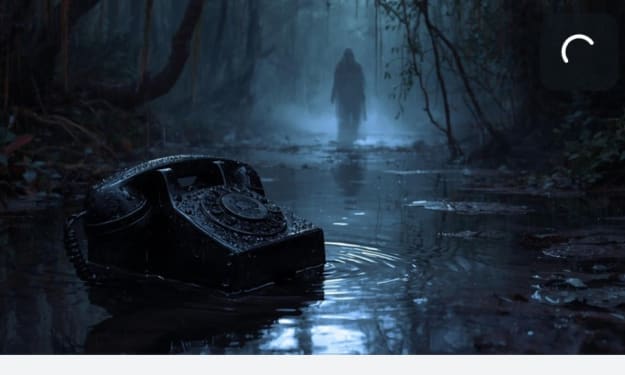
Most folks in town said Lila Gray stopped thinking long before she stopped breathing. It was as if her mind just set down its load one day and forgot to pick it up again. She would lie in her narrow bed for hours, rolling a little tin thimble between her fingers until even that became too heavy to hold. Her house smelled of cedar and dust, and it sagged with age, like it wanted to lie down and rest beside her. But what unsettled me most was the shelf in her parlor. On it sat a cracked piece of iron that looked like the mouth of an old gramophone. A bent wire hung from it like a limp tail. Lila called it her “speaker for the dead.” Nobody else knew what she meant. Her son, David, once said, “She kept a whole life locked away from me.” My aunt thought that was bitterness talking, but I don’t think so. I think Lila never let him give her kindness. And that’s its own kind of theft—because kindness with nowhere to land is like a bird with no tree. It just circles, lost, until it falls. When she passed, David swore he’d toss every last relic into the garbage. “I made it this far without ‘em,” he said. But I saw the crease between his eyes, the way his hands lingered on every object. He couldn’t bring himself to let go, not yet. Among her belongings was a will she had scrawled on lined notebook paper. Most of it was ordinary—leave the house to David, divide the quilts among nieces, let the church have her rocking chair. But one line stuck like a burr: “To find what matters most, my son must put his ear to the ground.” Aunt May snorted when she read it. “She must’ve been heat-struck when she wrote this foolishness.” But David went quiet. --- Now, I need you to understand something about old Southern women. They can turn anything into treasure. A cracked jar is the one she used to pickle okra when her brother came home from the war. A loose button is from the dress she wore to her first revival. A pebble from the yard becomes proof that the land itself once loved her. Every scrap is a story, and every story is holy. Lila was no different. She feared deep water more than anything, yet she hoarded relics like a crow—bits of broken glass, yellowed postcards, scraps of cloth. She built her house into a shrine for strangers long gone. You didn’t visit Lila’s parlor; you stepped into a mausoleum made of forgotten lives. And in the end, she made herself a prisoner of it. --- A year after her death, I dreamed of her. Dreams fade, but this one stayed sharp as a nail. She was in her bed, the room lit with soft afternoon light, a cup of chicory coffee steaming on the nightstand. She looked straight at me, her eyes thin as river stones, and whispered: “How will David know that the water I feared has come to drink from me?” Then I woke, and the world felt unsteady for days. I never told David, but soon after, he began walking the property, crouching low and pressing his ear to the earth like he was listening for a secret. Folks called him strange, but I knew he was following her riddle. --- That so-called “speaker for the dead” wasn’t from a gramophone, not really. Nobody knew exactly where it came from. Some said it was blown loose when a storm knocked down a warehouse in the next county. Others swore it was junk dredged from the river after a flood. Whatever it was, Lila treated it like a relic. If you pressed it to your ear, you didn’t hear silence. You heard a rush, like water tumbling over rocks, with voices hidden beneath. Not words, but laments, praises, sighs. David said once, almost to himself, “It ain’t wrong to want to hold on.” And I understood. The river doesn’t forget what we pour into it. Fear, sorrow, even love. It rolls them smooth like stones but never lets them go. --- Aunt May mocked Lila’s fear of water. “Imagine being scared of the only thing that keeps you alive,” she’d laugh. “A river’s the best storyteller we’ve got. Always moving, always remembering. Why wouldn’t you listen?” But I think that was Lila’s curse—she did listen. Too closely. She heard what most of us train ourselves to ignore. She heard the voices of the drowned, the whispers of the past, the cries of all who’d poured themselves into the current. She built her archive from those sounds, and it was heavier than any body could bear. --- People still tell the tale of that iron mouthpiece. The demolition crew that tore down an old hotel swore it had been ripped loose when the wrecking ball struck. They said it rolled into the creek and was carried downstream for years before Lila plucked it from the shallows. She polished it, placed it on her shelf, and claimed it had been meant for her all along. Some say it was nonsense. But others whisper that if you press your ear to it, you can hear the creek calling, waiting for someone to answer. The night Lila died, she hung up before she realized it was her own call. --- Epilogue Now when I walk by that creek, I stop. The water moves fast, carrying minnows, silt, and stories too old for us to name. Sometimes I wonder if David still presses his ear to the dirt, waiting for what his mother promised him. And sometimes, when the wind dies down and the water hushes, I think I hear something too. A sigh, a whisper, a voice asking to be remembered. If I’ve learned anything, it’s this: nothing we fear ever really leaves us. The water keeps it. And one day, sooner or later, it comes back to speak.
By Ihtisham Ulhaqabout a year ago in Fiction
The Day Time Forgot My Name. AI-Generated.
I woke up yesterday, and the calendar betrayed me. The date was gone. My phone showed no numbers, only a blank void where time should have been. Even the clock on the wall stood still—its hands frozen between seconds like a heartbeat that refused to finish.
By Muhammed Ismailabout a year ago in Fiction
Starlight Café – Part 1: Daily Life & Introductions. AI-Generated.
Chapter 1: Morning Haze The neon sign flickered pink and blue: “Starlight Café — Open 25/8.” I wiped the chrome counter again, though it had been cleaned ten times already. The smell of coffee, fried eggs, and synthetic bacon lingered like a warm fog.
By Ai.Pendrakeabout a year ago in Fiction
The Memory Thief
TITLE: THE MEMORY THIEF A HEIST OF THE HEART WRITTEN BY: LEGACY WORDS Elias worked as a cleaner at a special hospital called the Mnemosyne Clinic. Here, people could have their sad memories erased. The machine that did this hummed constantly—a sound Elias knew well. It was the sound of forgetting.
By LegacyWordsabout a year ago in Fiction
Strangers in a Moment ...
They met in that sliver of evening when the day forgets itself. The sun was slipping behind the water tower, the heat backing off just enough to let the wind touch people’s skin without starting a fight. The Delta air smelled like rain and yesterday’s frying. On the corner of Grafton and Fifth, the little cafe with the flickering OPEN sign hadn’t changed in thirty years—vinyl seats, a pie case that rotated too slow, a picture of Dr. King that the owner dusted every morning with the reverence of communion. Alyse slipped inside because the sky threatened to empty itself and because a woman sometimes needs coffee she doesn’t make with her own hands.
By Ashley D. Gilyardabout a year ago in Fiction
The Mirror's Reflection
Lena sat in the dusty attic, her fingers lightly tracing the edges of an old sketchpad. The room around her was still, the only sound being the occasional creak of the house settling. It had been months since she’d come here, since she’d hidden away from the world outside. In the silence, her thoughts roared louder than ever—recollections of failure, dreams that had slipped through her grasp, of who she was and who she no longer believed she could be.
By Mansoor Khanabout a year ago in Fiction
Guardians And Angels | Chapter Five | Part 19
One Some boys make every love song about them. Every single one of them, all night long, back-to-back. The Friday night before Halloween, after attending my first school dance in seventh grade with my best friend, I found out the hard way that those same boys make every sad song about them too.
By Christopher Dubbsabout a year ago in Fiction