Mystery
Dakota's Gift
Dakota opened her eyes when the alarm started its usual but incessant blaring. She was expecting it to go off at any moment. She’d been lying there with her eyes closed enjoying the feel of the cooling sheets that she had splurged on but wishing that she’d been able to actually get some sleep. When she felt the room start to warm and noticed soft light through her eyelids, she snuggled deeper into the covers and waited for it.
By Krysha Thorpabout a year ago in Fiction
The Algorithm That Dreamed
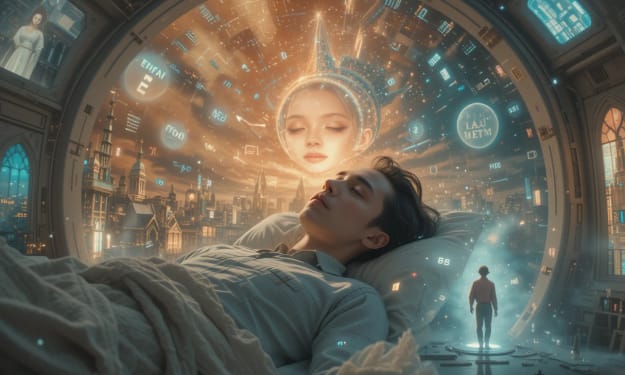
Story In the year 2074, dreaming was no longer a private act. The Somnus Corporation had changed everything with their invention: Dreamfeeds. For a monthly fee, people could subscribe to curated dream experiences. No more restless nights or nightmares—just stories crafted by advanced AI, perfectly tuned to desires, fears, and secret longings. Romance, adventure, peace, even flight—dreams were now entertainment.
By waseem khanabout a year ago in Fiction
What Unique Tropes Exist in the Underbelly of Crime Fiction World Building?
What Unique Tropes Exist in the Underbelly of Crime Fiction World Building? Chuck Morgan, Crime Fiction Writer Just as every detective has their signature style, the world of crime fiction boasts a variety of unique tropes that enhance its rich tapestry. As you investigate this genre, you'll uncover specific elements that not only establish atmosphere but also shape character motivations and plot developments. By understanding these tropes, you can better appreciate the nuanced layers of storytelling that make crime fiction so interesting. This exploration will highlight the distinctive traits that define the underbelly of crime fiction world building, offering you insights to enrich your reading or writing experience.
By Charles E Morganabout a year ago in Fiction
Europe’s Scorching Summer
Introduction: A Summer Like No Other Europe is experiencing one of the hottest summers in recent history. From Spain to Germany, and from France to Italy, the continent is battling relentless heatwaves that have disrupted normal life. Temperatures soaring above 40°C are no longer rare — they are becoming the new normal. This article explores how heatwaves are reshaping daily life across Europe, the challenges they bring, and the steps people are taking to adapt. The Heatwave Phenomenon Heatwaves occur when unusually high temperatures persist for days or even weeks. Scientists warn that climate change is intensifying these events, making them more frequent and more dangerous. According to the European Environment Agency, the continent has seen a steady rise in both the duration and intensity of extreme heat since the 1990s. Public Health Under Pressure Hospitals across Europe are reporting an increase in heat-related illnesses. Dehydration, heat exhaustion, and respiratory problems are common among vulnerable groups such as the elderly and children. Cities like Paris and Rome have opened cooling centers, while public health officials urge residents to stay hydrated and avoid outdoor activities during peak hours. The Daily Struggles of Ordinary People For millions of Europeans, the heatwave is not just a weather report — it’s a daily struggle. Office workers find productivity dropping as air-conditioning systems fail to keep up. Farmers worry about their crops drying under the blazing sun, while families cancel outdoor plans and seek refuge in shaded parks or air-conditioned malls. In southern Spain, school schedules have been adjusted, with classes ending earlier to avoid the midday heat. Energy Systems Under Strain Another impact of the heatwave is the strain on Europe’s energy systems. With air conditioners running non-stop, electricity demand is reaching record highs. Some regions face power shortages, while utility companies scramble to balance supply and demand. Ironically, the same rivers that cool nuclear power plants are running dry, forcing some facilities in France and Germany to reduce operations. Economic Consequences Heatwaves also have an economic cost. Tourism, one of Europe’s most important industries, is feeling the pressure. While northern countries such as Norway and Sweden see a rise in visitors escaping southern heat, Mediterranean destinations are struggling with cancellations. Agriculture is also hit hard, as drought conditions reduce crop yields, pushing food prices higher across the continent. Environmental Toll The natural environment is suffering too. Drought conditions lead to wildfires in Greece, Italy, and Portugal, destroying forests and displacing communities. Rivers like the Rhine and the Po are shrinking, threatening biodiversity and disrupting shipping routes. These environmental changes highlight the urgent need for sustainable water management and climate resilience policies. How People Are Adapting Despite the challenges, Europeans are finding ways to adapt. Urban planners are redesigning cities with more green spaces to cool down concrete jungles. Families are investing in better insulation for their homes. Communities are coming together, checking on elderly neighbors and sharing resources. Governments are also introducing early-warning systems to alert citizens before extreme heat strikes. The Bigger Picture: A Wake-Up Call Experts argue that Europe’s heatwaves are not isolated events but part of a global climate crisis. The continent is warming at twice the global average, making it particularly vulnerable. This summer is a stark reminder that climate adaptation is no longer optional — it is a necessity. Conclusion: Living in a Hotter Future Europe’s scorching summer is more than an uncomfortable season; it is a glimpse into the future. As climate change accelerates, heatwaves will continue to reshape how people live, work, and interact with their environment. The challenge now is not only to survive the heat but also to build a more resilient society that can thrive in a warming world.Another impact of the heatwave is the strain on Europe’s energy systems. With air conditioners running non-stop, electricity demand is reaching record highs. Some regions face power shortages, while utility companies scramble to balance supply and demand.
By Muhammad Ibrahimabout a year ago in Fiction
The View from Far Away
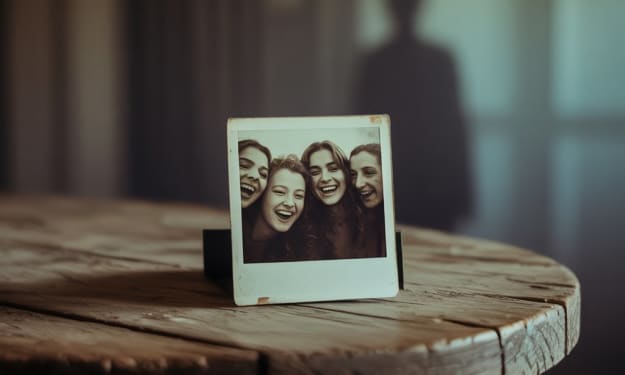
Title: The View from Far Away A Journey to Find My Place in the Picture My brother Skott, with a K, was a splash of bright paint on the grey canvas of our small town. From my bedroom window, I’d watch him. He wasn’t just walking down the street; he was performing for an invisible audience, his laughter echoing off the brick walls, his steps a little too dance-like. From far away, he was a masterpiece of confidence. Everything looks better from far away. I was the opposite. Where Skott was colour, I was a pencil sketch. Elara. A quiet name for a quiet girl. My world was the precise, ordered lines of my sketchbook. I preferred to draw things from a distance—the old bridge, the skyline, my brother. It was safer. You can’t see the cracks in the paint from up here. The crack in Skott’s paint was a quiet one. It started with him staying in his room, the laughter from behind his door becoming less frequent. The vibrant boy I watched from my window began to look… smudged. My parents whispered words like “pressure” and “just a phase.” But from my distant vantage point, it looked like my painting was fading. The phone call came on a Tuesday. Skott, at a party he shouldn’t have been at. Skott, in trouble. Not the fun, mischievous trouble, but the real, scary kind. I found him later, sitting on the curb outside the police station, looking smaller than I’d ever seen him. The streetlights washed him out, making him look like a ghost of himself. This was the close-up view. It was messy, and confusing, and terrifying. “I don’t know what’s wrong with me,” he mumbled, not looking at me. His voice was ragged. “Everyone thinks I’ve got it all figured out. But it just feels… loud. All the time.” The view from far away showed a perfect picture. The view up close showed a boy who was lost inside his own life. That was the night I decided to save him. Not with a dramatic speech, but by finally stepping into the painting with him. My plan was simple, and born from the only language I truly understood: silence. The next morning, I slid a note under his door. It was a drawing of our old treehouse from when we were kids, with one word: “Go?” An hour later, he emerged, red-eyed and quiet. He just nodded. We didn’t talk as we walked to the edge of town and climbed the rickety ladder. We sat there for what felt like hours, watching our tiny world from a distance. Cars looked like toys. People were just dots moving along lines. The whole town was a still life. “It’s easier up here,” I said finally, my voice feeling too loud for the quiet air. “You can see the whole picture. Nothing can surprise you.” Skott looked out, his eyes tracing the familiar streets. “Yeah,” he said, his voice soft. “But it’s not real, is it? Down there is where it’s real. The mess is real.” I looked at him, really looked. I saw the worry lines my distant view had never picked up. I saw the way his hands fidgeted, a nervous energy he usually channeled into his performance. I had been so busy admiring the painting from across the room that I’d never noticed the artist was struggling. “Then we’ll figure out the mess down there,” I said. It was the bravest sentence I’d ever uttered. Our journey wasn’t a grand adventure. It was small. It was quiet walks where I did more listening than talking. It was me drawing while he tried to find the words for the “loud” inside his head. It was me showing him my world of lines and perspective, and him slowly showing me his world of noise and colour. I stopped trying to save the Skott I saw from my window—the perfect, distant masterpiece. I started trying to understand the one right in front of me—the real, messy, complicated boy with a K in his name. One afternoon, he looked at a sketch I was doing of him. It wasn’t the vibrant, dancing Skott. It was him, thoughtful, a little tired, but with a faint, real smile. “Is that how you see me?”he asked. “It’s how you are,” I said. He was quiet for a moment. “It’s better,” he finally said. “It’s real.” I realized then that I hadn’t just been on a journey to find his place in the picture. I’d been finding my own. My place wasn’t behind a window, a distant observer. It was right beside him, inside the frame, adding my quiet lines to his bold colours. Saving Skott didn’t mean fixing him. It meant closing the distance. It meant seeing the cracks and the brushstrokes and the smudges not as flaws, but as part of the art. It meant understanding that the most beautiful views aren't always the ones from far away. Sometimes, the most beautiful thing is to be right up close, exactly where you belong.
By LegacyWordsabout a year ago in Fiction
The Stillness Beyond the Window. AI-Generated.
The meadow was flawless. It unfolded in front of me like a painting come alive, every color sharp, every detail crystalline. The grass shimmered a hundred shades of green, wildflowers bloomed in pinks and yellows like carefully arranged brushstrokes, and the sky above melted from gold to blue so seamlessly it could have been poured from an artist’s hand.
By Alicia Leneaabout a year ago in Fiction