Love
A Thousand Mornings Without You
The first morning without her felt like the sky had forgotten how to breathe. It wasn’t quiet. It was hollow. The kind of silence that seeps into your bones and makes the ticking of the kitchen clock sound like thunder. I stood in her kitchen—the one she had kept like a sacred shrine of warmth and smells and cinnamon—and all I could think was how her favorite mug still sat by the sink, waiting for a hand that would never return. My mother wasn’t just a woman. She was a symphony. A mixture of coffee spoons clinking, the scent of fresh laundry, and the lullabies she hummed out of habit more than memory. She moved through the world with a softness that could still a storm, and a strength that made mountains feel like mere bumps in the road. Growing up, I was difficult. Moody, sharp-tongued, and eager to grow into someone that wasn’t constantly defined as "Catherine's daughter." But she loved me in the quiet way only mothers know. She never demanded my affection, never scolded my distance. She just... stayed. A lighthouse in every storm I created. She wrote me notes. Not letters. Notes. Scribbled messages left on bathroom mirrors, in lunch bags, under pillows—tiny lifelines that said things like: “You are more than enough,” “I’m proud of you, even when you’re not proud of yourself,” and once, after a terrible teenage argument, simply: “I love you anyway.” Those notes used to irritate me. I mistook them for guilt-trips or smothering. But now, I would give anything to find just one more. To feel the curl of her handwriting again. To trace the ink of her words with my fingertips and believe, for just a second, that she was still here. Her illness came suddenly. A few tired mornings. A cough that lingered. Then, within weeks, a diagnosis: late-stage cancer, already spreading like wildfire through the body that once carried me, cradled me, fed me with hands and love and sacrifice. She handled it like she handled everything—with grace. “I’ve had a beautiful life,” she told me in one of our last lucid conversations. “I had you. That alone is more than many get.” I wanted to scream. That wasn’t enough. Not for her. She deserved more years, more sunrises, more of everything. But she just squeezed my hand, her eyes tired but filled with peace. “You’ll be okay. I raised you to be.” And here I am. Trying to be. It’s been 427 mornings without her. I count them because I want to remember the weight of her absence. Not to punish myself, but to honor her presence. Because the truth is, she’s not really gone. She shows up in places I least expect—when I open a window and the air smells like jasmine, her favorite flower. When I sing along to the radio and realize I’m using her exact harmony. When I catch myself saying something kind to a stranger, something she would have said. Love like hers doesn’t die. It just changes form. I recently found one last note. Tucked in an old book she lent me years ago and I never returned. It was faded, the ink almost erased by time and maybe tears. It read: “If you ever feel alone, just remember—I’m part of the stars, the sky, the sea. And every beat of your heart is one we still share.” I held that note to my chest and wept. Because a mother’s love is like gravity—it holds you together when everything else is falling apart. It isn’t loud or flashy. It is in the everyday moments, in the care, in the listening, in the staying. I am my mother’s daughter. And even in her absence, she loves me louder than ever. For every soul who misses a mother: your grief is the echo of an extraordinary love. Let it remind you that you were cherished. Always.
By Dr Gabriel about a year ago in Fiction
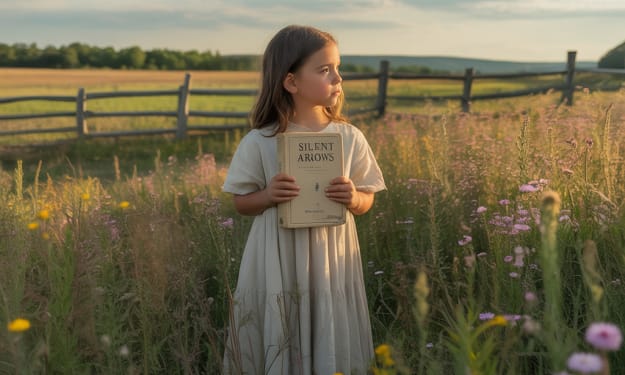
Arrow Storm
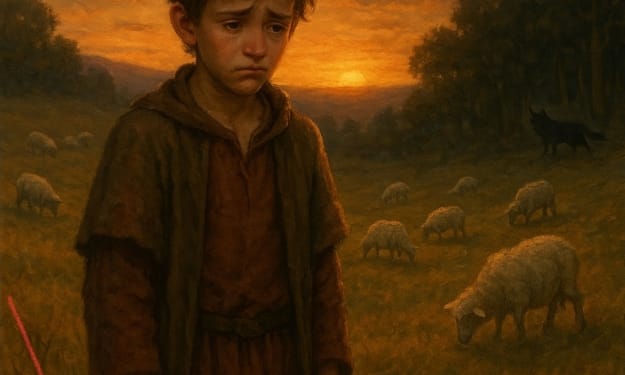
Send the sun!!!!! It wasn’t something many in the town had heard thunder from their Kings lips. Not in this lifetime, or the next, or the one before last. Centuries had passed and King Leonel was growing war-hungry, nearing his two-hundred-and-fifty-third birthday. She should have been here to celebrate.
By K.H. Obergfollabout a year ago in Fiction
The mirror of the second chances
A cold breeze danced through the cracks of the abandoned cottage as Maya brushed dust from the old mirror. It had been years since anyone had set foot inside. The house belonged to her grandmother, a woman known in the village for strange tales and stranger antiques. Now, after her passing, Maya had returned—not to reclaim her inheritance, but to find a part of herself that she'd lost along the way. Life in the city had hardened Maya. A decade spent chasing corporate success left her emotionally numb. Promotions, parties, paychecks—none of it filled the hollowness she carried. Worse, she had cut ties with her parents and abandoned her younger brother after a family feud. She never forgave them. Or herself. The mirror stood taller than Maya, with a bronze frame curled in vines and mythical beasts. Its glass shimmered unnaturally, even in shadow. Her grandmother once told her, “This mirror doesn’t just reflect what you are. It shows what you could be—if you dare to look deeper.” Maya scoffed then. Now, her skepticism was tinged with curiosity. She looked into the mirror… and blinked. The reflection wasn’t right. The woman staring back had the same face, same brown eyes, same tired expression—but something was different. Behind the mirrored version of Maya stood a boy. Her brother, Arman. He was twelve again, standing in the doorway of her old bedroom, holding a paper boat they made together before things fell apart. Maya gasped and stepped back. The reflection remained unchanged. She turned to check behind her. Nothing. No boy. Just silence. “Great. I’m hallucinating now,” she muttered. But something inside her stirred—a memory long buried. That paper boat was the last gift she ever gave him, before the fight, before the slamming doors and bitter silence. She stared at the mirror again. This time, she saw her younger self and her brother laughing in the backyard, making snow angels. The image faded, and a new one appeared: her mother crying in the kitchen, the day Maya left without saying goodbye. Tears welled up in her eyes. “I didn’t mean to leave forever,” she whispered to no one. A soft whisper echoed from the mirror. “Then go back.” Maya stumbled backward, her heart pounding. The room seemed to shift, the air thick with emotion. The mirror pulsed faintly like a heartbeat. Her hands trembled. “I can’t,” she said aloud. “It’s been too long. They’ve probably moved on.” But deep down, she knew that was just an excuse. The truth was simpler and scarier: she was ashamed. Ashamed of the words she said. Ashamed of the years she stayed silent. Ashamed that she waited until her grandmother died to come back. The mirror flickered again. Now it showed an older Maya, sitting in a sunny garden surrounded by children. Her brother was there too—grown up, smiling, forgiving. “Is this… possible?” she whispered. The mirror said nothing. --- The Next Morning Maya awoke on the dusty couch, the memory of the mirror vivid in her mind. She made a decision. She drove straight to the village where her parents still lived. Her hands shook on the steering wheel. She rehearsed apologies in her head—each one sounding too small for the years they had lost. As she neared the gate, she saw her mother outside, watering the plants. Time had aged her gracefully, but sorrow clung to her shoulders. “Mama?” Maya called softly. Her mother turned. The watering can dropped. “Maya…” she whispered. For a moment, neither moved. Then her mother ran, and Maya found herself wrapped in the kind of hug that melted ten years of pain in a single breath. “I thought we lost you,” her mother sobbed. “I was lost,” Maya replied, “but I want to come home. If you’ll have me.” Inside, her father sat stunned. Arman, now twenty-five, leaned against the wall, arms folded, unsure how to react. “You left,” he said bluntly. “For ten years.” Maya nodded. “I know. And I was wrong.” Silence hung heavy. Then he walked over and hugged her. Tight. “I kept the boat,” he whispered. That night, they sat together over tea, laughing through tears, sharing stories of the years they missed. It wasn’t perfect, but it was a start. --- Months Later Maya moved back to the village, renovated her grandmother’s cottage, and turned it into a small counseling center. People from nearby towns visited, drawn by the warmth she radiated—a warmth she rediscovered through healing. And the mirror? It remained in her room. Every so often, she’d stand before it, and see versions of herself—some joyful, some broken. But she no longer feared them. She understood now: the mirror never showed what was, only what could be. And for Maya, that made all the difference.
By Shehzad khanabout a year ago in Fiction
Cherry Blossoms
The sun is easy on his skin as he rolls over in bed. The rays creep in through the blinds and touch his lashes, playing with his hair. The girl in his arms opens her eyes; she looks at him, carefully entangling herself from his arms, trying not to wake him. She gets out of bed and goes to the window, and when she looks at the sky she knows that this is their last day together. She opens the window and breathes in the chilly morning air fresh from the scent of cherry blossoms; a lone dove is sitting on the tree under the window..The girl turns around and goes to the bathroom to get ready. She puts on concealer, mascara and lipstick. Her makeup is rushed, cakey but she doesn’t care. There is no time to waste. When she returns to the room the boy is sitting up and when she looks into his eyes she can see that the glow from them is gone. She looks around; the flowers from the table, the books by the bed disappeared as well. The room seems rather empty now.
By Jasmine Kozakabout a year ago in Fiction
Crimson Hearts of New York
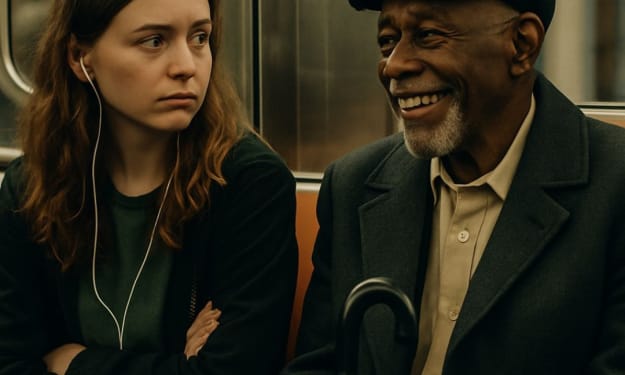
New York pulsed with energy—bright lights, roaring taxis, and millions of people who never looked twice at a stranger. It was the perfect place to hide. Vincent Ashmore had lived in the shadows for centuries. A vampire cursed with immortality, he had learned long ago that love was dangerous. Too fleeting. Too painful. Humans aged, changed, and died—but he remained the same. Cold. Eternal. Alone. That was until Lena Hart walked into his life. She was unlike anyone he had ever met—an aspiring musician with purple-streaked hair, ripped jeans, and a heart too big for her tiny Brooklyn apartment. Lena worked nights at a dusty old bookstore that happened to sit above one of Vincent’s safe havens. That’s how they met—when she accidentally found the hidden cellar door. “I didn’t mean to break in,” she had said, flashlight trembling in her hand. Vincent should’ve erased her memory, should’ve vanished. But instead, he stepped into the light—his skin pale, his eyes a strange, silver glow. “You shouldn’t be here,” he whispered. “And you shouldn’t be wearing a Victorian coat in 2025,” she smirked. He should’ve scared her. But instead… she smiled. From that night on, Lena kept coming back. By day, she chased her dreams of singing at open mic nights. By night, she played songs just for him in the quiet cellar beneath the bookstore. Vincent never told her what he was. Not at first. But she knew. There was something in the way he never ate, never aged, and never came out before sundown. His presence felt both ancient and sorrowful—like someone who had lived a hundred lives but never truly lived. Still, she didn’t run. “You’re not a monster,” she once told him, brushing her fingers against his cold hand. “You’re just... lost.” Vincent was falling for her. And it terrified him. He’d lost too many to time and fate. But Lena was different. She brought color back into his world. She sang in the dark. She laughed at danger. She touched him like he wasn’t cursed. But love, like blood, always leaves a stain. One night, as they watched the city lights from her fire escape, Vincent finally told her the truth. “I feed on blood,” he said, unable to meet her eyes. “I’ve lived for over two hundred years. I’ve seen empires fall. I’ve seen lovers die. I should’ve let you forget me.” Lena didn’t flinch. She just looked at him, softly, bravely. “I already knew,” she whispered. “You’re my darkest secret, Vincent. But I’d rather love you in the shadows than live without you in the light.” He kissed her then, for the first time. A kiss full of sadness, sweetness, and centuries of aching loneliness. But darkness was never far behind. An ancient vampire named Lucien, Vincent’s maker, returned to New York. He had sensed Vincent’s weakness—Lena—and saw her as a threat to their kind. “You’ve grown soft,” Lucien sneered. “A human girl? You disgrace our bloodline.” “I won’t let you touch her,” Vincent growled. Lucien laughed, a sound like broken glass. “Then you’ll die with her.” The war began that very night. Lucien set the bookstore ablaze. Fire licked the sky as Lena screamed Vincent’s name, smoke choking her lungs. Vincent arrived just in time, pulling her from the wreckage, his coat singed, his skin blistered by the flames. But Lucien was waiting. Their battle lit up the alley with inhuman speed, claws, and fury. Vincent fought like a man who had everything to lose. And when Lucien struck Lena down—just a shallow wound—Vincent saw red. He drove a silver dagger through Lucien’s heart, watching his maker crumble to dust. But the price was steep. Lena lay in his arms, bleeding, barely conscious. “Don’t let me go,” she whispered. “You can’t die,” Vincent said, voice breaking. “Not you. Not now.” There was only one way to save her: his blood. He bit his wrist and held it to her lips. “Drink,” he whispered. She hesitated—but she trusted him. She always had. The transformation was slow. Painful. But when it was over, Lena opened her eyes—and they glowed just like his. Months passed. They lived underground now, in a new sanctuary. Lena was adjusting—slowly—to her new life. The thirst was hard, but Vincent helped her. He taught her to hunt animals, not humans. To fight the darkness, not become it. “You gave me eternity,” she said once, resting her head against his chest. “No,” he replied, holding her close. “You gave me life.” She still sang for him. And sometimes, in the stillness of their secret world, they danced under candlelight. He was her darkest secret. She was his only light. And in the vast, eternal city of New York—where shadows crept and skyscrapers gleamed—they found something neither time nor fate could erase: Love.
By Muhammad Azeem about a year ago in Fiction