Love
When Our Hands Finally Found Each Other
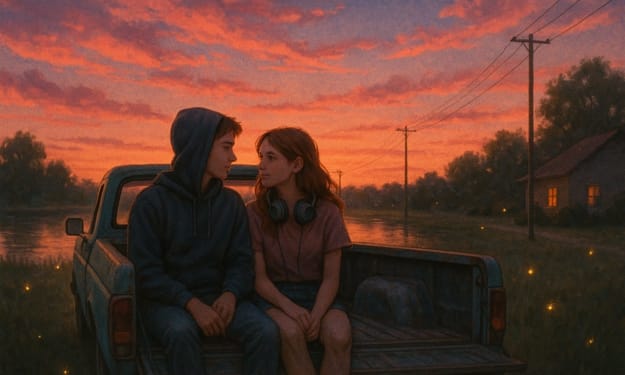
We’d been close since university — long before we ever thought to call ourselves anything more than friends. Back then, life was a blur of lectures, library sessions that lasted until midnight, and hurried walks to coffee shops just before they closed. Alex was there through all of it, a constant in a world that felt like it was forever changing.
By Gift Wesley Sageabout a year ago in Fiction
The Mermaid
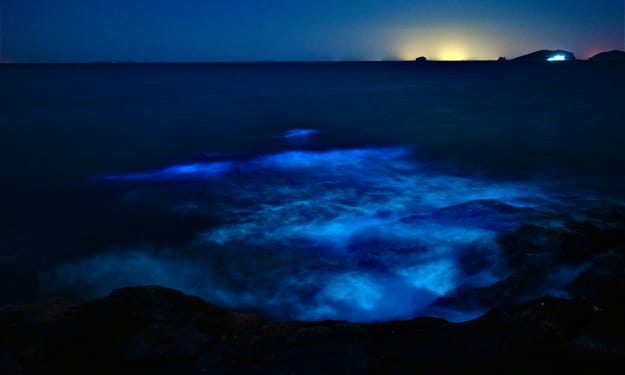
The sky was clear above the ocean. Constellations swayed on the surface and a slender figure stirred the water around the Cassiopeia; the harbour was silent, deserted ships resting gently by the docks. Suddenly light appeared behind a fishing boat, scattering through a net onto the ground. The figure under the water moved again and waves splashed against the docks when the laughter of two people echoed through the harbour. A girl and a boy, hand in hand, skipped around the ships towards a longer pier reaching into the ocean.
By Jasmine Kozakabout a year ago in Fiction
She Left Me a Voice Message — And Then She Was Gone
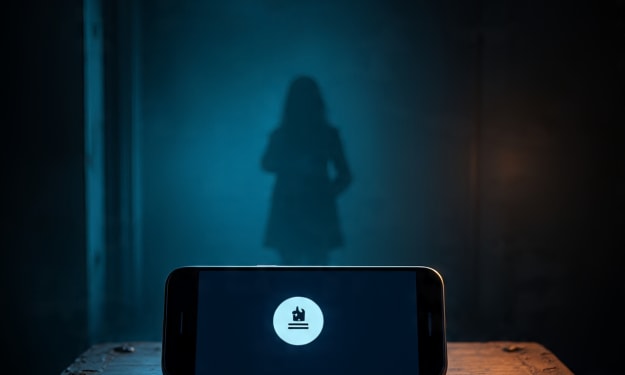
It was a quiet Wednesday evening when my phone buzzed. I didn’t recognize the number, but something told me to answer. Instead, it went straight to voicemail. I hesitated for a moment, then pressed play. Her voice came through—soft, trembling, but unmistakably hers. “Hey… it’s me. I’m sorry I couldn’t say this in person. I don’t know how to explain it, but I can’t stay anymore. I hope you understand… please don’t try to find me.” The message cut off abruptly. For a moment, the room felt colder. My heart raced as I replayed the message over and over, searching for clues, trying to understand what had pushed her to leave so suddenly. --- The Backstory We had been together for almost two years. Everything seemed perfect on the surface — laughter, late-night talks, plans for the future. But beneath the smiles, I sensed she was carrying a weight she never shared. Late texts from her, sudden silences, and the occasional distant look I couldn’t quite place. I asked her, many times. She just smiled and said, “I’m fine.” I wanted to believe her, but now, hearing that voice message, I knew she wasn’t. --- The Search Begins The next day, I called and texted. No reply. Friends didn’t know where she was. Her social media was silent — no posts, no stories, nothing. It felt like she vanished into thin air. I spent nights awake, listening to that voice message, wishing she had said more, anything. I reached out to everyone she knew, retraced our steps, but every lead turned cold. Her message haunted me. The desperation, the apology — it was like a goodbye wrapped in uncertainty. --- What I Learned From Her Silence Weeks passed. No sign. I realized sometimes the people we love carry battles we’ll never see. Maybe she left because she needed space, healing, or freedom I couldn’t give her. Her voice message became a bittersweet reminder that some connections linger in silence and absence. That sometimes, love isn’t about holding on tightly — it’s about letting go when words can no longer bridge the distance. --- Moving Forward, Holding On I still listen to that voicemail now and then. It reminds me of her courage — to leave, to speak the truth even when it’s painful. And me? I’m learning to hold her memory with kindness, to accept that some stories don’t have neat endings. Sometimes, a voice message is the last chapter — a whisper that says goodbye when no words face to face ever could.
By Azmat Roman ✨about a year ago in Fiction
The Journey of Silence
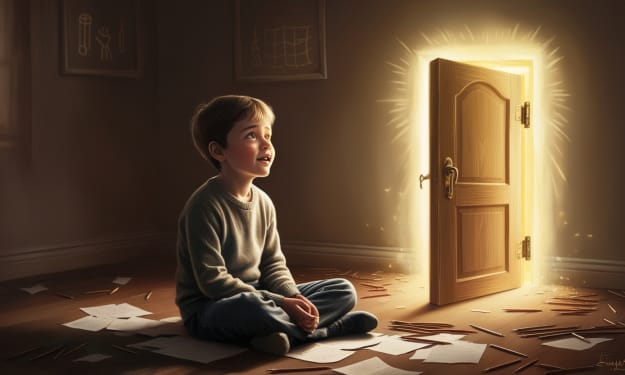
Not every silence is peaceful. Some scream so loudly inside you that the noise drowns out your soul. This is a story I never thought I’d tell. Not because it’s dramatic. But because it’s… quietly terrifying. I met him at a chai dhaba during winter. A quiet boy with haunting eyes who always sat at the corner bench, sketching on the back of old bills. No one spoke to him. He didn’t speak either. I don’t know why, but one day, I walked up and asked, “Tum kya bana rahe ho?” He looked up slowly. “Memories,” he said. Just one word. And he smiled—a tired, worn-out kind of smile, like he hadn’t used those muscles in a long time. Over the next few weeks, we met often. I never learned his real name, so I started calling him “Noor”—because he brought light into dark places without knowing it. He was a silent storyteller. His sketches weren’t art—they were wounds on paper. Each one told a story of pain, escape, or something too complex to label. Sometimes, he would draw strangers too. People sitting nearby, unaware that Noor was quietly turning them into memories. One day, he sketched an old man feeding birds. Another time, a mother scolding her child gently. He found beauty in moments most of us overlook. One evening, I asked him, “Why don’t you talk to others?” He looked out into the foggy night and said something that still burns in my memory: “Because I did… once. And the world didn’t listen. It laughed.” Noor wasn’t mentally unstable. He was deeply aware—too aware. He had lost both parents in a fire when he was ten. He lived in a shelter for most of his life, then drifted between cities. Every time he tried to connect with people, they either mocked his silence or forced him to be someone he wasn’t. But he never stopped drawing. One day, he handed me a folded sketch. It was me. But not just my face—my thoughts. My fears. My loneliness. All captured in ink. “How did you—?” I asked, choking on my words. “I listen,” he whispered. “Even when you don’t speak.” That was Noor’s superpower. He heard what others buried. And carried it. And just like that… he disappeared. No note. No goodbye. Just one final sketch left at our usual spot—two figures on a bench, one drawn in heavy lines, and the other fading away into the fog. I searched for him. Everywhere. But Noor was like a shadow—seen only when light hit the right angle. It’s been five years. Sometimes, I sit at that same dhaba, alone. And sometimes… just sometimes… I feel a sketch slide under my tea cup. A rough corner. A faint signature: "N." He lives, somewhere. Maybe in another city. Maybe drawing for someone else. Maybe still listening to unsaid words. I kept his sketches safe. I framed one. Another one stays folded in my wallet. A reminder that not every connection needs words. That sometimes, silence has more meaning than an entire book. And me? I’ve stopped chasing noise. I’ve learned to listen—to others, to myself, to silence. Because Noor taught me this: “Some people speak loudly. Some speak through silence. Both deserve to be heard.”
By Zain ul abidin about a year ago in Fiction
In the Light of Her Eyes. Content Warning.
It began with a look—a look that pierced the dull haze of a rain-soaked Thursday afternoon in November. I was seated at the window of an urban coffee shop, my nose fogged with steam from coffee and loneliness. Routine was life now. I worked, returned to an empty apartment, listened to the ticking clock at night, and asked myself when something would shatter this locked box I referred to as a heart.
By Muhammad Abdullahabout a year ago in Fiction
The Silence Beneath Glass
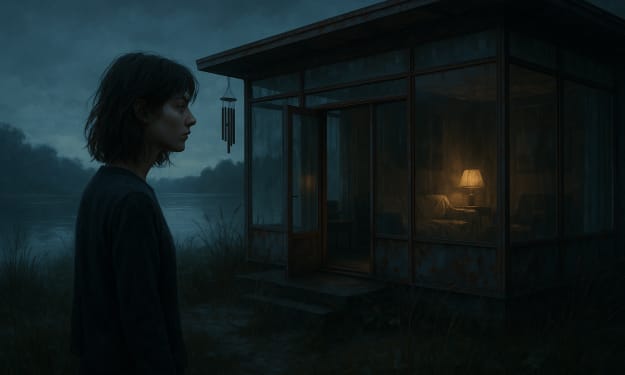
Part 1: The House That Shouldn't Exist There are places in the world where sound feels wrong. Like it doesn't bounce right. Like it's afraid to echo. That’s what I noticed first about the glass house. It stood on the edge of the lake, partially hidden by overgrown cattails and a collapsed boathouse. I’d been driving for two hours, aimlessly following back roads with the windows down and no music on. My phone had died somewhere around the last gas station, and I wasn’t sure what state I was even in anymore. But when I saw the house, I hit the brakes without thinking. It wasn’t on any map. It wasn’t for sale. It simply existed — wrong and silent — like it had been built out of a secret someone tried to bury and failed. The house was all glass, but not in the modern, luxury-home sense. It looked like something that had been abandoned for years, possibly decades — the frame eaten by rust, the panels fogged and stained with streaks like old tears. There was a front path choked by weeds and a metal wind chime hanging by the door that didn’t make a sound, even when the breeze hit it. I should’ve left. Any sane person would’ve. But sanity is relative when you’re running from something you don’t fully remember --- I don’t know why I started driving in the first place. The therapist — a warm woman with careful eyes and an office that smelled like lemon disinfectant — said it was common for memory loss to work that way. That the brain has its reasons for blacking out trauma. That it might come back in pieces. So when I found myself behind the wheel on a random June morning, wearing shoes I don’t remember buying and with a suitcase in the backseat packed by someone who clearly knows me better than I do, I figured: Maybe this is how it comes back. Maybe this is the road back to myself. Or maybe this is another kind of escape entirely. I stepped out of the car. The grass swallowed my ankles. The glass house watched me approach. The doorknob was warm, like someone had just touched it. Inside, it smelled like lavender and something deeper — not rot, exactly, but age. An old memory perfuming the air. I stood still for a moment, waiting for the floor to creak, for a ghost to whisper, for my mind to scream. None of those things happened. Instead, I heard the softest sound of a piano. One note. Just one. And then silence again. The furniture was covered in white sheets, some stained with water rings. There was a spiral staircase leading to an open loft with a massive window that faced the lake. A dusty photo frame sat on a small table near the entrance. I picked it up, my hand trembling. In the photo, I stood between two other people — a man and a woman. All of us were smiling. My hair was shorter, dyed a color I didn’t recognize. The man had his arm around me. The woman wore a dress with sleeves that looked like glass petals. I stared at my own face. My mouth knew that smile, but my brain did not. I flipped the frame over. On the back, in thick black ink: Summer, 2021 – Home again. Don’t forget. The handwriting was mine. I turned in a slow circle, heart pounding. The glass walls offered no safety, only exposure. I was being watched — not from outside, but from the past. This was my house. Or it had been. And someone had wanted me to forget it. I wandered through the house in a daze, touching everything. A chipped ceramic mug. A pair of ballet flats by the door. A record player half-covered by a moth-eaten scarf. In the kitchen, a knife block sat full — except for one empty slot. On the fridge, held by a magnet shaped like a black cat, was a postcard. A line of text in all capital letters: “YOU LEFT SOMETHING BEHIND.” No signature. No return address. Just a postmark: Three days ago. I dropped it. My hands had started shaking. That night, I didn’t sleep. I lay on the couch in the living room — sheets removed, just cracked leather against my back — and watched the reflection of the moon ripple across the lake, then against the walls of the house. I thought about the photo. About the missing knife. About the strange silence, like even the insects were holding their breath. And about the single piano note. Was it a memory? Or a warning? To Be Continu
By Dr Gabriel about a year ago in Fiction
The romantic weather
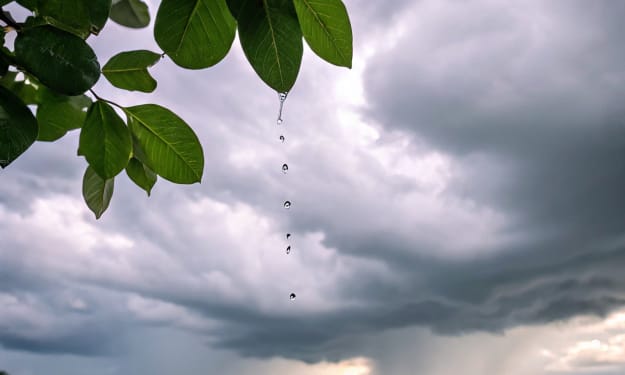
There are days when the world seems quieter, not because people are hushed, but because the sky has taken over the narrative. Rain drums gently on the roof, the wind murmurs through trees, and clouds move like wistful dreams above us. Weather, often treated as background noise in the human story, is in truth one of nature's most eloquent storytellers. Among its most expressive elements—rain and wind—speak with a particular poetry. They don’t just shape the environment; they shape moods, inspire memories, and sometimes carry the weight of something as intangible and powerful as romance. There is a romanticism to weather that transcends the literal. We aren’t just cold when the wind bites at our cheeks or merely wet when caught in the rain. We are stirred, quietly and deeply. The weather can draw us into reflection, heighten our senses, and remind us of how alive we are. In an age so obsessed with control, these wild elements offer liberation—reminding us that not everything bends to our will. Rain: The Introspective Companion Rain has always had a special place in the human psyche. In literature, film, and music, it serves as the soundtrack to introspection, confession, heartbreak, or reconciliation. Why does water falling from the sky feel so deeply personal? Perhaps it's the way rain isolates us in our thoughts. The sound of rain is a cocoon, a soft percussion that mutes the outside world and turns our attention inward. On rainy days, time seems to stretch. The bustle of the outside world slows down. Plans are canceled, streets are quieter, and we’re given a rare permission to do nothing—guilt-free. Rain also holds a strange duality. It can be both melancholy and comforting. A solitary walk under a drizzle can invite us into our own emotional landscapes. Yet, the same rain becomes a lullaby when we’re wrapped in a blanket, watching droplets race down a windowpane. It is perhaps the most democratic of weather—it doesn’t just happen in grand mountain ranges or untouched forests, but in cities, towns, and alleyways. Rain makes poets of all of us. And there’s a reason why so many love stories are set against the backdrop of rain. A kiss in the rain has become cinematic shorthand for surrender, for the moment when passion overrules practicality. Wet hair, soaked clothes, pounding hearts—it’s elemental and primal, stripping us of pretense. Rain, in those moments, doesn’t separate people; it erases everything else. Wind: The Invisible Wanderer If rain speaks to introspection, wind speaks to desire—for movement, for change, for something just out of reach. There is something untamable about the wind, something that defies logic and demands to be felt rather than understood. Wind is presence without form. You can’t see it, but you know when it arrives. It doesn’t just pass through a space—it animates it. Trees become dancers, waves ripple and crest, and even the most stoic buildings seem to react. Unlike rain, which often asks us to stay in, wind urges us to go out, to run, to feel. Children instinctively understand the joy of the wind. They run into it, fly kites, or scream just to hear their voices carried away. Adults, often burdened by routine, may forget this freedom. But then comes a gust on a spring morning, catching the hem of your coat or tousling your hair, and for a second, you remember. You remember that you are not just a mind navigating tasks, but a body in the world, capable of movement and wonder. Romance often begins in that kind of memory. A walk along the beach with sea winds pulling at your clothes. A rooftop dinner where the air carries scent and laughter alike. Or even a windswept farewell at a train station—the kind that only the most dramatic novels seem to deliver, yet happens in real life more often than we’d expect. Wind, like love, is invisible and yet unmistakably present. It can caress or overwhelm, soothe or stir chaos. And just like love, it refuses to be contained. The Alchemy of Mood and Weather Why do we romanticize certain types of weather? Is it mere aesthetics—the way grey clouds make colors more vibrant, or the golden hue of sunlight after a storm makes the world glow? Or is it something deeper? Human beings are, after all, deeply connected to nature, no matter how much our modern lives try to sever the link. Our bodies respond to barometric pressure. Our moods shift with the seasons. And emotionally, we’re still wired to respond to sensory experiences—sound, touch, temperature—all of which weather delivers in spades. A foggy morning can feel like a secret. A thunderstorm at night can feel like a story unfolding. A soft drizzle on a date can feel like an unscripted adventure. These aren’t just weather conditions; they’re emotional cues, deeply embedded in our imaginations. There is also the power of shared experience. Two people caught in unexpected rain laugh harder. A hand reached out against the wind feels more deliberate. Weather creates memories, not in grand, orchestrated ways, but in fleeting, unscripted moments that become unforgettable precisely because they are real. Technology, Forecasts, and the Lost Romance It’s worth considering how technology has dulled some of this natural romance. Forecast apps, indoor climate control, and a constant desire to "optimize" our environments leave little room for surprise. We have become obsessed with avoiding inconvenience. But in doing so, we sometimes avoid beauty too. When was the last time you walked without an umbrella, just to feel the rain? Or drove with the windows down, letting the wind fill the car with life? We tend to treat weather as something to plan around rather than something to experience. But the magic lies in surrender. Romantic weather is not always convenient. It’s often messy, unpredictable, and momentary—just like romance itself. And yet, that’s what makes it so moving. It teaches us to be present. To feel. To allow. Final Thoughts: Listening to the Sky The next time you feel the first drops of rain on your skin, or hear the wind begin to rise, pause. Don’t just check the forecast—check in with yourself. What memories stir? What emotions surface? What stories do the clouds above you seem to whisper? Rain and wind are more than meteorological events—they are messengers from the sky, inviting us into a deeper relationship with the world around us and with ourselves. They remind us that we are not merely spectators of nature but participants in its dance. In the end, perhaps the most romantic thing about weather is its indifference to us. It does not try to impress, flatter, or manipulate. It simply is. And in its authenticity, it frees us to be a little more real too. Let the rain fall. Let the wind blow. Let them remind you that the world is alive, and so are you.
By Julia Christaabout a year ago in Fiction
The Moment That Returned
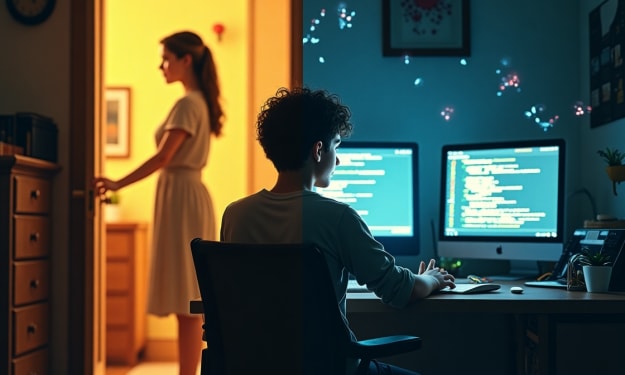
The Moment That Returned He went back to say sorry. But was it too late? by (NM) James was a man of logic. A software engineer by profession, he believed in numbers, timelines, and clean-cut algorithms. Emotions, to him, were like corrupted code—unpredictable, messy, and hard to debug. He lived alone, worked late, and rarely spoke unless spoken to.
By NASRULLAH MUKHLISabout a year ago in Fiction