Love
Thirty-Nine Six O’Clocks and Counting. Runner-Up in You Were Never Really Here Challenge.
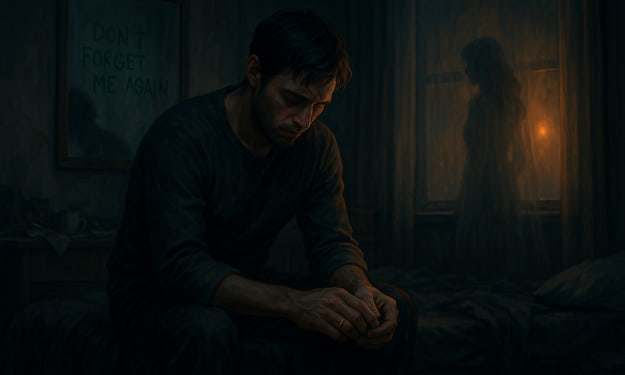
October 14th This is stupid. Why am I doing this? Yeah-yeah, I know, Dr. Parks said so. Well, she actually said that I should write down everything I’d tell you if you were still here.
By Cristal S.about a year ago in Fiction
The Sound of His Silence
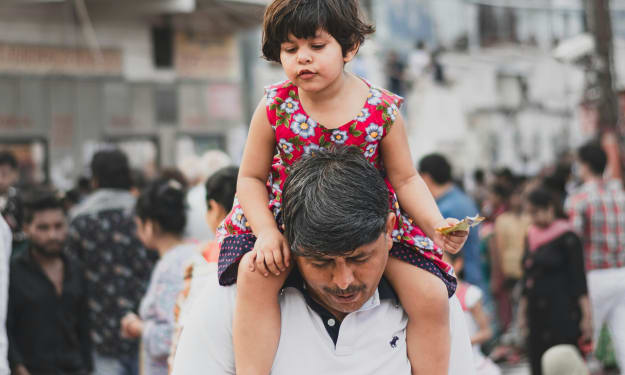
My father never said “I love you” out loud. Not once. He wasn’t the type to wrap his arms around you or spill emotions at the dinner table. His love was quiet, sturdy, and often hidden in plain sight — like a warm coat hung near the door on a rainy day, silently waiting for you to notice it was there all along. Growing up, I didn’t quite understand him. Other kids had fathers who cheered from the sidelines or taught them to ride a bike with joyful yells and high-fives. Mine stood back, hands in his pockets, a faint nod replacing a smile, watching in silence. At times, it felt like he was distant — like love lived in the cracks between his words instead of inside them. But love, I’ve learned, wears many forms. And my father’s version wasn’t loud, but it was unshakable. I remember the mornings most clearly. I’d wake up at 5:30 AM for school — not because I was eager, but because he was always up by then. Sitting at the kitchen table, sipping his black coffee, reading the same newspaper like it held the secrets of the universe. He’d already packed my lunch — same sandwich every day, crusts cut off just how I liked. I never asked him to. I never had to. He would hand me the brown paper bag without a word, nod once, then go back to his coffee. That was our morning ritual. No kisses, no “Have a great day,” but I swear his eyes held every word he never said. The closest I ever got to hearing his love was when I failed my math test in tenth grade. I sat at the table, ashamed, avoiding his gaze as I pushed the paper toward him. His eyes scanned the red marks. Then he reached over and flipped the paper upside down. “We try again,” he said simply. That was it. But in those three words, I heard everything: “I believe in you. I’m not disappointed. I love you.” I didn’t say thank you. I couldn’t. There was a lump in my throat too big for words. But he knew. Years passed. I grew older, moved out, and we grew more distant in every sense of the word. Phone calls were rare and brief — updates on the weather, how the car was doing, and if I’d remembered to change my oil. He never asked if I was happy, and I never told him. That wasn’t our language. Then came the day the doctor called. “Stage four. It’s aggressive,” the voice said. Everything inside me stilled. I flew home that night. At the hospital, I sat beside the man who never said “I love you” and held his hand. It felt foreign, wrong even — like I was crossing some invisible line we had kept all our lives. But his fingers wrapped around mine like they were waiting for me. I talked for hours — about my job, my girlfriend, how I still cut the crusts off my sandwiches. He never said much. Just nodded. The occasional “Hmm.” But he never let go of my hand. One night, I brought him his favorite blanket from home. As I tucked it around him, he finally looked at me — really looked — and said, “I never missed a game, you know. I was always there.” I felt the tears sting before they fell. I hadn’t seen him in the bleachers. Not once. But maybe love doesn’t always wave flags or shout your name. Maybe sometimes it sits quietly in the back row, just in case you glance that way. A week later, he was gone. After the funeral, I went back to the house to pack up his things. In the garage, behind a stack of old tools, I found a shoebox. Inside were every report card I ever had, faded photos from every game, and a small cassette player with a single tape labeled: “For when you need me.” My hands trembled as I pressed play. There was a pause. Then his voice, scratchy and unsure: “I’m not good at saying things. But I love you. Always did. Always will.” That’s when I broke. I realized then: love doesn’t always come in the shape we expect. My father’s love wasn’t wrapped in hugs or shouted from rooftops — it was folded into sandwiches, hidden in silence, tucked in the back row of bleachers. And sometimes, when love finally speaks, it echoes forever.
By Dr Gabriel about a year ago in Fiction
A Mother's Goodbye Beneath the Olive Tree
The wind whispered through the fields of Amara village, carrying with it the scent of soil, wheat, and a quiet sorrow that lingered in every home touched by war. Mariam stood at the edge of her small wooden porch, her hands rough from years of working the land, her back hunched slightly—not from age, but from burdens carried in silence.
By Intresting Storiesabout a year ago in Fiction
The Price of a Breath
The Price of a Breath The room was quiet. Not the kind of quiet that soothes. It was the sterile, hospital silence, filled with soft machine beeps and the ever-present scent of antiseptic. It was the kind of silence that makes your heartbeat sound like thunder, that makes time move like molasses.
By VoiceWithinabout a year ago in Fiction
The Coffee Pot Never Lies”
Every morning in Maple Hollow, the coffee pot starts brewing at exactly 5:30 AM. It’s the kind of town where people still wave from their porches, gossip over pie at the diner, and know your dog’s name — even if they don’t remember yours. Eleanor Reeves, 63, has been the first to open the corner café for nearly four decades. Her hands are calloused, her memory sharp, and her coffee stronger than regret. In this town of 3,000 people, Eleanor's Café is more than just a pit stop — it's where lives quietly unfold. Across the cracked linoleum floor, you’ll find Army vets reading the paper, high schoolers whispering into their phones, and new parents looking like they’ve seen war. Eleanor knows them all. She doesn’t need Facebook to know who got divorced, who’s running for town council, or who just came back from rehab. Every day at 6:15, Thomas Young walks in. Always wearing the same faded flannel and trucker hat, always orders black coffee and a cinnamon roll. Retired mechanic. Lost his wife last spring. He doesn’t talk much, but Eleanor knows grief when she sees it. Then there’s Maya, 28, who moved back in with her parents after trying to “make it” in Austin. She now teaches second grade and spends her evenings working on a podcast that maybe five people listen to. But Eleanor listens. That matters. One Thursday morning, Maya asks Eleanor, “How do you stay in one place your whole life?” Eleanor pours her a fresh cup and replies, “You don’t have to go far to live a big life. You just have to pay attention.” That line sticks with Maya. It ends up in her next podcast, which somehow goes semi-viral. An agent emails. A publisher calls. She’s baffled. All she did was quote Eleanor. Weeks go by, and one day Eleanor finds her own face — lines and all — on a magazine cover Maya sends her. “The Wisdom of Small-Town America.” Maya’s voice on the phone shakes with gratitude. “You changed my life,” she says. But Eleanor just chuckles. “I didn’t change anything, honey. You just started listening.” That year, Maya moves to New York. Thomas starts sitting a little longer at the café, sometimes smiling at a woman who comes in after yoga. And Eleanor? She keeps opening up at 5:30 AM. Because even if everything changes, the coffee pot never lies. Eleanor never considered herself a storyteller, yet every cup of coffee she poured carried one. The café had become a patchwork of lives — stitched together not by grand gestures, but by morning routines, quiet nods, and the occasional unsolicited advice. It was a living, breathing diary of Maple Hollow, and Eleanor was its keeper. On the surface, not much changed in the town. The same wooden sign swung above the café door, and the same bell jingled when it opened. But underneath, people grew, stumbled, and healed — all within those worn-out walls. Eleanor didn’t need to say much; she had the rare gift of listening deeply. Her silence gave others room to speak their truth, even when they didn’t know they needed to. That’s what Maya had picked up on. The podcast wasn’t just about a café — it was about presence, about noticing the things that most people rush past. Maya had tried to find meaning in cities filled with noise, but it was in Eleanor’s stillness that she finally heard it. The town changed slowly, one honest moment at a time. And while Maya’s voice reached thousands, Eleanor’s never left the café. She didn’t have to — her truth was already steeped into every pot she brewed. Theme: This story highlights the essence of American life — a slower pace, deep roots, generational wisdom, and the way ordinary people quietly impact each other. It blends modern realities (burnout, return-to-hometown, digital lives) with timeless Americana.
By Dr Gabriel about a year ago in Fiction