Humor
The House at the End of Memory
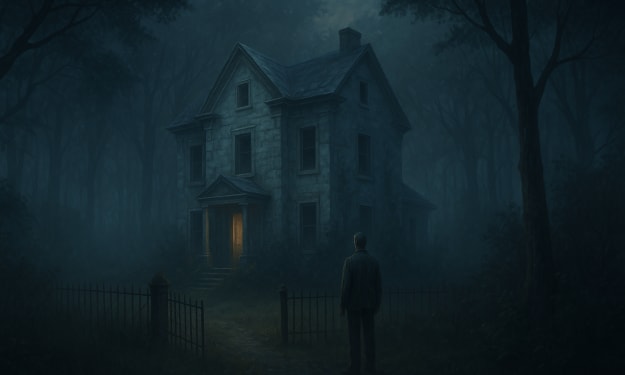
I was eleven the first time I saw the house. It perched at the end of a road swallowed by trees, a path my grandmother told me never to follow. “Where the branches hush the world,” she’d whisper, “some silences carry echoes louder than screams.”
By Muhammad Abdullahabout a year ago in Fiction
The Mystery Of The Floating Containers
The Old Amber Forest Grove, nestled deep within the tall Canadian Rockies, was a place of whispering pines, beautiful babbling brooks, and a peculiar brand of chaos. It was home to a community of animals as diverse as the wildflowers dotting its lush green meadows, and where the unexpected was, well, to be expected. But even for the Old Amber Forest Grove, the sight of several large, brightly colored containers of different sizes bobbing down the usually serene stream was decidedly out of the ordinary.
By Toby Hewardabout a year ago in Fiction
You’ll Never See the World the Same after Reading This
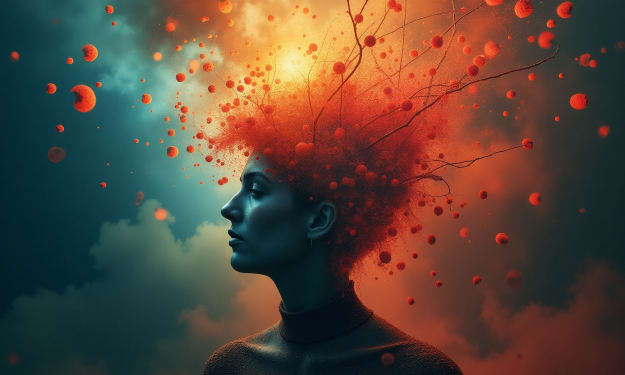
What if I told you that much of what you think, feel, and believe… might not actually be yours? It sounds strange—maybe even uncomfortable—but the way we see the world isn’t as solid as we believe. Behind the curtain of our everyday choices, memories, and emotions is a mind playing tricks, shaping our entire reality without asking for permission.
By shoaib khanabout a year ago in Fiction
The Girl Who Drew Doors.
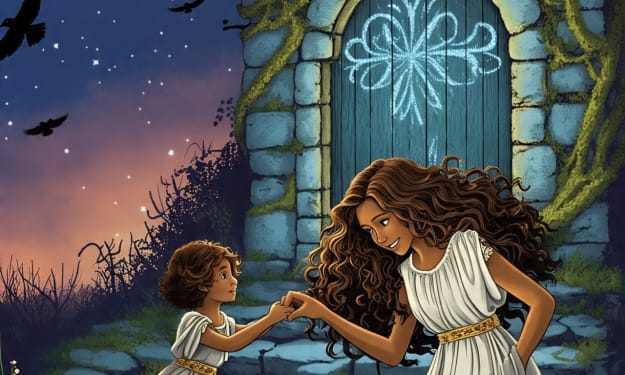
In the quiet town of Elmbrook, where the fog rolled in thick every morning and the rain tapped gentle lullabies against windowpanes, lived a girl named Mira. She was an oddity by the town’s standards—not because she wore mismatched socks or talked to the crows, but because she carried a piece of chalk wherever she went. Bright blue, always sharpened to a perfect point. Mira wasn’t like other children. While they played hide-and-seek or kicked footballs across the muddy park, Mira crouched by the walls of old buildings, sketching doors. Not ordinary doors, either—hers had twisted handles, vines growing out of the frames, and symbols no one could read. Sometimes they glowed faintly under moonlight. People whispered. “That Mira’s not right,” they’d say, peeking through lace curtains. “Drawing doors on things like she’s trying to leave.” But Mira wasn’t trying to leave. She was trying to return. It all began when Mira was five. Her parents took her on a walk through Elmbrook’s outer woods. They told her stories about faerie circles and owl spirits, trying to make her giggle. At one point, they sat by an old stone well to rest. Mira wandered, drawn to a moss-covered boulder. Upon its face, someone had drawn a door—curved at the top, etched with stars. Curious, Mira reached out and touched it. And it opened. The world behind that door was unlike anything she knew—sky split into ribbons of lavender and gold, trees that whispered secrets, and flowers that blinked like sleepy animals. She met a woman there, tall and pale-skinned, with silver eyes and hair like fireflies. The woman called herself Liora and spoke in riddles. “You have the Sight,” Liora had said. “You can draw paths where none exist. You can open what’s closed.” Mira spent hours there, or maybe days—it was hard to tell. When she finally returned, staggering back to the mossy boulder, her parents were gone. The well was gone. The trees were different. And the town… had changed. She was still in Elmbrook. But everything felt slightly… off. Her home looked the same, but a different family lived there. The bakery was on the wrong side of the street. Her name was no longer on the school’s registry. It was like she had slipped into a different version of the world. No one remembered her. Except the crows. That’s when she began drawing. She stole a stick of blue chalk from a schoolyard box and began sketching doors—trying to find her way back to the door that had first opened. Trying to find Liora, or at least someone who remembered the world behind the veil. For years, Mira searched. Sometimes the doors she drew would open. Sometimes they would hiss and vanish into smoke. Once, a door led her to a desert with two moons and a city made of glass. Another took her into a library suspended over a void, where books fluttered like birds and spoke aloud in a dozen voices. Each time, she asked, “Do you know how I can get back?” Each time, the answer was either silence or more riddles. One day, at sixteen, Mira found herself sketching a door on the stone wall behind the old bakery—an ornate arch with spirals like flames. She hadn’t meant to draw it; her hand had moved of its own accord. When she stepped back, the air shimmered, and the door opened soundlessly. Liora stood on the other side, older now, sadness etched around her eyes. “You’ve been searching long,” Liora said softly. “The threads between worlds are thinning.” “Why can’t I go back?” Mira asked, heart aching. “Because your world has already moved forward. And so have you.” Mira lowered her gaze. “Then what am I?” Liora smiled, brushing a curl from Mira’s face. “You are a Walker now. A Doorweaver. The girl who drew doors because she could never stop seeking… and who helped others find their way.” Mira turned. Behind her stood a child, lost, frightened, clutching a stuffed bear. The girl’s eyes wide with wonder. “She’s like you once were,” said Liora. “She needs a path.” Mira took the child’s hand. Then she knelt, and with her blue chalk, she began to draw. A door bloomed on the stone wall, warm and golden. It pulsed like a heartbeat. And together, they stepped through. Mira had finally found her purpose—not to return to where she came from, but to help others find their way home. She would always be the girl who drew doors. But now, she was also the one who held them open
By Azmat Roman ✨about a year ago in Fiction
Stuck With Mr. Billionaire
“You seriously expect me to sleep in a cabin with him?” Harper’s voice echoed off the pine walls of the snowbound lodge. Her suitcase hit the floor with a thud, narrowly missing the foot of the man leaning against the fireplace, smug grin firmly in place.
By USAMA KHANabout a year ago in Fiction
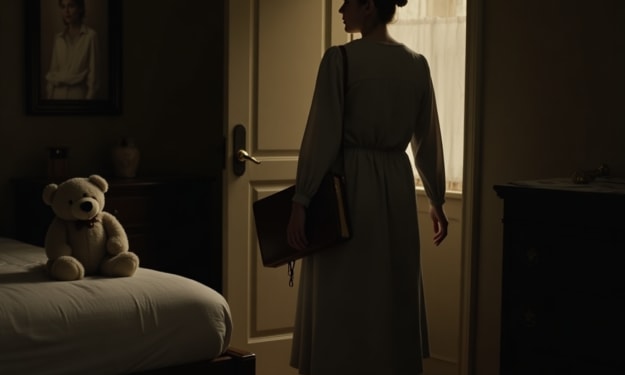
My Grandmother’s Mirror Only Reflects the Dead
The Mirror’s First Secret I almost sold the mirror the day after Grandma Lillian’s funeral. It was an ugly thing—a heavy oak frame carved with twisting vines, the glass smoky with age. But Mom insisted: "She wanted you to have it. Said it was special."
By MUHAMMAD Abbasabout a year ago in Fiction
Stars We Buried
The desert was quiet the night we buried the stars. Not real stars, of course—we were just children. But at thirteen, what mattered wasn’t reality, but the believing. And we believed fiercely, the way only kids on the edge of growing up can. We buried them in jars: tiny glass containers filled with glow-in-the-dark stickers, firefly wings, glitter, and scribbled wishes. We gave them names. Leo called his Sirius, after the brightest in the sky. Mina’s was Andromeda, because she liked the sound of it. I named mine Echo, because I didn’t want my wish to be forgotten. We buried them just outside the old radio tower where no one went anymore—just past the cactus line, where the sand grew cold and silent and the sky spilled over with stars. We dug holes with our bare hands, then stood back and looked up. “This way,” Mina said, brushing dirt from her knees, “if we forget who we are, the stars will remember.” We believed her. We grew up. As kids do. Mina moved away first—her family couldn’t afford to stay in the dying town. Then Leo drifted. He stayed longer, long enough to start smoking and get his heart broken by a girl who loved storms more than people. I stayed. For years, I didn’t visit the buried stars. Life got crowded—college, bills, funerals. Dad passed. Mom followed. The town shrank more. But one sleepless night, thirty-three years later, something pulled me back. I parked near the cracked fence of the radio tower, flashlight in hand, and walked out into the night. The air smelled the same—dust and dry heat. Coyotes cried in the distance. The stars above looked so sharp, I felt like I might bleed just staring too hard. And there, after some fumbling, I found them. The jars were still there, buried shallow. Their lids rusted, their glow long faded. But the scraps inside—wish-paper, old charms, a plastic dinosaur from Leo’s collection—still held shape. I dug them all up. I didn’t cry until I opened mine. Inside was a note. Faded, water-damaged. But legible: > I wish to never be forgotten. I wish to find my voice. I wish my friends never leave. I remembered writing it with sticky fingers and a heart full of fear. I remembered Mina watching the sky like it was trying to talk to her. I remembered Leo saying he wanted to become a star himself, if nothing else worked out. I thought that was just kids being weird. But now, standing in the dark, I wondered if he meant it. That night, I made calls. Mina, surprisingly, answered on the second ring. She lived in Oregon now, with two kids and a husband who fixed guitars. “You remember the stars?” I asked. There was a pause. Then: “I think about them every time I can't sleep.” I didn’t need to explain. We agreed to meet. One week later, Mina and I stood together under the same desert sky, older and heavier with years, and waited. Leo was late. Typical. But just as we were about to give up, we saw headlights. His truck sputtered up the dirt road like it had twenty years ago, spitting dust and heat. When he got out, Leo looked like time had fought him and only half-won. But his eyes—his eyes were the same. We didn’t say much at first. Just hugged longer than we needed to. Then we reburied the jars—cleaned, resealed, wishes tucked inside again. This time, we added new ones. I wrote mine on a napkin from Leo’s glove compartment: > I wish we remember how to be whole again. Mina placed a small photograph in hers—a picture of the three of us at fifteen, with messy hair and wide eyes. Leo just dropped in a new glow sticker and smiled. We stood in silence as the wind picked up. “I always thought we buried those stars to hide them,” Leo said at last. “But maybe we did it to keep from losing them.” Mina nodded. “We were keeping pieces of ourselves safe.” The stars above blinked, ancient and indifferent. But somehow, I felt them listening. We stayed until dawn.
By Azmat Roman ✨about a year ago in Fiction