Humor
The Clockmaker's Silence.
The Clockmaker’s Silence In the heart of a quiet, mist-covered village stood a little shop that never closed, yet no one ever saw it open. The sign above the crooked door read “E. Varnham – Clockmaker”. Its windows were always clean, the brass doorknob gleamed like gold, and inside, clocks of all sizes ticked in harmonious rhythm. Some villagers claimed the clocks inside ran backward on stormy days. Others said you could hear a heartbeat if you leaned against the door. But the most curious thing of all was that no one had seen Elias Varnham speak. Not in years. Old Elias had once been the most talkative soul in the village—a man who hummed while he worked, told long stories about time and its secrets, and loved children enough to handcraft wooden cuckoos to make them laugh. Then, one day, he went silent. Not out of illness, nor rudeness. He simply… stopped speaking. He still greeted customers with a gentle nod and a smile. He still fixed their clocks, often leaving them in better shape than new. But never a word passed his lips. People asked, of course. “What happened to Elias?” “Did he take a vow?” “Was it grief?” Some whispered it had to do with his son, Peter. Peter Varnham was a bright boy with quick fingers and a quicker smile. He had helped his father since he was tall enough to reach the workbench, dreaming of becoming a clockmaker, too. But when Peter turned sixteen, he left the village after a terrible argument—shouting so loud it rattled the shop windows. He never returned. Years passed, and the clocks in Elias’s shop never lost a second. But the silence inside the shop deepened. The cuckoo birds didn’t chirp anymore. The chimes fell quieter. And Elias grew older, more frail, but never ceased his work. One gray autumn evening, the village’s priest, Father Harren, visited the shop. He brought a pocket watch that had belonged to his grandfather. “It’s stopped,” he said gently. “Like so many things lately.” Elias took the watch, nodded, and turned to work. As the gears clicked beneath his tools, Father Harren hesitated, then asked: “Do you ever wish you could turn back time?” Elias paused. His hands trembled slightly over the brass gear. Then he opened a drawer and took out a small notebook. He wrote in it carefully, and slid it across the table. > “Every day. But time only moves forward, even for clockmakers.” Father Harren looked into the old man’s eyes and saw something there—regret, loss, and the deep ache of unspoken words. That winter, snow fell early. The clocks in Elias’s shop continued to tick, but the villagers noticed something new: a large grandfather clock in the display window that no one had seen before. It was unlike anything Elias had ever made—sleek, modern, yet ancient in design. Its pendulum didn’t swing side to side, but in a slow, circular motion, like the hands of a sundial. And etched into the base, barely visible through frost, were the words: > “Forgive me.” One week later, the shop was silent. Utterly silent. No ticking, no whirring, no soft sounds of winding gears. Elias Varnham had died in his sleep. The village mourned, and the shop remained closed. But one rainy morning in spring, a stranger appeared—young, with Elias’s eyes and hands stained with oil. He carried a worn suitcase and a wooden cuckoo tucked under his arm. Peter Varnham had returned. He didn’t speak at the funeral. But afterward, he walked to the shop, unlocked the door with a rusted key, and stepped inside. The clocks began ticking again. And for the first time in decades, the cuckoo birds chirped.
By Azmat Roman ✨about a year ago in Fiction
Signed, Your Ghost
The first letter arrived on a Tuesday. Mara found it tucked neatly into her mailbox, nestled between bills and a coupon booklet. There was no return address—only her name handwritten in a script that looked strangely familiar. The envelope was pale gray, sealed with an old-fashioned wax stamp bearing the impression of a feather. She opened it on the kitchen counter, next to a half-drunk cup of coffee and a vase of wilting sunflowers. > Dear Mara, You left the bedroom light on last night. It’s okay—I didn’t mind. It’s strange, watching you sleep. I used to sleep beside you. Do you remember that? I’d count your breaths when I couldn’t count sheep. You always exhaled in threes. I never told you. I’m still here. Just quieter. Signed, your ghost. Mara stared at the letter for a long while, her fingers trembling slightly. She assumed it was a joke—some elaborate prank. But no one knew about the breath-counting. No one could’ve. She folded the letter and shoved it into a drawer. By Thursday, she had nearly convinced herself it was a one-time thing. A trick of memory. Maybe she had written it herself, during one of her sleepless nights, and forgotten. But then came the second. > Dear Mara, You made pancakes this morning. You forgot the vanilla, but they were still good. I remember how you used to hum while flipping them—“Moon River.” You don’t hum anymore. I wish I could eat with you. Sit across from you like before. But the table only sets for one now. Still, thank you for making them. The smell reminded me of Sunday. Signed, your ghost. It had been two years since Leo died. Two years since the accident. The sharp turn. The tree. The endless silence that followed. She had buried him with his favorite blue scarf and the book he never finished. Mara had tried to move on. She even dated someone briefly, a man named Owen who worked at the bookstore downtown. But she always ended things early—before she got too close. Before she had to explain the shadow that still sat at her table or the phantom weight beside her in bed. Now, the letters came once a week. They never asked her for anything. They were simply observations. Memories. Moments only Leo could’ve known. The smell of their favorite candle. The way she cried at commercials. The time she broke her toe dancing in the kitchen. Each one ended the same way: > Signed, your ghost. At first, they terrified her. Then they made her ache. But over time, the fear dulled, replaced by something else—comfort, perhaps. Connection. She started writing back. Nothing elaborate—just notes scribbled on napkins or the backs of receipts, left on the windowsill or taped to the mirror. She never knew if they were read, but somehow, she felt less alone. On the anniversary of his death, she made his favorite dinner—spaghetti with too much garlic and a bottle of wine neither of them could ever finish. She lit a candle. She poured two glasses. The next morning, she found a final letter. > Dear Mara, Thank you. For everything. For the dinners and the dancing, the laughter and the late-night walks. For remembering me. For not forgetting yourself. You’re stronger than you think. You always were. I’ve been holding on, afraid you needed me to. But I think you’re ready now. Not to forget—but to live. You’ll always carry me, but you don’t have to wait for me anymore. You are not alone. You never were. Goodbye, my love. Signed, your ghost. Mara wept, but it wasn’t the same kind of sorrow. It was softer now, almost sweet. She tucked the letter into a box with the others. Then she opened the windows, letting in the morning air. The sun spilled across the floor like forgiveness. And for the first time in years, she felt light enough to move forward.
By Azmat Roman ✨about a year ago in Fiction
The Gym Rat Trap
When I met Chad, I thought I’d finally cracked the dating algorithm. He was funny, ambitious, and had biceps that could probably cradle a small cow. A real gym rat — not just one of those guys who “occasionally hikes” and thinks whey protein is a type of shampoo. He had the full package: personal trainer certification, veins that mapped his forearms like Google Earth, and a way of saying “macronutrients” like it was a poem.
By Muhammad Abdullahabout a year ago in Fiction
The Man Beneath the River
Ben woke up gasping. The faucet was still running. That awful sound of dripping water, echoing like laughter through the pipes. His father used to say it was the river trying to whisper back. Whispering all the sins Ben had swallowed and never spat out.
By Muhammad Abdullahabout a year ago in Fiction
Savant Veila - The Aegis of Sages
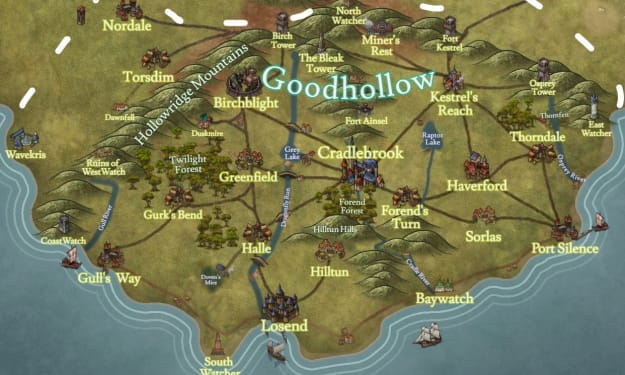
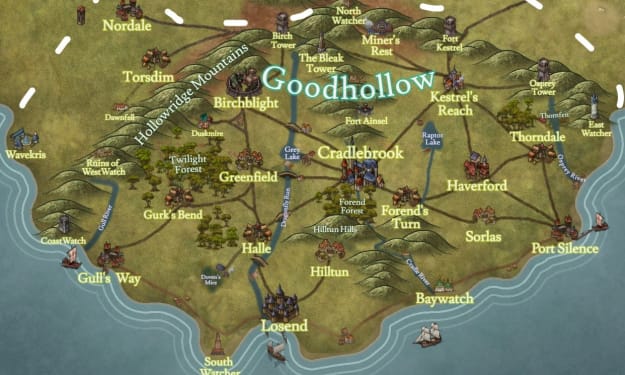
Savant Veila - The Aegis of Lore In the heart of Cradlebrook, among the gilded shelves of Cradlebrook’s great library The Golden Gathering, Savant Veila sat within the embrace of knowledge. Though to many she was merely a librarian, to those who sought wisdom, she was Delnator’s chosen. She was the quiet force of knowledge shaping Goodhollow’s destiny.
By Canyon Cappola (TheNomad)about a year ago in Fiction
The Strange Summer
This story is about me. Of course it is. I'm fabulous. My name is Thomas Finius Blakely. My buddies call me Tom. Most humans call me, affectionately, "That Darn Cat." I'm sure this endearment is thanks for controlling the rodent population.
By Julie Lacksonenabout a year ago in Fiction
The Divine Pantheon of the World of Hurth
The Divine Pantheon of the World of Hurth The Divine Pantheon of the World of Hurth The world of Hurth is shaped not only by its people and lands but by the divine forces that guide, challenge, and inspire those who dwell within it. The gods of Hurth represent the many facets of existence, each wielding influence over their respective, sometimes overlapping, domains and watching over their followers with wisdom, fury, laughter, or cunning. Some shape destinies with a firm and guiding hand, while others revel in chaos, their influence unpredictable yet undeniable. Whether through grand temples adorned with sacred symbols, whispered prayers in tended fiends and hidden groves, or desperate cries upon the battlefield, the presence of the divine is inescapable.
By Canyon Cappola (TheNomad)about a year ago in Fiction
Elion - The Silent Collector
Elion - The Silent Collector Though its name suggested stillness, Port Silence was never truly quiet. The world continued as it always had, merchants locking their shops, sailors securing their vessels, revelers stumbling from taverns, their laughter carrying through the darkness. But beneath the hum of city life, unseen and unnoticed, a quieter force walked among them. Not a lord, not a warrior, not even a priest, but something far older, far greater.
By Canyon Cappola (TheNomad)about a year ago in Fiction
Thorne Stormfoot- The Wrath of Trantor
Thorne Stormfoot- The Wrath of Trantor The people of Baywatch had always lived in peace. Their days were spent basking beneath the golden glow of the sun, their nights lulled by the whispers of the tide. Fishing boats glided across the waters, markets bustled with fresh catches, and laughter echoed through cobbled streets.
By Canyon Cappola (TheNomad)about a year ago in Fiction