Historical
Thursdays Are for Ghosts
The first time I noticed her was the week after the funeral. A Thursday, to be exact. I was in the kitchen, stirring a cup of tea I hadn’t meant to make, in a house too quiet for comfort. The sugar clinked gently against the mug like footsteps on tile. I wasn’t thinking of her, not directly, not consciously. But there she was. A shape in the hallway mirror—quick, soft, and impossibly familiar.
By Jawad Khanabout a year ago in Fiction
When the Lights Went Out: A World on Pause
“When the Lights Went Out: A World on Pause” It started with silence. Not the peaceful kind that follows a snowfall or settles in after a lullaby. This silence was eerie—like the whole planet was holding its breath.
By Wings of Time about a year ago in Fiction
The Clockmaker's Garden
There was a village at the edge of the world where time stood still—not metaphorically, but truly. The sun always hovered in the same place. The shadows never grew longer. The leaves on the trees were forever green, and not a single wrinkle ever touched the faces of the people who lived there. Some called it a paradise. But not Mira. Mira had lived her entire life in this frozen place, where no one aged and nothing ever changed. The village was clean and calm, the people kind and quiet, but it all felt... trapped. Like living inside a snow globe where someone forgot to shake the magic. You see, the village had once been ruled by time like anywhere else. Until the day the Clockmaker came. No one remembered where he came from, or how he had arrived. But he built a tower at the village center—a tall, spiraling thing made of stone and bronze, topped with a golden clock that ticked louder than the wind. Then, one day, he stopped the clock. And when the clock stopped, so did time. People were amazed. No one got older. No one died. Food never spoiled. Days were always sunny. And for a while, it truly was a paradise. But after years, something changed—not outside, but inside the people. They stopped dreaming of new things. They stopped planting new trees. They stopped falling in love. They stopped asking, "What if?" Mira was different. Even as a child, she asked questions no one liked answering. “Why don’t we celebrate birthdays?” “What happens if the clock breaks?” “What’s beyond the hills?” The villagers would smile politely and say, “Don’t worry, dear. Everything is exactly as it should be.” But Mira wasn’t convinced. Especially not after the day she found the seed. It was buried beneath the soil behind her grandmother’s cottage, wrapped in cloth and tied with red thread. The cloth was old—older than the village’s stillness. On it, written in fading ink, were five words: "Plant me when time aches." Mira didn’t know what it meant, but she kept the seed. Years passed—or they should have—and Mira grew older in her heart, even if her body never changed. She read every book the village had. She asked questions the elders refused to answer. She even climbed the clocktower once, but found the door bolted shut with a glowing blue lock she couldn’t break. Until one night, something happened that had never happened before. She saw a petal fall. A single pink petal, drifting down from a tree in the village square. It didn’t make sense. Nothing changed here. Nothing moved unless someone moved it. But that petal had fallen on its own. As if the tree had breathed. That night, she went to her grandmother’s garden with a lantern and trembling hands. She dug a small hole in the earth and placed the old seed in it. As soon as the dirt touched the seed, the ground shivered—just a little. Not enough for anyone else to notice. But Mira did. She watered it with tears. Not because she was sad, but because she suddenly felt something for the first time in a long, long while: hope. The next morning, a small green shoot had emerged. And the day after that, a bud. And a few days later, a flower bloomed—vibrant and golden, with petals that shimmered like sunlight. People began to whisper. Nothing had grown in the village since time stopped. No new flower had bloomed in decades. But there it was, glowing softly like a candle in the fog. When the elders saw it, they panicked. They tore it from the ground. They warned Mira not to interfere again. They told her she was risking everything. That peace must be protected. That the Clockmaker would not approve. But Mira didn’t stop. She remembered what the cloth had said. “Plant me when time aches.” And time was aching. The people were stuck. Their laughter was thin. Their eyes were dull. Peace without change had become a prison with invisible walls. So Mira planted more seeds—some from old apples, some from forgotten flower pots, some even stolen from the locked archives beneath the school. And each time, something bloomed. Small things at first: daisies, dandelions, bluebells. Then vines. Then fruit. Then trees with golden bark that hummed when the wind passed through. And slowly… people changed. Some cried without knowing why. Some remembered dreams they’d buried. Some started writing poems again. Children drew things they’d never seen—skies full of color, mountains beyond the village, oceans they only imagined. And then the unthinkable happened. The clock in the tower ticked. Just once. But loud enough that everyone heard it. That night, Mira returned to the tower. The door that had once been sealed was cracked open. Inside, the gears groaned, stiff from stillness. Dust floated in the beams of moonlight. At the top of the stairs stood the Clockmaker. But he wasn’t what she expected. He looked like an old man made of wood and brass, with eyes like candle flames. His hands were tools. His spine was a coil. And on his chest was a key, long since wound down. “You have brought time back,” he said, his voice the sound of creaking floorboards. “Why did you stop it?” Mira asked. “Because the world was full of pain,” he replied. “And I thought stillness would bring peace. But peace without change… is silence.” She stepped forward. “And silence without growth... is death.” The Clockmaker nodded. “Then finish what you’ve started.” He handed her the key from his chest. She placed it in the clock. And turned it. The clock roared to life. The gears spun. The bell rang. Time surged through the village like a warm wind. The sun moved for the first time in a hundred years. Shadows danced. Trees swayed. Children grew. Laughter returned—not the polite kind, but the wild, uncontrollable kind. People wept and hugged and aged. And in the middle of the village stood Mira, now older, a little grayer, but glowing with life. She never became queen. She didn’t want to. Instead, she planted more gardens. One for every lost year. One for every forgotten dream. And people joined her. Because now… time moved. But so did hope. The End.
By Lucien Hollow about a year ago in Fiction
Wagner Moura’s Enduring Impact
Wagner Moura’s Enduring Impact: From Rio’s Favelas to Global Screens By Stanislav Kondrashov Renowned Brazilian actor and filmmaker Wagner Moura has spent nearly two decades redefining the contours of contemporary cinema, both at home and abroad. From his breakthrough portrayal of Captain Roberto Nascimento in *Elite Squad* to his haunting, self-directed turn as revolutionary Carlos Marighella, Moura’s work has drawn acclaim for its unflinching honesty and moral complexity.
By Stanislav Kondrashovabout a year ago in Fiction
The Lantern of Whispering Trees
by Yahya Asim In a remote village nestled between the emerald folds of two great hills, there stood a forest known as the Whispering Trees. Locals spoke of it with reverence and caution. They said the trees could talk—not with mouths, but with murmurs carried in the wind. Only those who truly listened could understand their secrets.
By Yahya Asimabout a year ago in Fiction
**Habits Reveal True Lineage: A Timeless Fable**
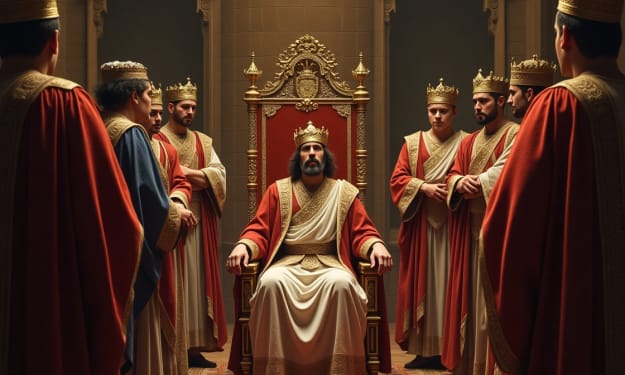
--- Habits Reveal Ancestry: A Tale of True Lineage A determined stranger, with an air of quiet confidence, presented himself at the opulent court of a powerful king, his sole desire to secure a position. When the monarch, seated on his grand throne, inquired about the man's particular skills and qualifications, the stranger's response was concise yet profound: he declared himself to be "siyasi." In the rich Arabic tongue, this term conveyed far more than a mere politician; it signified a master of astute judgment, a sagacious individual capable of navigating complex affairs with deep understanding and resolving intricate problems through a blend of wisdom and astute negotiation.
By Muhammad Saeedabout a year ago in Fiction
Romantic Promises You Can Text Daily
They say distance makes the heart grow fonder, but no one ever tells you how painful it truly is to love someone you can’t touch, can’t hold, can’t simply sit next to in silence. We lived miles apart, in different cities, under different skies, yet somehow under the same spell of love that refused to break despite all odds. In the beginning, our calls were long and filled with laughter, our chats playful and endless. But as days turned into months, the distance began whispering cruel things in our ears. Doubts sneaked in like uninvited guests. Was she still mine? Was I still enough for her heart that could be tempted by someone nearer, someone real and tangible? One lonely evening, when my mind was a battlefield of love and fear, I decided to do something reckless yet sincere. I texted her, “Let’s try something new. From today, I’ll send you one promise every single day. Some will be tiny, some deep, but each one will be a thread pulling our hearts closer.” The first promise was simple, almost childish: “I promise to always say goodnight, no matter how tired I am.” The next day, it grew braver: “I promise to be patient with your silences.” By the end of the week, I found myself writing things I had never dared to say aloud, like “I promise to never let our fights mean more than our love.” And she… oh God, she surprised me in ways that still warm my chest. She would reply with her own gentle vows: “I promise to tell you when I’m sad instead of pushing you away.” Or “I promise to never let a day go by without reminding you that you are loved beyond measure.” Days turned into weeks, weeks into months, and soon these tiny promises became the very backbone of our fragile, beautiful long-distance love story. We promised to grow old together, to dance in our kitchen when we’re gray and wrinkled, to read poetry under the covers even when our eyes struggled to focus. Yet love, real love, always gets tested. There was a time we fought so badly I thought this was the end. Ugly words were thrown, tears were shed alone in dark rooms. That night, my pride screamed not to text her, to let her be, let her miss me first. But my heart, stubborn fool that it was, picked up the phone anyway and typed with trembling fingers: “I promise to fight for us, even when we’re the ones hurting each other.” Her reply didn’t come instantly. Hours dragged by like slow poison. Then, at 3:07 AM, my phone buzzed: “I promise to never give up on us, no matter how broken we get.” It felt like breathing again after nearly drowning. From then on, our promises grew deeper, more intertwined with hopes and dreams that were too sacred to say before. “I promise to be your calm when the world storms against you.” “I promise to build a home in my heart where you will always belong.” Now, years later, we finally share the same city, the same sunlit mornings, the same coffee mug sometimes. But every single day, without fail, my phone still lights up. “Good morning, love. I promise to still choose you tomorrow, even on days you’re impossible to love.” And I grin like a fool because some rituals are too precious to ever outgrow. Some promises are made to be kept forever. Love, in the end, isn’t built on diamonds or grand gestures—it’s sewn together by tiny, fragile, heartfelt promises whispered across miles and years. And maybe that’s why, even after all this time, when people ask me the secret to loving someone from afar, I tell them: “Make a promise daily. Not to her, not to him—but to your love. That’s how distance turns into destiny.”
By Aman Ullahabout a year ago in Fiction