Historical
Greek Mythology
Chaos in Greek Mythology: The Birth of Order from Cosmic Void Introduction: The Gates of the Mythological Universe Ancient Greek mythology is not only the world of gods, heroes, and monsters. It also offers a profound cosmological narrative about the origin of the universe, time, and order. At the very beginning of these narratives, there is a being that existed before everything else: Chaos. But who is Chaos? Or, more accurately: What is Chaos?
By Remzi Kazdalabout a year ago in Fiction
Atlantic
A civilization that lies deep in the seas... A legendary city that rules the world with its advanced technology, but was buried in the waters overnight by incurring the wrath of the gods: Atlantis! So is this story real, or is it a metaphor thousands of years old? Today, we are putting all the details on the table, from Plato's writings to modern conspiracy theories, even NASA's explanations!
By Remzi Kazdalabout a year ago in Fiction
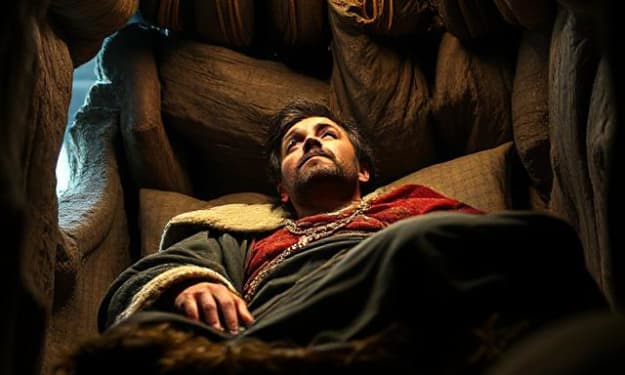
The King's Humble Night: A Lesson in Empathy
[**The King and the Woodcutter: A Lesson in Humility** In a quaint, serene kingdom, nestled amidst rolling hills and lush forests, there reigned a benevolent king. He was a monarch of many virtues, but among his deepest passions was the thrill of the hunt. It was a sport that allowed him to escape the confines of his opulent palace and connect with the raw, untamed beauty of his land.
By Muhammad Saeedabout a year ago in Fiction
Real Money Heist – Part 1: The Planner
I still remember the first time I met him. Not in some dark alley or abandoned warehouse like they show in movies. It was at Gloria Jean’s in DHA Phase 6, Lahore. A quiet Thursday. Rain on the windows. He was already there — sipping black coffee, no sugar. Looked like someone’s retired uncle, not the man who would plan the biggest heist Pakistan never found out about.
By Sofia Elira Solenneabout a year ago in Fiction
The Last Letter from Mallow Street
The envelope was yellowed now, the edges curling like old bark in a summer fire. It sat alone in the drawer of the hallway table, buried beneath two train tickets, a rusted key, and a bus pass for a route that hadn’t run in fifteen years.
By Muhammad Saleemabout a year ago in Fiction
The Day My Brother Disappeared Without Saying Goodbye
There are moments in life that come silently, without warning, and yet leave behind a thunder that never stops echoing. For me, that moment came on a foggy Wednesday morning—the day my older brother disappeared. His name was Saad. He was three years older than me and, in many ways, everything I wasn’t. Quiet, brooding, thoughtful, and always lost in books or long walks. He had a smile that didn’t come easily, but when it did, it made you feel like everything would be okay. We were close once. Shared a room, a bicycle, even secrets. But as we grew older, something shifted. Saad began to pull away. At first, it was subtle—skipping meals, sitting alone on the rooftop, and staring into the night for hours. He would disappear for long stretches without explanation. When I asked him where he went, he’d just shrug and say, “Somewhere quiet.” There was always this weight in his eyes, like he was carrying something none of us could see. Our parents noticed too. My mother thought he was in love. My father assumed it was just a phase. But I knew something deeper was unraveling. Then came the morning. He left home like he always did — wearing his dark green jacket, headphones around his neck, and a small notebook in his pocket. My mother handed him his lunch, and he kissed her forehead, something he hadn’t done in years. Then he turned to me, gave a nod, and said, “Take care of them.” I laughed. “You act like you’re going off to war.” He smiled — a full, warm smile — and walked out the door. That was the last time we saw him. When he didn’t return that night, we thought he might’ve stayed with a friend. The next day, worry set in. By the third day, my father filed a missing person’s report. What followed were weeks of searching—calls, posters, visits to friends, hospitals, even the morgue. Nothing. Then, exactly thirty days after his disappearance, we received a letter. No return address. Just his handwriting. > “I’m not lost. I’m just away. I need to breathe, to feel something different. Don’t be angry. I love you all. Tell Mom her food still smells like home.” My mother held that letter to her chest and sobbed. My father crumpled it, then smoothed it out again. He read it every night for a month, always in silence. We never heard from Saad again. Years passed. We tried to move on. I finished school. My parents grew older. The house grew quieter. Saad’s room remained untouched — like a museum. His books, his scent, his scribbled poems in the margins — all still there. Sometimes, I’d lie on his bed and read his old journals. They were filled with thoughts too heavy for someone so young. He wrote about feeling invisible, misunderstood, exhausted by expectations. He questioned the purpose of everything — life, family, even himself. I often wondered — what was it that finally broke him? Was it the pressure to succeed? The silence around mental health? Or just the sheer weight of existing in a world that demands so much from people who feel too much? I don’t know. But I do know that we failed to see him. Really see him. Ten years later, I visited a small village in northern Pakistan for work. While walking through the bazaar, I passed a man who looked so much like Saad, I froze. He had the same walk, the same slouch, even the same dark green jacket. I called out, “Saad?” He turned for a second, stared at me. Our eyes locked. But then he turned away and disappeared into the crowd. Was it really him? Or just a ghost of my memory playing tricks on me? I don’t know. But that night, I dreamed of us sitting on the rooftop again, sharing stories, laughing about silly things. I woke up crying. Some disappearances are not about escape. They're about survival. About finding space to breathe, to heal, to exist on one’s own terms. If I could speak to him now, I’d tell him we forgive him. That we still love him. That not a single day goes by when we don’t think of him. That the door is still open. Always.
By Muhammad Usamaabout a year ago in Fiction
The Echo in the Empty Mug
Sarah Thorne’s world was a symphony of notifications. Emails pinged on her laptop, Slack messages buzzed on her phone, calendar reminders chimed relentlessly. Her sleek, minimalist apartment overlooked a city that never slept, its neon glow reflecting in the glass towers that housed countless others just like her – perpetually connected, perpetually exhausted. She was a rising star at NexaTech, her life a meticulously managed spreadsheet of deadlines, deliverables, and diminishing returns on her sanity.
By Habibullahabout a year ago in Fiction
Life Beneath the Waves: A Glimpse Inside a Nuclear Submarine
Right now, while around 650,000 to 700,000 people are flying thousands of feet above the Earth in airplanes, thousands of others are deep below the ocean’s surface in submarines. A nuclear submarine is one of the most expensive weapons in the world. Its greatest strength lies in its silence. It spends most of its life underwater, hidden from sight. Yet, inside this powerful weapon, the most delicate element is its crew. So, let’s take a glimpse into the life of those who live inside this metal capsule. Not everyone can qualify to serve on a submarine. Navies have strict requirements, including rigorous psychological tests. Spending long periods inside a metal tube underwater is no easy feat. A single mistake can endanger everyone’s lives, so strong nerves are essential. A mission is usually planned for about a month at a time. The longest publicly known record for staying submerged without surfacing is eleven months, held by an American submarine. (At any given time, the US has about sixty to seventy submarines deployed in global waters.) Spending long stretches without sunlight in such confined quarters takes a toll on the mind. How long can a nuclear submarine stay underwater? That depends solely on how much food it carries. Its reactors are fueled once for its entire lifespan. Air and water are regenerated onboard, so food—the fuel for its crew—is the only limiting factor for how long it can stay submerged. The crew’s time is divided into three eight-hour shifts: eight hours on duty, eight hours of personal time (for exercise, reading, or playing games), and eight hours of sleep. Living space is extremely limited, with coffin-like bunks separated by thin curtains. Privacy is nearly non-existent. Someone is always sleeping, so loud noises, shouting, or slamming doors are strictly prohibited. Usually, the number of crew members exceeds the number of bunks, so bunks are shared—one sailor sleeps during a shift, and the same bunk is used by another in the next shift. Space issues don’t stop at bunks—showers and toilets are limited too. For a crew of over a hundred, there are typically only two showers, and showers are limited to three minutes or less. (The submarine filters seawater for bathing.) There’s only one laundry area—clean clothes are a luxury here. Toilets must be used carefully as waste is collected in special tanks and released at appropriate times. For recreation, there are cards, board games, and video games, which help build strong friendships among the crew. The largest portion of a submarine is taken up by its engine room (half the vessel), followed by the kitchen. Good, varied food is essential to keep the crew’s morale up during stressful weeks underwater. Fresh food is available at first, then they switch to preserved, canned supplies. There is no internet connection on a submarine, and contact with the outside world is only possible when the submarine surfaces—which happens rarely. Surfacing makes the submarine easier to detect, so it stays silent. This means the crew goes weeks or months without any contact with family or friends. The friendships formed among the crew are deep and often last a lifetime. Some unspoken rules are followed: no one discusses controversial topics—politics are never brought up. Life onboard has its own traditions and ways. Certain military disciplines are relaxed, like daily shaving, but these rules return once the crew is back on land. Submarine life is not for everyone. Without fresh air or sunlight, thousands of people are right now sailing beneath the world’s oceans, confined inside these metal capsules, hidden but always vigilant.
By 🇲 🇮 🇳 🇩 🇺 🇳 🇫 🇴 🇱 🇩 🇪 🇩 about a year ago in Fiction
The Voice in Apartment 4B
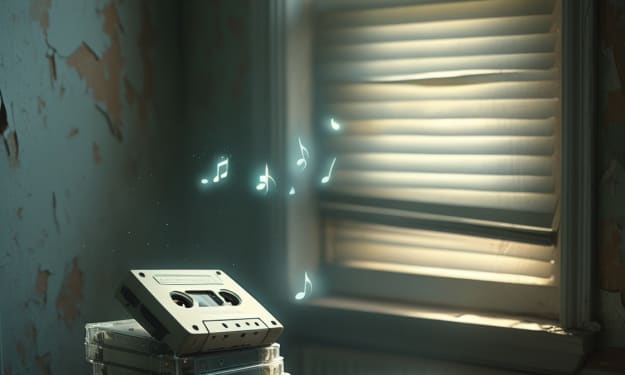
The Voice in Apartment 4B By [Ubaid khan] The first time I heard the music, it was subtle — a faint piano melody slipping through the thin walls of my studio apartment. I paused mid-bite of my cereal, listening. The tune was soft, melancholic, like something from a forgotten vinyl spinning in a dusty attic. I lived in 4A, and 4B — according to the building manager, Mrs. Evers — had been vacant for months. “Last tenant left in a hurry,” she had told me, pushing her cat-eye glasses up her nose. “Didn’t take much with her. Spooked or something. Strange girl.” That should have made me wary. But it didn’t. I’d only just moved to the city, trading a small-town existence for a one-room walk-up and dreams of a fresh start. If anything, the idea of a ghostly neighbor brought a kind of curious comfort. The city could be a lonely place. The second time I heard the music, it came with a voice. “You can’t just keep running,” it said softly. A woman’s voice. Clear. Intimate. As if spoken directly into my ear. I dropped the mug I was holding. The building was old, the walls thin, but 4B was still supposed to be empty. I pressed my ear against the wall that separated our units. Silence. Then, a rustle. Another whisper. “…but you already know that, don’t you?” My breath caught in my throat. I tried to laugh it off, muttering to myself about faulty plumbing, echoing radios, air vents. I didn’t sleep that night. On the third day, I knocked on 4B’s door. Three raps. Nothing. I tried the knob. It creaked open. The apartment was dim, heavy with stale air. Dust floated like lazy snowflakes through the beams of sunlight slipping between the blinds. The place was barren, except for an old milk crate in the center of the living room. Inside the crate: a small tape recorder, a stack of labeled cassette tapes, and a note that read: "For whoever’s listening — listen closely." The first tape was marked “Tape 1: Arrival.” I brought it back to my apartment, popped it into the dusty recorder, and hit play. A woman’s voice — soft, warm, almost familiar. “If you’re listening, then you’ve heard me,” she said. “I wondered who’d move in next door. I’ve been trying to reach someone… anyone. But I didn’t expect it to work.” She chuckled, low and bittersweet. “You’re probably confused. I would be too. I’m not dead, if that’s what you’re thinking. At least… I don’t think I am. Not in the usual sense.” A long pause. Then: “I found these tapes helped me speak. Not just to record, but… somehow, to respond. I started making them when the dreams began. When I started hearing things through my walls.” Over the next week, I listened to a tape each day. They began abstract — musings on loneliness, time, sound, and silence. The woman (she never said her name) spoke of feeling like she was unraveling, like her thoughts were drifting into the walls themselves. She talked to me — not in the way a diary talks to a future reader, but like she knew me, knew what I was feeling. “You wonder if you’re going crazy,” she said in Tape 3. “You’re not. But even if you are, sometimes madness is a doorway.” I hadn’t told anyone about the anxiety attacks. About waking up sweating, heart racing, uncertain of where I was. I hadn’t told anyone because I didn’t know anyone here. But she knew. The deeper I went into the tapes, the more direct the messages became. “I heard you crying last night,” she said in Tape 5. “I remember crying just like that. When I couldn’t tell if I was escaping something or leaving everything behind.” I stopped the tape. Stared at the wall between our apartments. My apartment. Her apartment. How could she know? I couldn’t resist any longer. I went back into 4B. This time, I explored. The place had an eerie stillness to it, but also a strange warmth — like someone had just left and would return at any moment. I opened the closet. There, taped to the inside wall, was a final cassette. It was labeled simply: “For Her.” My hands trembled as I placed it into the recorder and pressed play. “I think I made this for you,” the voice said. “I don’t know how I know you, but I do. You came here to disappear, didn’t you? Just like I did. You wanted a clean slate, to leave the hurt behind. But it doesn’t work like that. Hurt follows. It echoes.” A long pause. “But healing echoes too. Maybe that’s what I’ve been trying to send — an echo of healing. A message in a bottle through time and thought.” She inhaled, shaky. “If you stay… write your own tapes. Leave something behind. Someone might need it. Someone like you.” That night, I slept. Not just laid down — I slept. And the next morning, I pulled out a blank cassette from the crate, held it in my hand for a while, then wrote across the label in black ink: “Tape 1: Beginning.”
By Ubaid Khanabout a year ago in Fiction