Historical
The Summer I Forgot to Exist
The Summer I Forgot to Exist Genre: Fiction / Psyche / Mental Health Format: Diary-style narrative June 5th They say the sun heals everything. I believed that once. Now I just flinch when the light touches me, like it’s trying to burn the truth off my skin. The first party of the summer was tonight. Bonfire on the beach. Everyone was there. I smiled, I laughed. I don't remember meaning any of it.
By waseem khanabout a year ago in Fiction
The Lantern Keeper of Isenfall
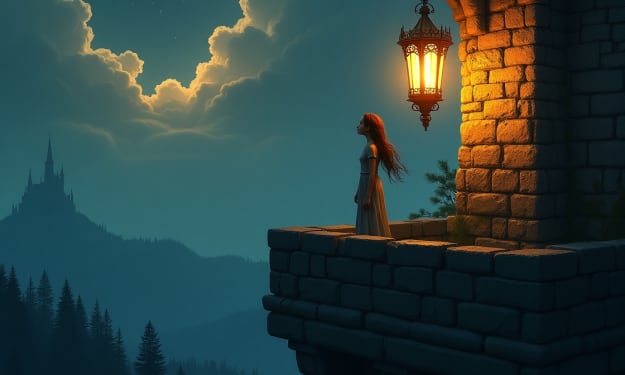
The Lantern Keeper of Isenfall In the frost-wrapped village of Isenfall, where twilight lingered longer than dawn, the people spoke in hushed tones about the Lantern Keeper. His tower rose crookedly from the cliffs, like a finger pointing to the stars — forever lit, never visited.
By Wings of Time about a year ago in Fiction
Greek Mythology
Gaia: The Mother of Greek Mythology Gaia's Place in Mythology Gaia, one of the most fundamental figures of Greek mythology, is considered the mother of all living things, mountains, seas and sky, not just the gods. She is "Mother Earth" – one of the first conscious beings in the universe and the basis of life. One of the first formations born in the wake of Chaos, Gaia is not only a mythological character, but also a symbol of cosmic order, fertility, and universal balance.
By Remzi Kazdalabout a year ago in Fiction
The Memory I Borrowed from a Stranger
The Memory I Borrowed from a Stranger Genre: Fiction / Poets / Surreal It started on a Wednesday. I remember that much. I was on the 7:42 bus, the one that smells like lukewarm coffee and regret, where passengers avoid eye contact like it’s currency. The kind of morning where silence hums louder than conversation.
By waseem khanabout a year ago in Fiction
Where the Night Forgot Her Name
She never intended to leave. Not really. Mara had folded the laundry, fed the cat, and even left the porch light on. Her husband, Darren, was still at work—or so he said—and the house was quieter than she liked. In the stillness, her thoughts got too loud. The wine glass beside her had been refilled twice already, and the hum of the refrigerator was the only sound she could cling to.
By nawab sagarabout a year ago in Fiction
The Heartbreak - then the Repeat
It wasn't my first heartbreak, but it was the first one that shattered my heart like it was made of glass. I had wanted it to work - so badly that I stayed silent and tried my best to push through everything and be someone that I couldn't look at in the mirror. I remember being so thankful that I never bruised. I remember being so grateful that when people asked questions, that I could use that I was shy or that it was our faith and I was being a good submissive wife.
By Adora Hooperabout a year ago in Fiction
The Last Letter in Vienna
I didn’t go to Vienna looking for anything. Not love. Not meaning. And definitely not a letter that would change my life. But stories, I’ve learned, don’t wait for permission. They just show up—sometimes in dusty bookshops, sometimes in the hollow places inside you. It was a narrow alley off Kärntner Straße, the kind you’d miss unless you were actively avoiding where you were supposed to be. I was meant to meet my tour group at the Mozart House—but guilt has a funny way of tugging your feet in other directions. That’s when I saw it: Antiquariat Stein & Söhne. The name was almost invisible, its gold paint faded and peeling under a tangle of ivy. A cracked bell above the door jingled faintly as I pushed it open. Inside, it felt like I’d entered another century. The air smelled like parchment, pipe smoke, and dreams people once had. Books towered in uneven stacks. Sunlight filtered through stained glass, casting patches of blue, red, and amber across the floorboards. “Looking for anything special?” asked the old man behind the counter. His English had a crisp Viennese tilt. His eyes were sharp, curious. “No,” I replied. But that wasn’t the truth. I was looking for something I couldn’t name—something to fill the silence inside me since Nathan left. I wandered the narrow aisles until a slender book caught my eye. Liebesbriefe von 1941. Love Letters from 1941. Its spine was worn, its cover soft with time. As I flipped through its pages, something slid out. A real envelope. Yellowed. Fragile. Sealed. The name written in elegant cursive: Elena Hofstadter. And beneath it: Für immer, Dein A. (Forever, yours, A.) There was no address. Just a date: 20 April 1945. I stared at it, heart racing. The past had slipped between the pages of fiction. And it had found me. I sat in the back of the bookshop, letter trembling in my hands. Finally, I broke the seal. > Meine liebste Elena, If you're reading this, it means you found the book. It means I’m gone. But you must know: I never ran. I never betrayed you. What they said—I need you not to believe it… He had been accused of helping Jewish families escape the Nazis. He had been taken. But he left her this letter, and instructions—cryptic, hurried—about something hidden behind a painting in their favorite café in Mariahilf. It was a goodbye. It was a plea. It was a final breath sealed in paper. I felt the lump in my throat swell. Whoever he was, A. had died loving her. Desperate to be believed. And now I was the only one who’d heard his voice. I couldn’t sleep that night. I kept thinking about Elena. About A.. About the photo he said he’d hidden behind that painting. By morning, I had made my decision. I boarded the tram to Mariahilf. The café was still there—Café Rosenlicht—timeless and warm. The painting, a landscape of the Danube, hung in a quiet hallway near the restrooms. My heart beat in my throat as I touched the frame. It moved. Behind it: a loose brick. Inside the small crevice: a tin box, rusted at the corners but still intact. Inside the box: a faded black-and-white photograph of Elena and A. in front of the Danube. A pressed violet. A second letter—still sealed. I didn’t open it. It wasn’t mine to read. Back at the bookstore, I placed the tin box on the counter. The old man peered inside, then at me, his eyes glassy. “My father mentioned a couple during the war,” he said. “They used to visit this shop. He said they disappeared... but he never knew what became of them.” He looked at the photo gently, like touching history. We put the letter, photo, and violet in a glass case by the shop’s entrance. I helped write the plaque: The Last Letter of Vienna A love preserved through war, time, and silence. Tourists now stop to read it. Some take photos. Some just stare, the way I did when I first opened that letter. I came to Vienna running—from a wedding that never happened, from a man who couldn’t even give me a reason why. I wanted quiet. I wanted to disappear into a city that didn’t know me. Instead, I found love. Not for myself—but through it. In it. Because of it. A kind of love that crossed wars, walls, and time. I still write letters now. To people who’ll never read them. Not because I expect a reply, but because someone, someday, might find one—and feel less alone. Just like I did. Some stories live in us quietly, waiting. Others, like this one, crash into us unexpectedly—reminding us that even in endings, there are beginnings. Even in silence, there’s a voice. And even in forgotten bookshops, love survives.
By Muhammad Abuzar Badshah about a year ago in Fiction
The wilted flowers in my book
In the quiet corners of my life, where dust motes danced in the slanted sunlight and the scent of aged paper lingered, lay a collection of books that held more than just stories. Within their pages, pressed and preserved like delicate secrets, were **wilted flowers**. Each one, a brittle echo of a moment, a whisper from a forgotten season.
By noor ul aminabout a year ago in Fiction
The Last Monkey of Emberwood
The sun cast golden shafts of light through the tangled canopy of Emberwood, where ancient trees whispered secrets to the wind. Few dared venture deep into the forest, and those who did rarely returned with the same light in their eyes. Emberwood had earned its reputation—not for beasts or bandits, but for something older, something no one could explain. Legends told of a time when the forest teemed with mystical creatures, guardians of balance between man and nature. Chief among them was the red-crowned monkey, said to possess the wisdom of the old world and the power to summon the spirits of the forest. But they vanished centuries ago, or so the world believed. Until now. --- Twelve-year-old Maya stood at the forest’s edge, gripping the leather strap of her satchel. Her father had disappeared into Emberwood six months ago, chasing tales of ancient relics and forgotten creatures. He never returned. The local villagers had warned her, begged her not to follow. But Maya had found his journal—its final pages scribbled with strange symbols, maps, and one repeated phrase: “The Last Monkey watches the heart.” With trembling fingers and fire in her chest, Maya stepped past the last fence post and into the emerald gloom. --- The deeper she went, the quieter the world became. Birds did not sing here. Insects did not buzz. Even her breath seemed to fade into the silence. Strange markings appeared on trees—swirls and glyphs that pulsed faintly when touched. She followed the map, the landmarks lining up one by one: the twin rocks, the river that flowed uphill, the hollow tree humming with energy. After hours of trekking, she reached a wide clearing bathed in sunlight. In the center stood a stone totem, moss-covered and broken. At its base sat something… watching her. It was a monkey—small, with deep brown fur and a brilliant crimson patch on its forehead. Its golden eyes locked onto hers, intelligent and calm. "You…" Maya whispered. "You're real." The monkey tilted its head and dropped from the totem. It didn't run. Instead, it walked toward her on all fours, stopping inches away. Slowly, it reached out and touched her satchel. Inside was her father’s journal. She opened it and showed him the last page. The monkey tapped one symbol—an eye inside a leaf. Maya understood. This was the "Heart of Emberwood," the place her father had written about. But why had he come here? And where was he now? The monkey gestured for her to follow. --- For the next two days, they traveled together. The monkey—whom Maya began calling Ember—led her through forgotten temples and glowing caves, across vines that sang when touched, and to pools that shimmered with stars in daylight. Along the way, Ember showed her carvings, visions locked in the stones: images of a time when humans and forest spirits coexisted. But something had broken the balance. A great fire. And a betrayal. The red-crowned monkeys had tried to stop it, but only one remained. That one now stood beside her. At the mouth of a great cavern, Ember hesitated. The entrance was sealed with a large stone covered in hand-shaped indentations. Maya placed her palm on one. A heartbeat echoed beneath the stone. With a deep groan, the stone door slid open. Inside, vines glowed softly, illuminating what seemed to be a sanctuary—an ancient hall with curved walls and high domes. At its center was a crystal tree, long dead, wrapped in black roots that pulsed with dark energy. Ember shrank back, trembling. Suddenly, from the shadows, a figure stepped forward. Maya gasped. “Dad?” But the man who emerged looked… changed. His eyes were too dark. His skin carried faint markings, like the symbols in the forest. "I found it, Maya,” he said slowly. “The Heart. It speaks. It grants knowledge beyond time.” “You’re scaring me,” she said. He raised his hands. “I did it for us. For mankind. The monkey—he wants to keep this power hidden. He’s afraid.” Maya looked at Ember, who stood firm but sorrowful. “The forest isn’t a weapon,” she said. “It’s alive. You wanted to protect it once. Remember?” Her father hesitated. Then the black roots pulsed. His expression twisted. “The Heart belongs to all,” he growled. The ground trembled. The roots lashed out. Ember leapt forward, placing himself between Maya and the dark energy. His crimson mark glowed bright—brighter than the cavern, than the crystals, than the sun itself. The roots screamed. From Ember’s chest, light exploded—pure, green, and wild. It surged through the room, into the walls, up the dead tree. The blackness hissed and cracked, recoiling like a shadow at dawn. Maya’s father collapsed, unconscious but breathing. The crystal tree bloomed—petals of light unfurling into the air, casting illusions of monkeys past, leaping and dancing across the domes. The sanctuary breathed again. Ember turned to her, tired but smiling. "You saved it," Maya whispered, kneeling beside him. But Ember was fading—his form flickering like the last flame of a candle. The light had taken its toll. “No,” she said, tears spilling down her cheeks. “Don’t go.” He reached up, pressing his small hand to her chest. Then he was gone. --- The villagers gasped when Maya returned—alive, her father weak but safe. They listened in silence as she told them what had happened. Some scoffed. Others wept. But weeks later, the forest began to change. The rivers ran clearer. Birds returned. Trees bloomed out of season. And sometimes, in the corner of an eye, a small monkey with a red crown could be seen watching from the branches. A legend had been reborn. And Emberwood had a guardian once more—not of fur and bone, but of spirit, memory, and hope. ---
By Habibullah. Shoukat Aliabout a year ago in Fiction
Greek Mythology
1. THE COSMIC ORIGINS OF TARTAROS 1.1. The First Powers from Chaos According to Hesiod's Theogonia, one of the main sources of ancient Greek mythology , everything started with Chaos at the beginning of the universe. Chaos refers to an infinite and formless void in which order, form, and meaning do not yet exist. This "first" being or state is the starting point of the basic building blocks of the universe. Among the first beings to come after Chaos are Gaia (Earth), Tartaros (Depth), Eros (Love), Nyx (Night), and Erebus (Darkness). These beings are not gods or goddesses in the classical sense, but are direct cosmic forces. That is, they are the first energy fields that determine the functioning of the universe.
By Remzi Kazdalabout a year ago in Fiction
The Man Who Writes Letters to Strangers
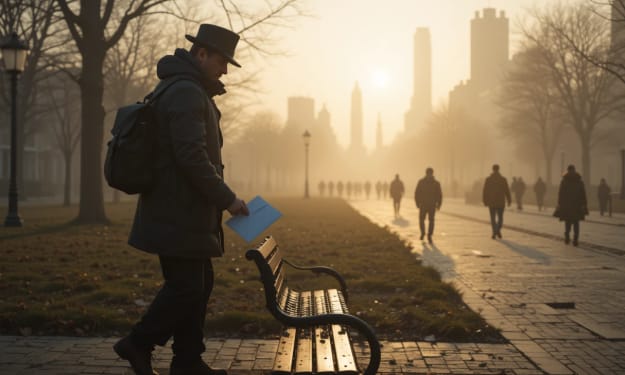
The Man Who Writes Letters to StrangersGenre: Fiction / PsycheTheme: Loneliness, Hope, Human Connection There was a man in the city who had no name, at least not to those who passed him by. He was neither wealthy nor particularly poor, not entirely old, but weathered enough to carry the silence of decades. To the morning crowd, he was just another wool-coated figure with a slight limp and a canvas satchel that always seemed too full. But to the city itself, he was something else entirely.
By waseem khanabout a year ago in Fiction