Historical
When the Sirens Stopped
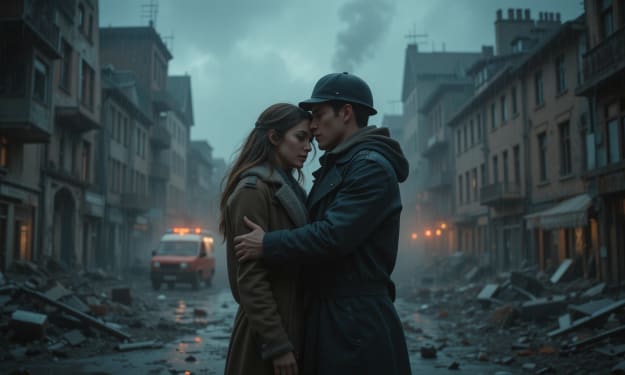
When the Sirens Stopped Written by Noor Khan The air smelled like smoke, and the sky never turned blue anymore. In a shattered corner of Eastern Ukraine, just miles from the frontlines, 22-year-old Lena clutched her backpack tighter and glanced over at Amir. Dust clung to his eyelashes, and his hands trembled as he checked the half-broken radio for updates. The sirens had stopped two days ago, but no one knew whether that meant safety — or silence before the storm. Lena had grown up in Luhansk. She was a university student when the war escalated again, studying literature and dreaming of teaching. Amir was a foreign volunteer medic, half-Ukrainian, half-Turkish, who had arrived to help civilians. Their paths crossed during an airstrike at the local hospital. Amid chaos, their eyes met. She was bleeding from her arm; he wrapped it with a torn shirt and whispered, “You’ll be okay.” She wasn’t. Nothing was. But she followed him anyway. They had been hiding together for eleven days in a collapsed train station basement with no heating, little food, and one flickering flashlight. The city above them was rubble — bones of what once was home. But in that underground darkness, something quietly bloomed. “Do you still think we’ll make it out?” Lena asked one night, her voice barely a whisper. Amir looked at her and smiled faintly. “I don’t think. I believe.” That was Amir. A man of belief. Belief in survival, belief in hope, belief in her. Every few hours, they took turns peeking through a shattered concrete crack above the stairs. Drones still buzzed in the sky. Gunfire echoed like thunder. They scribbled poetry on the back of ration wrappers just to feel human. Then came the twelfth night. They heard footsteps. Loud. Unhurried. Foreign. Amir held his breath and slowly turned off the flashlight. Lena pressed her back to the cold wall, her heartbeat louder than any bomb. The footsteps passed. Then returned. “Russian patrol?” Amir whispered. She nodded silently. They had no weapons. No way to run. Just each other. Suddenly, the footsteps stopped. A voice called out in broken Ukrainian, “We know someone is here. Come out.” Amir grabbed Lena’s hand. “No,” she whispered. “They’ll shoot.” “We can’t stay. We’re out of food. If they find us here, it’s worse.” “But…” “If anything happens—remember your name. And that I love you.” She wanted to scream. Instead, she kissed his forehead, and they stood up together. But fate is strange. As they reached the top of the stairs, a sudden blast rocked the building. Dust rained from the ceiling. The patrol scattered. A nearby apartment tower had been hit — not them. Using the confusion, Amir pulled Lena through a broken side tunnel he had spotted days ago but never dared to use. They ran. Through collapsed corridors. Through narrow alleys lined with burnt-out cars. Through snow dusted with ash. That night, they reached an abandoned Red Cross outpost. It had no doors, no staff, and no medicine. But it had maps. And a working radio. Amir managed to call an NGO in Poland using an old frequency. “Two survivors. One injured. Near checkpoint Bravo 9. Need extraction.” They waited 48 hours in the broken building, feeding on crackers and hope. Finally, a drone hovered above, dropping a flare. Minutes later, a black van appeared from the west — silent, fast, foreign-plated. They were rescued. 💬 Why This Story Matters Lena and Amir now live in Warsaw. She teaches Ukrainian refugee children; he volunteers at a trauma clinic. They still write poems on the backs of receipts. They say war took everything — except what mattered most. Love in a dangerous place is not romance. It's survival. It's staying when everything says to run. It's sharing silence in a room full of fear. It’s believing in life when death is outside your door. Their story never made headlines. But somewhere, in a city still broken, a wall stands with faded graffiti: “The sirens stopped — but we didn’t.”
By Moonlit Lettersabout a year ago in Fiction
The Librarian's Apprentice
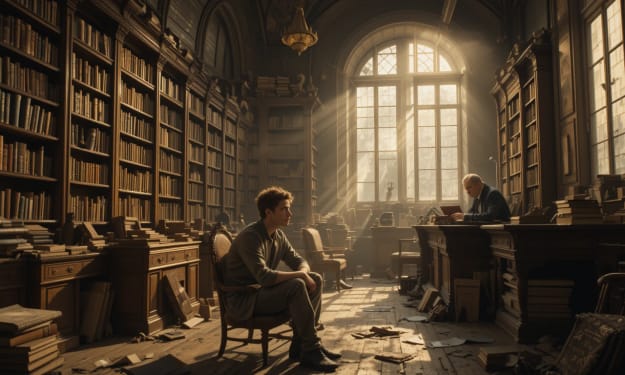
The Librarian's Apprentice Written by Noor Muhammad In a quiet seaside town in Portugal, far from Lisbon’s buzz and the glamour of tourist trails, lived a boy named Luca. He was the son of a fisherman who rarely returned home dry and a mother who worked at a local diner, wiping tables and dreams at the same time.
By Moonlit Lettersabout a year ago in Fiction
The Light Beneath the Streetlamp. AI-Generated.
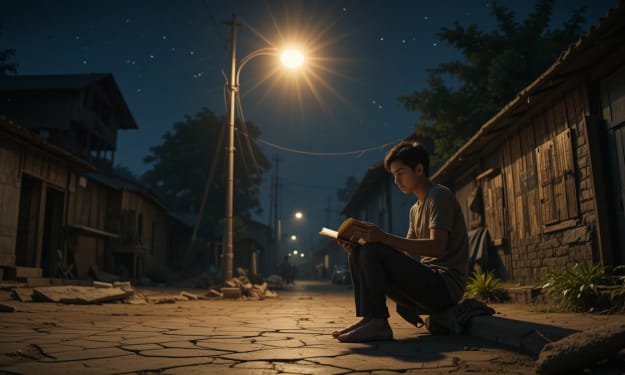
The Light Beneath the Streetlamp Written by Noor Muhammad In the heart of a crowded Pakistani city, where honking rickshaws and endless duststorms ruled the day, lived a boy named Ahsan — a name that meant "perfection" in Arabic, though life had rarely been perfect for him. Ahsan was 17, tall for his age, and had eyes that always seemed to be searching for something beyond the narrow streets he walked every day. He lived in a one-room house with his widowed mother and younger sister. His father had passed away when he was only nine — a construction accident, and just like that, their world broke into pieces no one knew how to fix. There was no inheritance. No savings. Only his mother’s willpower and a tiny job stitching women's clothes for barely 300 rupees a day. But Ahsan had dreams — not the kind that sparkle in movies — the kind made of necessity. He wanted to earn enough to send his sister to school, to buy his mother new glasses, to maybe one day own a home with two rooms and a working ceiling fan. 🌙 Streetlamp Classroom By day, Ahsan sold boiled eggs outside a college gate. Most students ignored him. Some felt sorry. A few bought from him out of kindness. But at night, after he cleaned the small cart and washed hiThes hands with water from a leaking pipe, he sat under the only working streetlamp near his house — his makeshift classroom. An old man once left a torn English grammar book at the tea stall nearby. Ahsan asked if he could keep it. That book became his treasure. Each night, he read the same chapters again and again. He copied words into a notebook made of scrap papers stapled together. Some nights, stray dogs circled him. Other nights, drunk men shouted nearby. But Ahsan kept reading. One day, a college professor who had noticed the egg-seller before, saw him studying under the streetlamp. Curious, the professor approached and asked, “Why are you reading this?” Ahsan stood up respectfully and said, “Because I want to change my life, sir.” The professor was quiet for a moment, then said, “Meet me tomorrow morning. I’ll bring you something better.” 📘 A Push from Fate The next day, the professor handed Ahsan a used smartphone and said, “It’s old, but it has internet. Learn whatever you can.” That phone changed everything. Through free Wi-Fi from the college gates, Ahsan started watching YouTube videos on grammar, freelancing, and even coding. He didn’t understand everything at first. But he tried. And retried. Eventually, he discovered a freelancing platform for writing product descriptions. His English wasn’t perfect, but his work ethic was unmatched. He’d take hours to write what others did in minutes — but clients noticed his dedication. His first payment: $5. Enough to buy a new notebook, a full meal, and a spark of belief. 🌟 Ahsan, The Mentor By the time he turned 20, Ahsan had stopped selling eggs. He was now making over $200 a month — not a fortune, but a lifeline for his family. His sister was in school. His mother no longer stitched at night. And the ceiling fan? It finally worked. But Ahsan didn’t stop there. He started a small WhatsApp group for local boys who had dropped out of school — teaching them freelancing basics, sharing free courses, and encouraging them to read under the same streetlamp that once taught him. One of them got a $20 gig in two weeks. Word spread. Now, every Friday evening, under that very streetlamp, a group of young dreamers gather — notebooks in hand, eyes full of purpose. They call it “The Lamp School.” 💬 Why His Story Matters Ahsan didn’t win a medal. He wasn’t a viral sensation. He had no fancy degrees or foreign sponsors. But he changed lives — quietly, persistently, with nothing but a cracked phone, a streetlamp, and unshakable hope. One of his students once asked him, “Bhai, what if we fail?” He smiled and replied, “Even if we fail, we’ll fail forward.” And that’s the story of Ahsan — the boy who studied in the dark so others could learn to shine.
By Moonlit Lettersabout a year ago in Fiction
The Window Without Glass. AI-Generated.
The Window Without Glass By Noor Muhammad In the dusty corner of a crowded street in Lahore stood a crumbling house with no proper gate, faded paint, and a window that hadn’t seen glass in years. Behind that window lived a boy named Haris. Haris wasn’t the kind of boy people remembered. He wasn’t loud. He wasn’t especially bright in school. He wasn’t athletic or funny. What made Haris different was that he noticed things—quiet things, like the way his mother sighed after folding laundry or how his father’s hands trembled every evening after pushing a fruit cart all day. Their house was small—two rooms, a leaking roof, and a kitchen that barely functioned. The broken window in Haris’s room faced a school playground across the street. Every day, he watched kids in clean uniforms play, laugh, and run freely. He watched them while tying the same worn laces of his school shoes for the third year in a row. But Haris never complained. He had learned early on that complaints didn’t change anything. What changed things was belief. 📻 The Day the Radio Broke One evening, while helping his father repair the old fruit cart, Haris heard something from a nearby shop—an English news broadcast on the radio. He didn’t understand all the words, but he caught some: “global... effort... innovation... future.” Those words stuck in his mind like a song. The next day, he went back to that shop and stood outside until the shopkeeper waved him in. “You like the news, boy?” he asked. Haris nodded. “You understand English?” “Not all. But I want to.” That’s how it started. Every day after school, Haris would stop by the shop and listen for ten minutes. The shopkeeper, amused at first, grew fond of the boy’s curiosity. He gave Haris an old grammar book. “Try learning from this.” And so, Haris did. He practiced verbs and tenses under candlelight. He repeated English sentences in front of the broken window, imagining he was talking to someone on the other side of the world. 💻 An Accidental Discovery At 15, Haris was given a gift by his cousin—an old, barely-working smartphone with a cracked screen and no SIM. But it connected to Wi-Fi. Haris didn’t waste time. He found a free online English course. He watched motivational videos. He discovered Google Translate. He typed slowly, one thumb at a time, and wrote small paragraphs about his life just to see how they sounded in English. Then one night, while browsing YouTube, he found a video titled: “How to earn money online through writing.” His heart skipped a beat. He clicked. That video changed his life. ✍️ His First Story He spent three days writing his first story—about a boy who wanted to fix his broken window and see the world clearly. It was fictional, but it was also him. He submitted it to a small writing website. Days passed. Then came an email: “Your story has been accepted.” They didn’t pay him. But they published it. And that was enough. He wrote another, and another. People left comments: “This moved me.” “You have a gift.” “Keep writing.” He cried the night someone messaged him from Canada saying, “Your story reminded me of my childhood.” 💡 When Hope Became Purpose Haris saved enough from online gigs—rewriting blogs, editing captions, translating Urdu essays—to buy a better phone. He started a blog. He posted quotes and small fictional stories in English and Urdu. His followers grew. At 18, he applied for a remote internship with a digital magazine. The editor wrote back: “We don’t usually hire people your age... but your writing feels real.” He got the job. 🌍 The View Now Today, Haris still lives in the same house. The window is still there, still without glass. But now, he sees more than just the playground. He sees messages from readers in Indonesia, Pakistan, even Germany. He sees story ideas. He sees freedom. He teaches writing to younger kids in his neighborhood. He tells them, “Your words are more powerful than your wallet. Never forget that.” One evening, while watching the sunset through that same old window, his little brother asked, “Will we ever live in a better house?” Haris smiled. “We already do. It's not the walls that matter. It's what lives inside them.”
By Moonlit Lettersabout a year ago in Fiction
The Tides of Rome
Title: The Tides of Rome In the year 2493, history was no longer confined to books and digital archives. Thanks to the invention of the Temporal Corridor, time travel had become possible—but only for a carefully chosen few. These were not tourists or adventurers, but highly trained specialists whose mission was to preserve, observe, and never interfere.
By Malik BILALabout a year ago in Fiction
TESTIMONY OF AN EYE-WITNESS BY VICTOR HUGO. AI-Generated.
In the days leading up to December 1, 1851, France was calm—too calm. Charras, a cautious man by nature, even unloaded his pistols. The idea of a coup seemed ridiculous. People laughed at the thought that Louis Bonaparte, the President, could ever destroy the Republic. After all, who would believe a man like him capable of such a massive betrayal?
By Ahsan ullahabout a year ago in Fiction
MISSING: A World War II Story of Love, Friendship, Courage, and Survival
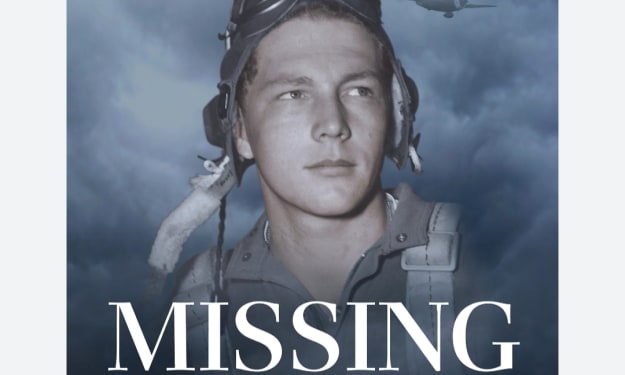
On the ninth day of the brutal Battle of the Bulge in December 1944, 2nd Lt. Donald N. Evans, a young American fighter pilot, flew his P-47 Thunderbolt over the icy forests of Belgium. The mission was routine—until enemy fire ripped through his aircraft. With only seconds to spare, Don bailed out of his burning plane, parachuting into the bitter cold and snow-covered chaos below. He landed behind enemy lines, wounded and alone, with a shattered leg and no clear direction to safety. In the unforgiving wilderness of the Ardennes Forest, Don crawled and limped through snowdrifts, driven only by willpower and the hope of surviving. On Christmas Eve, he found shelter beneath a pine tree. He was starving, freezing, and completely isolated. All around him, artillery echoed through the hills, and enemy patrols searched the woods. He lay silent, consumed by pain and fear, unsure whether he’d ever see his family or homeland again. But Don’s journey was just beginning. Soon after, he was discovered and captured by German SS troops—the most feared paramilitary arm of the Nazi regime. Alongside hundreds of other American prisoners, Don was forced to endure a brutal 200-mile march through enemy territory in the depths of winter. Weak from injury and hunger, he was pushed to his physical and emotional limits. The prisoners endured freezing temperatures, constant abuse from guards, and total uncertainty about their fate. Many didn’t survive. Those who did, like Don, were later imprisoned in German POW camps, where survival became a daily battle of endurance and inner strength. That Don Evans survived is nothing short of a miracle. But his story isn’t only one of suffering—it’s also one of profound love, loyalty, and human connection. Born into poverty in a small American town, Don was the classic all-American boy. He was a natural leader, student body president, a gifted athlete, and deeply optimistic about the future. At eighteen, he enrolled in college and fell in love with his high school sweetheart, Laura Jeanne. They were young, hopeful, and full of dreams for the life they planned to build together. Then came December 1941. The attack on Pearl Harbor pulled America into the war, and Don, like so many others, answered the call to serve. Before shipping out to Europe, he and Laura Jeanne married, clinging to the belief that love would survive—even through the fires of war. Don became part of the 368th Fighter Group of the Ninth Air Force. There, he formed an unbreakable bond with four other young pilots, calling themselves simply “The Five.” Together, they flew dangerous missions over Nazi-occupied territory, supporting ground troops and risking their lives daily. Their brotherhood—built in the skies over Europe—provided strength, courage, and a deep emotional connection in the face of constant danger. One of the most intimate and moving elements of Don’s story is the series of letters he and Laura Jeanne exchanged during the war. These deeply personal letters reveal their unwavering love, their fears, their dreams, and the emotional lifeline that kept them going. Through their words, readers gain a rare, firsthand glimpse into the emotional toll of war—not only for the soldiers on the front lines, but also for those waiting anxiously back home. The story of MISSING is crafted through a rich blend of firsthand letters, journal entries, mission reports, and interviews. It offers not just historical facts but a deeply human portrait of a young couple swept up in world-changing events. It explores themes of love, friendship, sacrifice, and survival in one of history’s darkest chapters. By war’s end, Don returned home forever changed—scarred in body and spirit, but alive. His reunion with Laura Jeanne was the fulfillment of a promise whispered across oceans and battlefields, a testament to the endurance of hope and love. The young man who had once huddled alone beneath a pine tree in a frozen forest had come home—not unchanged, but unbroken. MISSING is more than a war story. It is a tribute to the resilience of the human spirit, the power of love to sustain us, and the friendships that give us strength when everything else is stripped away. In a time of global darkness, Don Evans’ story shines as a beacon of courage and humanity
By Israr khanabout a year ago in Fiction
The Song That Found Me
The Song That Found Me How a Broken Guitar and a Stranger’s Melody Gave Me Back My Voice In the spring of 2025, I found a guitar in a dumpster behind my apartment building. It was a battered thing—cracked body, missing a string, the kind of instrument nobody would look at twice. I hadn’t played music in years, not since I was a teenager dreaming of coffeehouse gigs and a life as a singer-songwriter. Life had other plans: a string of dead-end jobs, a breakup that gutted me, and a creeping fear that my creative spark was gone for good. But something about that broken guitar called to me, so I fished it out, dusted it off, and brought it home.
By Shohel Ranaabout a year ago in Fiction
Finding Light in the Fog
The fog was thick that morning, the kind that swallows the world whole. It clung to the grass, wrapped around the trees, and blurred the edges of everything, including me. I stood at the edge of the park, my breath shallow, my chest tight with the familiar weight of anxiety. It wasn’t a new feeling—more like an old, uninvited guest who’d overstayed their welcome. But that morning, something shifted. That morning, I took my first step into the fog, and it changed everything.
By Shohel Ranaabout a year ago in Fiction
Hidden Fear
To everyone else, Ali was fearless. He cracked jokes in crowds. Led presentations at work like a pro. Took risks, smiled big, and said things like “Life’s too short to be scared.” But there was one thing no one knew — Ali was living with a fear that he had never spoken out loud. Not because it was silly. Not because it was rare. But because it was the kind of fear you carry in your chest quietly, every single day — the kind that people can’t see, but you never stop feeling. --- The Fear of Not Being Enough Ali’s hidden fear wasn’t about heights, spiders, or the dark. It wasn’t about losing a job or failing a test. It was this: > “What if I’m not enough for the people who love me?” What if, one day, they all realize he’s not as smart, not as funny, not as kind as they think? What if they only like the version of him that performs well — not the one who struggles at 2 a.m. with anxiety and self-doubt? --- The Perfect Son Who Felt Like a Fraud Growing up, Ali had always been “the responsible one.” He got good grades. Helped at home. Never got into trouble. His parents called him “their pride.” His younger siblings looked up to him. Teachers loved him. Friends trusted him. But as the praise piled up, so did the pressure. He felt like he had to keep performing, or he’d disappoint everyone. Even when he was exhausted, he smiled. Even when he was confused, he acted confident. Even when he was falling apart, he kept saying, “I’m good.” He wore his success like armor. But inside, he was terrified someone would see the cracks. --- Anxiety in Disguise You’d never know Ali had anxiety. He went to the gym. Went out with friends. Posted Instagram stories with filters and laughter. But late at night, lying in bed with the lights off, the fear came creeping in like smoke. What if I fail them? What if I can’t keep it together forever? What if they love a version of me that isn’t even real? These thoughts didn’t scream — they whispered. But they never stopped. --- The Moment Everything Broke One night, Ali forgot to mute his phone and a voice note from his boss played out loud in front of his family. “Great job on that project, Ali. You’ve outdone yourself again — honestly, I don’t know how you manage it all.” Everyone smiled. His mother said proudly, “That’s my son.” Ali smiled too — but his hands were shaking under the table. Because the truth was, that project had drained him. He’d worked three nights with barely any sleep. He wasn’t proud — he was exhausted. And he didn’t even like his job anymore. That night, after everyone went to bed, Ali sat on his balcony with tears in his eyes. For the first time, he admitted the truth to himself: > “I’m scared they only love the version of me who keeps winning.” And admitting that felt like taking off a mask he didn’t know he’d been wearing for years. --- The Beginning of Courage The next day, Ali did something he’d never done before. He called his closest friend and said: > “Can I tell you something without you trying to fix it?” The friend said yes. And for twenty minutes, Ali talked. Not like the confident guy everyone knew, but like a human being — tired, overwhelmed, and afraid. His friend didn’t interrupt. He just listened. At the end, he said, > “You know what? I don’t care how ‘perfect’ you are. I love you for being real.” Ali didn’t cry often. But he cried then. --- The Truth About Hidden Fears Everyone has a hidden fear. Some fear rejection. Some fear loneliness. Some fear failure. Some, like Ali, fear not being enough. And the scariest thing about hidden fears isn’t that they exist — it’s that we keep them hidden for so long, they begin to define us. But the moment you speak them out loud… they start to lose power. Because fear thrives in silence — But it shrinks in the light of truth and connection. --- So If You’re Hiding a Fear Right Now… Let this be your reminder: You don’t have to carry it alone. You don’t have to wear a mask just to be loved. You don’t have to pretend to be okay every single day. Speak. Share. Be honest — even just with one person. Because there is strength in admitting fear. And healing doesn’t begin with pretending. It begins with saying: > “This is what I’m afraid of. But I’m ready to face it.” And that — is where courage lives.
By Hazrat Bilalabout a year ago in Fiction