Historical
The Library That Wasn’t There
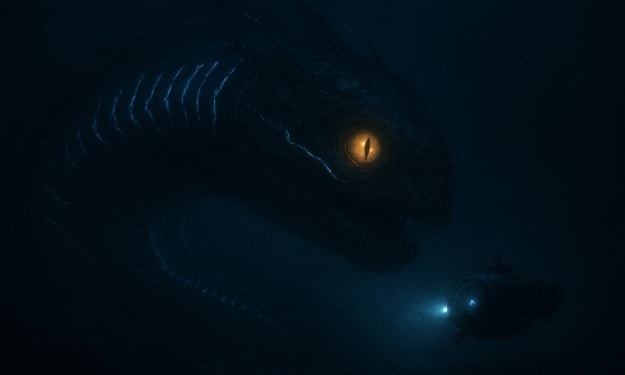
M Mehran Lena had always loved wandering. Not just the kind of wandering where your feet take you somewhere new, but the kind where your mind drifts past the edges of what makes sense. That was how she found the library. It was raining the day she first saw it. She was hurrying home from work, coat dripping, when she noticed a narrow alley between two old brick buildings. She could have sworn it hadn’t been there before. Curiosity tugged at her, so she slipped inside. At the end of the alley stood a tall oak door carved with symbols that seemed to shift when she looked too long. Above it, in tarnished brass, was a sign that read: The Library of Lost Things. The moment she pushed open the door, the rain vanished. She stepped into a cavernous hall, lined with shelves that spiraled into the shadows above. Dust danced in shafts of golden light. The air smelled of parchment, cedar, and something faintly sweet, like apples. An elderly man at the desk looked up. His spectacles perched precariously on the tip of his nose. “Welcome,” he said, as though he had been expecting her. “You’re late.” “I—I don’t even know what this place is,” Lena stammered. “The Library,” he replied simply, sliding a massive leather-bound ledger toward her. “Everything that is lost ends up here. Objects. Memories. Choices. Whole futures, even. You may browse.” Lena walked between the aisles, her fingertips brushing spines etched with titles like The Notebook You Misplaced in Fifth Grade and The Names You Forgot to Remember. On one shelf, she found The Friendship That Might Have Been. On another, Every Time You Didn’t Say What You Felt. Her breath caught. Each book was a life she almost lived. “Can I read them?” she asked the librarian. “You may read,” he said, “but with reading comes remembering. And remembering has a cost.” That night she opened her first book: The Letter You Never Sent. Inside was her own handwriting, pouring out love she had been too afraid to confess years ago. Tears burned her eyes. She closed it quickly, heart pounding, but she couldn’t shake the thought of what might have been if she had posted that letter. She began visiting the library every evening. Work, dinner, even her friends faded into the background. She read about careers she might have chased, cities she almost moved to, people she never met. Some stories filled her with joy, others with regret so heavy it made her chest ache. One night, she found a small, unmarked volume wedged between two massive tomes. Curious, she opened it. The pages were blank. “What is this one?” she asked. The librarian’s eyes glinted behind his spectacles. “That is not what you lost. It is what you are losing.” Her hands trembled. “What do you mean?” “Your time,” he said softly. “Every hour spent here is an hour taken from your own unwritten story. You are forgetting to live while you read about what might have been.” Lena felt cold sweep over her. She thought of the friends she hadn’t called in weeks, the projects she had abandoned, the laughter she hadn’t shared. The library had given her glimpses of her lost paths, but it had also been quietly devouring the present. “I don’t want to lose now,” she whispered. The librarian leaned forward. “Then you must decide. Close the book. Leave while you still can. Or keep reading, and let yourself fade into the shelves.” Lena’s gaze darted to the unmarked volume. Its blank pages seemed to stretch infinitely, waiting to swallow her story. Her pulse raced. Slowly, with trembling hands, she shut the book. The sound echoed like a door slamming. The librarian nodded once, approval flickering in his tired eyes. “Wise. Few make that choice.” The next moment, Lena found herself standing back in the rain-soaked alley. The oak door was gone. Only a crumbling brick wall remained. For weeks she searched for the library again, returning to the same alley, circling blocks, even sketching symbols she remembered from the door. But it never appeared. Sometimes, though, when she’s drifting off to sleep, she swears she hears the faint rustle of pages, as though a thousand lost stories are whispering her name. But Lena has learned something crucial: not all lost things are meant to be found. Some are meant to remind you that the story you are writing now is the only one that matters.
By Muhammad Mehranabout a year ago in Fiction
In The Heat Of The Day
The sun beamed down as Robert drove his wagon through the valley. The heat was hotter than he had ever experienced. Each day, his water was drying, and the valleys never seemed to end. After the war, times were tough, but the heat was never-ending. As Robert investigated the valley, it seemed like a pool of water, and blinking only confirmed his first sighting. The tired horse still trudged along as Robert only hit him harder. His face red from the sun was now red in anger as he needed that water. Each step was shallow as the heat also had the poor horse trotting along to the middle of the desert. The sweat had been dripping for days, and the horse refused to move faster. Robert just wanted to pan for his gold, but he had to go through this desert. The many miles seemed to be avoiding all the snakes and scorpions, but Robert was going to make it. It was only a few miles away, as the only thing he needed was to get to water. As he inched forward to the bushes, the water disappeared. He stopped the wagon only for a break, and there was gold in California. Tears ran down his face as he needed to find a small body of water. He stopped the wagon and stood there as he wanted to breathe even in this intense heat. The cactus was all around with no water sources.
By Sarah Danaherabout a year ago in Fiction
The Biggest Lie Ever Told
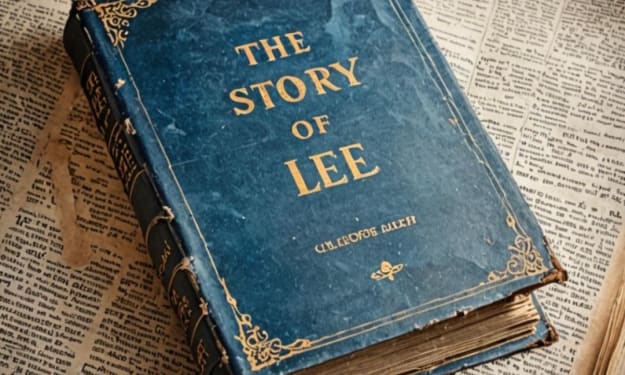
His name doesn’t really matter, but every fictional character needs one, so, how about John? No, wait; that’s already a name in use by one of his cult followers. Actually, naming him is impossible. It’s incumbent to just make up his name since everything else is fictional, too. Lee is an appropriate name because it’s so close to Lie.
By Star Love Greyabout a year ago in Fiction
A Voodoo Conjuring.
The serene conjure woman stands in ritual, her hands dancing above a bowl of smoldering herbs. Candles flicker, shadows stretch, and ancestral symbols curl upwards through the smoke. The palette glows with warm earth tones - brown, gold, and soft white - evoking reverence and quiet power.
By Novel Allenabout a year ago in Fiction
3 Idiots
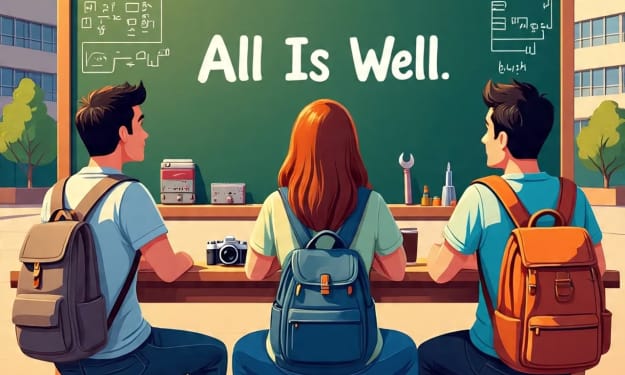
Introduction Indian cinema has produced countless films that entertain audiences with music, drama, and romance. However, few movies manage to inspire, educate, and leave a long-lasting impact on society. Rajkumar Hirani’s 3 Idiots (2009) is one such masterpiece. Starring Aamir Khan, R. Madhavan, Sharman Joshi, Kareena Kapoor, and Boman Irani, the film is based on Chetan Bhagat’s novel Five Point Someone. More than a comedy-drama, 3 Idiots challenges the rigid education system, celebrates friendship, and encourages the pursuit of true passion in life. --- Plot Overview The story revolves around three engineering students at the prestigious Imperial College of Engineering: Farhan Qureshi (Madhavan), Raju Rastogi (Sharman Joshi), and Ranchoddas Shamaldas Chanchad, famously known as Rancho (Aamir Khan). The film moves back and forth between the past and the present. Farhan and Raju go on a journey to find their long-lost friend Rancho, who had mysteriously disappeared after graduation. Along the way, they recall the memories of their college life, their struggles, and Rancho’s unconventional approach to education. Rancho, unlike other students, questions the traditional methods of rote learning and blind competition. He believes that education should be about gaining knowledge, not securing ranks or jobs. His philosophy—“Chase excellence, and success will follow”—becomes the soul of the film. --- Themes and Messages 1. Critique of the Education System One of the strongest aspects of 3 Idiots is its critique of the rigid, exam-oriented Indian education system. The character of Viru Sahastrabuddhe, nicknamed “Virus” (played brilliantly by Boman Irani), symbolizes the authoritarian and result-driven mindset of many institutions. The film highlights how excessive pressure leads to anxiety, fear, and even tragic consequences, as seen in the case of Joy Lobo, a student who commits suicide due to academic stress. 2. Friendship and Brotherhood At its core, 3 Idiots is a story of friendship. The bond between Rancho, Farhan, and Raju is heartwarming. Rancho motivates his friends to follow their dreams—Farhan to pursue photography instead of engineering, and Raju to overcome fear and believe in himself. Their loyalty to each other, even in times of crisis, adds emotional depth to the story. 3. Following One’s Passion The film encourages the audience to follow their passion rather than blindly chasing societal expectations. Farhan’s struggle to convince his father to allow him to become a wildlife photographer reflects the reality of many young people forced into careers they do not love. Rancho’s inspiring words—“Do what you love”—resonate with millions of viewers worldwide. 4. Innovation and Practical Knowledge Rancho’s innovative mindset is shown in several scenes, such as when he fixes machines in creative ways or explains concepts through practical demonstrations. This emphasizes the importance of creativity, curiosity, and problem-solving skills over memorization. --- Performances and Direction Aamir Khan, despite being much older than a typical college student, brings charm and energy to Rancho’s character. His performance is natural, witty, and deeply inspiring. R. Madhavan and Sharman Joshi shine as Farhan and Raju, bringing emotional honesty to their roles. Kareena Kapoor, as Pia (Virus’s daughter and Rancho’s love interest), adds freshness and romance to the story. Boman Irani delivers a powerful performance as the strict yet humorous college principal. Director Rajkumar Hirani deserves immense credit for blending humor, drama, and social message seamlessly. The film’s dialogues, written by Abhijat Joshi and Hirani, are memorable and thought-provoking. Lines like “All is well” have become part of everyday conversation. --- Cinematography and Music The film’s cinematography beautifully captures both the campus life and the stunning landscapes of Ladakh, especially in the climax. The music, composed by Shantanu Moitra, perfectly complements the story. Songs like “Give Me Some Sunshine” and “All Is Well” not only entertain but also reflect the struggles and optimism of students. --- Impact on Society 3 Idiots was not just a commercial success but also a cultural phenomenon. It became one of the highest-grossing Indian films of its time and received widespread critical acclaim. More importantly, it sparked conversations about the flaws in the education system, the mental health of students, and the need to encourage creativity and individuality. Many young people found courage to pursue their dreams after watching this film. --- Conclusion 3 Idiots is more than just a movie; it is an experience that entertains, inspires, and challenges societal norms. With its brilliant performances, meaningful themes, and perfect balance of humor and emotion, the film continues to remain relevant even more than a decade after its release. It reminds us that education should be about learning, not pressure, and that life is best lived when we follow our passion. In short, 3 Idiots is not just a film about three engineering students—it is a life lesson for everyone. Truly, Rajkumar Hirani has given Indian cinema a gem that will be remembered for generations.
By Muhammad Bilalabout a year ago in Fiction
The Letter I Was Never Meant to Read
It was a quiet evening when I stumbled upon the letter. The house was unusually still, the kind of silence that presses on your chest and makes you feel like something is about to change. I hadn’t been looking for secrets; I was simply searching for an old notebook in the wooden chest my mother kept locked in her room. But fate has a strange way of revealing truths when we least expect them.
By Nadeem Shah about a year ago in Fiction
Under the Crimson Sky
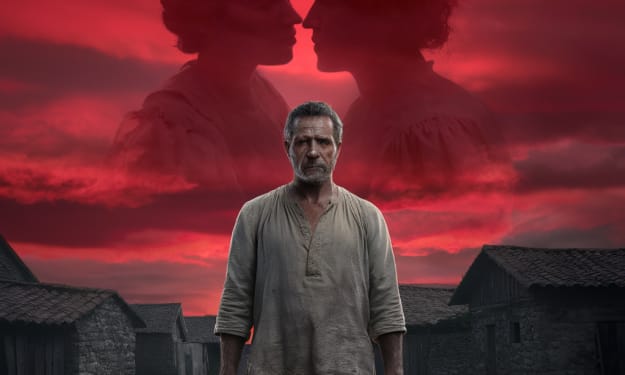
The crimson sky stretched endlessly above, its fiery glow spilling across the horizon like blood on sand. For most villagers, it was just another sunset, another day slowly slipping into the night. But for Ayaan, the sight of that sky was both a curse and a reminder—a curse of the past he could never completely bury, and a reminder of the fight he could no longer run away from.
By Nadeem Shah about a year ago in Fiction
The Echo of the Shadow in Iași
In an Iași enveloped by late autumn, where rusty leaves danced a melancholic tango on the old cobblestones, and the air carried the sweet aroma of freshly baked cozonac, a story unfolded that defied the boundaries of reality. It wasn't a tale of noisy ghosts or spectral apparitions, but one far more subtle, more insidious, an illusion so powerful that it shaped destinies.
By alin butucabout a year ago in Fiction