Fantasy
Don Quixote
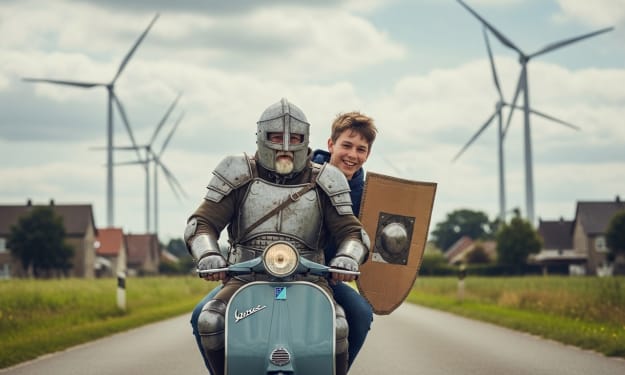
In the heart of a sunbaked town where the modern world met rusting traditions, lived an old man with a mind like a lantern in the fog. Everyone knew him—not for his wealth or status, but for the armor he wore, fashioned from scrap metal and car parts, and the rusting scooter he called his “noble steed.” Alonzo De La Vega had once been a literature professor, until time and grief peeled back the layers of academia and left behind only a man with a library of forgotten worlds in his heart. He now called himself Don Quixote, and to him, the world was still filled with dragons, damsels, and noble quests. Every morning, he rode through town in a crooked helmet, waving to shopkeepers and schoolchildren, quoting Cervantes as if they were gospel. “Have courage, my friends! For reality is only what we allow it to be!” Most smiled indulgently. Some laughed. A few pitied him. But no one could deny that the town felt different when he rode by—as though something magical stirred in the dust behind his wheels. --- One cloudy morning, Don Quixote burst into Café Lucia, clutching a wrinkled map. “I have found it!” he cried. “The lair of the dragon lies beyond the hills, near the abandoned wind turbines!” “Again with the dragons?” Lucia asked, handing him his usual black coffee. He leaned in, lowering his voice. “This one guards a forgotten truth. A great treasure. And I must retrieve it.” Sitting nearby, sixteen-year-old Marco rolled his eyes. “There’s nothing out there but weeds and rust.” Don turned slowly. “Every story begins with disbelief. Even yours.” “Mine?” “Yes, you—squire in disguise, afraid of your own potential.” Don Quixote placed a hand on Marco’s shoulder. “Come with me. Be the shield to my sword. See the world not as it is—but as it could be.” Marco laughed, but something flickered in his chest. A small defiance. A yearning he didn’t want to name. --- Two hours later, they stood at the base of the wind farm. Giant turbines groaned in the breeze, towering like ancient titans. “To you, they are machines,” Don said. “To me—they are wind giants. Keepers of forgotten battles.” Marco crossed his arms. “Okay. So where’s this treasure?” Don pointed to a crumbling bunker half-buried in dust. “There. Beneath the dragon’s shadow.” They entered. Dust motes swirled in flashlight beams. Metal creaked. And then—they found it. A trunk. Inside: a stack of journals, photographs, and a medal. “My wife’s,” Don whispered, lifting the medal with shaking hands. “She served… I buried this place after the war took her mind. I thought forgetting would heal me.” Marco blinked. “This is your treasure?” “No,” Don smiled. “This is the memory of who she was. This is why I ride.” --- On the way back, they were silent. But something had changed. The world looked different. The wind turbines weren’t just turbines anymore. They were possibilities. --- Weeks passed. Don Quixote rode daily, but now with a companion. Marco, now armed with a cardboard shield and a borrowed heart, became his “faithful squire.” Together, they “battled” injustice—fixing broken park benches, cleaning graffiti, delivering groceries to lonely elders. People started to believe. Not in dragons or giants. But in something bigger. Hope. Wonder. Imagination. One day, Don didn’t show up. Marco found him in his apartment, sitting by the window, armor by his side. “I think my steed is tired,” Don said, smiling faintly. “Time for this knight to rest.” Marco sat beside him. “But who will ride now?” Don took his hand. “You will.” --- And Marco did. Years later, the town still tells stories of Don Quixote and his squire. A bronze statue now stands in the square: a knight in mismatched armor, holding out a helmet to a wide-eyed boy. And every so often, on cloudy afternoons, children swear they see wind turbines bowing in the breeze. Not machines. Giants.
By Shah Nawazabout a year ago in Fiction
PARASITIC RELATIONSHIPS
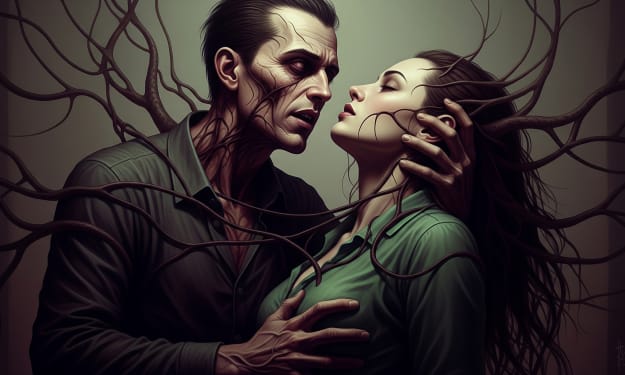
Picking up my purse, I prepared to leave the strange flat. Looking around at my unfamiliar surroundings, I soon found something untraceable that I wanted. I grabbed the stones I saw inside a bowl on the side table, and then noticed last night's Fling’s wallet beside the bowl.
By Mother Combsabout a year ago in Fiction
The Unranked Heir
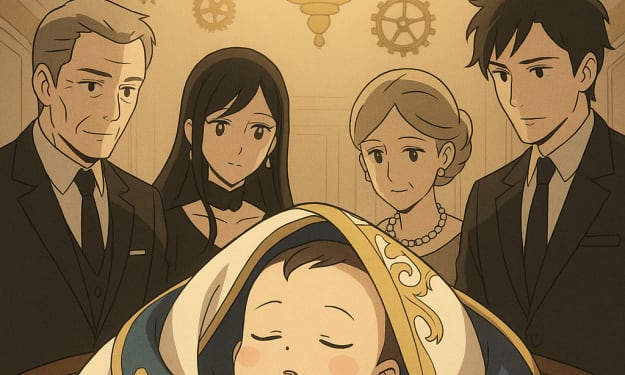
Chapter 1: The Weight of Inheritance Power isn't inherited—it's imposed. I learned this the moment I drew my first breath, when the world seemed to hold its breath with me. My uncle, a man who had lived in penthouses for two decades and witnessed every excess wealth could buy, called my birth "the grandest celebration he'd ever seen." Coming from someone who'd attended the coronation of oil princes, that meant something.
By Emmanuel Ikerionwuabout a year ago in Fiction
The Garden That Forgot to Bloom
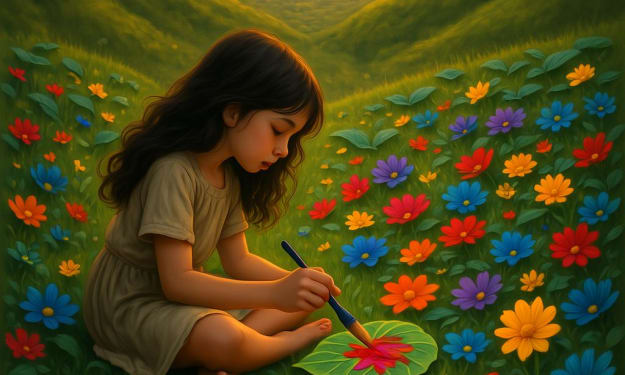
There was once a garden where no flower ever bloomed. It lay between two quiet hills, wrapped in the arms of a forgotten valley. The earth was not dead, and the sun did not hide. Rain visited kindly, and the wind whispered lullabies across its skin. Yet, no color ever rose from the ground. Only leaves. Only stems. Only green—and nothing else. The villagers called it the Hollow Garden. Many believed it was cursed. Some blamed the seeds. Others whispered that the soil was jealous of the bright meadows blooming beyond the hills. But whatever the reason, the garden remained mute in its silence. Year after year. Season after season. Then one day, a girl arrived. Her name was Lila. She was not from the village, and nobody knew why she came. Her eyes looked like they had once held entire storms. Her hands were small, but they carried the quiet weight of something she never spoke about. When she first walked into the Hollow Garden, she did not dig, she did not plant, and she did not water. She sat. Right in the center of the garden, among the stems and silent soil, she simply sat. And she listened. Not with her ears, but with her silence. She listened with her breath, with her stillness, with her open palms resting softly against the earth. It was as though she was listening not for sound, but for feeling. The villagers watched from afar. Some laughed. Some shook their heads. Some whispered that she must be broken too, just like the garden. But Lila kept coming back. She did not speak. She did not try to change the garden. But over time, she began to hum. Softly. Gently. The kind of humming that sounded like a lullaby only the soul could hear. Her voice was cracked, like a dried riverbed after a cruel summer, but it carried warmth. A warmth that filled the empty space without asking anything in return. Days passed. Then weeks. The garden remained green. Only green. But something had shifted. The wind began to circle the valley more often. It carried her hums like invisible threads through the leaves. Birds started to visit again, resting on bent branches. Even the rain lingered longer, as if curious to watch. Then one morning, Lila brought a basket. It was not filled with seeds or tools, but with paintbrushes. Dozens of them, and pots of paint in every color the eye could imagine. She sat in the garden and began to paint the leaves. Red, blue, yellow, orange—petal colors blooming on plain green leaves. The garden, surprisingly, allowed it. It let her color its silence without resistance. By evening, it looked as though the valley had finally bloomed. “It is only paint,” the villagers said. But still, they came. One by one. Some brought food. Some brought stories. Others brought songs. The garden became a place not of flowers, but of people. They laughed. They wept. They sat. They listened. And then, something unexpected happened. A single flower bloomed. A pale yellow daisy, hidden near a rock. So quiet and soft, it could have been mistaken for memory. Nobody noticed it the first day. Or the second. But on the third, a small boy pointed and shouted, “Look! It is real!” Lila smiled. Not because a flower had finally bloomed, but because someone had finally seen it. By the end of the season, ten more had bloomed. Quietly. Naturally. Not because of magic, or perfect soil, or any special method. But because something inside the garden had healed. Lila never said goodbye. One morning, she simply left—with the same silence with which she had arrived. The villagers kept visiting the garden. They stopped calling it Hollow. They gave it a new name. The Listening Garden.
By Muhammad Abuzar Badshah about a year ago in Fiction
The Whispering Blade
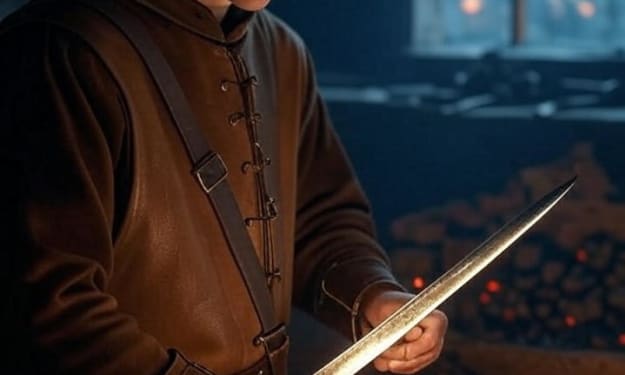
In the quiet village of Emberhollow, nestled between the Shadowridge mountains and endless whispering woods, lived a seventeen-year-old blacksmith named Eldon Vale. Orphaned as a child and raised by his aging mentor, Master Darnic, Eldon had known nothing but fire, steel, and the comforting clang of the hammer upon anvil. Life was simple. Predictable. Safe. Until the night the sword appeared. It was a crisp autumn evening. Eldon had been working late, shaping horseshoes and fixing old plows when a sudden gust of wind blew through the forge—though all the windows were shut. The fire flared blue, and the anvil sparked violently. There, resting atop the anvil as if it had always belonged, lay a sword. Its hilt was obsidian black, carved with ancient runes that shimmered faintly. The blade itself was unlike anything Eldon had ever seen—metal that seemed to absorb light, yet shimmer with an inner glow. And when he touched it, it hummed—not with vibration, but with voice. That night, long after the forge had gone cold, Eldon lay awake with the sword beside him. As the moon rose high, a soft whisper began to drift from the blade. > "The crown sleeps beneath roots of ash. One heart beats where none should be. The flame forgets, the steel remembers— What once was lost, shall rise in thee." Eldon jolted up, eyes wide. "Who’s there?" he asked, but only the sword answered—silent again. Night after night, the sword whispered more riddles, more cryptic verses that hinted at a lost kingdom, a sleeping king, a terrible war. Eldon scribbled them down, studying them by candlelight. Something ancient was speaking to him—something that knew him. Then came the fire. One evening, as villagers gathered for the harvest celebration, riders emerged from the forest, faces hidden behind iron masks. Bandits. Raiders. No warning. No mercy. Flames rose. Screams echoed through the square. Eldon ran toward the forge, heart pounding, unsure what he could do. Then he saw it—the sword, glowing like molten silver. It sang to him. > "Blood will burn, and truth will bleed, But only flame can plant the seed. Take the blade, or all shall fall— The forge has called, now heed the call." His hands trembled. He had never wielded a real weapon before. He was a smith, not a warrior. But something deep inside awakened. He grabbed the sword. The moment his fingers closed around the hilt, a surge of energy roared through him. His vision blurred. The whispers became a chorus—chanting, crying, calling. He stepped into the street. The nearest raider charged at him. With no training, Eldon should have been cut down in seconds. But the sword moved with him. Or perhaps, it moved for him. It parried, it struck, it burned. Every blow left trails of glowing light. The raiders, startled by the young blacksmith’s fury—and by the magic pulsing from the blade—began to flee. But not before one of them spoke. > "The Blade of Velmir has returned," the masked leader hissed. "The Flameborn has awakened. The Kingdom stirs…" Then he vanished into the smoke. The village smoldered behind Eldon. Ash drifted through the air like snow. People stared in awe—some in fear. He dropped the sword. It stopped glowing, now cool and still. But it still watched him. Later that night, as he sat alone in the forge, the sword whispered again. > "You are not only of Emberhollow. You are the last ember of Velmir, Forged in fire, born to reign. Seek the roots beneath the ash. The kingdom remembers you." Eldon looked at the blade. He thought of the kingdom in the riddles, of the magic in his blood he never knew existed. The sword had saved his village. But at what cost? If he kept it, he would no longer be just a blacksmith. He would become a flame in a war that had long burned out—until now. The blade pulsed gently, waiting. Eldon exhaled. The world had changed, and so had he. With trembling hands, he lifted the sword once more. This time, he did not fear it. He listened.
By NIAZ Muhammadabout a year ago in Fiction
The Second First Time
The taxi slowed as the road narrowed, and even before the car came to a stop, he knew: this place remembered him. A dusty breeze swirled through the cracked window, carrying the scent of earth, rain, and something else he couldn’t name. Was it wheat? Firewood? Maybe time itself had a smell in this part of the world — warm, worn, and unchanged. He stepped out, one foot on familiar ground, the other still unsure.
By IHTISHAM UL HAQabout a year ago in Fiction
The Scars That Bloomed When She Left
The burn scars cracked open on a Tuesday. Ellie had been gone for 47 days. I remember peeling off my sweat-soaked shirt after another night of phantom pains—the kind that made my nerves scream like they were still bathed in kitchen flames. That’s when I saw them: thin fissures splitting the mottled skin of my chest, glowing like bioluminescent river deltas. And from those cracks, petals. Crimson roses unfurling slowly, drunkenly, as if waking from a long sleep.
By Hamayoun Tareen about a year ago in Fiction
The Quiet
The view was cinematic. Golden hills rolled down to the sea, olive trees scattered like brushstrokes in a landscape painting. The air shimmered with heat. Somewhere below, a bell rang from a distant chapel, the sound stretching thin and lonely in the stillness.
By Faceless Limabout a year ago in Fiction
The Garden That Ate the Sun
There was a time when the village of Veradale basked in golden sunlight. It stretched across the hills like honey, warming the fields, blooming the tulips, and drying the linens hung from every humble porch. But that was before the garden came. It started as nothing—just a patch of earth behind the long-abandoned Garrison estate. Locals had always whispered about the estate, calling it cursed. No one dared to live there. But in early spring, dark green sprouts pushed through the ground like veins on skin. They were thick, pulsing, almost breathing. A few boys tried to poke at the vines with sticks, only to come home the next day with strange rashes on their arms. The very next morning, the sun didn’t rise. The sky was not overcast, nor stormy. It was simply... dark. A gray, endless twilight hung over Veradale. The townspeople waited for the clouds to break, but they never did. Days turned into weeks. Crops began to fail. Animals grew restless. The birds stopped singing. And yet, behind the Garrison estate, the garden bloomed. No sunlight touched Veradale anymore, but the garden didn’t need it. It grew wildly—roses the size of dinner plates, vines thick as tree trunks, flowers with petals that shimmered like moonlight. Some said the plants whispered if you stood too close. Others said they heard crying. The town council sent a few men to cut the garden down. They never returned. One of them, old Mr. Remy, was found three days later—his body wrapped in roots, his face twisted in terror, his eyes... burned. Not gouged, not scratched. Burned. As if he had looked directly into the sun—but no sun had shone for nearly a month. It was 14-year-old Lyra who discovered the truth. Her younger brother, Jacob, had disappeared chasing his dog into the garden. The townspeople begged Lyra not to go after him, but she refused. “If no one else will,” she said, tying a red scarf around her neck, “then I will.” She stepped into the garden at twilight. The moment she passed its edge, warmth pressed against her skin. It was humid. Alive. The air shimmered with golden motes, like dust floating in liquid amber. She called for Jacob, but only the rustle of leaves answered. The plants turned as she moved. She could feel their attention. She wandered deeper. Time felt strange—stretched. Twisted. A vine brushed her cheek like a lover’s touch. In its reflection, she saw something horrifying: herself, aged by decades, her face weathered, eyes hollow. She stepped back. Then she heard it—a soft, familiar giggle. Jacob. She followed the sound to a clearing where the sun still shone. Bright. Brilliant. Blinding. And in the center, sat Jacob—laughing, playing, bathed in golden light. She ran to him, but the ground shifted. Roots rose like snakes, wrapping around her ankles. “You should not be here,” whispered a voice from the trees. It wasn’t a person. It was the garden. “The sun,” Lyra gasped, staring into the radiance. “Why is it here?” “It is mine now,” said the garden. “It feeds me. It loves me. The world beyond starves, but I bloom.” “You’re killing us,” she cried. “You stole our light!” “The sun was wasted on you,” it said. “You grew crops. I grow eternity.” She looked at Jacob, smiling blankly, unmoving. “Let him go.” “I cannot,” the garden replied. “He is part of the bloom now. He chose the light.” “No,” Lyra said, pulling a matchstick from her pocket. She had brought it for warmth—maybe for protection. She struck it. Fire bloomed. The garden screamed. The roots recoiled. The trees trembled. Jacob blinked, his eyes clearing. “Lyra?” he whispered. She grabbed him, dragging him away as vines snapped and leaves turned black. The golden sun flared, then dimmed. As they ran, the light faded behind them, shrinking, curling in on itself like a dying star. They emerged back into Veradale. The sky was still dark—but less so. A crack of sunlight pierced the horizon. The next morning, the sun rose again. The garden, now a patch of smoldering ash, never returned. But on quiet nights, if you walked past the Garrison estate, you could still smell flowers, and hear leaves rustling in the dark, as if waiting. Waiting for the next one brave—or foolish—enough to bring them light.
By Ubaid Khanabout a year ago in Fiction
The Diamond Treasure in the Depth of the Sea
Long ago, beneath the surface of the Southern Sea, there existed a hidden underwater kingdom known as Sirena. Protected by glowing coral walls and ancient sea magic, Sirena thrived in silence, unknown to the surface world. At the heart of its power was a legendary jewel called The Heart of the Abyss—a massive diamond that pulsed with light, magic, and life.
By Engr. Mansoor Ahmadabout a year ago in Fiction
A Child's Bedtime Story (maybe)?
The sun was setting into the water. You could almost hear it sizzle as it struck the ocean. I knew this was going to be one of those nights. I could always tell that my nightmare was right around the corner when I shut my eyes even though I knew I was still awake.
By Barbara Gode Wilesabout a year ago in Fiction