Fan Fiction
The Clockmaker's Secret
In the quiet town of Elderglen, where cobblestone streets whispered stories of old and every shopfront seemed frozen in time, there lived an enigmatic man known only as The Clockmaker. His real name had long been forgotten — even by the town’s oldest residents. His shop, Timeless Ticks, stood at the edge of the town square, tucked between an abandoned library and a bakery that always smelled of cinnamon and secrets.
By NIAZ Muhammadabout a year ago in Fiction
The Unconventional Path
For years, I followed the script. Go to college, get a good job, climb the corporate ladder, buy a house, settle down. It was the well-trodden path, the one society assured me would lead to stability, respect, and ultimately, happiness. I excelled in my role as a marketing manager, pulling long hours, hitting targets, and dutifully attending every networking event. On paper, I was a success. In reality, I was slowly suffocating, trapped in a gilded cage of expectations and a relentless pursuit of someone else's definition of "making it." The hum of the office lights became a constant reminder of the life I was supposed to be living, not the one I truly desired.
By Momin Shahabout a year ago in Fiction
The Train That Never Came
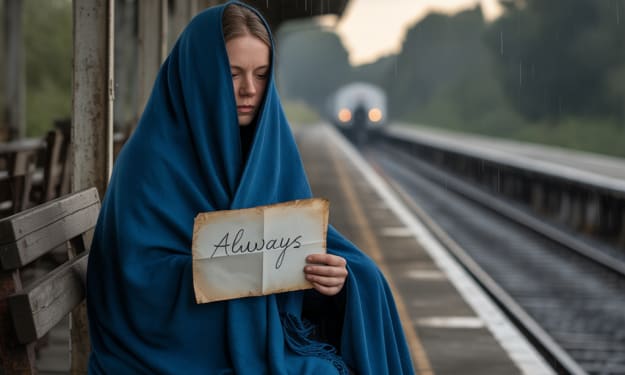
It was a rainy Thursday when Noor reached the deserted railway station of Chanar. Time stood still here. The station clock had stopped ticking years ago, but people still glanced at it out of habit—hoping maybe, like the train, time would also come back someday. Noor, wrapped in a faded blue shawl, held an old letter in her hand — creased, yellow, and fragile like her hope. She had come here every Thursday for the last 17 years, waiting for the same train. The one that left with him. His name was Zayan. They were childhood friends. Grew up in the narrow, rain-soaked streets of old Lahore, chasing kites in the spring, stealing mangoes in summer, and sharing dreams in the dim flicker of lantern light during the long power outages. Their bond wasn’t loud or dramatic. It was quiet, like a secret prayer whispered before sleep. They had no need for confessions. They never said, “I love you.” They never had to. The whole mohalla knew they were meant to be. Even their parents, once skeptical, had begun to understand — maybe even hope. Life was good, and simple. Until it wasn’t. Zayan got a job offer in Karachi — a big break. The kind of opportunity boys from small towns only dreamed of. “I’ll go,” he said, “but only for a few weeks. Then I’ll come back. With something solid in hand. A job. A future. And next time, I’ll come not just for you, but to ask for you.” Noor smiled through her tears. “Promise me?” “Next Thursday,” he whispered, holding her hand tightly at the station, “I’ll be back. And I’ll never leave again.” That Thursday never came. The train didn’t return. Noor waited. First with hope, then with worry. Days turned into weeks. Weeks into years. No calls. No letters. No Zayan. People said he moved on. That he found someone else in the city. Others whispered he died in an accident. Some claimed he simply forgot her. But Noor didn’t believe them. She couldn’t. She kept coming every Thursday to the station, dressed in that same blue shawl he once said made her look like the sky at dawn. She brought with her the letter he had left, the only one — written just before boarding the train: "Don't wait too long. Life is cruel to those who stand still. But I’ll be back before you blink." Irony. The world moved on. Friends got married. Her siblings grew distant. Her parents died — still believing their daughter was living in some dream. She became “that mad girl from Chanar station.” Children laughed at her. Shopkeepers pitied her. But she never stopped waiting. Then, on her 35th birthday, something changed. A rusted postman’s bicycle rattled into her lane. He handed her an envelope, no sender, no return address. Inside, just one line: “If I told you the truth, would you still wait?” Noor froze. The handwriting was unmistakable. It was him. The following Thursday, she didn’t just wait — she searched. She asked every vendor, every porter, every soul who had once known him. That’s when she met Babu — the old porter with trembling hands and tired eyes. “You still waitin’, beti?” he asked kindly. “Yes,” she nodded. He looked down. “I think I owe you the truth.” Her heart stopped. “Zayan did come back. Three Thursdays later. I remember it like yesterday. It was raining just like today. He looked like death — pale, soaked, trembling.” “What happened?” she whispered. “Your father sent him away. Told him you were married. That you had forgotten him.” Noor staggered back. “He cried,” Babu continued, “like a child who’d lost everything. Said he never imagined you'd give up so easily. He left me a note for you. But your abba saw it… and burned it.” Noor collapsed onto the bench, her knees weak. “I tried to stop him,” Babu said softly. “But I was just a servant.” She felt everything collapse. The weight of 17 years of waiting for a man who had, in fact, come back. A reunion that never happened because of a lie. A life spent mourning someone who had mourned her too. “Where did he go?” “No one knows. Just said he’d disappear. That ‘the tracks are cursed.’ That he’d never return to a place where love was punished.” Noor didn’t cry. There were no tears left. She got up slowly, straightened her shawl, and walked down the rusted tracks — like a ghost retracing the past. The tunnel ahead was dark, overgrown, almost forgotten by time. Then, a silhouette emerged. A man, older now. His hair grey, his frame thinner. But his eyes — those same eyes — still searching. Zayan. They stood in silence. He held a crumpled photograph in his hand — of her, from years ago, in that blue shawl. “I came every year,” he said quietly. “But I never had the courage to face what I thought was true — that you forgot me.” “I never did,” she replied. “Not for a second.” He broke. Years of pain and longing flowed in a single tear down his cheek. She stepped forward, placing the old letter in his hand. He opened it. Two words: “Still waiting.” And just like that, the abandoned platform saw something it hadn’t in years — love that survived betrayal, silence, and time. As they embraced, the broken station clock began to tick again.
By Muhammad Usamaabout a year ago in Fiction
The Message I Never Sent
>> WRITTEN BY PROFESSOR KHAN 1. Alone in the Glow The apartment was quiet—too quiet. The kind of quiet that settles deep in your bones and makes the air feel heavy. The only sound was the soft hum of the refrigerator and the occasional creak of old pipes in the walls. I sat on the edge of my bed, the warmth from the blanket barely touching the cold that lived inside me.
By Professor khanabout a year ago in Fiction
The First Time I Told the Truth The Second First Time
The thing about truth is that it doesn’t always come all at once. Sometimes, it slips out like a hesitant whisper. Sometimes, it crashes like a tidal wave that no one sees coming. And sometimes, it’s a quiet revolution that changes everything.
By MIne Story Nestabout a year ago in Fiction
The Time Borrower
They say he appears when you're most desperate—when time feels like it's slipping through your fingers, and you’d give anything to slow it down. He doesn’t advertise. No glowing neon signs. No whisper through the trees. One moment you’re alone, and the next… he’s just there.
By MIne Story Nestabout a year ago in Fiction
The House That Changed Its Doors
The house on Ash Fern Road had been empty for 47 years. Ivyith no history on record? That’s not a bargain, it’s a warning.” Meredith laughed it off. Ghost stories didn’t pay the bills. This house, however, had four bedrooms, a library, a garden, and space for her son, Noah, to play. It was perfect. At least in the daylight. The first door moved on the third night. Meredith awoke at 2:43 a.m. to get a glass of water. She turned left from her bedroom, as always, toward the kitchen. Instead, she stepped into a narrow hallway filled with shelves. Books. Floor to ceiling. She blinked, confused. It was the library. But that should’ve been two rooms over. Shrugging it off, she figured she had turned the wrong way in her groggy state. She didn’t mention it. The next night, the bathroom wasn’t behind the blue door anymore. It was a brick wall. Noah woke her at 3:12 a.m., tugging at her sleeve. “Mommy, my door changed.” “Go back to sleep,” she whispered. “I saw a new one. It was red. I think it was watching me.” By the end of the first week, Meredith wasn’t sure where anything was anymore. The house seemed to breathe in its sleep, shifting its bones when no one was looking. The kitchen swapped with the study. The front door disappeared one night and returned in the attic the next morning. Some doors vanished entirely, replaced by smooth walls or empty archways. She tried to draw a floor plan. It changed every night. The only constant was Noah’s room—it never moved. The door was always green. Always at the top of the stairs. Always open, as if the house respected the boy more than the mother. Or feared him. Desperate, Meredith installed cameras. But each morning the footage was static between midnight and dawn. Her phone showed nothing. The electrical readings blinked and crackled like Morse code from another world. Still, she stayed. Because nowhere else would take them. And because, deep down, some part of her was fascinated. One night, she left sticky notes on every door. “This was the kitchen.” “This leads to laundry.” “DO NOT OPEN AFTER MIDNIGHT.” In the morning, the notes were rearranged, but one had something written beneath it. Scrawled in tiny, perfect cursive: “You are the stranger here. Not us.” Noah became quieter. He began talking to the house. “Goodnight, East Wing,” he would say, placing a toy car by a new door. “You did good today.” Once, Meredith found him whispering into the keyhole of a door with no knob. “What are you doing?” “I’m telling it my dream so it knows where not to take us.” “Who told you that?” He looked up, eyes wide. “The house.” On the 23rd day, the mirror in the hallway showed a door that didn’t exist behind her. When she turned around, it was there. A tall, narrow wooden door with iron hinges and a black handle shaped like an open eye. Something about it felt… final. She didn’t open it. That night, Noah disappeared. She searched the whole house—every room, every door, even the attic with its damp beams and dusty rafters. She screamed until her voice cracked. The house stayed silent. Then, around 4 a.m., she opened what used to be the coat closet. Noah was inside. Asleep. Wrapped in blankets that weren’t theirs. “They were kind,” he said. “They just wanted to meet me.” “Who?” “The doors.” Meredith decided to leave the next day. But there was no front door anymore. Only 13 others. All different colors. All closed. She tried them all. Some opened into old rooms. Some opened into nothing—just black space, like falling without end. One opened into a copy of her childhood bedroom. Another showed her standing on the other side, older, crying. She closed that one quickly. By the 40th day, she gave up. They had food. The house made sure of that. It grew things in the garden overnight—fruits she couldn’t name, vegetables shaped like spirals. The water was always clean. The air smelled of books and earth. She started to wonder: Was it really a house? Or a being? A creature of doors and choices and passageways? Noah began drawing the doors. Pages and pages of them. Each had a name. “The Listening Door.” “The Door of Sighs.” “The Door That Remembers.” Meredith asked if he was afraid. He said no. “They’re just lonely,” he explained. “They used to go everywhere. But then the world forgot about them.” She didn’t understand. “Mom,” he said gently, “this isn’t a haunted house. It’s a house that got lost.” On the 61st night, the iron-hinged door returned. The one shaped like an eye. It was in her bedroom now. This time, it was open. A note lay on her bed. “You may leave. But not unchanged.” She stepped forward. Noah beside her. The house didn’t creak or groan. It just... waited. She held her son’s hand and stepped through. The sunlight on the other side was warmer than she remembered. They stood in front of the house. But it was older now. Crumbling. As if decades had passed. The road was overgrown. The world was… quieter. She pulled Noah into her arms, heart pounding. “Are we home?” she whispered. He looked around. “No,” he said. “But maybe they are.” Author's Note: Some houses are built to be lived in. Others are built to remember, to hide, or to wait. This one… waited for someone who would understand its doors.
By Atta Ullahabout a year ago in Fiction
The Jasmine Promise
The morning mist still clung to the trees when Prince Indrajit and his sister Princess Indravati arrived at the ashram of Subramanyam, the legendary teacher of kings. The old guru welcomed them with folded hands, his white beard glowing in the dawn light. Behind him stood his son Prasanna - tall, broad-shouldered, with eyes that seemed to hold all the wisdom of his father's teachings. As Indrajit formally requested tutelage, Indravati found herself unable to look away from Prasanna. There was something in the way he stood - not like the stiff-backed warriors at court, but with an easy grace that spoke of quiet confidence. When their eyes met, she felt her breath catch in a way no palace suitor had ever made her feel. Even as her brother led her away, she glanced back three times, and each time found Prasanna still watching her. The next morning, as Indrajit began his lessons, Indravati's handmaiden Pramila approached Prasanna with a bouquet of night-blooming jasmine. "From the princess," she whispered, glancing around nervously. "She said you'd understand the meaning." The flowers' heady perfume surrounded Prasanna as he brought them to his face, his heart pounding. That evening, he pressed a carefully folded poem between the same flowers and had them returned to Indravati's chambers. For weeks, this secret dance continued. During the day, Indravati would sit with her brother during lessons, her eyes constantly drifting to where Prasanna tended the ashram's gardens. In stolen moments when no one was watching, they exchanged whispers by the old banyan tree, their fingers brushing as they passed notes hidden in flower petals. On the final day of training, as the sun set in a blaze of orange and purple, Indravati found Prasanna alone by the river. "I'll speak to my father tonight," she promised, her small hand gripping his. "We'll be married before the monsoon comes." Prasanna's joy was tempered by fear. "Your father is a king, and I'm just a scholar's son. What if he refuses?" Indravati lifted her chin with royal determination. "Then we'll leave together. I won't lose you." But fate had other plans. That very night, King Veerabahu summoned his daughter to the throne room. "Prince Vikraman of the northern kingdom has asked for your hand," he declared proudly. "I've already given my word." The blood drained from Indravati's face, but royal duty kept her protest locked behind clenched teeth. When word reached Prasanna, he collapsed beneath their banyan tree, a dagger glinting in his hand. "If I can't have her," he whispered to the uncaring night, "then let my life end here." Meanwhile, at the palace gates, a handsome stranger calling himself Anandan rescued Pramila from a charging elephant during the wedding preparations. As he carried her to safety, neither realized how their lives would soon intertwine with their masters'. On the eve of the wedding, as tradition demanded, Indravati and her bridesmaids visited the Durga temple in the forest. Hidden behind the towering statue of the goddess, Prasanna waited with a breaking heart, determined to see his love one final time. What he saw instead made his blood run cold - Indravati, alone before the idol, raising a ceremonial dagger to her own throat. "No!" He burst from hiding, grabbing her wrist just in time. The dagger clattered to the stone floor as they clung to each other, tears mingling. Suddenly, the temple doors burst open. There stood Anandan, the mysterious stranger, his disguise now discarded. "Stop this foolishness!" he commanded. "The obstacle isn't the king's promise, but Prince Vikraman's claim. Convince him to withdraw, and your path is clear." Indravati shook her head in despair. "How? I've never even met the man!" With a dramatic flourish, Anandan removed his traveler's cloak to reveal royal silks beneath. "Because Prince Vikraman stands before you." The truth unfolded like a lotus blooming - Vikraman had come in disguise to understand why the princess resisted their marriage. Seeing her true love for Prasanna, he refused to be the cause of their suffering. "No union begun with broken hearts can prosper," he declared. The next morning, a stunned King Veerabahu listened as Vikraman himself pleaded Prasanna and Indravati's case. Moved by such selflessness, the king gave his blessing. As the conch shells sounded their joy throughout the kingdom, two weddings were celebrated - one for the princess and her scholar, another for the noble prince and Pramila, whose courage had matched his own. Years later, when travelers passed the old banyan tree, they would sometimes see an aging couple sitting in its shade - a still-graceful woman leaning against a man whose eyes still sparkled with wisdom and love. And if the moonlight was just right, one might glimpse the ghostly shapes of two young lovers dancing among the flowers, their joy finally complete. Thus they proved that no promise is stronger than compassion, no law greater than love.
By Alice Talesabout a year ago in Fiction
Whispers of the Howling Pine.. Content Warning.
The people of Dunridge always said the Pine Hollow wasn’t just a forest—it was a memory that never forgot. A dark place cursed with whispers, vanishing hikers, and cold winds that carried voices not born of this world.
By Muhammad Usamaabout a year ago in Fiction
Bloodline
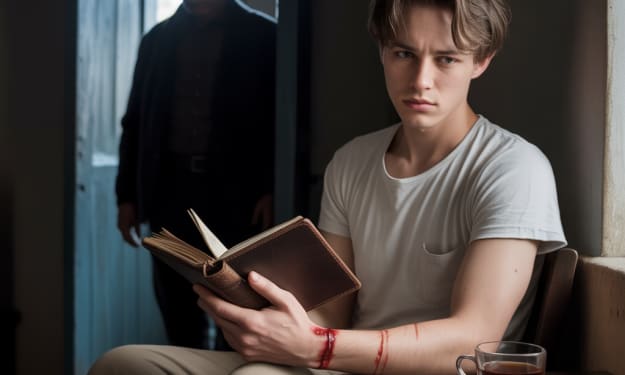
They say blood is thicker than water. But no one tells you how heavy it can feel. I was born into a family where no one said “I love you” out loud. Where silence was tradition. And suffering ran through our veins like some kind of inheritance. We bled, not from wounds — but from words unspoken, truths buried too deep, and the weight of expectations passed down like sacred curses. --- My father never hit us. But he didn’t need to. His silence could choke a room. One look could send us to our knees. He bled from his hands every day — the kind of blood that came from honest work and broken dreams. But he never showed pain. > “We don’t cry,” he used to say. “We hold it in. That’s what men do.” So we did. --- My brother, Adeel, was the golden one. Strong, stoic, brilliant. He followed in my father’s footsteps like a soldier marching to a war he never asked for. I followed too — quietly, always two steps behind. --- One night, Adeel got into a fight outside a gas station. Someone said something. He said something back. A broken bottle. A flash of red. And just like that, real blood was spilled. We rushed to the hospital. My mother praying under her breath. My father… silent. --- Adeel survived. Barely. He was never the same after that. He stopped eating. Stopped laughing. Started drinking. “Men don’t talk,” Dad said. “They get through it.” But Adeel didn’t. He bled differently now — from the inside. Quiet and constant. --- One day, I found him in the bathroom. Pale. Barely conscious. Wrists open. I screamed. He didn’t. That was the first time I understood that blood wasn’t just a metaphor in our family. It was our language. --- He lived. Again. But he left a note taped to the mirror: > “You never asked how I felt. You just assumed I was fine.” That sentence still slices through me like glass. --- After that, everything changed. Dad started going to bed earlier. Mom began lighting candles and praying harder. I… started writing. --- I kept a journal full of the things we never said: “I’m scared.” “I don’t know how to be a man.” “I love you.” “I wish someone would just hold me.” --- Then one day, I showed my father the notebook. He didn’t read it at first. Just stared at it like it was some foreign object. Then he asked, > “Why write this? What’s the point of remembering pain?” I looked him straight in the eyes and said: > “Because pretending it didn’t happen hasn’t helped us either.” He didn’t respond. But the next morning, I saw the notebook on his table — flipped open to the first page. A mug of tea sat beside it. That was his version of a conversation. --- Sometimes, love looks like pain passed down and finally broken. --- Now, years later, I work with boys like Adeel. Boys who’ve been told to man up. To shut up. To never cry. I teach them that strength isn’t silence. That blood doesn't always have to carry history — it can carry healing too. --- One of them once asked me, > “Do you think pain can be passed down in blood?” I said, > “Yes. But so can courage.” He smiled. I knew he understood. --- Adeel lives far away now. He paints. Sells art online. His wrists are scarred but his eyes are soft again. We call every Friday. Sometimes we talk about dad. Sometimes we don’t. --- The other day, my father — now slower, older — asked me, > “Do you think I ruined him?” I said: > “No. You just didn’t know how to hold him.” --- There’s something beautiful about broken men learning how to be gentle. Something tragic about how long it takes. --- Blood doesn’t have to be destiny. You can rewrite your story. You can choose what gets passed on. You can bleed — and still live. ---
By Muhammad Usamaabout a year ago in Fiction