Fan Fiction
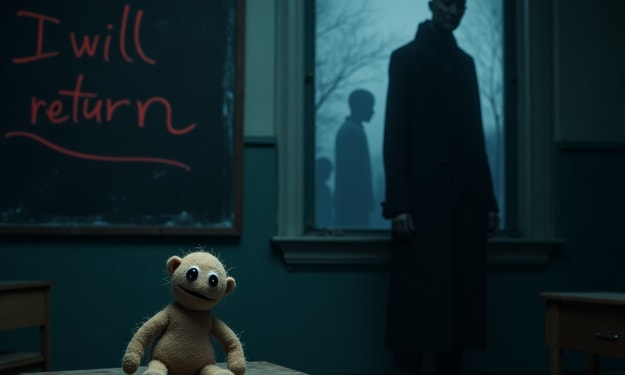
Return of the Puppet Master
The night was unusually quiet, the kind of silence that settles like fog — heavy, unspoken, and full of dread. The old school building stood still, wrapped in darkness, its crumbling walls whispering secrets of the past. Somewhere in that eerie calm, the sharp, sudden scream of a little girl sliced through the night like a knife.
By Ameer Gullabout a year ago in Fiction
The Cartographer
Amelia’s life was a meticulously organized map, every street, every landmark, precisely placed. As a cartographer, she thrived on order, on the certainty of lines and labels. Yet, lately, her own internal map felt increasingly blank, particularly the regions marked "childhood" and "family." A vague, persistent ache resided where memories should have been, a blank space she couldn't fill. Her grandmother, the last living link to her past, had recently passed, leaving behind a house filled with echoes and a single, enigmatic inheritance: a worn leather-bound journal.
By Momin Shahabout a year ago in Fiction
Love and Pride
It was an old street in Lahore, lined with dusty rose-colored bricks and narrow lanes that seemed to whisper stories of years gone by. In a modest house on that street lived Zimal, a beautiful, headstrong, and stubborn girl. Her greatest flaw was her pride. Since childhood, she had been taught never to bow her head before anyone — no matter how close, no matter how dear. Not far from her house lived Arham. Arham was a calm, thoughtful young man, known for his soft smile and kind heart. He had loved Zimal for as long as he could remember. Their story had begun like countless others — as childhood friends chasing kites on rooftops, sharing secrets under neem trees, laughing over stolen mangoes in summer. As they grew, so did the feelings they had for each other, changing from innocent childhood companionship into something far deeper. They never needed to say it aloud. It was there in every glance, every accidental brush of hands, every time Zimal saved a sweet for Arham or he carried her books home from college. The whole neighborhood whispered about them. It was only a matter of time before they would be married — everyone was sure of it. --- The Seeds of Pride But pride has a way of poisoning even the sweetest love. One evening, under the same old neem tree, Arham finally decided to speak. He brought a small silver ring, simple yet sincere. His hands trembled as he held it out to her. “Zimal, you know me better than anyone. I want you with me — forever. Will you marry me?” For a moment, a shy smile danced on her lips. Her heart screamed “yes,” but her mind held her back. What if people thought she was too eager? What if they thought she had no self-respect? Instead of answering, she teased, “So soon? Maybe you should prove your love a bit more. Besides, I don’t like simple rings.” Arham was startled. “It’s not about the ring, Zimal. It’s about us.” “But it is about these things too. Why hurry? Let’s wait. Let’s see how serious you are.” Hurt flickered in Arham’s eyes, but he nodded. “Alright, if that’s what you want.” --- The Growing Distance Days turned into weeks, and weeks into months. Zimal waited for Arham to come again with a grander proposal, perhaps something flashy, something that would satisfy her pride. Arham, on the other hand, felt humiliated. His heart broke a little every day, thinking that the girl he loved cared more for show than his sincere feelings. Their meetings became fewer. Conversations, once filled with laughter, were now edged with irritation. Neither was willing to take the first step back. Pride stood like an iron wall between them. One afternoon, Arham saw Zimal at the market. He smiled and walked toward her, hoping to mend things. But Zimal turned away, pretending to fix her dupatta, too proud to greet him first. Arham stopped in his tracks, his smile fading. If she couldn’t even acknowledge him in public, what was left? He decided then that he would no longer chase her. His love was deep, but his dignity was deeper. --- Love Lost to Ego Months later, news spread through the street that Arham’s family had finalized his engagement to a distant cousin. It was a quiet affair, arranged by elders who thought it best to help him move on. Zimal heard the news from a neighbor. Her hands trembled, the cup of tea she held slipped and shattered on the floor. That night, she lay awake, staring at the ceiling, her mind echoing with “What if…?” What if she had just said yes that evening? What if she had swallowed her pride for the sake of love? But pride is a cruel companion. Even now, her heart ached to run to Arham, to tell him how deeply she loved him — yet her stubbornness chained her tongue. Arham, too, spent countless sleepless nights. His heart still longed for Zimal, but his wounds were too raw, his humiliation too fresh. Both of them loved fiercely, yet neither could humble themselves enough to save that love. --- The Silent End Years passed. Zimal remained unmarried, living with memories of laughter under neem trees and hands brushing by accident. Often she stood by her window, watching children fly kites in the street below, wondering how her life might have been if she had simply listened to her heart. Arham had a family of his own now, a wife who cared for him and children who laughed in his lap. Yet every time he passed that neem tree, something deep inside him twisted with an old, unhealed ache. Thus ended a love that could have been beautiful — ruined not by time, not by fate, but by two hearts too proud to bend for each other.
By Aman Ullahabout a year ago in Fiction
Love at First Sight
Amaan was never the kind of boy who believed in love stories. He always thought they were exaggerated tales people told to make life sound more colorful than it really was. But on the first day of college, that belief shattered like fragile glass.
By Aman Ullahabout a year ago in Fiction
The Last Kite. AI-Generated.
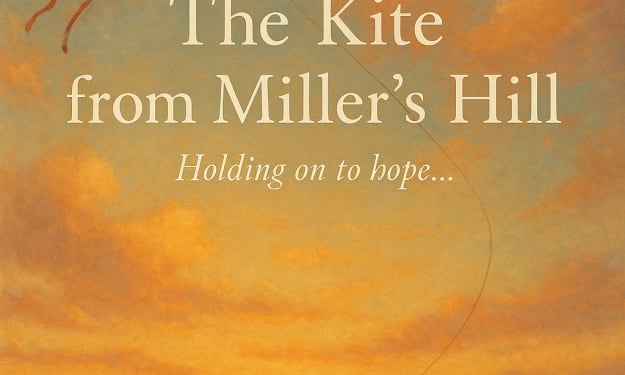
When Jacob’s grandfather died, he left behind very little—an old flannel coat, a pair of muddy boots by the back door, and a red kite tucked away in the attic. The kite was fragile, the paper thin and yellowing, but the frame was sturdy. On one side, written in shaky black ink, were the words: "We rise again." Jacob hadn’t seen the kite in over ten years. It had been their ritual once—every spring, just as the frost lifted, they’d walk up to Miller’s Hill, a windswept patch of grass behind the orchard. His grandfather would carry the kite like a banner, and Jacob would run, his heart beating in time with the wind. But time moved forward, and rituals faded. Jacob grew older. The kite stayed in the attic. --- It had been three weeks since the funeral. The house smelled like wood polish and silence. No one visited anymore. His parents had flown back to the city. The will had been read. Everything settled into dust. Everything, except the kite. Jacob found it while looking for a hammer. The attic was dim, filled with cobwebs and the scent of forgotten summers. He hadn’t gone up there in years, but the moment he saw the red fabric, a chill ran through him—not of fear, but of recognition. Memory tugged at his sleeve like a child wanting to play. He took the kite down, dusted it off. It was lighter than he remembered. Or maybe he had just gotten heavier. --- The next morning, he found himself walking the familiar dirt path up to Miller’s Hill. The wind was strong that day—one of those restless spring winds that pull at your collar and make you squint at the sky. The kind his grandfather used to say was “perfect flying weather.” Jacob stood in the middle of the field, his boots sinking slightly in the thawing ground. He felt ridiculous. He was twenty-eight, alone, holding a tattered kite. But he ran. The kite wobbled at first, dragging low, then caught a gust. With a sudden whoosh, it lifted into the air, dancing against the clouds. Jacob let out a breath he didn’t know he’d been holding. It soared. Higher and higher. He stood there, fingers tight on the string, eyes full of sky. For a moment, he swore he could feel his grandfather beside him, murmuring the same phrase he always said when the kite took off: “See that, Jacob? We don’t stay down forever.” --- The next day, he returned to the hill. And the day after that. What started as a one-time visit became a quiet habit. The townspeople began to notice. An old woman walking her dog waved at him one morning. “Your grandfather used to bring you up there,” she said. “It’s nice, what you’re doing.” Jacob nodded, unsure what he was doing exactly. But the kite kept rising, and with each flight, the tightness in his chest loosened, just a little. --- One day, a boy appeared at the edge of the field, watching shyly. He couldn’t have been more than ten. Thin frame, worn sneakers, a stitched patch on his backpack. Jacob looked over. “Wanna try?” he asked, offering the spool of string. The boy hesitated, then nodded. Together, they ran. The kite soared. Afterward, the boy smiled. “My dad used to fly kites with me,” he said softly. “Before he left.” Jacob didn’t ask questions. Instead, he handed the boy the kite. “Keep it. It flies best when it’s shared.” --- Spring turned to summer. Jacob repaired the old workbench in the shed and built more kites—bright ones, patterned ones, even one shaped like a bird. Kids started coming up to the hill. Parents followed. Soon, Miller’s Hill became a patchwork of color and laughter. The town called it The Kite Circle. Jacob never officially led it, but he was always there, carrying extra string, helping kids whose kites nose-dived, whispering, “We rise again.” --- On the one-year anniversary of his grandfather’s passing, Jacob stood alone on the hill at sunset. The red kite—the original—still flew, patched in one corner, but strong. He held the string gently, then let it go. The kite spun upward one last time, danced with the wind, then drifted down, settling between two oaks. He didn’t chase it. He just smiled. Because he finally understood what his grandfather meant. --- Some things fall. Some things fade. But the things that matter—the love, the lessons, the hope— They rise again.
By Muhammad umairabout a year ago in Fiction
When the Sky Opened
The sky had always been a constant presence—endless, predictable, a backdrop to the rhythm of everyday life. But one ordinary afternoon, everything changed. When the sky opened, it wasn’t just a meteorological phenomenon; it was a profound event that reshaped a community, altered lives, and stirred the deepest questions about our place in the universe.
By Muhammad Asimabout a year ago in Fiction
The Clockmaker’s Secret: A Steampunk Adventure
In the mist-shrouded streets of New Babbage, where copper pipes twist like serpents across soot-blackened walls and clockwork machines hum in eternal motion, a secret lies hidden — a secret that could change the world. This is the setting for The Clockmaker’s Secret, a thrilling steampunk adventure story that weaves mystery, invention, and rebellion into an unforgettable narrative.
By Muhammad Asimabout a year ago in Fiction
The Secret of the Old Diary.
When Zara agreed to spend a few weeks at her grandfather’s old house in the quiet village, she had imagined peaceful days, maybe a chance to sketch or catch up on reading. What she didn’t expect was to uncover a secret that would change how she saw her family forever. The house was tucked away at the end of a dusty lane, its wooden doors weathered by decades of rain and sun. Inside, everything smelled faintly of sandalwood and old books. Her grandfather spent most of his days sitting on the veranda, sipping tea, lost in thoughts. One afternoon, when the sun was high and birds chirped lazily from the neem trees, Zara decided to explore the attic. She climbed the narrow staircase carefully, brushing aside cobwebs. The attic was dim, with tiny spears of sunlight piercing through cracks in the wooden roof. Pushed into a corner was an old chest, covered in dust so thick that her fingers left deep trails when she touched it. Curiosity overpowered hesitation. She pulled the heavy lid open. Inside were bundles of old letters, sepia photographs of people she did not recognize, and at the very bottom, a leather-bound diary. Its cover was cracked, the gold lettering nearly faded away, but she could still make out: “Memories & Secrets.” Zara sat down on an old trunk, the diary balanced on her lap. As she opened it, a gentle scent rose from the pages — something like dried roses mixed with time itself. The first few entries were simple. Notes about village life, small joys, descriptions of market days and rains that turned roads to rivers. But then, about halfway through, Zara found something that made her heart catch. It was a letter, written in her grandfather’s hand, but never sent. > “My dearest Fariha, I wonder if time will ever be kind enough to let us be together. Each day, I see your smile in every flower that blooms, hear your laughter in the rustle of leaves. But our families would never allow it. I hope one day, when we are old and the world has tired of its stubbornness, we will sit under the mango tree, your hand in mine, with nothing left to fear…” Zara closed her eyes. Her grandfather had always been a figure of calm strength — gentle, wise, but never someone she thought of as a man who had once been desperately in love. The diary unfolded more letters like this, little passages that spoke of secret meetings by the riverbank, stolen glances during village fairs, dreams of a future that never came to be. Then came an entry that was different — dated many years later. > “I saw Fariha today, after all these years. Her hair is silver now, her laughter softer, but she is still the girl who made my heart race under the old neem tree. We spoke of gardens, of grandchildren, pretending the past never happened. But when she left, she pressed a jasmine into my hand. Some things, it seems, never truly fade.” Tears filled Zara’s eyes. She thought of her grandfather sitting on the veranda downstairs, looking out over fields where perhaps he once dreamed of walking hand in hand with the love of his life. All these years, he had carried this quiet ache, and no one had known. Gently, Zara closed the diary, holding it to her chest as if she could feel the heartbeat of the young man her grandfather had once been. She went back downstairs, the afternoon light now mellow and golden. Her grandfather looked up and smiled. “Find anything interesting in the attic, beti?” Zara walked over and sat by his side. For a moment she simply looked at him, seeing not just the gentle old man she’d always known, but also the boy who once wrote love letters under starlight. “Yes, Nana,” she said softly, slipping her hand into his wrinkled one. “I found memories. Beautiful ones.” He chuckled, a sound both wistful and warm. Then he squeezed her hand. “That’s all life is, my dear — a box of memories. We’re lucky if we get to share them before they turn to dust.” They sat there together as the sun dipped lower, painting the sky in strokes of orange and lilac. The breeze carried with it the faint scent of jasmine. Zara closed her eyes, imagining a younger version of her grandfather, standing under the neem tree with Fariha, love shining bright and fearless in their eyes. Some secrets, she realized, weren’t meant to stay hidden forever. Sometimes they waited quietly, tucked away in old diaries, hoping to bloom again in someone else’s heart.
By Aman Ullahabout a year ago in Fiction