Fan Fiction
I Followed a Strange Trail on Google Maps – What I Found Shocked Me
1. The Glitch That Changed Everything Maya Chen’s life was measured in pixels. As a satellite imagery analyst for TerraGlobal, her job was to spot discrepancies in digital maps. But when a jagged green trail appeared overnight on Google Maps—snaking through downtown Seattle where no park existed—even she dismissed it as a glitch.
By Habibullahabout a year ago in Fiction
The Lost Temple of Zorath
Chapter 1: The Mysterious Map The dusty antique shop in Cairo smelled of aged parchment and forgotten secrets. Archaeologist Lena Carter carefully unrolled the brittle map she'd just acquired from a shady merchant, her fingers trembling with excitement. The faded ink depicted a hidden temple deep in the Amazon rainforest—the Lost Temple of Zorath, a mythical place said to hold an ancient artifact of unimaginable power.
By JAWAD HUSSAINabout a year ago in Fiction
Where the Birds Waited for Her
Where the Birds Waited for Her Written by Shah Zeb Every morning at 6:45 AM sharp, Eleanor stepped onto her small balcony with a cracked ceramic bowl full of seeds. Her balcony overlooked the modest garden she tended to herself, a little square of green in an otherwise graying suburban neighborhood. A line of small wooden birdhouses hung from the awning above, painted in pale blues and gentle pastels. They looked like a row of forgotten memories, faded but tender. The birds came with the sun. Chickadees first, then cardinals, then the plump mourning doves who always arrived late, like tired guests at a Sunday brunch. She had names for them all—not based on science or species, but on feeling. The tiny brown one with the crooked wing was Pip. The red-breasted visitor was Clara. The loud, bossy one with the attitude? That was Detective. Eleanor was 82 and lived alone. Her husband had passed away ten years earlier, and her daughter, now grown, lived two states away with children of her own. They called weekly, sent cards on birthdays, and promised to visit more often. Eleanor never resented the distance. She understood life moved fast, and she had made peace with her solitude. Her birds, however, were daily guests she could rely on. "Morning, Clara," she'd whisper, gently tossing seeds across the railing. Clara would hop once, then twice, before pecking the ground gracefully. Pip would flap around anxiously, waiting for his moment. The ritual was always the same, as familiar to Eleanor as her own heartbeat. The neighbors had noticed her little ritual, though few ever spoke of it. They thought of Eleanor as kind but quiet, the sort of neighbor who’d smile softly but never overstay a conversation. Some of the children had called her the Bird Lady. One summer, a group of them had even drawn bird footprints with chalk leading up to her gate. And then, one morning, Eleanor didn’t come out. At first, the birds waited on the roof and railing like always. Pip fluttered his wings in a nervous rhythm. Clara perched on the balcony's edge, her head cocked toward the window. Detective let out two loud chirps and flew away. But Eleanor’s window remained still. By noon, the seeds remained in their ceramic bowl by the kitchen sink. She had passed away in her sleep. The news trickled slowly. A concerned neighbor noticed the mail piling up. The garden, always tidy and lovingly trimmed, was beginning to wilt. A wellness check was made. Her daughter arrived two days later, her face pale and lips pressed into a thin line. She stood on the balcony in the early morning, clutching the bowl of seeds in her hands. She scattered them. And the birds came. Pip landed first, more hesitant than usual. Clara followed. Even Detective made a rare, quiet appearance, as if sensing something different. Eleanor’s daughter wept behind the curtain of her long sweater sleeves as the little wings fluttered and dipped, feeding in silence. In the weeks that followed, the balcony stayed empty. But the birds kept coming. Every morning at 6:45 AM. The neighbors noticed. The woman was gone, but the birds—dozens of them—still came. They lined up on the balcony railing, perched on the old birdhouses, and waited. No food was there, but they came anyway. Pip still flapped nervously. Clara still tilted her head, scanning the window. It became a quiet mystery. A retired teacher who lived across the street wrote about it in the neighborhood newsletter. Someone else posted a photo online, captioned: “She’s gone, but they remember.” The story spread. Comments flooded in. “Nature remembers kindness.” “Proof of soul.” “Not all routines die with us.” One morning, a child from the neighborhood—maybe nine or ten—climbed the gate and placed a small bowl of seeds on the balcony. Her parents scolded her later, but the next morning, when she returned with her father, the seeds were gone. Birds, full and bright, fluttered into the sky as she beamed. So began the second ritual. Neighbors took turns. They left seeds. Hung new birdhouses. Repainted the railing in Eleanor’s favorite pale blue. The garden was weeded and watered. Even the mailman brought a bag of sunflower seeds one morning, leaving it neatly by the gate. Eleanor’s daughter visited on the anniversary of her passing. She stood among people she’d never met—neighbors, children, elders. Together, at 6:45 AM, they watched as the birds came again. And waited. The ceremony was brief. No speeches. Just seeds scattered, and wings rising into the morning light. Someone had made a small plaque: “She gave, they remembered. Eleanor’s Birds.” Years passed. The house eventually sold to a young couple. They kept the garden. Refilled the feeders. The tradition stayed. Tourists even visited sometimes, drawn by the quiet beauty of it. The birds kept coming. Not because of habit. But because, perhaps, they felt something there. Something left behind. Not all goodbyes are echoes. Some are seeds. And some seeds bloom with wings.
By Moonlit Lettersabout a year ago in Fiction
The Keyboard Is Mightier
Part I: The Kid Behind the Screen Max was fifteen when he hacked his first school database. It wasn’t out of malice—just curiosity. He wanted to see if he could. When the login screen gave way to rows of student records and confidential teacher notes, his heart thundered like a war drum. He didn’t change anything. He just stared.
By waseem khanabout a year ago in Fiction
The $5 Scratch Card That Changed My Life
It was just another Thursday morning. The kind of day where the coffee tastes dull, your phone is filled with spam notifications, and your to-do list is longer than your patience. I stopped at the gas station like I always do — to fuel both my car and my mood. I grabbed a coffee, a pack of gum, and on a whim, a $5 scratch card. The kind with shiny gold foil and flashy promises.
By Shoaib Afridiabout a year ago in Fiction
The Man Who Sat in Silence for 10 Years
The Man Who Sat in Silence for 10 Years Written by Raza Iqbal In the small village of Bramble Hollow, nestled between misty hills and forgotten trails, there lived a man named Elias Wren. No one had heard his voice in ten years. Not even a whisper.
By Moonlit Lettersabout a year ago in Fiction
Whispers of the Wind
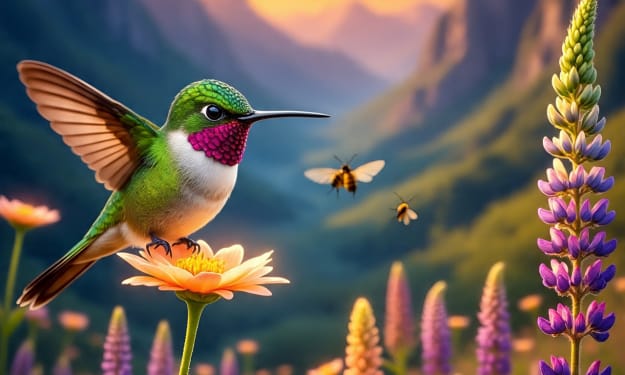
In a lush, hidden valley nestled between towering green mountains and sparkling rivers, lived a tiny hummingbird named Luma. Her feathers shimmered in the sunlight—emerald green on her back and ruby red on her throat. But it wasn’t just her colors that made her special. Luma had something more—a heart full of dreams. While most hummingbirds in her colony were content with fluttering from flower to flower, sipping nectar, and resting in the comfort of the same old trees, Luma often found herself gazing at the distant horizon. She would perch on the highest branch and stare into the skies, wondering what lay beyond the familiar. Other birds would chirp, “Why go so far when all we need is here?” But Luma couldn’t help it. The world called to her. From the time she was young, she had heard stories told by the elder birds—tales passed down from beak to beak—about a mythical place known as The Blooming Heart. It was said to be a hidden valley where flowers never faded, the air was sweet all year round, and the wind carried dreams instead of dust. Many birds had searched for it, but none had returned with proof. Some even said it was just a story, made up to entertain the young. But Luma believed. Not blindly, not foolishly, but deeply. She believed in beauty, in adventure, in the possibility that something more existed beyond what was known. And so, one cool morning, just as dawn colored the sky in hues of rose and gold, Luma made a decision. With a flutter of her wings and a heart pounding with courage, she left her valley behind. The world beyond was more beautiful—and more difficult—than she had imagined. She flew over tall forests where trees touched the clouds and flowers grew in colors she had never seen. She hovered near icy streams, tasted nectar from wild blooms, and watched fireflies dance like stars in the dark. She made friends along the way—a wise old owl who showed her how to read the wind, a cheerful blue jay who taught her which berries to avoid, and even a shy butterfly who guided her through a stormy night. Every creature seemed surprised that such a tiny bird had come so far, all alone. But it wasn’t always magical. Luma faced harsh rains and cold winds that chilled her wings. Sometimes the skies grew dark, and no flowers could be found for miles. Her energy would fade, and she would sleep shivering on a branch, wondering if she had made a mistake. One day, after weeks of travel, Luma reached the edge of a canyon. The wind howled, and the sky looked uncertain. She almost turned back. But then she remembered the stories—the Blooming Heart wasn’t just a place. It was a dream. A dream that asked for bravery. And so, she pushed forward. Hours later, as the sun began to set, painting the clouds with shades of orange, pink, and violet, Luma saw it—a clearing surrounded by the tallest flowers she had ever seen. They shimmered with dew and light, and the entire field seemed to hum with life. Butterflies floated lazily through the air. Bees buzzed softly without haste. The wind was warm and full of fragrance. Luma landed gently on a petal and closed her eyes. There was no grand sign, no booming voice telling her, “You have arrived.” Instead, there was peace. A quiet so deep it filled her from beak to tail. And then came the whisper—not in words, but in feeling. The wind asked, Is this enough for your heart to bloom? And Luma smiled. Because now she understood: The Blooming Heart wasn’t a place on a map. It was a journey. It was every risk taken, every storm survived, every friend met along the way. It was the bravery to follow a dream, even when no one else believed in it. When Luma returned to her home valley weeks later, the other hummingbirds fluttered in awe. Her feathers were a bit faded, her wings thinner, but her eyes sparkled brighter than ever before. “Did you find it?” they asked eagerly. “Is the Blooming Heart real?” Luma nodded. “Yes. But not in the way we thought. I didn’t find it—I became it.” From then on, Luma became more than a traveler. She was a teacher, a storyteller, a guide. Young hummingbirds gathered around her, eyes wide with wonder, as she told them about far-off skies and whispering winds. And whenever a young bird asked, “Do you think I could go too?” Luma would smile and say, “Only if you’re ready to let your heart grow wings.” And somewhere, far beyond the mountains, the wind would whisper again—carrying the tale of a tiny hummingbird who believed that no dream was too big for a brave heart to follow. Start writing...
By Muhammad Bilalabout a year ago in Fiction
The House That Waited for Her
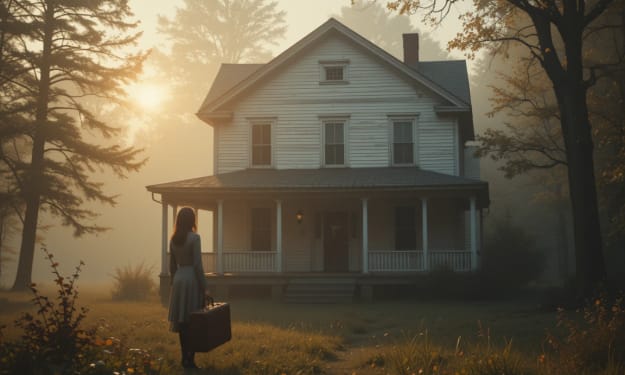
The House That Waited for Her Written by Mirza The house sat at the edge of a forgotten road, with white paint peeling like old memories and vines growing over the porch railings like stubborn thoughts no one had trimmed back. For forty years, it had waited — quietly, patiently — for her to return. To the rest of the town, it was just the “old Barlow house,” the one people drove by without really seeing. No one lived in it. Not since Ellie left. They said Mr. Barlow never moved a single piece of furniture after she ran away. The curtains remained drawn, her bedroom untouched, and the porch light — it stayed on, every night, like a lighthouse in case she ever came home. Ellie Barlow had been a spark in a quiet town, a girl with fire in her voice and wildness in her heart. She talked about New York, Paris, and places most people only read about. She wanted more than her small town could give. So on a humid July morning in 1985, just sixteen, Ellie packed a bag, left a note on the kitchen table, and boarded a bus that didn’t stop for goodbyes. And she never looked back. She became Eleanor Barlow in the city. Dropped the southern lilt, the denim jackets, and the scent of honeysuckle. She wore blazers and heels and built a life out of ambition. Editor. Director. Then, finally, her name in the corner of a hardcover book jacket — a memoir of someone else's life, written in her own words. But she never wrote about herself. She told friends she was an only child, that her parents were dead, and that she didn’t miss the place she came from. She told herself the same lies, until they became easier to carry than the truth. But on her 56th birthday, a letter arrived. A real one, with a crooked stamp and shaky handwriting she hadn’t seen in decades. > "Dear Ellie, If you’re reading this, it means I’m gone. The porch light is still on. You can come home now. — Dad." The house smelled like old wood, dust, and the faintest trace of lemon soap. Ellie stood in the foyer, her hands trembling as they used to when she was five and had knocked over her mother’s vase. Nothing had changed — not the photos on the wall, not the grandfather clock frozen at 3:17, not even the tiny pencil mark that still measured her height on the kitchen doorframe. The dining table still held the lace runner. Her chair still wobbled at the leg. And on the fridge was the last thing she ever drew — a crayon sketch of a girl flying a kite. Her father's shoes were still by the door. She found the note on her old bed: > “Thought you might come one day. Bedroom’s still yours. Welcome home, little star.” She didn’t cry. Not at first. She made coffee in the same chipped kettle. She sat on the porch and listened to crickets. She looked across the field where she used to chase fireflies and remembered the night her father built a campfire and promised her the stars would wait for her. They had. The neighbors were older. A few recognized her. Most didn’t. She didn’t explain. She helped Mrs. Heller carry groceries and fixed the swing in the old park. She walked past the school and stared at the empty lot where her best friend’s house once stood. One afternoon, she sat down at the same wooden desk in her old room. And for the first time in decades, she wrote about herself. About the girl who left. And the woman who came back. She stayed for a month. The house whispered to her, each room unlocking a version of herself she had buried. The girl who used to sing into hairbrushes. The teenager who kissed a boy named Luke under the bridge. The daughter who once believed her father didn’t understand her dreams. But he had. He had left the light on for 40 years. And when she opened the attic, she found a box labeled “For Ellie.” Inside, were postcards she had never sent, old newspaper clippings of her achievements, and a small tape recorder. She played it. > “You don’t have to forgive me. I just hope you find peace. Wherever you go, you’ll always have a place here. Love you forever, Dad.” Ellie didn’t sell the house. She returned to the city, but she visited every summer. Eventually, she wrote a second book: “The House That Waited for Me.” It wasn’t a bestseller. But readers loved it. Because it was real. And it made them remember their own unfinished stories.
By Moonlit Lettersabout a year ago in Fiction
Whispers in the Dark
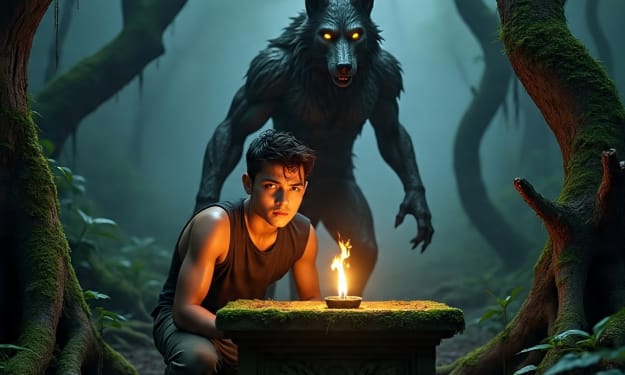
The jungle had always belonged to the predators. At least, that’s what the villagers believed. For generations, they whispered tales of a beast that hunted only under the new moon—a creature with glowing eyes, breath like smoke, and claws that left no trail. They called it "Shaqaal", meaning "the Silent One." Few had seen it and lived. In a remote village nestled at the edge of the ancient Zartan Forest, a young hunter named Rafiq had made a name for himself. Brave, strong, and clever, he had tracked wolves, leopards, even a starving tiger. But now, an unsettling silence had taken hold of the jungle. No birds sang, no monkeys chattered. And goats, cattle, and even people had begun disappearing—always on nights when the moon vanished. The elders begged Rafiq not to go. “This is not your prey,” warned old Zahra, the healer. “Shaqaal is not of this world.” But Rafiq was proud. Too proud. “I’ve never met a beast I couldn’t face.” So, on the next moonless night, armed with only his bow, a blade, and a torch, he slipped into the forest, guided by the stillness and the creeping mist. The trees, tall and ancient, seemed to lean in as if whispering secrets to one another. Hours passed. Nothing. No sign. Only fog and the sound of his own breathing. Then, just as he neared the Black Hollow—a place feared even by seasoned hunters—he saw it. Two eyes. Burning yellow. Motionless. Rafiq froze. The creature stepped into view. It was no ordinary predator. Standing taller than a man, its body was sinewy, coated in dark, shadowy fur that seemed to absorb the light. Its face was wolf-like, but stretched too long, too sharp. And its limbs ended in long, hooked claws that barely touched the ground. It made no sound. No growl. No snarl. Just watched. Rafiq raised his torch high and shouted, trying to scare it off. The creature blinked slowly—then disappeared. Not ran. Not jumped. Just melted into the mist. He spun, heart pounding, trying to find it. That’s when the whispers began. Not from one direction, but all around. Low. Hollow. Echoing words he couldn’t understand. He backed away, stumbling over roots, eyes darting. Then he saw movement—three shadows, maybe four, circling him. But every time he looked directly, there was nothing. Suddenly, a claw lashed out from behind, slashing his shoulder. He cried out and swung his torch—but again, nothing. The jungle came alive with the whispers. And the laughter. Realizing he was no longer the hunter, but the hunted, Rafiq turned and ran. Branches whipped his face, blood soaked his sleeve, and the trees blurred into darkness. He reached an old stone altar—the one from Zahra’s tales—said to be where Shaqaal had first appeared a hundred years ago. He collapsed behind it, gasping, and dipped his fingers into a pouch he’d brought—ashes from his father's grave. In the old tongue, he muttered a prayer of protection, just as Zahra had taught him in secret. The forest held its breath. The whispers paused. Then... silence. Rafiq dared to peek over the stone. There it stood. Closer than ever. Staring. But now its eyes weren’t glowing. They were... confused. Afraid? The ashes worked. The old magic still lived. The creature shrieked—an unearthly sound that pierced the air like glass shattering. It lunged at him—but something stopped it mid-air. An invisible force held it back, burning its skin like fire. The beast howled and vanished into the mist again. Rafiq, trembling, marked a circle with the ashes around the altar and waited till dawn. When the first light broke through the canopy, the jungle exhaled. Birds chirped. Leaves rustled. And the whispers died. --- Rafiq returned to the village, bloodied but alive. He no longer boasted, no longer hunted. Instead, he became the forest's guardian—keeping the ashes sacred, warning others of the old spirits that still roamed beyond the veil. The jungle was not just home to animals. It remembered. It waited. And under the new moon, it whispered. Still.
By Muhammad Bilalabout a year ago in Fiction
The Things We Never Said
It’s strange how you can know someone for years and still feel like a stranger when it ends. Meera and I weren’t just best friends — we were soul sisters, or at least, that’s what we used to say. We met in school, grew up together, laughed until our stomachs hurt, cried on each other’s pillows, and shared dreams like secrets. We promised that no matter what happened, we’d never let distance or time change us. But promises made in youth don’t always survive adulthood. --- Where It Started to Slip It wasn’t a fight. That would’ve been easier, cleaner. At least then there would’ve been a moment to point to — a reason. Instead, it happened slowly. Life got busier. She got a new job in a different city. I got into a relationship that consumed more of my time than I expected. We missed each other’s calls. Conversations became shorter. Birthday wishes became texts instead of phone calls. But the love never left. It just… went quiet. I remember one weekend I traveled to her city for work. I thought about calling her, about grabbing coffee like old times. But I convinced myself she was probably busy. I told myself, “Next time.” But sometimes, next time never comes. --- I Thought There Was Time I always told myself we’d reconnect soon. Maybe I’d visit her. Maybe we’d sit on her old rooftop and talk like we used to. Maybe we’d pour our hearts out like we did when the world still felt simple. But I waited too long. One Sunday morning, her brother called. I hadn’t heard from him in years. His voice was low, heavy. I felt it before he even said the words. > “She’s gone, Arooj. She didn’t wake up.” Just like that. No warning. No goodbye. No closure. I stared at the wall for what felt like hours, my phone still in my hand. The world didn’t stop — cars still passed by, birds still chirped — but mine collapsed into stillness. I kept waiting for someone to say it was a mistake. That she’d call me laughing, saying, “Don’t be dramatic, I’m fine.” But she didn’t. She never would. --- The Guilt That Followed The grief came in waves. But the guilt — that was constant. Why didn’t I call more? Why didn’t I ask how she was really doing? Why did I think we had forever? I kept scrolling through our old chats. Her last message was simple: > “Miss you, idiot.” I had replied, “Me too. Let’s catch up soon.” We never did. Now I visit her old texts like a haunted place — looking for what I missed, wondering if she knew I loved her, even when I didn’t say it enough. I even typed out a message to her one night. “I wish I had said more.” I never sent it. I just stared at it until the screen went dark. --- The Things We Never Said We never talked about how lonely she might have felt in that new city. We never said, “I need you,” even when we did. We never admitted we were drifting — we just kept pretending we weren’t. There’s a special kind of ache in unfinished friendships — the kind that don’t end in anger but in silence. She never said goodbye, and I never got the chance to say I’m sorry. --- What I Know Now If I could say one last thing, I’d say: > “I’m sorry. For not showing up sooner. For thinking we had time. For every laugh I saved for later.” But I can’t. So now, I write letters I’ll never send. I replay memories that now feel like scenes from another life. And I whisper her name sometimes, hoping she still hears me. I light a candle every year on her birthday. I don’t tell anyone why. That tiny flame reminds me of our quiet friendship — soft, constant, and gone too soon. --- Final Thought Don’t wait to say the things that matter. Because sometimes, the most painful goodbyes are the ones that never happen — just a missed call, an unopened message, and the sound of silence where a voice used to be. Tell your people you love them — while you still can.
By Hazrat Bilalabout a year ago in Fiction