family
The Voice Memos I Never Sent
The first voice memo was for Michael. I remember recording it one evening while walking home. The sky had turned a soft indigo, and I’d just passed the coffee shop where we first met — not by fate, but because you knocked over my laptop with your messenger bag. You apologized, bought me a coffee, and the next thing I knew, we were building a life.
By ℍ𝕦𝕕 ℍ𝕦𝕕 𝔸𝕞𝕫about a year ago in Fiction
Second Home
I have been away from home for a few years now, but I still miss it. In my own way. Not in the way they expect me to. My friends and family, I know they love me, but I don’t think they truly understand me. Not one of them supported my move away, not really. A few of my friends tried to act supportive, but they never seemed convincing. You could tell that they had this expectation of me. I don’t even think it was about me. They just expected me to follow the pattern. To keep my head down and file through life in the order I’d been given.
By Simon Georgeabout a year ago in Fiction
Joyful Splashes: A Child’s Delight in the Pool. AI-Generated.
The sun was high in the sky, shining brightly over the small village. It was summer vacation, and the air was hot and dry. Birds chirped lazily on the trees, and even the leaves seemed tired in the heat. But inside the little garden behind the Malik family’s house, laughter filled the air.
By Bilal Mohammadiabout a year ago in Fiction
The Window That Never Closed
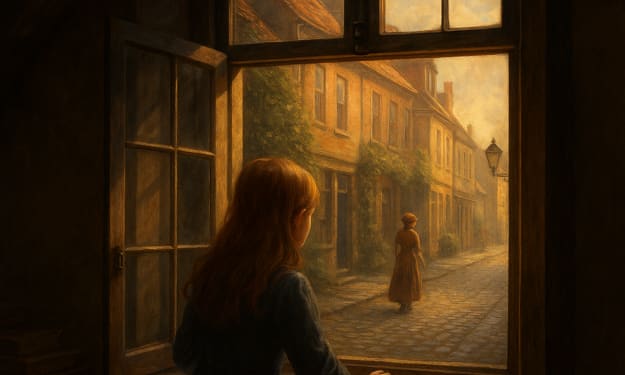
At the edge of a quiet village stood a weathered stone house with ivy crawling up its walls. It had a red door, crooked chimney, and one peculiar window on the third floor. No matter the season — rain, snow, or wind — the window never closed. Some said it was stuck. Others whispered that it chose not to. But no one really knew why. Talia, a twelve-year-old with too much curiosity and not enough fear, had just moved into that house with her grandmother. Her parents had gone abroad for work, leaving her in the care of Granny Mae. The house smelled like old books and lemon soap, and each floor creaked with its own rhythm. But what fascinated Talia most was that window — tall, narrow, and always slightly open. She could feel a breeze from it, even when the rest of the house was still. One morning, while unpacking dusty boxes in the attic, Talia finally approached it. Outside, the garden lay overgrown and misty. But as she looked through the glass, something changed. The garden wasn't there. In its place stood a cobbled street with horses, carriages, and women in bonnets walking under gas lamps. She blinked. Rubbed her eyes. Looked again. The view remained. Her heart raced. She stepped back, unsure. The attic around her was silent, unchanged. But the window showed a world not her own — not even her time. That evening, she told Granny Mae, who only smiled. “That window has always been strange,” she said, stirring soup. “I looked through it once when I was your age. Never forgot what I saw.” Talia wanted to ask more, but the look in her grandmother’s eyes said: not yet. The next day, Talia returned to the window. This time, she placed a hand on the glass. It felt cool, like touching a calm river. Suddenly, the latch clicked — the part that never worked before. The window creaked open a little wider, and with barely a breath, she was pulled through. Not fallen — not jumped — just passed. As if the window accepted her. She landed softly on a cobbled path. The air smelled different — smoky, earthy, alive. Children played with hoops, a man sold newspapers shouting headlines from 1891, and a girl around her age stared at her with wide eyes. “You’re not from here,” the girl said plainly. “No,” Talia admitted. “And neither is that window.” The girl nodded. “I’m Elsie. It brought you here too, didn’t it?” Elsie took Talia’s hand and led her through the streets. Everything buzzed with life, but it felt like a faded memory — a photograph given breath. “I found the window when I was smaller,” Elsie explained. “It shows people what they need to see, when they need to see it.” Talia was puzzled. “But why me?” Elsie stopped. “Maybe to remember something… or to change something.” They wandered to a park where an old bench sat under a tree that looked oddly familiar. “This is where I come to think,” Elsie said. “I never knew anyone else could come through.” Talia sat, looking around. “How long have you been here?” she asked. Elsie looked down. “A long time. I think… I forgot how to leave.” Talia felt a chill. Back at the window, time passed differently. In the house, Granny Mae noticed the breeze had stopped. For the first time in fifty years, the window was fully closed. She climbed the stairs slowly and pressed her hand against the glass. “She’s gone through,” she whispered. “Just like I did once.” But her voice wasn’t afraid — only thoughtful. In the past, Talia realized something. The buildings, the people, even Elsie — they weren't alive in the usual way. They were memories, moments. “This isn’t time travel,” she said aloud. “It’s… time remembering.” Elsie nodded slowly. “That’s why I couldn’t leave. I forgot who I was outside this place.” Talia reached for her hand. “Then let’s remember together.” Talia began to speak of her grandmother, the lemon soap, the attic’s creaks, and the books filled with pressed flowers. Elsie’s eyes filled with tears. “I remember now,” she whispered. “Granny Mae… was my sister.” Talia gasped. “You’re my great-great-aunt.” The wind stirred around them. The window had opened for a reason. Back in the attic, the latch clicked once more. The window opened with a long breath, as if waking. A breeze swept through the room, carrying the faint scent of cobblestone and roses. And then, softly, Talia stepped back inside — her feet dusty, her heart full. Behind her, Elsie faded like morning mist, smiling. Granny Mae was waiting. “You saw her, didn’t you?” she said. Talia nodded. “She remembers now.” The two stood by the window together. It remained slightly open, always. But now, it felt like it belonged. Not a mystery — but a memory, kept alive. A window between worlds, and within hearts.
By The Pen of Farooq about a year ago in Fiction
Cupcakes and Sunshine
It was one of those easy, quiet afternoons when the sun was warm but not too hot, and the sidewalk seemed to stretch out like a gentle path to nowhere in particular. I wasn’t rushing, wasn’t on any schedule. I was just enjoying the day — something that doesn’t happen often enough in our busy lives.
By ibrahim khanabout a year ago in Fiction
When the Rain Fell Softly. AI-Generated.
The first time I saw her, it was raining—not the wild, stormy kind, but the soft, gentle drizzle that makes everything feel like a dream. I was sitting outside a quiet bookstore in Lahore, under a small awning, sipping hot chai from a paper cup. The smell of wet earth, old books, and street samosas lingered in the air. That’s when she appeared—running, laughing, drenched but not bothered at all. Her dupatta clung to her, her hair wet and tangled, and her smile… it was the kind that didn’t ask for attention but captured it anyway. She looked at me, a stranger, and said, “Do you mind if I stand here for a while? My umbrella broke halfway down the street.” I moved slightly, making space under the already crowded shade. “Of course not.” She stood beside me, brushing water from her sleeves. There was a kind of quiet comfort in the moment—two strangers sharing shelter from the rain. I offered her some chai. She took it with a soft laugh and thanked me. That’s how it began. Her name was Areeba. She was a literature student, studying Urdu classics, and had a soft spot for rainy days and old poetry. That first conversation went from Faiz to Ghalib, from chai stalls to childhood stories. She told me how marigolds reminded her of her grandmother’s garden—how they were simple but lasted longer than roses. I remember thinking, This girl sees beauty in things most people forget to notice. We parted ways that day without exchanging numbers, just a smile and a soft “maybe I’ll see you again.” I didn’t expect to. But the city, in its strange way, kept bringing us back together. We met again a week later at the same bookstore. Then again in a chai shop nearby. After that, it became a pattern. We never made plans—we just kept running into each other like the universe was writing us into the same chapter. We talked about everything. She told me how her dream was to pursue her Master’s in Karachi. I told her how I loved photography but never had the courage to chase it seriously. She encouraged me, saying, “If something brings you peace, it’s worth following.” One day, I brought her a bunch of marigolds, tied in a simple white thread. She looked at them, then at me. “You remembered.” “I remember everything about you,” I replied. We sat on that bookstore bench for hours, not caring about time or the noise around us. She read me poems from her notebook. I took pictures of her holding those marigolds, the sunlight catching her smile. But not every love story ends with forever. Some just leave you with moments that never fade. One evening, as we sat under our favorite tree, Areeba told me she’d gotten her admission in Karachi. She was leaving in two weeks. “I’m happy for you,” I said, though my chest ached. “I don’t want to go,” she whispered. “But you have to,” I replied. “For yourself. And I’ll still be here. Always.” We didn’t make promises we couldn’t keep. We exchanged letters instead of big words. And when she left, I stood at the station with another bunch of marigolds, watching her train disappear into the horizon. We kept in touch for a while—calls, texts, voice notes filled with poetry and silly jokes. But life has its way of testing distances. Slowly, the messages grew shorter. The calls became less frequent. And yet… not a day goes by when I don’t think of her. Every time it rains, I look out the window and remember that day—her laugh, the broken umbrella, and the warmth of her hand brushing mine as she took the chai. I still visit that bookstore. I still sit on that same bench. And yes, I still buy marigolds. Because sometimes, a moment is enough. One walk in the rain. One poem. One girl who saw beauty in forgotten things. And honestly, even if love doesn’t last a lifetime, it can still change one. Forever.
By Sherooz khanabout a year ago in Fiction
Growing Pains
“No!” I shrieked, “I don’t want another child. I can’t go through that again.” Don’t get me wrong. I loved my son, Shawn, more than life itself. I didn’t even have much trouble with childbirth. But, after we got home, I went through a long period of severe depression.
By Julie Lacksonenabout a year ago in Fiction
Whatever Happened To Home
Today was the day — The day where I left it all behind. Why I would do such a thing? Well, I have yet to come up with a simple answer for that. It’s far more complicated than just one thing. It’s a buildup of pressure that has slowly been pushing for an escape. And the only escape I ever knew — was to run away.
By John Henryabout a year ago in Fiction
One Hundred Years of Solitude
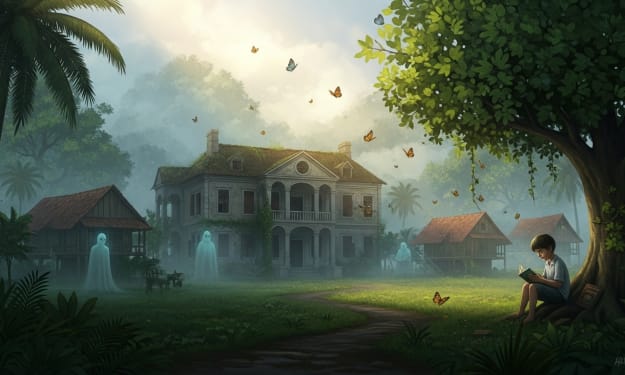
The Buendía house stood at the edge of the village of Santa Nieve, where the jungle whispered and time curled in on itself like old parchment. It had been there for a hundred years, though no one remembered building it, and no one dared to tear it down. The walls wept in the rainy season, the windows blinked with the wind, and strange lights flickered from the attic even when the house was empty. Except it was never really empty. The villagers swore they saw the same faces looking out from the upper window—faces of the dead. But it was not the dead that haunted the Buendía house. It was memory. --- Every generation of Buendías was born with two things: a peculiar birthmark shaped like an almond and an incurable yearning to escape the fate of their forebears. Yet they always came back—drawn by dreams, omens, or guilt—to the house that never aged, even as they did. Mateo Buendía was the last. At twelve, he wandered into the library on the second floor and found a dusty journal with a cracked leather cover. His fingers tingled when he touched it, as if the book had been waiting for him. Inside were entries dating back a century, written by hands that trembled with love, sorrow, and madness. The first entry: “Time is not a line. It is a circle made of forgetting.” Mateo read late into the night, the past whispering secrets through ink. --- He learned of Esperanza Buendía, who could see spirits but married a man who believed only in science. She danced with ghosts in the hallway and wept when her husband burned all her journals in a fire fueled by logic. Of Rafael, who tried to sail upriver to find the city of mirrors but returned years later with white hair, empty eyes, and a bottle that contained only silence. Of Alma, who once fell in love with a man in her dreams and searched the waking world in vain, never realizing he had been born decades after her death. And of Aureliano, the original—the first to write the journal, the first to speak of solitude not as loneliness, but as inheritance. --- “Why do they all return?” Mateo asked the old gardener one morning. The gardener, who had worked there longer than anyone alive could remember, said, “Because the house remembers what they forget.” That night, Mateo dreamed of Esperanza standing by the fig tree, beckoning him. Her voice echoed: "The curse is not solitude. It is silence. You must finish the story." --- Mateo wrote every night after that, filling page after page in a second journal. Not just with the tales of the Buendías, but with his own. Of feeling invisible at school. Of the boy who smiled at him once and never again. Of the silence that grew between him and his mother, who spoke to birds more than she did to him. The more he wrote, the more the house changed. The cracks in the walls healed. The air grew lighter. The attic door, sealed for generations, creaked open. Inside, Mateo found a mirror. But when he looked into it, he saw not himself—but every Buendía before him. They blinked, breathed, wept. And then, they smiled. --- Years passed. Mateo never left the house. People said he had gone mad like the others, obsessed with the past. But sometimes children saw him in the garden, speaking to butterflies or writing in the dust with his fingers. And at night, light still flickered in the attic. One stormy evening, lightning struck the fig tree. When the villagers came to check the ruins, the house was gone. All that remained were two journals under the roots—one old, one new—and a single almond-shaped birthmark burned into the earth. --- In time, the Buendía name became legend. A whisper. A tale told to children about the house that remembered and the boy who listened. No one dared rebuild on the land. For even in absence, solitude lived there still—eternal, magical, and waiting to be written again.
By Shah Nawazabout a year ago in Fiction