family
One Hundred Years of Solitude
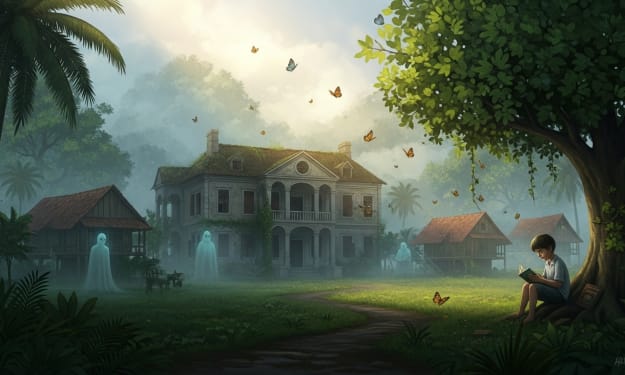
The Buendía house stood at the edge of the village of Santa Nieve, where the jungle whispered and time curled in on itself like old parchment. It had been there for a hundred years, though no one remembered building it, and no one dared to tear it down. The walls wept in the rainy season, the windows blinked with the wind, and strange lights flickered from the attic even when the house was empty. Except it was never really empty. The villagers swore they saw the same faces looking out from the upper window—faces of the dead. But it was not the dead that haunted the Buendía house. It was memory. --- Every generation of Buendías was born with two things: a peculiar birthmark shaped like an almond and an incurable yearning to escape the fate of their forebears. Yet they always came back—drawn by dreams, omens, or guilt—to the house that never aged, even as they did. Mateo Buendía was the last. At twelve, he wandered into the library on the second floor and found a dusty journal with a cracked leather cover. His fingers tingled when he touched it, as if the book had been waiting for him. Inside were entries dating back a century, written by hands that trembled with love, sorrow, and madness. The first entry: “Time is not a line. It is a circle made of forgetting.” Mateo read late into the night, the past whispering secrets through ink. --- He learned of Esperanza Buendía, who could see spirits but married a man who believed only in science. She danced with ghosts in the hallway and wept when her husband burned all her journals in a fire fueled by logic. Of Rafael, who tried to sail upriver to find the city of mirrors but returned years later with white hair, empty eyes, and a bottle that contained only silence. Of Alma, who once fell in love with a man in her dreams and searched the waking world in vain, never realizing he had been born decades after her death. And of Aureliano, the original—the first to write the journal, the first to speak of solitude not as loneliness, but as inheritance. --- “Why do they all return?” Mateo asked the old gardener one morning. The gardener, who had worked there longer than anyone alive could remember, said, “Because the house remembers what they forget.” That night, Mateo dreamed of Esperanza standing by the fig tree, beckoning him. Her voice echoed: "The curse is not solitude. It is silence. You must finish the story." --- Mateo wrote every night after that, filling page after page in a second journal. Not just with the tales of the Buendías, but with his own. Of feeling invisible at school. Of the boy who smiled at him once and never again. Of the silence that grew between him and his mother, who spoke to birds more than she did to him. The more he wrote, the more the house changed. The cracks in the walls healed. The air grew lighter. The attic door, sealed for generations, creaked open. Inside, Mateo found a mirror. But when he looked into it, he saw not himself—but every Buendía before him. They blinked, breathed, wept. And then, they smiled. --- Years passed. Mateo never left the house. People said he had gone mad like the others, obsessed with the past. But sometimes children saw him in the garden, speaking to butterflies or writing in the dust with his fingers. And at night, light still flickered in the attic. One stormy evening, lightning struck the fig tree. When the villagers came to check the ruins, the house was gone. All that remained were two journals under the roots—one old, one new—and a single almond-shaped birthmark burned into the earth. --- In time, the Buendía name became legend. A whisper. A tale told to children about the house that remembered and the boy who listened. No one dared rebuild on the land. For even in absence, solitude lived there still—eternal, magical, and waiting to be written again.
By Shah Nawazabout a year ago in Fiction
1984
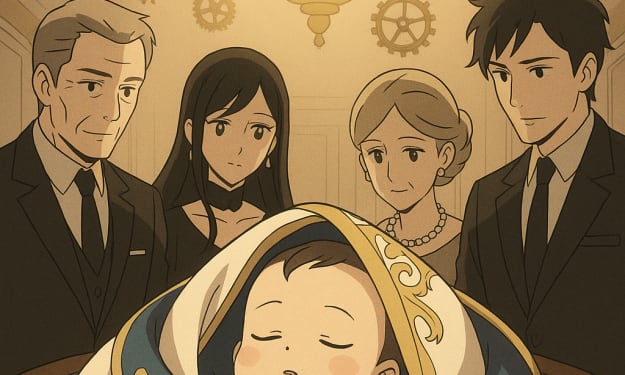
In Sector 7 of the Unified Republic, Winston Hale blinked away the sting of fluorescent light as the surveillance drone buzzed past his workstation. He kept his hands moving—filing data, erasing old entries, rewriting history. Truth was fluid here. And Winston, like everyone else, was expected to drown in it. It was the year 2084, but they still called it 1984, in tribute to the “Founding Vision.” The Party had long since digitized Orwell’s prophecy, weaponizing fiction into a blueprint. Every citizen wore their compliance like a second skin, and every screen whispered the same mantra: “Freedom is Obedience. Obedience is Peace.” Winston didn’t believe it. Not anymore. --- He first saw her in the corridor outside Archive Room Delta. Dark curls. Grey jumpsuit. Eyes too awake. Julia. Their first conversation was risky—a whispered joke about the food. The second was dangerous—a shared memory of the stars beyond the city domes. By the third, they were in love. And in rebellion. --- They met in abandoned metro tunnels, long forgotten by the city above. Julia brought old books salvaged from black market trades. Winston brought questions. "Why do they erase everything?" he asked once, flipping through a banned copy of History of the World Before Unity. "Because control," Julia whispered, “requires amnesia.” “They’ve made lies feel like truth,” Winston muttered. “No,” she said. “They’ve made truth illegal.” --- Hope, however, is combustible. And surveillance never sleeps. The morning the Thought Police came, Winston was already waiting. He didn’t resist as they dragged him from his apartment. He only asked one question: “Is she safe?” They didn’t answer. --- Room 101 was colder than he imagined. Not in temperature—but in silence. A single chair. A single screen. And behind the screen: Authority. Not a man. A voice. A system. “Winston Hale,” the voice echoed, “you are guilty of independent thought, emotional deviation, and unsanctioned intimacy.” “I know,” he said quietly. “Why?” He didn’t speak. “Why, Winston?” At last, he whispered, “Because I remembered who I was before I feared you.” --- Reeducation began with isolation. Then deprivation. Then immersion. For weeks, they fed him Party broadcasts until his dreams bled into propaganda. They made him watch videos of Julia’s arrest—real or fake, he couldn’t tell. In his final session, they presented him with a choice. A lever. A screen. One would spare Julia. The other, himself. “Choose,” the voice commanded. His hand trembled. Tears welled in his eyes. And then— He stepped back. “I will not.” Alarms blared. But Winston smiled. --- They released him. Broken, perhaps. Or maybe they thought he was. He returned to his job. Typed the lies. Filed the past. Wore the mask. But behind his eyes—still, a spark. Because rebellion isn’t always loud. Sometimes, it’s a memory. Sometimes, it’s the refusal to forget. --- Years later, children would find a scratched phrase hidden behind an old databank wall: “2 + 2 = 4” And though they didn’t understand it, they whispered it anyway. Like prayer. Like prophecy. Like truth.
By Shah Nawazabout a year ago in Fiction
Tails from Juniper Lake
Beau was a happy-go-lucky Golden Retriever with a slobbery grin and a backpack full of snacks. His owners insisted he carry his own food and treats. Tilly, a sleek gray cat with a taste for adventure (and a profound disdain for Beau’s drool), assisted her owner in packing her bag with sardine tins, catnip, and her favorite cat hammock to relax in.
By Sam Hudginsabout a year ago in Fiction
The Unranked Heir
Chapter 1: The Weight of Inheritance Power isn't inherited—it's imposed. I learned this the moment I drew my first breath, when the world seemed to hold its breath with me. My uncle, a man who had lived in penthouses for two decades and witnessed every excess wealth could buy, called my birth "the grandest celebration he'd ever seen." Coming from someone who'd attended the coronation of oil princes, that meant something.
By Emmanuel Ikerionwuabout a year ago in Fiction
The Garden That Forgot to Bloom
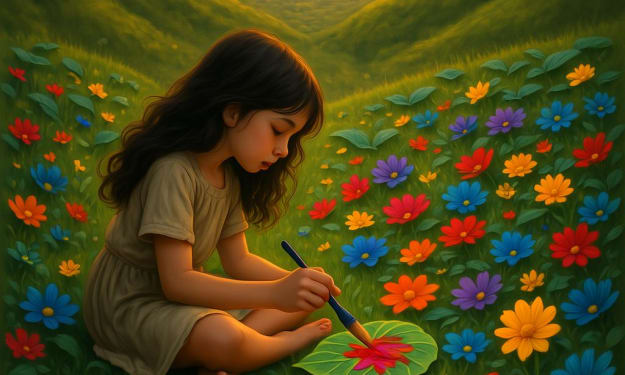
There was once a garden where no flower ever bloomed. It lay between two quiet hills, wrapped in the arms of a forgotten valley. The earth was not dead, and the sun did not hide. Rain visited kindly, and the wind whispered lullabies across its skin. Yet, no color ever rose from the ground. Only leaves. Only stems. Only green—and nothing else. The villagers called it the Hollow Garden. Many believed it was cursed. Some blamed the seeds. Others whispered that the soil was jealous of the bright meadows blooming beyond the hills. But whatever the reason, the garden remained mute in its silence. Year after year. Season after season. Then one day, a girl arrived. Her name was Lila. She was not from the village, and nobody knew why she came. Her eyes looked like they had once held entire storms. Her hands were small, but they carried the quiet weight of something she never spoke about. When she first walked into the Hollow Garden, she did not dig, she did not plant, and she did not water. She sat. Right in the center of the garden, among the stems and silent soil, she simply sat. And she listened. Not with her ears, but with her silence. She listened with her breath, with her stillness, with her open palms resting softly against the earth. It was as though she was listening not for sound, but for feeling. The villagers watched from afar. Some laughed. Some shook their heads. Some whispered that she must be broken too, just like the garden. But Lila kept coming back. She did not speak. She did not try to change the garden. But over time, she began to hum. Softly. Gently. The kind of humming that sounded like a lullaby only the soul could hear. Her voice was cracked, like a dried riverbed after a cruel summer, but it carried warmth. A warmth that filled the empty space without asking anything in return. Days passed. Then weeks. The garden remained green. Only green. But something had shifted. The wind began to circle the valley more often. It carried her hums like invisible threads through the leaves. Birds started to visit again, resting on bent branches. Even the rain lingered longer, as if curious to watch. Then one morning, Lila brought a basket. It was not filled with seeds or tools, but with paintbrushes. Dozens of them, and pots of paint in every color the eye could imagine. She sat in the garden and began to paint the leaves. Red, blue, yellow, orange—petal colors blooming on plain green leaves. The garden, surprisingly, allowed it. It let her color its silence without resistance. By evening, it looked as though the valley had finally bloomed. “It is only paint,” the villagers said. But still, they came. One by one. Some brought food. Some brought stories. Others brought songs. The garden became a place not of flowers, but of people. They laughed. They wept. They sat. They listened. And then, something unexpected happened. A single flower bloomed. A pale yellow daisy, hidden near a rock. So quiet and soft, it could have been mistaken for memory. Nobody noticed it the first day. Or the second. But on the third, a small boy pointed and shouted, “Look! It is real!” Lila smiled. Not because a flower had finally bloomed, but because someone had finally seen it. By the end of the season, ten more had bloomed. Quietly. Naturally. Not because of magic, or perfect soil, or any special method. But because something inside the garden had healed. Lila never said goodbye. One morning, she simply left—with the same silence with which she had arrived. The villagers kept visiting the garden. They stopped calling it Hollow. They gave it a new name. The Listening Garden.
By Muhammad Abuzar Badshah about a year ago in Fiction
Ramiro
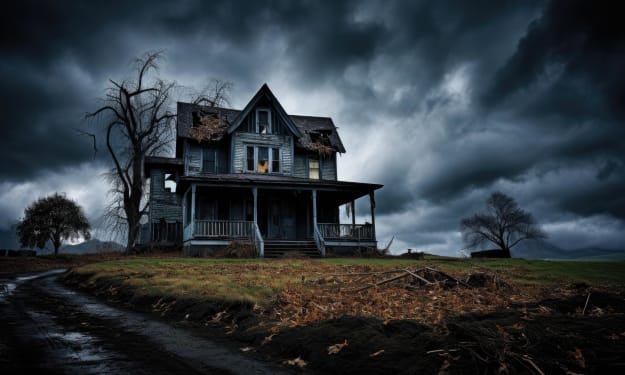
He was born to a family of meagre means, and but a moon-cycle thence was left at the doorstep of a butcher’s shop, where laboured a sorcerer of obscure repute. There, in that sanguine place of flesh and entrails, the babe Ramiro was reared—not as a son, but as a humble apprentice, schooled in minor magicks and menial labours. Yet there was one chamber into which he was forbidden ever to tread: the shadowed sanctum known only as the Dark Room, where the most sacred and perilous enchantments were wrought.
By Stephen Betancourtabout a year ago in Fiction
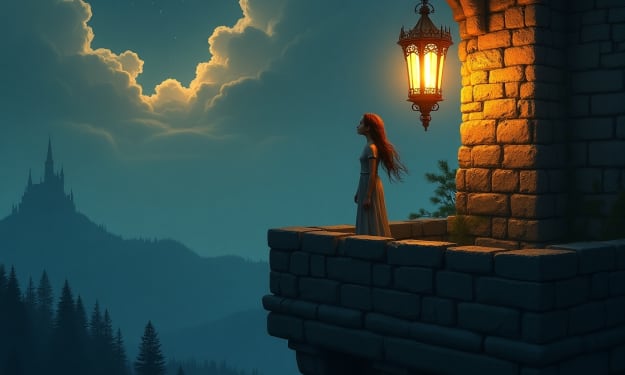
The Lantern Keeper of Isenfall
The Lantern Keeper of Isenfall In the frost-wrapped village of Isenfall, where twilight lingered longer than dawn, the people spoke in hushed tones about the Lantern Keeper. His tower rose crookedly from the cliffs, like a finger pointing to the stars — forever lit, never visited.
By Wings of Time about a year ago in Fiction
Threads of Us. AI-Generated.
We were born two years apart, but somehow, it always felt like we shared the same breath. My sister Aaliya and I weren’t just siblings; we were co-conspirators in mischief, partners in crime, and occasional sworn enemies over TV remote battles.
By Taslim Ullahabout a year ago in Fiction