family
The Man in Apartment 7B
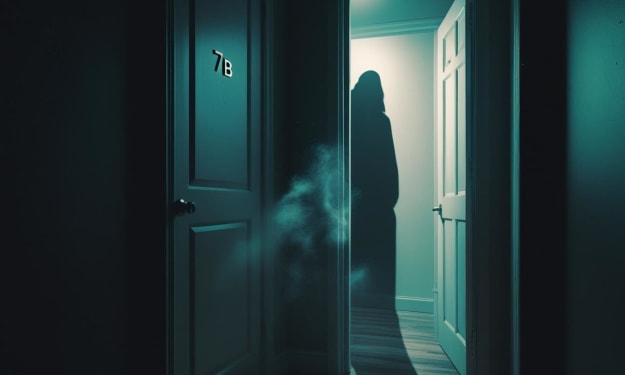
The Story Continues... The hallway leading to apartment 7B always smelled of old carpet and damp paint. It was as if time stood still in that corner of the building. Hira had passed by it dozens of times, but she never dared to stop. There was something about that door — the rusted brass numbers, the uneven doormat, the faint sound of movement behind it — that made her uneasy. She didn’t know his name. She didn’t know what he looked like. But she knew he was watching her. The Incident with the Sticky Note After finding the warning note that read, “Don’t look into 7B’s window again,” Hira felt trapped. Someone had been close enough to her door to slip it underneath — silently, stealthily. No camera had captured it. She checked the hall cams using her landlord’s shared app, but the footage from between 2:00 AM and 2:30 AM had been mysteriously erased. “Glitch in the system,” the landlord said dismissively. “It happens.” But Hira knew better. She decided to test something. That night, at 2:15 AM, she turned off every light in her apartment, stood at the edge of her window, and peeked through the blinds into 7B. Nothing. Just darkness. Then — a flicker. The curtain moved. For a second, just a second, she saw it: a pale hand slowly pulling the curtain aside. And behind it — a face. But not just any face. It was hers. The Doubts Begin The next day, Hira visited the property manager. She asked who lived in apartment 7B. He hesitated. “That unit’s been empty for months,” he finally said. “Hasn’t been rented since last summer. Previous tenant vanished.” She felt cold. “Vanished?” He nodded, lowering his voice. “Police called it ‘inconclusive disappearance.’ No signs of forced entry. No family to report her. Just gone.” Hira's legs felt weak. She asked for a name. The manager scanned his files. “Odd,” he murmured. “There’s no name listed here. Just a single word.” He turned the screen toward her. Written under “Previous Tenant” was: Hira. The Locked Door That night, she couldn’t sleep. Something about 7B called to her. It was madness, she knew, but she needed to see it — needed to confirm with her own eyes that it was empty. At 3:09 AM, barefoot and shaking, she walked down the hall. The corridor was dead silent. She stood in front of 7B. The doorknob was old, rusted, but not locked. She turned it slowly. Click. The door creaked open. The apartment inside was dark, musty, and freezing cold. Hira stepped in. The air felt thick. Heavy. Like she had walked into a sealed vault. She turned on her phone flashlight and scanned the room. Furniture draped in white sheets. Dust. Spiderwebs. But then she noticed something odd. Photos. Dozens of them, covering an entire wall. Every single photo was of her. At the grocery store. Taking the trash out. Sleeping. Some were taken from angles inside her own apartment. She dropped her phone. The Sound from the Closet As she bent to pick up her phone, a soft creeeeak echoed through the apartment. Her light turned toward a tall closet door in the corner. It was opening. Slowly. No wind. No movement. No draft. Just the creak of wood. Inside — darkness. Then, she heard it. A low, rasping whisper. Hira… She turned and ran. The Stranger at the Grocery Store The next morning, Hira tried to pretend it was a hallucination. Stress. Maybe sleepwalking. Maybe she imagined it all. She walked to the nearby grocery store to clear her head. At the counter, the cashier looked up, startled. “Back so soon?” Hira blinked. “What?” “You were just here. Ten minutes ago. You bought the same things. Same lipstick. Same notebook.” Hira’s mouth went dry. “I’ve been at home all day.” The cashier frowned. “No, I’m sure it was you. You even said your name — Hira.” The Recording Panicking, Hira went back to her apartment. She set up her phone to record herself sleeping — just to be sure. That night, she tossed and turned, but managed to sleep. The next morning, she watched the footage. At exactly 2:34 AM, the screen shimmered — almost as if the air inside the room shifted. The bedroom door opened. She didn’t move. A figure stepped in. The screen flickered. The figure walked up to the bed. And then… bent over to whisper something into her ear. Suddenly — Hira sat up in bed. But her eyes were closed. She got up. Walked to the camera. Looked directly into the lens. And smiled. Then everything went black. To Be Continued... Next in Part 3: "Voicemails from the Past" Hira’s old number is calling her… but she no longer owns it.
By Abid Ali Khanabout a year ago in Fiction
A New Home, A Hidden Past
The moment Hira stepped out of the taxi and onto the damp, cobbled street, she felt a chill crawl down her spine. Ridge Town was supposed to be a new beginning — a sleepy hilltop community far from the chaos of her past life in Karachi. She had rented an old Victorian-style apartment at the edge of the town, nestled between pine trees and fog-draped hills. It was peaceful. Too peaceful. Her apartment — 3A Maple Lane — stood tall and slightly crooked, as if time had leaned on it too hard. The windows were high and narrow, and the door creaked with an eerie reluctance when she pushed it open. She could hear the echoes of her own footsteps on the wooden floor. “This is home now,” she whispered, forcing a smile. Hira was 27, and this was the first time in years that she was completely alone. No family. No friends. Just the remnants of a life she was desperate to forget. What she left behind was buried — or so she thought. She spent her first few days unpacking, redecorating, and exploring the town. Ridge Town was small — population just under 10,000. People were polite but distant, especially with outsiders. Her neighbors nodded politely, but no one made an effort to talk, not even Mrs. Allen from 3B who always peeked through her blinds. But Hira liked the quiet. Silence, after all, couldn’t hurt you. Until it did. The First Sign It was on the fifth night that she heard it — a soft knocking sound from her living room window. She checked her phone. 2:13 AM. She lived on the third floor. Hira cautiously crept toward the window. The wind outside howled, trees swayed violently, and shadows danced on the walls. But when she pulled back the curtain, there was no one there. “Just the wind,” she told herself. But it wasn’t just the wind. The knocking happened again the next night. Same time. Same window. Again — nothing outside. By the seventh night, it wasn’t knocking anymore. It was humming. A soft, almost childlike melody. A tune that felt familiar… too familiar. She froze. That lullaby — her mother used to hum it to her when she was seven. But her mother died when she was ten. --- The Eyes from Across There was a man in the apartment across from hers. 7B. She noticed him the day she moved in — tall, dark jacket, rarely left his window. His curtains were usually drawn, but sometimes she’d catch a sliver of his face. Pale. Emotionless. Watching. One evening, she waved. He didn’t respond. Later that night, she found a sticky note under her door. “Don’t look into 7B’s window again.” She ran into the hallway, but there was no one. Just dim lights and a flickering bulb near the staircase. --- The Photo Frame While dusting an old shelf in her bedroom, Hira discovered a small crack in the wall. Inside it, tightly wedged, was a photo frame — old and dusty. She pulled it out and stared in disbelief. It was a picture of her. But it wasn’t recent. She was wearing her school uniform — the same one from 9th grade. The photo had no date, but the background was unmistakable: her childhood home in Karachi. “How did this get here?” she whispered. There was something scribbled on the back of the frame in black ink. "She never left." --- A Phone Call from Nowhere That same night, her phone rang. No caller ID. No number. She hesitated before answering. A woman’s voice spoke. “You left the door open, Hira.” Chills ran down her spine. She checked — her apartment door was closed. “I’m watching you,” the voice said again. Calm. Gentle. Like a lullaby in itself. She hung up, heart racing, and turned off her phone. The Dreams Begin Over the next few nights, the nightmares returned — vivid, terrifying, and strangely real. In one, she saw herself standing in a dark corridor with dozens of doors, each one opening to reveal a version of herself: crying, screaming, bleeding, laughing. In one dream, she opened a door and saw her own body, floating above her bed, eyes open, staring straight at her. She woke up screaming. And there — standing at her bedroom door — was a figure. Tall. Still. Just standing there. When she turned on the light, it was gone. The Journal In the kitchen cabinet, behind an old cereal box, she found a leather-bound journal. The name on the first page stopped her breath. "Property of Hira Saeed" But she had never owned such a journal. She flipped through the pages. Entries detailed her thoughts, fears, secrets… things she had never written down. The final entry read: “He’s in the walls now. I can hear him breathing. If I disappear, know that it wasn’t by choice.” Signed: Hira. Her hands trembled. What was happening? Who had been living here before her? Or worse… Was she the one who had always been here?
By Abid Ali Khanabout a year ago in Fiction
The White House in the Distance
A summer years ago, when nothing seemed to matter except playing as much as possible before dark. I wasn't afraid of anything yet and experienced everything as if it were the first time. At the tender age of five, the world was my playground and nothing bad could ever happen.
By Krysta Dawnabout a year ago in Fiction
The House That Waits at the Edge of the Fog
1. The Arrival Elena had seen the house in her dreams long before she ever found it. It sat quietly at the edge of a fading forest, shrouded in fog that moved like breath across the hills. Windows like closed eyes. A door like a secret no one wanted to tell. When she finally stood before it—real wood, real chill, real sky darkening—her bones knew it before her mind did. This was where the nightmares began. And now, maybe, where they would end. 2. The Whisper The key was already in the lock. Inside, the air smelled like time left alone. Not rotten—just forgotten. Dust floated like slow snow. The walls pulsed with stillness. The house didn’t groan or creak. It listened. That night, the whisper came. Not outside the room—but inside her head. Not words at first. Just… feeling. Like something was watching. Something waiting. Not cruel. Just patient. “Who’s there?” Elena whispered to the dark. The dark answered with a breath beneath her bed. 3. The History In town, no one would speak of the house. One woman, old and knotted like driftwood, told her: “That place doesn’t haunt you. It holds you.” “Why?” “Because it remembers.” Remembers what? Elena didn’t ask. She was starting to remember too. Flashes: A girl in the mirror who wasn’t her. A voice in the hallway calling a name she’d forgotten. A nursery with no toys. A crib that rocked by itself. 4. The Becoming The house didn’t hurt her. It fed her. Each night, the dreams grew stronger. She saw other versions of herself—crying, clawing, screaming. Not all were human anymore. And the voice—clearer now—said, “You’ve come back.” Elena didn’t run. She stayed. Because the truth was: she had been there before. Not in this life. But in another. And she had died in this house. More than once. 5. The Truth The house was alive. Not with wood and wires. With memory. It remembered every soul it held. Every scream. Every shadow pressed into its floorboards. It didn’t kill. It collected. Elena was its favorite kind of visitor—the ones who belonged to it before they were born. And now it wanted her back. 6. The Ending That Isn’t They found her car weeks later, engine cold, windshield dusted with fog. No footprints. No sign of struggle. Just a journal on the seat. Inside, only one sentence was written over and over again: “The house remembers me. And I remember it now.” The End? The House Doesn't Stay in One Place The house at the edge of the fog isn’t fixed to one location. It moves. Not quickly, and never when you look straight at it—but over time, it shifts. From one forgotten road to the next. From one dreaming mind to another. People don’t find the house. The house finds them—especially those who have a connection from another life, or a memory too buried to explain. Sometimes it appears in a photo you don’t remember taking. Sometimes in a sketch your child draws without knowing why. Sometimes in the background of a dream you swear you’ve had before. If you ever feel like a house is watching you… It probably is. And if you hear a whisper when no one else does, don’t answer. Because it might just be calling you home.
By Silas Blackwoodabout a year ago in Fiction
A Sweet Treat
The sun dipped low over the quiet suburban street, casting golden shadows across the sidewalks. A light breeze carried the scent of freshly cut grass, and the distant hum of life continued softly in the background. It had been one of those days where everything had gone slightly wrong—an overflowing inbox, a missed lunch, and a spilled cup of coffee. The kind of day that made you want to disappear into silence and forget the world for a little while.
By Musawir Shahabout a year ago in Fiction
My Brother's Keeper
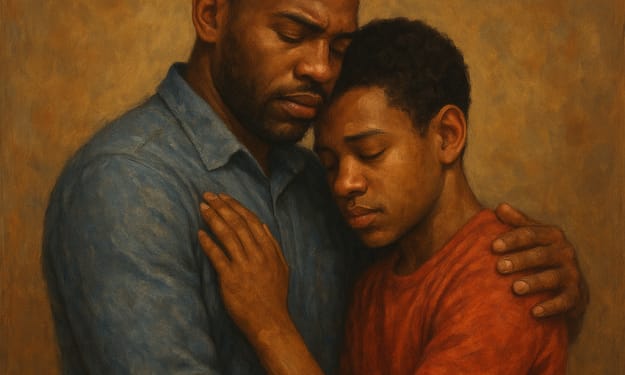
Growing up in a small rural town, my brother Malik and I were inseparable. I was the younger one by three years, always trailing behind him with wide eyes and a thousand questions. Malik had this quiet strength about him—he rarely spoke much, but his actions were louder than any words. He was my protector, my guide, and my hero. People used to say we were like David and Jonathan, but the truth is, Malik never needed a sling—his heart was strong enough to shield me from the world. Our father left when I was six. Malik was nine. One day, he was there at the breakfast table, sipping black coffee and complaining about the radio signal, and the next day, gone. No note, no goodbye, just silence. Mom worked two jobs to keep the house running, and while she was physically present, her exhaustion swallowed her emotionally. That’s when Malik stepped in—not just as a brother, but as a father figure too. He made sure I got to school on time, helped me with homework, cooked meals when Mom couldn’t, and once, when a bully shoved me into a puddle, Malik walked over and silently handed me his dry hoodie without saying a word. The next day, the bully had a black eye, and no one ever messed with me again. We dreamed big together. Malik wanted to be an engineer, and I wanted to be a writer. He would sit beside me as I scribbled stories in my notebook and sometimes even add his own ideas—usually practical ones, like how a machine could help the main character save the day. But life, as it does, began to pull us in different directions. Malik graduated from high school and started working at a local construction company to help with bills. College wasn’t an option for him—he gave up that dream so I could have mine. I got a scholarship to a university two hours away, and when I left, I promised him that I would make it worth his sacrifice. “You just do your thing,” he told me that day at the bus stop. “I got us.” I should have seen the wear in his eyes—the way he carried burdens he never spoke about. But I was too caught up in the freedom of a new beginning to notice that Malik was quietly unraveling. While I buried myself in books, lectures, and the dream of writing a novel, Malik was dealing with harsh realities. Long shifts. Low pay. A growing pressure to take care of everything back home. He stopped answering my calls as often. When I asked how things were, he always said, “All good, little bro. Focus on you.” Then one winter night, I got a call from Mom. Malik had been arrested for stealing construction equipment from the job site. My stomach dropped. This couldn’t be real. Malik? My brother who would give the shirt off his back to a stranger? I rushed home and found out the truth. The equipment had been sold to cover mounting debts—our mom had fallen sick, bills had piled up, and Malik had done what he thought he had to do. He pled guilty and refused to let us hire a lawyer. “Don’t waste money on me,” he said. “Let me take responsibility.” He was sentenced to two years in prison. Visiting him was like visiting a ghost. His eyes were dimmer, his voice lower. But every time I tried to apologize—for not being there, for not seeing the weight he carried—he’d stop me. “You don’t get it,” he said once through the glass. “Everything I did, I’d do again. I just didn’t want you to have this kind of life.” That broke me. I spent the next two years turning pain into pages. I wrote every single day. Stories about brothers, about love, about sacrifice. When Malik was released, I was waiting at the prison gates with the first printed copy of my debut novel. The dedication read: > For Malik—my brother, my protector, my keeper. I am because you were. He teared up, quietly, and said, “You did it. I knew you would.” We moved in together for a while after that. Malik found a steady job with a company willing to give former inmates a second chance. He started night classes in engineering—his old dream wasn’t dead, just sleeping. And I kept writing, feeding the world with the stories Malik helped inspire. But there’s one story I never published—this one. Because this one wasn’t fiction. It was real. It was raw. And for a long time, it felt too sacred to share. But now I think the world needs to hear it. We often idolize heroes in capes and masks, but some of the greatest heroes walk beside us silently, making sacrifices without applause. Malik never asked to be anyone’s savior. He simply loved, deeply and quietly, in the only way he knew how. He once told me, “You don’t have to carry guilt, bro. Just carry the torch.” So that’s what I do. Every book I write, every word I share, is lit by the fire he built when I was too young to strike the match myself. I am my brother’s keeper. But more importantly, he was mine.
By Nimatullahabout a year ago in Fiction
The Scent of Jasmine
The house was silent, but not empty. It had been a week since my mother passed away, yet every room still whispered her presence. The jasmine-scented candles she loved were still on the windowsill, unlit now, but their fragrance remained — faint, like the echo of her laughter.
By Abid Malikabout a year ago in Fiction
Shadow Brother
The call came just after midnight. I was already half-awake, the way you are when your mind senses something before your body does. The screen lit up with "Unknown Caller," but I knew. I didn’t need a name or a number. “Jake’s in the ER. Overdose.” That was all my mother said. I sat on the edge of my bed for a long time, phone still in hand, her words echoing like a song I didn’t want to remember. Jake. My little brother, though he hadn't been little in years. Just six minutes younger, technically—we were twins. But while I kept moving forward, ticking the boxes—college, job, apartment—Jake had wandered. From rehab to halfway houses, from fleeting highs to crushing lows. Everyone called me the “good twin.” They said I got the brains, the self-control. Jake got… lost. --- We were five when we started pretending we were superheroes. We called ourselves “The Keeper Brothers.” Jake picked the name, said we protected each other no matter what. I wore a blue cape made from Mom’s old bedsheet. He had red. “You fall, I pick you up. Deal?” he said. “Deal,” I answered, and we spit in our palms and shook like men. I remember that day more vividly than birthdays or graduations. That day, Jake was mine to protect. But somewhere along the way, I stopped keeping my end of the deal. --- At the hospital, the nurse said I was listed as emergency contact. He was stable, but unconscious. I stood outside the door and watched him. Jake’s body looked deflated. Like the air of his spirit had escaped. Machines hummed beside him, indifferent. I sat. Waited. Remembered. The first time he stole from me was high school. My watch, then later my car keys. He crashed it into a street pole—no license, no insurance. Dad had to fix it. I wanted to scream at him. I didn’t. I told myself he’d get better. He didn’t. At twenty-three, I gave up. Told Mom I couldn’t keep bailing him out—emotionally or financially. “He’s not your project,” my therapist said. But he wasn’t a project. He was my brother. --- Jake woke up around 4 a.m. His voice was raw. “You came.” “Yeah.” “Bet you’re mad.” “I’m not mad,” I lied. “Just tired.” He turned his head slightly. “Of me?” I didn’t answer. There was a pause, one of those thick, heavy silences that holds more than words ever could. “I was clean for three months this time,” he said. “Longest ever.” I nodded. “I know.” He looked at the ceiling. “You remember when we tried to build that treehouse in Grandma’s backyard?” “You sawed the ladder wrong and fell. Broke your arm.” Jake chuckled, then winced. “You stayed by my bed for three nights straight. Didn’t even go to school.” I swallowed hard. “I don’t know how to be that brother anymore,” I said. Jake turned to me, eyes dull but searching. “Then just be you. That’s enough.” --- The next morning, we sat in silence while the nurse changed his IV. Before I left, I placed my hand over his. “You fall, I pick you up. Remember?” He smiled—tired, but real. “Deal.” --- Jake didn’t get magically better. Recovery isn't a montage with upbeat music. But this time, I stayed involved. Not as a savior, not as a fixer. Just as a brother. I showed up to his meetings. I answered his texts. Sometimes we didn’t even talk about addiction. We talked about old cartoons, or pizza, or who Mom liked best. (We both knew it was Jake.) Two years later, he stood at my wedding and gave a toast that left everyone crying. He ended with: “This man used to wear a blue cape and pick me up when I fell. And even after I burned the cape, he still picked me up. That’s what brothers do.” --- If this were fiction, I’d end it here. On a hopeful note, with a redemptive arc. But this is a not-so-fictional story. Six months after that wedding, Jake relapsed. This time, there was no hospital call. Just a police officer, and a bag of his things. The blue and red capes were folded neatly among them. He’d kept them all these years. --- I visit his grave every Sunday. Not out of guilt—but love. I talk. Sometimes I even laugh. People ask how I manage. I tell them I still keep the deal. You fall, I pick you up. I couldn’t pick up his body. But I carry his memory. I am, and always will be, my brother’s keeper.
By Shah Nawazabout a year ago in Fiction