Fable
The Photographer of Lost Souls
M Mehran Every morning at dawn, Mira Lang stood on the cliffs overlooking the sea, her camera in hand. She waited for the light — that thin, trembling line between night and day — when the world seemed to hold its breath. For years, she’d photographed the sunrise. To anyone else, she was simply an artist obsessed with light. But there was a reason behind her quiet ritual — something no one in the coastal town of Evershore knew. Mira could see the souls of the dead. They appeared in the first rays of sunlight — faint silhouettes standing on the horizon, looking toward a place beyond the sea. And when she took their picture, they vanished. --- It had started ten years ago, on the morning her brother drowned. She had been taking photos by the lighthouse when she saw him standing in the surf — smiling, waving, as though saying goodbye. Instinctively, she lifted her camera. When she pressed the shutter, he disappeared. The next day, his body washed ashore. Since then, every dawn brought new faces. Some she recognized from the village — fishermen, old widows, travelers who never returned. Others were strangers. But all of them waited in silence until she captured their final photograph. Her photos, strangely, never showed the figures. Only light. The gallery walls in her cottage were filled with hundreds of them — golden streaks, foggy horizons, pale sunrises. To others, they were art. To her, they were farewells. --- One evening, as Mira closed her shop, a boy entered. He couldn’t have been more than ten, his hair salt-streaked, his clothes too big for him. “You’re the lady who takes pictures of ghosts,” he said. Mira froze. “Who told you that?” “My granddad,” he said. “He said you helped him find Grandma. She died before I was born.” Her heart softened. “What’s your name?” “Eli.” He looked up at her with bright, serious eyes. “Can you take my picture tomorrow?” She frowned. “Why would you want that?” “Because,” he said quietly, “I think I’m supposed to go.” Her stomach turned cold. “Eli, what do you mean?” He shrugged. “I’ve been feeling tired. Mama says it’s nothing, but I know it’s the same tired Grandma had before she left.” Mira knelt beside him. “You’re not going anywhere. Do you understand?” He only smiled. “You help people cross, don’t you? Maybe you can help me too.” --- That night, she couldn’t sleep. The boy’s words echoed in her mind. She had never tried to stop a soul from leaving — only to send them peacefully onward. But Eli was still alive. When dawn came, she found him waiting on the cliff, barefoot, his small figure outlined by the pink horizon. “You shouldn’t be here,” she said, breathless. “I told you,” he said softly, “it’s time.” He pointed toward the sea. There, just above the waves, stood two shapes — a man and a woman, holding hands. The woman’s hair blew in the wind like a white veil. “My grandparents,” Eli whispered. “They’ve been waiting for me.” Mira’s throat tightened. “Eli, please, you can’t go yet.” He turned to her, eyes full of peace she couldn’t understand. “You always said goodbyes are beautiful. Take my picture, Miss Mira. Please.” Her hands shook. “If I take it, you’ll…” He nodded. “That’s okay.” The wind rose, carrying the smell of salt and rain. Mira lifted her camera, tears stinging her eyes. Through the lens, she saw the three of them together — the boy and the figures of light. “Goodbye, Eli,” she whispered, pressing the shutter. The light flashed — and he was gone. Only the sea remained. --- The next day, the town woke to the news: a boy had passed away in his sleep, peacefully. Mira stayed home, unable to move, unable to cry. She had helped countless souls find peace — but this time, it felt different. She went to the cliffs that evening, camera in hand, but the horizon was empty. No figures. No light. For the first time in years, she felt completely alone. Then she saw it. On the sand below, someone had left a small object — a camera, old and weathered, with her name carved into the side. She picked it up, confused. It wasn’t hers. When she looked through the lens, the world shimmered — and there was Eli, standing beside his grandparents, all three of them waving and smiling in the golden light. He mouthed the words: Thank you. Mira lowered the camera, tears streaming freely now. The sea roared softly below, endless and calm. She finally understood — she wasn’t just taking pictures of endings. She was keeping promises. --- Years later, people still came to Evershore to see her photographs. Critics said her work captured something no one could describe — not grief, not beauty, but something in between. No one ever noticed the faint outlines hidden in the light. But if you stand on those cliffs at dawn, you might. Sometimes, when the sky blushes with the first light of day, you can still hear the faint click of a shutter — and see an old woman standing with her camera, smiling toward the sea, waiting to say one more goodbye.
By Muhammad Mehranabout a year ago in Fiction
The Library at the Edge of Dreams
M Mehran No one knew when the library appeared. One morning, the townspeople of Merrinfield woke to find a tall glass building standing at the edge of the river — a place that hadn’t been there the day before. It shimmered faintly, like sunlight caught on water. There was no sign, no doorbell, only a single line etched into the glass: > “Borrow wisely. Every story costs a memory.” People laughed at first, calling it a prank. But by evening, curiosity won. The first visitor entered — and never spoke of what she found inside. --- Eleanor Gray was not easily frightened. She was a schoolteacher, practical and careful, the sort who believed in schedules and not much else. But she had dreams that haunted her — dreams of a boy’s laughter echoing through a field of sunflowers, though she had never had a child. When she heard about the library, something in her heart tugged. That night, she followed the river until the building came into view. The doors opened on their own. Inside, rows of shelves spiraled upward into darkness. The air smelled faintly of rain and old paper. Each book glowed with a soft golden light, and on their spines, instead of titles, were phrases: “A Day You Forgot,” “Your First Smile,” “The Moment Before Goodbye.” Behind a circular desk sat a woman dressed in gray, her eyes like candlelight. “Welcome,” she said. “I am the Librarian.” Eleanor tried to speak, but the words tangled in her throat. “What kind of library is this?” “One that trades stories for memories,” the woman said. “You may read anything you wish. But remember — the story you take will cost you something you once lived.” Eleanor laughed nervously. “That’s absurd.” “Is it?” The Librarian smiled. “You already carry stories you cannot remember. Wouldn’t you like to know where they went?” --- Eleanor hesitated only a moment before walking deeper into the shelves. Her hand brushed the glowing spines until she found one that pulsed warmly beneath her fingers. > “The Son You Never Knew.” Her breath caught. “What…?” The Librarian appeared beside her, silent as shadow. “Are you sure you wish to open it?” Eleanor nodded. The moment the book opened, the room vanished. She was standing in a kitchen flooded with morning light. A man stood at the stove, humming softly, while a small boy with curly hair drew pictures at the table. “Mommy!” the boy said, turning to her. She froze. “What… did you call me?” He giggled. “You’re silly. You said we’d go to the park today!” The man smiled over his shoulder. “He’s been waiting all morning, Ellie.” Tears blurred her eyes. The warmth, the laughter, the smell of pancakes — it felt real, more real than anything she’d known. Then the pages began to turn. The light dimmed. The man faded first, then the boy. “No!” Eleanor screamed, clutching at the air. “Please, don’t take them!” The Librarian’s voice echoed softly around her. “Every story ends, Miss Gray.” When Eleanor blinked again, she was back in the library, her cheeks wet with tears. “Was it true?” she whispered. The Librarian tilted her head. “Truth and memory often trade places. But you paid for it, didn’t you feel it?” Eleanor’s mind ached — like something precious had been stolen and replaced with emptiness. --- Days passed, but she couldn’t stay away. She returned again and again, each time drawn to another glowing spine: “The Road You Never Took.” “The Letter You Forgot to Send.” “The Life You Almost Lived.” Each story showed her a world that might have been — a husband she had loved, a friend she had lost, a version of herself who laughed more often. But with every visit, her memories of the real world dimmed. She forgot her students’ names. She forgot her address. Eventually, she forgot why she had ever come. --- One stormy night, she stood before the Librarian for the last time. “I don’t remember who I am anymore,” Eleanor said. “Have I borrowed too much?” The Librarian regarded her gently. “You have borrowed your whole life, dear one. But there is one book left — the first story you ever gave away.” She led Eleanor to a mirror at the far end of the hall. Its frame was carved from ink-dark wood, and at its center lay a single book — plain, unmarked, bound in blue leather. Eleanor opened it. The pages were blank, except for a single line written in her own handwriting: > “The day I lost my son.” And suddenly, it all came back — the hospital room, the stillness, the silence after his first and only breath. The pain had been too great, so she had wished to forget. And someone — something — had answered. Eleanor fell to her knees. “I remember now.” The Librarian placed a hand on her shoulder. “And now you may rest.” As the rain beat against the glass walls, the light of the library dimmed. The shelves faded, one by one, until only the mirror remained. When the townsfolk came at dawn, the building was gone. All that remained was a single blue book lying on the riverbank, its cover damp but unspoiled. Inside were no words — only the faint scent of rain, and one pressed sunflower.
By Muhammad Mehranabout a year ago in Fiction
The Man Who Painted the Rain
M Mehran The town of Bellhollow had not seen rain for seven years. The riverbeds cracked like old glass, and the fields turned to dust. Children had grown up without ever knowing the sound of thunder. But every morning, just before sunrise, an old man named Jonas Reed climbed the hill behind his cottage and began to paint the sky. He carried a weathered easel, a box of paints, and a canvas so stained with old colors that it looked like a fragment of a storm. The townsfolk called him the mad painter. They said he used to be a great artist in the city — until his wife died, and he walked away from everything. Jonas didn’t mind the names. He only minded the silence. The silence where her laughter used to be. Every dawn, he stood beneath the colorless sky and painted clouds — hundreds of them — as if his brush could coax the heavens to weep again. He painted until his fingers cramped, until the sun burned through the haze, and then he went home to his empty cottage, where her portrait hung by the window. “Still no rain,” he would whisper to it. And somehow, he imagined she smiled back. --- One morning, as he unpacked his paints, Jonas noticed a little girl standing at the bottom of the hill. She couldn’t have been more than eight. Her dress was patched, her hair wild as dry grass. “Are you painting the rain again, Mister?” she called. He smiled faintly. “Trying to.” “My mama says you’re wasting paint,” the girl said, tilting her head. “Your mama’s probably right,” he chuckled. “But maybe the sky just needs to see what it’s forgotten.” The girl came closer. “Can I help?” He hesitated, then handed her a brush. “If you promise not to stop believing.” So she dipped her brush into blue paint and made a clumsy stroke across the canvas. “Like this?” “Perfect,” he said softly. “You just gave the sky a reason to remember.” From that day on, she came every morning. Her name was Marin, and she painted beside him — suns, clouds, rivers, everything the world had lost. The townsfolk laughed when they saw them, an old man and a child chasing storms that would never come. But one evening, when Jonas was cleaning his brushes, he noticed something strange. The air smelled faintly of wet earth. He stepped outside and saw a dark cloud low on the horizon. His heart skipped. “Impossible,” he whispered. The next morning, he climbed the hill with Marin. The sky was still empty — except for a single gray streak. She giggled. “You did it, Mister! You painted a real cloud!” He laughed, though his hands trembled. “Maybe we both did.” Over the next week, the gray spread. A shadow moved across the hills, and the wind began to carry the soft promise of rain. The people of Bellhollow grew restless. They stared at the sky, whispering prayers. And then, on the seventh morning, as Jonas dipped his brush into blue, a drop fell onto his canvas. Not paint — rain. He froze. Marin gasped and looked up. More drops followed, splashing onto their faces, their hands, their artwork. Jonas fell to his knees, laughter and tears mixing on his cheeks. “You see, Marin? It remembered!” The rain fell harder, soaking the hill, washing away the dust of seven years. Down in the town, people ran into the streets, arms raised, shouting and crying. For the first time since his wife’s death, Jonas felt alive. --- But as the rain poured, he realized something else. The clouds above — they looked exactly like the ones he had painted. Every brushstroke, every curve. He turned to Marin, but she was gone. He scanned the hillside. No footprints. No sign she’d ever been there. Only a small paintbrush lying in the mud — hers. He picked it up, heart pounding. The rain fell harder now, and thunder echoed in the distance. A voice drifted through the storm — soft, familiar, impossible. “You did it, Jonas.” He looked up. In the swirling gray sky, for just a moment, he saw her — his wife, her hair streaming like rain, her eyes shining with tears. “I missed you,” he whispered. “And I missed you,” she said. “But you had to remember how to paint again — how to hope.” Then lightning flashed, and she was gone. When the storm ended, the town bloomed again. Rivers filled, flowers returned, and people whispered of a miracle. They said the mad painter had brought back the rain. But Jonas never painted again. He spent his days tending the new flowers and teaching the village children how to see color in the clouds. And every evening, when the sun dipped low, he climbed the hill and left two paintbrushes at the top — one for himself, and one for the little girl who had helped him remember that love, like rain, always finds its way home.
By Muhammad Mehranabout a year ago in Fiction
The Last Candle in the Library
The city of Avenfell had forgotten what stories felt like. No one spoke of dragons or dreams anymore. The streets were gray, silent, and obedient—lined with posters of smiling officials who promised “Peace through Order.” Books were banned years ago. The government said they caused confusion, rebellion, and “unrealistic hope.”
By Zahoor khanabout a year ago in Fiction
I’ve Had Enough
“Okay, Alice enough is enough. You asked me to do you a favor and hide in this closet until this Wonderland thing blew over. Well, it’s been five years, and I want out. I wasn’t a skeleton when you locked me in, but I am now. You must know that we skeletons never stay hidden forever.
By Mark Gagnonabout a year ago in Fiction
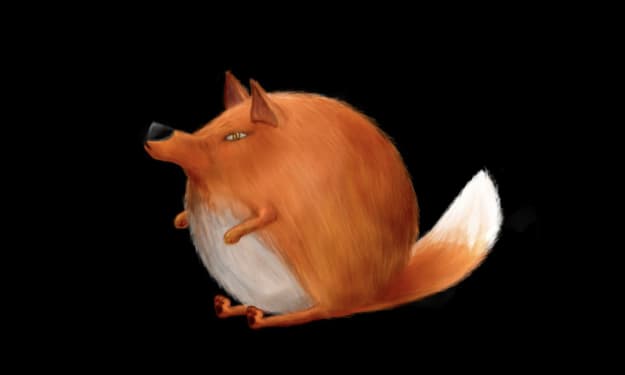
The Wise Owl and the Greedy Fox
In a dense forest, where sunlight danced through the thick canopy and streams sang gentle lullabies, there lived a fox known far and wide for his cunning ways. His name was Razzel, and while clever, he had a flaw that often got him into trouble—his greed. Razzel wanted everything he saw: the juiciest fruits, the fattest rabbits, and the richest dens in the forest.
By Zahoor khanabout a year ago in Fiction
The Clever Jackal and the Proud Lion
In the heart of a vast jungle, where trees whispered ancient secrets and rivers hummed songs of time, there lived a lion named Suran. Suran was strong, fearless, and known across the forest as the “King of Beasts.” His roar echoed like thunder, sending deer scattering, birds flapping, and even the wind seeming to pause. But Suran had a flaw. His pride was larger than the jungle itself. He believed that his strength alone made him invincible, that no creature—big or small—could ever challenge him. One hot afternoon, as the sun painted golden streaks across the sky, Suran prowled near a clearing. His amber eyes spotted a jackal, lean and quick, sipping water from a pond. The jackal’s name was Vira, and though small compared to the lion, he carried sharpness not in his claws, but in his mind. Suran growled, amused. “What are you doing here, little trickster? Shouldn’t you run at the sight of your king?” Vira bowed slightly, but his eyes twinkled with mischief. “Oh mighty Suran, I respect your strength. But sometimes, even kings can be mistaken about their power.” The lion’s mane bristled. “Mistaken? Are you daring to question me?” “Not question,” Vira replied calmly, “but I wonder if pride has blinded you. Strength alone doesn’t always win battles.” The jungle grew silent. Suran’s roar broke it like a storm. “Then prove it, jackal! Challenge me, and let us see if wit can stand before might.” Vira’s heart raced, but he did not show fear. “Very well. I accept your challenge. But let us not fight with claws and teeth—that is your realm. Instead, let us test who can outsmart the other.” Suran laughed. “A game of cleverness? Very well. But if you lose, you shall serve me forever.” “And if I win,” said Vira, “you must promise never to boast again, and rule with humility.” The lion agreed, confident there was no way a small jackal could outwit him. --- The First Test Vira led Suran to a tall cliff where the rock sloped down into a valley. “Look down there,” Vira said, pointing at a still pool that mirrored the sky. “Do you see another lion?” Suran peered into the water. Indeed, his own reflection glared back at him, mane swaying, muscles rippling. “That is a rival lion,” Vira whispered, “and he dares to claim your territory. If you are truly the king, drive him away.” Enraged, Suran leapt into the pool with a mighty roar. Water splashed high as he clawed at the reflection, but of course, there was no rival—only himself. The lion dragged himself out of the pool, wet and furious. Vira chuckled softly. “Strength wasted on shadows.” --- The Second Test The next day, Vira led Suran to an ancient banyan tree with roots like snakes and branches that touched the sky. At its base lay a large hollow. “Inside,” said Vira, “is a beast that devours all who enter. If you truly are fearless, step in and defeat it.” Suran puffed out his chest. Without hesitation, he shoved his head inside the hollow. Suddenly, from deep within, a swarm of bees burst out, angry at the intrusion. The lion roared and thrashed, but the bees stung him relentlessly, driving him away. His once-proud mane was now tangled and swollen with stings. Vira shook his head. “Courage is noble, but recklessness is foolish.” --- The Final Test Bruised in body and ego, Suran growled, “Enough tricks, jackal! Give me a true test, one worthy of a lion.” Vira smiled. “Very well. My last challenge: try to catch me.” Before the lion could react, Vira darted into the thickets. He knew every path, every tunnel beneath roots, every hollow log in the jungle. Suran thundered after him, muscles straining, but wherever he leapt, the jackal slipped away. The chase went on until the lion’s breath came in heavy gasps, his paws scraped, and his mighty body trembled with exhaustion. At last, Vira appeared atop a rock, calm and unbothered. “You see, Suran,” he said gently, “strength has its limits. Wit finds paths where muscle cannot. A wise king knows both his power and his weakness.” --- The Lesson The lion collapsed onto the earth, his pride wounded deeper than his body. For the first time, silence filled his heart where arrogance once roared. “You have won, jackal,” Suran admitted. “Your wit has shown me what my pride could not. I am king, yes, but what is a king without wisdom? Only a fool wearing a crown.” From that day forward, Suran ruled with a new spirit. He listened to the small as well as the mighty. He no longer boasted of strength, but sought counsel and fairness. The jungle grew more peaceful, for its ruler had traded pride for humility. And as for Vira, he returned to his quiet life, carrying no crown, no throne—only the satisfaction that a clever mind had tamed a proud heart. --- Moral of the Story Pride may roar the loudest, but wisdom whispers the truth. Strength may rule for a time, but only humility makes a ruler truly great.
By Zahoor khanabout a year ago in Fiction
Free Me, Please!
To the now-adult children who were read Kolobok in childhood: Greetings from the Fox's underbelly. Literally. I've been ghosting here for as long as parents continue reading my story to their children. Quite frankly, I am fed up. Sorry for the pun but I want out. So hear me out.
By Lana V Lynxabout a year ago in Fiction
Thin Line. Honorable Mention in Parallel Lives Challenge.
TBL Fingers with dirty nails shook as they struggled to tie bloody boot laces. Officer Perty was unsure of how his boots had come untied in the interaction. Blue and red light flashed around him, and he felt dizzy, sick, inhuman. ‘What have I done?’, he asked himself as he stood and looked at the body, the very small body of the man—boy that he’d just shot. Blood pooled around the body slowly, shining in the moonlight, reflections of the red and blue lights danced on the liquid. There was a buzzing in Perty’s ears, a low hum of blood pulsing through his own veins. His head was spinning with a deep pain, and his whole body vibrated with anxiety. Someone slapped his shoulder.
By Raine Fielderabout a year ago in Fiction