Excerpt
The Roar and the Whisper
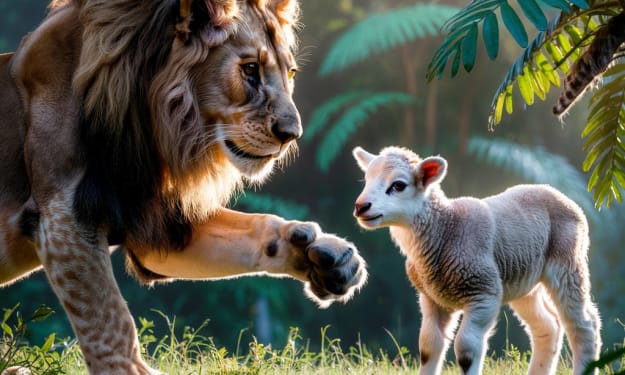
The Roar That Ruled "eep in the heart of the forest where sunlight cracked through tangled canopies and shadows held secrets, ruled the mighty lion, Ragnar. His mane was like flame, his roar like thunder, and no creature dared question his rule. He hunted when he pleased, roamed where he chose, and took what he wanted. The law of the wild was simple: “The strong survive, and the weak obey.” And no creature was considered weaker than the lambs of the northern meadow. Their soft bleats and peaceful grazing made them easy prey. They never ran far. They never fought back. And they always feared Ragnar. But the lion was growing tired. No hunt thrilled him anymore. No roar echoed long enough. A gnawing emptiness followed every victory, though he didn’t know why. The Lamb Who Didn't Run One overcast morning, Ragnar padded through the forest and came upon a stream near the meadow. There, alone and humming a strange little tune, stood a lamb—Lyra—her snow-white wool glowing against the gray sky. She was far from her flock, vulnerable, unaware. Or so Ragnar thought. He stepped forward, ready to pounce, but Lyra didn’t flinch. She looked up, locking eyes with the predator of her kind. "You’re the lion they all whisper about," she said. Her voice was calm. Almost... curious. Ragnar paused mid-step. No creature had ever spoken to him without trembling. "You should run," he growled. "I know," she replied. "But I won’t." "Why not?" Lyra smiled faintly. "Because I don’t believe you want to eat me. Not today. A Strange Curiosity Instead of devouring her, Ragnar sat down. For the next hour, they talked. Or rather—she talked, and he listened. She told him about the wind and how it carried the scent of wildflowers from the southern hills. She told him about a mother bird building her nest in a crooked tree. She even sang him a lullaby her grandmother used to hum during storms. When the sky darkened, Ragnar rose. “You’re strange for a lamb.” "And you’re quiet for a lion," Lyra said, unbothered. He left without a word, but that night, Ragnar didn’t sleep. He kept hearing her voice—soft and steady like a whisper brushing against thunde- Return to the Meadow The next day, Ragnar returned. And the next. And the next. They never talked about fear. Or death. Or what might happen if one day his hunger outweighed his curiosity. They spoke of stories instead. The myths of the forest. The colors of the moon. The dreams Lyra sometimes had where lions and lambs danced together without fear. “You’re ridiculous,” Ragnar said once, but he found himself wondering—what would that world look like The Challenge But the jungle noticed. And the pride grew restless. “You’ve gone soft,” snarled Drax, Ragnar’s younger rival. “You sit with prey while your strength withers.” “I’m still king,” Ragnar growled. “Then prove it. Hunt her. Bring her back as your prize.” Ragnar said nothing. But inside, something cracked. That night, he stood at the edge of the meadow. Lyra was waiting. She always waited. But this time, he didn’t sit. He stared at her as if seeing her for the first time—as a lamb, as prey, as the weakness he had once vowed to destroy. "Is today the day you eat me?" she asked gently. "I might have to." Lyra nodded. “Then at least let me tell you one more story.” He listened. It was a story about a lion and a lamb who were born into war but dreamed of peace. Who were told they could never be friends but still shared shade under the same tree. A story that never had an ending—because no one dared imagine one. “You can write it,” Lyra said. “You’re the lion. You decide how the story ends.” The Roar That Changed Everything The next morning, Ragnar returned to the pride. He roared—not a roar of dominance or hunger, but something new. A roar that echoed with choice, not instinct. “I will not hunt the lamb,” he declared. “Nor any creature who offers no harm.” The pride erupted. "You’ve betrayed your nature!" Drax roared. “No,” Ragnar said. “I’ve rewritten it.” A battle followed. Fierce, brutal, primal. But in the end, Ragnar stood over Drax, bloodied but unbowed. “This is our law now: strength with mercy, power with restraint.” Some lions left. Others stayed. But the jungle heard. And the whisper began to spread. A New Meadow Months passed. The forest changed. Predators and prey still lived by instinct, but not by fear. A fragile truce was born—not perfect, not without setbacks—but real. And sometimes, in the quietest part of the meadow, Ragnar would sit beside Lyra, listening to her stories as the sun dipped low. “Do you miss being feared?” she asked once. “Sometimes,” he admitted. “But I’ve found something better.” “What’s that?” He smiled. “Peace.” The Final Story Years later, when Lyra grew old and her steps slowed, she asked Ragnar for one last favor. “Tell the story,” she whispered. “Even when I’m gone. Tell it like it mattered.” Ragnar, now grayed and gentler, nodded. And he did. He told the cubs and the calves, the foxes and the fawns. He told them of a time when the jungle was ruled by fear, and how a lamb changed a lion with nothing but her voice. He ended each tale the same way: > “Strength isn’t in how loud you roar, But in how quietly you can listen.”
By Arshad khanabout a year ago in Fiction
Schwarzkümmelöl: The Ancient Remedy with Modern Benefits
Schwarzkümmelöl, also known as Black Seed Oil, has been revered for centuries for its remarkable health benefits. Derived from the seeds of the Nigella sativa plant, this powerful oil has been used in traditional medicine across the Middle East, Asia, and Africa. In recent years, it has gained global recognition as a natural remedy for a wide range of health issues—from inflammation to skin care.
By eternalwigsabout a year ago in Fiction
The Man Who Sat at Table Seven
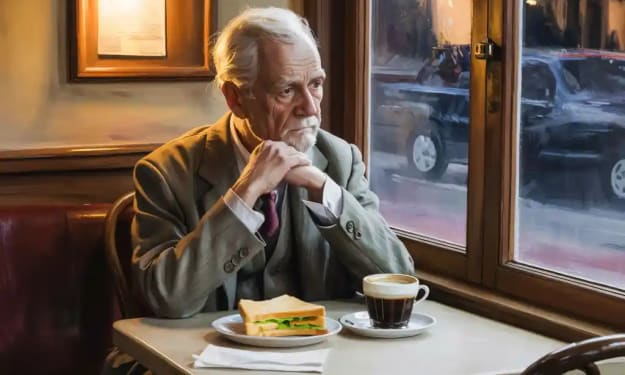
There’s a quiet little café on East 41st Street, nestled unceremoniously between a secondhand bookstore and a flower shop that always smells of jasmine and damp stems. Blink, and you might miss it. No neon signs. No whimsical chalkboard menus boasting fancy lattes or turmeric infusions. The awning just reads “Mira’s Café” in fading gold letters. Inside, it smells like toasted bread, warm milk, and stories too old to tell.
By Arshad khanabout a year ago in Fiction
The Echoes of the Yellow Scarf
When Mira stepped off the subway at 14th Street, the crowd swept around her like waves. It was the same platform, same train, same morning routine—but today, something was different. Clutched in her hand was a yellow scarf. Not hers. She had found it on the park bench she always sat on before heading to work. It was soft, handmade, and slightly frayed at the edges, with initials stitched in the corner: S.H. She hesitated before picking it up earlier that morning. Normally, she'd ignore lost items, let someone else deal with them. But something about this scarf felt… personal. Like it was meant for her to find. By the time she reached her office on the 22nd floor of a glass-paneled building, she couldn’t stop thinking about the initials. Who was S.H.? Why did it feel like more than just a lost scarf? She Googled the initials with “yellow scarf” and “New York”—of course, nothing. A thousand meaningless results. But then came the dreams. That night, Mira dreamt of a girl in a yellow scarf standing under a streetlamp, eyes full of sorrow. She said nothing. Just stood. Watching. Silent. The next night, she returned. This time, Mira spoke. “Who are you?” The girl looked up. “Help me find home.” Mira jolted awake. The scarf was on the chair beside her bed—right where she’d left it. But it looked newer. Less worn. As if time had reversed. In the days that followed, the dreams grew more vivid. The girl—always in that yellow scarf—stood by a bench, her back to Mira, facing a lake Mira had never seen before. And every time, she'd whisper, “Almost there.” Mira started drawing the scenes. She was no artist, but the urge was uncontrollable. She filled pages with images of the girl, the lake, the scarf fluttering like a whisper caught in wind. Her friends thought she was spiraling. “You need sleep,” they said. “You’re obsessing over nothing.” But she couldn't stop. One rainy Sunday, Mira walked aimlessly through Central Park, the scarf wrapped around her neck, the dreams echoing in her thoughts. And then—she saw it. The bench. Not just any bench. The bench. The one from her dreams. It faced a small, quiet lake. Willow trees bowed along the edges. A streetlamp flickered nearby. It was all real. She sat. A soft breeze passed. Leaves rustled. The scarf lifted slightly. And then, across the lake, stood the girl. Real. Flesh and bone. Same yellow scarf. Same solemn eyes. Mira stood. “Who are you?” The girl smiled faintly. “You found me.” Mira stepped forward, breath caught in her throat. But before she could speak again, the girl turned and walked toward the trees—fading like mist in morning light. Gone. Mira looked down. The scarf had vanished. In its place, on the bench, was a note. “Thank you. I’m home now. – S.H.” That was three years ago. Since then, Mira walks the park every Sunday. She never saw the girl again, but sometimes, when the breeze picks up just right, she feels a soft warmth on her neck—as if a scarf, unseen, still lingers. She doesn’t tell many people the story. Who would believe her? But if you ever find a yellow scarf where it shouldn't be… Hold on to it. Someone might be waiting.
By Arshad khanabout a year ago in Fiction
Between Our Cups of Tea
She placed the teacup in front of me, just like she always did — handle turned exactly to the right, the way I liked it. No sugar. No milk. Just like our mornings now. Bland. Quiet. Ritualistic. “Thanks,” I said, my voice low but audible. She didn’t answer. She never really did these days. She took her seat across from me, the chair creaking slightly under her, and lifted her own cup without a glance. The steam rose between us like a ghost — thin, silent, vanishing quickly. We sipped. Two strangers in a house we once called home. --- There was a time when mornings meant laughter. When she’d lean over the table, teasing me about my uncombed hair. When I’d kiss her forehead while the kettle boiled. When we’d talk — really talk — about dreams, books, movies, and silly ideas that only mattered to us. Now, we sip in silence. --- “What time are you heading out?” she finally asked, eyes still on her tea. “Around ten,” I replied. “You?” “Maybe earlier. I have to stop by the pharmacy.” I nodded. Another ordinary exchange. Another moment with nothing in it. --- It wasn't always like this. We used to touch each other without thinking — fingers brushing while reaching for the same spoon. We used to giggle like teenagers, even after five years of marriage. We used to sit on the floor instead of the couch, just because it felt cozier. We used to say “I love you” before falling asleep — even when tired, even when angry. I can't remember the last time we said that. I can't remember the last time I looked at her and saw her — the girl I fell in love with. Now, I just see a quiet woman in a bathrobe, pouring tea. And maybe she sees just a man behind a newspaper — not the boy who once chased her in the rain. --- “I’ve been thinking,” she said, suddenly. I looked up. “About?” She hesitated, then shook her head. “It’s nothing.” Say it, I wanted to tell her. Scream it if you have to. Tell me you’re unhappy. Tell me you miss me. Tell me you want to leave. Anything. Just don’t sip tea and pretend this is normal. --- I remember the night I first met her. She was at a bookstore, reading the back cover of a poetry collection. She had no makeup on. Just jeans, a plain blue shirt, and hair tied in a messy bun. She looked up, caught me staring, and smiled like I was already forgiven. We spoke for two hours that night. We didn’t even buy the book. Now, the same woman won’t speak to me for more than two minutes unless it’s about bills or groceries. --- I reached across the table and touched her hand. She didn’t pull away. But she didn’t hold it either. Just let it sit there — like my touch was something to tolerate, not treasure. “I miss us,” I said. She blinked. Once. Twice. And then quietly replied, “I know.” --- Silence again. Not heavy. Not angry. Just... empty. --- She stood, collected her cup, rinsed it in the sink. I watched her movements. Precise. Mechanical. Distant. I wanted to say so many things. Like how I still remember the way she laughed with her eyes. Like how I still sleep on the edge of the bed because that’s how she likes it. Like how I don’t want to lose her but don’t know how to keep her. But I said nothing. Because we both had gotten used to saying nothing. --- As she dried her hands on a towel, I asked: “Do you think we’ll ever be okay again?” She didn’t turn around. After a pause, she said: > “I think... we’ve been trying not to break. But maybe we already did. Quietly. Without noticing.” --- I stood up. Walked to the door. Picked up my coat. “I’m going for a walk,” I said. She only nodded. No “be careful.” No “come back soon.” Just a nod — like I was a neighbor borrowing sugar, not her husband. --- Outside, the air was colder than I expected. I shoved my hands into my pockets, thinking about how two people can share a house, a bed, a life — and still feel miles apart. --- When I returned an hour later, she was gone. But on the table, next to my empty teacup, was a note. > I made you a fresh cup. I don’t know if it changes anything, but… it still matters to me that you drink it warm. —M ---
By Muhammad Usamaabout a year ago in Fiction
The Brave Cub Who Walked Into the Storm
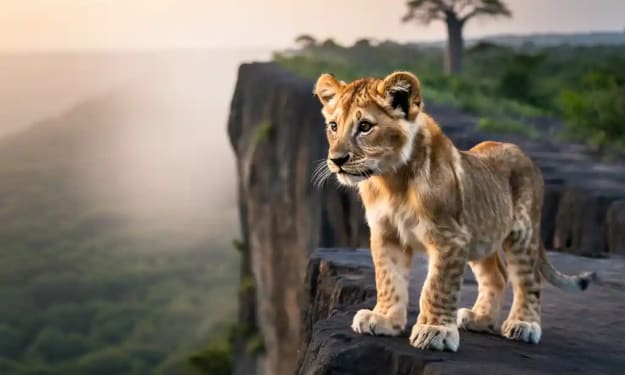
art of the African savanna, where golden grass whispers stories of survival and legacy, a lion cub named Leo was born. But unlike his siblings, who roared with instinct and leapt with promise, Leo was different. He was smaller. Quieter. Often overlooked. While the others played fiercely beneath the tall acacia trees, Leo watched from a distance—his eyes not on the games, but on the horizon. His paws were too small to race, his roar too soft to intimidate, and his legs trembled in the company of boldness. Yet there was something else inside him. A spark that didn’t show on the surface. A curiosity. A question. “Why don’t you join them?” his mother would ask gently, her golden eyes filled with worry. Leo would lift his head, ever so slightly. “Because I want to learn,” he would whisper. “I want to see the world before I try to conquer it.” Others in the jungle didn’t understand. They dismissed him. “Too small to matter,” scoffed the zebras. “Too quiet to be brave,” mocked the monkeys from their high, swinging homes. But Leo didn’t argue. He didn’t need to. Somewhere deep inside him, a voice far older than his own murmured: “Your time will come. And when it does, the world will know.” he Storm That Changed Everything It came without warning. The sky, once a blue canvas, darkened into a violent grey. Thunder cracked through the heavens, and the jungle trembled. The rain poured like arrows from the clouds, and the wind howled like forgotten spirits. Leo’s family, like many others, found refuge in a rocky cave near the cliffs. They huddled close, seeking warmth and safety as the world outside unravelled. Then came the sound that pierced the storm. A cry. Fragile and distant. Milo. The baby elephant from the neighboring herd. Lost. Alone. The lion king, Leo’s father, growled with authority. “No one moves. The storm is not kind to wanderers.” But Leo couldn’t sit still. His ears twitched at the sound. His heart raced—not with fear, but with purpose. “He’s out there,” Leo said, more to himself than anyone else. “He’s afraid.” “You’re just a cub,” his father barked. “Don’t be foolish.” But Leo had already stepped forward. His mother tried to stop him. But courage moves faster than doubt. And sometimes, a lion’s heart knows exactly when to roar—even if no one else can hear it.
By Arshad khanabout a year ago in Fiction
The Stranger Who Knew My Name"
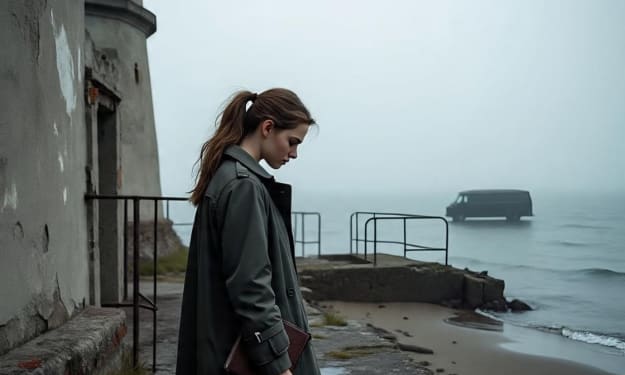
>> WRITTEN BY PROFESSOR KHAN A Rainy Day and a Chance Meeting It started with rain—the kind that drenches you in seconds. I ducked into a small bookstore to wait it out. That’s when I saw him: an old man with a long coat and a walking stick, staring at me like he knew me. I offered a polite smile. He approached with surprising speed for someone his age. “You’re Sarah Williams,” he said. I froze. I had never seen him before. --- The Name I Never Shared My name isn’t listed anywhere—not online, not even on social media. I use a pen name for my freelance writing. So how did he know? “I knew your mother,” he added. “Before she disappeared.” The word hit like thunder. My mother had passed away when I was two. At least, that’s what I had always believed. --- The Photo in the Old Journal He handed me a torn leather journal. “She wanted you to have this one day.” I opened it to find a photograph taped inside: a young woman, unmistakably my mother, standing in front of a lighthouse I’d never seen. Scribbled beside it were the words: "Find the light. Trust no one." It felt like a riddle—but something told me this was real. --- The Lighthouse That Didn't Exist I spent that evening combing the internet for the lighthouse in the picture. No results matched. Not even reverse image search helped. I was beginning to doubt everything when I noticed a handwritten note tucked in the back of the journal: “Wexford Bay. 12 steps east of the old pier.” A place I’d never heard of. But something in me stirred. I had to go. --- The Voice on the Other End Before leaving for Wexford Bay, I noticed a phone number faintly scratched on the back of the photo. Curious, I dialed it. After a few rings, a voice answered—quiet, rushed. “Sarah?” My heart jumped. “Who is this?” “I can’t talk long. They monitor everything. Don’t trust anyone at Wexford—not even the sheriff. They’ll make you disappear too.” The line went dead before I could respond. I hadn’t even told them my name. --- The Sheriff With the Cold Eyes Wexford Bay was small and quiet. The kind of town where outsiders don’t blend in. I stopped by the sheriff’s office to ask about local motels. Sheriff Denton greeted me with a smile that didn’t reach his eyes. “Lighthouse?” he repeated. “No such place anymore. Burned down long ago.” When I thanked him and turned to leave, he said, “Best not go digging up things that ought to stay buried.” That wasn’t advice. It was a warning. --- Ghosts of the Coastline Locals avoided my gaze as I walked the shore. When I asked about the lighthouse, they turned away, whispering. Still, I followed the journal’s instructions. Twelve steps east of the old pier, I found a rusted lockbox buried in the sand. It was heavy. Inside, I found dozens of old letters—all addressed to me, from my mother. --- Letters From the Hidden Past “If you're reading this, it means the truth finally found its way back to you,” one began. “I never died. I had to vanish because of what I discovered.” She wrote about a secret project, government surveillance, people going missing. It sounded like fiction. But the weight of her words—and the effort to hide them—told me it was all real. --- The Man in the Gray Van Back at my motel, I noticed a gray van parked across the street. Same van the next morning. And the next. When I finally approached it, it sped off. I knew then: I was being watched. The old man in the bookstore hadn’t just delivered a message. He was protecting me. Or trying to. --- A New Identity, A New Purpose Weeks later, I received one final envelope. No return address. Inside: a plane ticket, a passport, and a handwritten note. “You’re not safe anymore. But you’re not alone.” The name on the passport wasn’t mine. But somehow, it felt more me than any name ever had. I boarded the plane without looking back. The world I thought I knew was gone. But a new one was waiting.
By Professor khanabout a year ago in Fiction
Jinn Behind Bars: A Prison Guard’s Story of the Unseen Inmates
Jinn Behind Bars: A Prison Guard’s Story of the Unseen Inmates My name is Umar Farooq. I’ve served as a prison officer in three different facilities across Pakistan. I’ve seen drug lords cry, murderers plead, and innocent men rot behind bars.
By Noman Afridiabout a year ago in Fiction
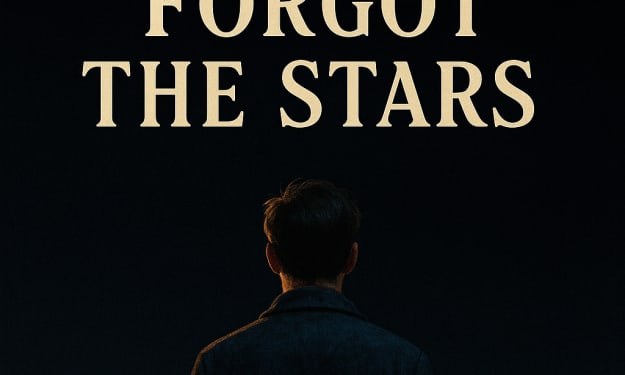
When the Sky Forgot the Stars
When the Sky Forgot the Stars It happened on a Thursday. Not the day of an apocalypse or a war—just a simple, quiet Thursday. The kind of day you forget before it’s even finished. That evening, people looked up and blinked in confusion. There were no stars. Not a single one. No blinking specks, no constellations, no Milky Way stretching like a silver ribbon across the night. Just a hollow darkness, deep and endless, like the sky had been scrubbed clean. Some thought it was pollution. Others blamed a blackout in some satellite system. But it wasn’t that. The stars were gone—and worse, no one remembered they were ever there. Except me. I first noticed it while walking my dog, Juno, down Harper Street. She stopped to sniff an old fence post, and I gazed up instinctively, the way people do when waiting for something to finish. The moon hung low and golden, bright but alone. “Strange,” I muttered. Juno barked at nothing. I asked around the next day. My sister, a teacher, chuckled and said, “Stars? You mean like in astrology?” “No. The actual stars.” She looked puzzled. “Like... the sun?” “No, the ones in the night sky.” She laughed like I’d made a joke. “There’s never been anything in the sky except the moon. You’re thinking of movies or something.” That’s when I realized it wasn’t just the stars that were gone. It was the memory of them too. I searched through books in the library—no constellations in the science section. No photos of starlit skies in the astronomy shelves. No mention of Polaris, Orion, or even shooting stars. It was as if history had been rewritten, globally, meticulously. Only the moon and the dark remained. Online forums didn’t help either. When I posted a thread titled, “Where did the stars go?” people replied with jokes. A few suggested I seek therapy. So I stopped asking. But I started writing. I filled notebook after notebook with star charts from memory: the jagged belt of Orion, the seven stars of the Big Dipper, the lonely light of Sirius. I even painted the night sky with cheap oil paints, splattering white dots over deep navy. Juno sat by my feet, as if she understood. I didn’t know why I remembered. I still don’t. But the ache grew stronger each night. As if something had been stolen—not just from the world, but from the soul. Weeks passed. One evening, while sorting through old photo albums in the attic, I found a picture. It was faded, probably from the 1990s. A camping trip. There were two kids—me and someone I didn’t remember. But in the corner of the sky, faint and grainy, there they were. Stars. I stared at it for hours. It was proof. Real, physical evidence that I wasn’t insane. I brought the photo down, framed it, and placed it on my living room wall. The next morning, it was blank. Same photo, same frame, but the sky was black. Smooth. Starless. Like the stars were being erased, even from paper. I checked my notebooks. Gone. The pages were blank. The paintings? Just dark blue canvases. No one believed me when I showed them the "vanishing evidence." I stopped trying. But Juno still barked at the sky sometimes. Then came the dreams. Every night, I’d drift off and find myself standing in a wide field. Above me, the stars blazed bright, singing like tiny bells. I could see everything—galaxies spinning, comets trailing fire, planets dancing around distant suns. Each night, the dreams lasted longer. Each time, I woke up crying. Until one night, I didn’t wake up alone. A knock on my door at 2:17 a.m. I opened it cautiously. A man stood there, maybe fifty, with wild grey hair and trembling hands. He held a thick leather book. “You remember too,” he whispered. His name was Ellis. He used to be an astrophysicist before funding dried up and the stars vanished from human thought. He had been waiting, he said, for someone else to wake up—someone who remembered. “I’ve met six others like us,” he said. “Scattered across the globe. Different ages. Different lives. But we all remember.” I invited him in. He showed me his journal—full of symbols, theories, and maps of the sky as it used to be. Unlike mine, his notes hadn’t vanished. He had hidden them in lead-lined drawers, covered in silver foil. He believed whatever force had erased the stars could only reach exposed memory. “I think it’s not natural,” he said. “More like... a theft.” “A theft?” I asked. He nodded. “Like something didn’t want us to look up anymore. To wonder. To dream beyond the Earth.” “But why?” Ellis looked at me, sadness in his eyes. “Because wonder leads to freedom. And someone, or something, doesn’t want us to be free.” That night, we stood in the field behind my house. Ellis held a strange device—something between a telescope and a tuning fork. “It’s not enough to remember,” he said. “We need to remind the sky.” He struck the fork. A low, humming sound vibrated through the air. Juno barked once, then went quiet. The ground trembled. And for a moment—a fraction of a second—I saw it. A flicker. One star. Then gone again. Ellis fell to his knees, shaking. “It’s still there,” he whispered. “Underneath the forgetting.” I don’t know what comes next. Ellis left a week later, searching for the others like us. He said they might be able to bring back the sky—if they worked together. I still look up every night. The darkness is deep. Heavy. But I remember. And sometimes, in the farthest corner of the sky, where even darkness is shy, I see a glimmer. A star. Just one. Waiting to be remembered. Author's Note: They say the night sky reflects the soul of the world. If that's true, maybe we've just forgotten how to look. Maybe it's time to remember.
By Atta Ullahabout a year ago in Fiction
10 Years of Marriage Equality
A Decade of Love and Progress Where were you on June 26, 2015? For me, it was a normal day at work. But that day changed history—it was the day same-sex marriage became legal across all 50 states in the U.S. We celebrated love, equality, and a hard-won victory for the LGBTQ+ community, activists, and everyone who believes in justice.
By Shafi Ullah Darweshabout a year ago in Fiction