Classical
The Cartography of Deception
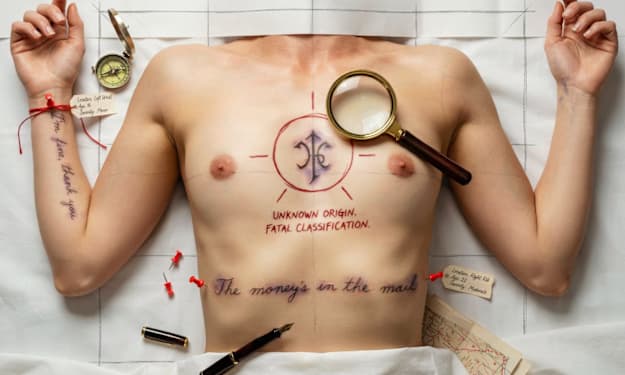
The first lie I ever told appeared on my left wrist the night I turned sixteen. It was small, just four words in a font so delicate it looked like a vein had risen to the surface: "I'm fine, thank you." I'd said it to my grandmother that morning, brushing off her concern about the bruise on my collarbone. The bruise was from a boy at school. The lie was from survival.
By Muhammad Sabeel5 months ago in Fiction
I Inherited a House That Doesn't Exist on Any Map
An Unexpected Inheritance When my grandfather passed away, I expected to inherit little more than a few family photographs and some old furniture. Instead, I received a letter from a law firm informing me that he had left me a property hidden deep in the mountains. The news surprised everyone in the family. None of us had ever heard him mention owning another house. According to the documents, the property had belonged to him for more than forty years. Curious and slightly confused, I accepted the inheritance and decided to visit the place myself.
By Robert Redford5 months ago in Fiction
Of Poison...Cologne and Old Money. 🎷🎷🎷🎷. Top Story - June 2026.
The faint sweetness of spilled bourbon envelopes the senses ~ the air is thick with the ghostly haze of cigarette smoke, incense, and a slight hint of clandestine promised sin. The atmosphere smolders beneath the low amber bulbs secreted behind frosted glass, a few red lamps glow like cat's eyes in the dark, and candles sputter in unmatched holders. Shadows pool in corners, watching...listening.
By Novel Allen5 months ago in Fiction
The Advantages and Disadvantages of Religion in Our Society II
The Advantages and Disadvantages of Religion in Our Society 2 Religion has influenced human civilization for thousands of years. It has shaped cultures, laws, traditions, art, education, and the way people understand life itself. For many, religion is more than a set of beliefs—it is identity, comfort, guidance, and community. For others, religion is viewed more critically because of the conflicts, divisions, or restrictions sometimes associated with it. Like many powerful forces in society, religion carries both advantages and disadvantages depending on how it is practiced, interpreted, and experienced. The Advantages of Religion 1. Building Community and Belonging One of religion’s greatest strengths is its ability to bring people together. Religious gatherings, shared rituals, celebrations, and places of worship create spaces where people connect and support one another. In many communities, religion becomes a source of friendship, encouragement, and social support during difficult times. 2. Providing Moral and Ethical Guidance Many religious traditions encourage values such as honesty, kindness, forgiveness, generosity, patience, and responsibility. For some people, religious teachings serve as a moral compass that helps guide decisions and behavior. 3. Offering Comfort During Hard Times Life often brings uncertainty, loss, disappointment, and fear. Religion can provide hope and emotional strength. Belief in something greater than oneself can help people endure difficult seasons and find meaning in suffering. 4. Encouraging Charity and Service Religious organizations have historically played roles in helping the poor, supporting education, providing healthcare, and responding to disasters. Many acts of volunteering and generosity around the world are connected to faith communities. 5. Preserving Culture and Identity Religion often becomes deeply connected to traditions, language, ceremonies, and family values. Festivals, music, stories, and customs frequently pass from generation to generation through religious practice. --- The Disadvantages of Religion 1. Risk of Division and Conflict While religion unites many people, differences in belief have sometimes contributed to tension and conflict. When people treat differences as threats instead of opportunities for understanding, religion can become a source of division. 2. Resistance to Change Some religious communities may strongly resist social, scientific, or cultural changes. This can create tension when traditional beliefs and modern developments appear to disagree. 3. Misuse of Religious Authority Religion itself is not automatically harmful, but people in positions of influence can misuse faith for personal gain, control, fear, or manipulation. History and modern society both show examples where authority was abused. 4. Pressure and Exclusion Some individuals experience pressure to conform to religious expectations. People who question beliefs, leave a faith, or live differently may sometimes face judgment or rejection. 5. Conflict Between Freedom and Rules Religious teachings often include standards and boundaries. For some, these create structure and meaning. For others, they may feel restrictive if imposed without room for personal choice or discussion. --- The Balance: Religion and Society The impact of religion is rarely simple. For one person, religion may represent peace, healing, and purpose. For another, it may represent painful experiences or limitation. Much depends on interpretation, leadership, culture, and personal experience. Society often benefits when religion contributes positively while respecting diversity, freedom of thought, and human dignity. At its best, religion can inspire people to serve, love, build, and seek truth. At its worst, religion can become fear, division, or power without compassion. The question is not always whether religion exists in society— but what people choose to do with the influence it carries.
By Samson E. Gifted5 months ago in Fiction