Adventure
When Bullets Paused for Friendship
The snow was falling lightly on the border between two nations locked in a bitter war. The year was 2023, and tensions between the fictional countries of Lirvia and Ostenia had escalated into full-blown conflict. Each side accused the other of invading territories and undermining peace, and neither was willing to yield.
By Intresting Storiesabout a year ago in Fiction
The Stranger Who Knew My Name"
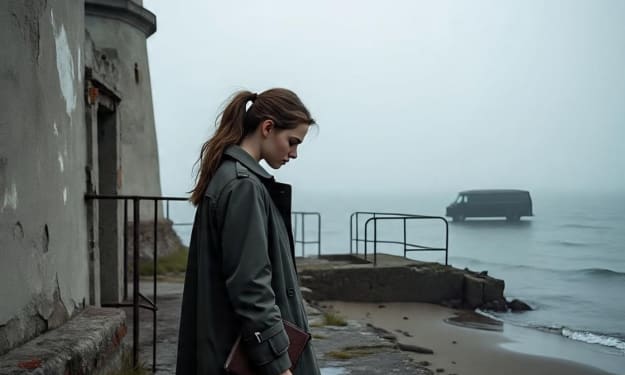
>> WRITTEN BY PROFESSOR KHAN A Rainy Day and a Chance Meeting It started with rain—the kind that drenches you in seconds. I ducked into a small bookstore to wait it out. That’s when I saw him: an old man with a long coat and a walking stick, staring at me like he knew me. I offered a polite smile. He approached with surprising speed for someone his age. “You’re Sarah Williams,” he said. I froze. I had never seen him before. --- The Name I Never Shared My name isn’t listed anywhere—not online, not even on social media. I use a pen name for my freelance writing. So how did he know? “I knew your mother,” he added. “Before she disappeared.” The word hit like thunder. My mother had passed away when I was two. At least, that’s what I had always believed. --- The Photo in the Old Journal He handed me a torn leather journal. “She wanted you to have this one day.” I opened it to find a photograph taped inside: a young woman, unmistakably my mother, standing in front of a lighthouse I’d never seen. Scribbled beside it were the words: "Find the light. Trust no one." It felt like a riddle—but something told me this was real. --- The Lighthouse That Didn't Exist I spent that evening combing the internet for the lighthouse in the picture. No results matched. Not even reverse image search helped. I was beginning to doubt everything when I noticed a handwritten note tucked in the back of the journal: “Wexford Bay. 12 steps east of the old pier.” A place I’d never heard of. But something in me stirred. I had to go. --- The Voice on the Other End Before leaving for Wexford Bay, I noticed a phone number faintly scratched on the back of the photo. Curious, I dialed it. After a few rings, a voice answered—quiet, rushed. “Sarah?” My heart jumped. “Who is this?” “I can’t talk long. They monitor everything. Don’t trust anyone at Wexford—not even the sheriff. They’ll make you disappear too.” The line went dead before I could respond. I hadn’t even told them my name. --- The Sheriff With the Cold Eyes Wexford Bay was small and quiet. The kind of town where outsiders don’t blend in. I stopped by the sheriff’s office to ask about local motels. Sheriff Denton greeted me with a smile that didn’t reach his eyes. “Lighthouse?” he repeated. “No such place anymore. Burned down long ago.” When I thanked him and turned to leave, he said, “Best not go digging up things that ought to stay buried.” That wasn’t advice. It was a warning. --- Ghosts of the Coastline Locals avoided my gaze as I walked the shore. When I asked about the lighthouse, they turned away, whispering. Still, I followed the journal’s instructions. Twelve steps east of the old pier, I found a rusted lockbox buried in the sand. It was heavy. Inside, I found dozens of old letters—all addressed to me, from my mother. --- Letters From the Hidden Past “If you're reading this, it means the truth finally found its way back to you,” one began. “I never died. I had to vanish because of what I discovered.” She wrote about a secret project, government surveillance, people going missing. It sounded like fiction. But the weight of her words—and the effort to hide them—told me it was all real. --- The Man in the Gray Van Back at my motel, I noticed a gray van parked across the street. Same van the next morning. And the next. When I finally approached it, it sped off. I knew then: I was being watched. The old man in the bookstore hadn’t just delivered a message. He was protecting me. Or trying to. --- A New Identity, A New Purpose Weeks later, I received one final envelope. No return address. Inside: a plane ticket, a passport, and a handwritten note. “You’re not safe anymore. But you’re not alone.” The name on the passport wasn’t mine. But somehow, it felt more me than any name ever had. I boarded the plane without looking back. The world I thought I knew was gone. But a new one was waiting.
By Professor khanabout a year ago in Fiction
Jinn Behind Bars: A Prison Guard’s Story of the Unseen Inmates
Jinn Behind Bars: A Prison Guard’s Story of the Unseen Inmates My name is Umar Farooq. I’ve served as a prison officer in three different facilities across Pakistan. I’ve seen drug lords cry, murderers plead, and innocent men rot behind bars.
By Noman Afridiabout a year ago in Fiction
The Curse of a Beggar: How One Mistake Haunted Generations
The Curse of a Beggar: How One Mistake Haunted Generations My name is Tameezuddin, and I am the last man of my bloodline. This story isn't just a confession — it's a warning. It happened in 1978. I was a proud young man then, newly married, working in a textile mill in Karachi. One evening, while walking home with some colleagues, a frail old beggar approached us. His clothes were tattered, his beard long and silver, and his voice barely a whisper. “Baba, just one roti… I haven’t eaten in two days.” The others ignored him, but I… I made a mistake. I laughed. I said loudly, “You haven't eaten in two days? Then maybe it's time Allah calls you up for dinner in the sky!” My friends laughed too. But the beggar didn’t. He looked at me — no hatred, no anger, just cold, quiet eyes — and muttered something under his breath. I didn’t catch the words, but my spine went cold. “May your sons be as hungry as I am,” he finally said aloud. “And may your daughters never speak your name with pride.” We walked away joking. But the joke never ended. That year, my wife miscarried. The next child — a boy — was born weak, sickly, and blind. My third child, a girl, never spoke a word from birth. Doctors found no medical explanation. Still, I didn’t connect it to that night. Until I met the beggar again. Fifteen years later. He was older, now almost skeletal, still sitting at the same corner. He looked up as I passed. “You remember now, don’t you?” he rasped. I froze. “My curse was not hatred,” he said. “It was justice.” Tears filled my eyes. I fell to my knees. “Forgive me. I was foolish. Please lift it.” He smiled. “Forgiveness is not mine. It must come from those who suffer.” I rushed home and broke down in front of my wife and children. I told them everything. But the curse had grown roots. My daughter died at age 17. My son — blind, but brilliant — took his own life after years of depression. Only my youngest son, born late in my life, remained. But the pattern continued. He lost his first job due to mysterious accusations. His wife left him after stillbirths. And when he tried to move abroad, every visa got rejected — often with no reason. Now he refuses to speak to me. He blames me. And he’s right. I live alone in a house filled with silence. Every knock on the door feels like justice. Every mirror shows not my face, but my mistake. One day, I opened a dusty old Quran, trembling hands seeking peace. A verse stood out: “And the supplication of the oppressed — even if he is a disbeliever — is never rejected.” I wept. Not because I was cursed. But because I deserved it. Now, if you’re reading this, know this: You may have money, power, strength… but a broken-hearted prayer from the street can break your throne. So never mock the hungry. Never curse the poor. Because sometimes… they curse back. And their words don’t die with them.
By Noman Afridiabout a year ago in Fiction
The Unfurling of Agnes
With the faint, nearly undetectable rustle of old paper, Agnes Periwinkle went about her day. The Municipal Archive, a vast maze of lost histories, dust motes dancing in the few shafts of sunlight, and the reassuring smell of lignin and ageing parchment were the quiet, climate-controlled hallways where her days unfolded. Agnes had been its silent keeper for thirty-seven years, a human catalogue among the millions of old maps, old papers, and old photos.
By Momin Shahabout a year ago in Fiction
Back to School: Where Memories Stayed but Everything Else Changed
Back to School: Where Memories Stayed but Everything Else Changed I never believed in ghosts — until I became one in my own memories. It was a rainy afternoon when I found myself standing at the old iron gate of my childhood school. I hadn’t planned this visit. A detour during a business trip had somehow led me here — to this road, this corner, this place that once meant the world to me. The gate still squeaked. I pushed it gently, and it moaned like an old friend waking up after a long nap. The same trees lined the path, but they seemed taller, older, heavier with silence. I half expected to see my 10-year-old self running across the yard with ink-stained fingers and untied shoelaces. But the field was empty. The old basketball court, where we once laughed and fought and bled, had been replaced by a parking lot. The canteen — oh, that sacred hut of samosas and mango drinks — was now a metal vending machine box. I stared at it for a long moment, feeling betrayed by time. I walked past classrooms whose windows now had grills. Back in my day, those windows let in not just air but also whispers, paper planes, and sometimes a rogue cricket ball. The smell of chalk was gone. The sound of wooden desks scratching against concrete was no longer there. Even the colors on the wall — once bright with murals we painted — had faded into bland institutional grey. I reached Class 5-B. That was my room. The place where I first stood up to answer a question. Where I learned to lie about homework. Where I passed my first note to a girl whose name I never had the courage to ask again. The door was shut. I peeked through the glass. Inside, it was just another room. Smartboards instead of blackboards. Plastic chairs instead of wooden benches. No names carved into desks. No memories in the corners. No ghosts — except me. I walked to the playground, now littered with electronic slides and foam flooring. Once, we had a broken swing, a rusty see-saw, and a patch of dirt that served every purpose from cricket pitch to war zone. I remembered falling there once — scraped knees, tears, and a teacher who brought me water from her own bottle. I wondered where she was now. Had she grown old, retired, forgotten us? Or did she still remember the boy who couldn’t tie his laces but always raised his hand? Suddenly, I heard laughter. A group of children ran past me — maybe ten or eleven years old. Their uniforms were newer, their shoes shinier, their laughter still familiar. For a moment, I wanted to stop them. Ask: Do you know what happened here? Do you know about Anwar who once climbed that tree during math class? Or Zain who got locked in the science cupboard? Or Sana who cried every Monday? But they wouldn’t know. How could they? They belonged to a new chapter. I was just a footnote. I sat on a bench — the only one that hadn’t changed — and took out my phone to click a picture. But the image looked too sterile, too modern. I put the phone away. Some moments aren’t meant to be captured. Only remembered. I left the school with a heavy heart. Not because it had changed. But because I had hoped it hadn’t. And perhaps, deep down, I feared that even if I returned a hundred times, I’d never find the pieces of me I left behind. The bell rang as I reached the gate — sharp, digital, and soulless. Not like the old one, which echoed across the valley and stayed in your head long after school was over. I didn’t turn back. I didn’t want the school to see me cry
By Noman Afridiabout a year ago in Fiction
Married to a Jinn: My Daughter’s Secret Union – Truth or Delusion?
Married to a Jinn: My Daughter’s Secret Union – Truth or Delusion? It started with a whisper. Not in my ear, but in the air. Whispers that lingered long after midnight, curling like smoke under my daughter’s bedroom door.
By Noman Afridiabout a year ago in Fiction
When Robots Dream
The idea of robots dreaming may sound like science fiction, but as artificial intelligence (AI) advances, questions about machine consciousness and the nature of AI experiences become increasingly relevant. What would it mean for a robot or AI system to "dream"? Can machines have subconscious processes, emotions, or even desires? Exploring these questions invites us to rethink what consciousness means—not only for humans but for the technology we create.
By Muhammad Asimabout a year ago in Fiction
Kevin’s Kite and the Big Sky Promise
Kevin stood at the edge of the hill, gripping the handle of his bright red kite. The wind tugged playfully at the string, eager to pull it into the sky. The hill was the highest place in town, and the sky above it seemed endless—like it could carry anything, even the heaviest thoughts.
By YOUNG MINDSETabout a year ago in Fiction
Caution Hits Before The Wind
Many of us as individuals go throughout life without a care in the world and just let things be as they are. However, this mindset is a dangerous one as it can just as well lead to a good outcome as well as a bad one. This is a story about a young fox named Amber, who's cautious nature became the one thing that saved her when she was besieged by a beast she had no hope of defeating.
By Toby Hewardabout a year ago in Fiction