Adventure
The Forbidden City
Introduction: A Palace of Mystery and Power The Forbidden City stands as one of the most iconic and fascinating landmarks in the world. Located in the heart of Beijing, China, it served as the imperial palace for nearly 500 years. More than just a grand architectural marvel, the Forbidden City is steeped in history, culture, and symbolism, making it a window into the world of Chinese emperors and dynasties.
By Anwar Jamilabout a year ago in Fiction
Kid vs Monkey
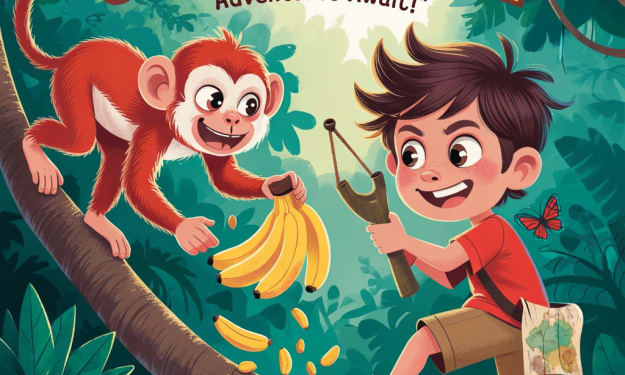
Tommy was no ordinary kid. At ten years old, he was full of curiosity and always up for an adventure. Today, he was visiting his grandmother’s countryside house, right next to a sprawling jungle. Everyone in the village whispered stories about the jungle—mysterious creatures, hidden treasures, and especially one clever monkey named Kiki, who was known as the trickiest animal around.
By YOUNG MINDSETabout a year ago in Fiction
The Mapmaker's Secret
The descent beneath the ancient temple had taken them through fire-scarred chambers and tunnels choked with bones — some human, some not. Now, Elias Voss and the cloaked woman — who had finally given her name as Thalia Kyriakou, a descendant of the temple’s last oracle — stood before an obsidian door inscribed with letters that hadn’t been spoken since the time of Pythia.
By Amanuel Goshuabout a year ago in Fiction
The Mapmaker's Secret
The air was heavy with incense long extinguished. The chamber beneath Delphi was vast, lined with honeycomb alcoves that had once held scrolls, relics — even human remains. This was not just a place of prophecy. It was a burial chamber for seers.
By Amanuel Goshuabout a year ago in Fiction
The Mapmaker's Secret
The ink was vanishing. Even as Elias held the parchment closer to the flickering oil lamp, the script dissolved before his eyes like smoke on wind. He muttered under his breath, tracing the outline of the fading runes with a gloved finger.
By Amanuel Goshuabout a year ago in Fiction
The Mapmaker's Secret
The journey to Delphi was rough. Elias and Thalia rode in a weather-worn cart through the craggy hills of central Greece, once sacred land now pockmarked with forgotten battle scars and bandit roads. Elias studied the copied map every chance he got, deciphering layers of forgotten symbols and celestial patterns etched beneath the Greek text.
By Amanuel Goshuabout a year ago in Fiction
The Mapmaker's Secret
1823 – Istanbul, at the edge of an empire fraying at its borders. The fog curled over the Bosphorus like a slinking beast, wrapping the crumbling port in its breath. Market stalls groaned beneath the weight of damp spice sacks and salted fish. Down an alley too narrow for a carriage and too crooked for light, a man stepped off a wooden ferry, tucking a leather-bound satchel beneath his long coat.
By Amanuel Goshuabout a year ago in Fiction
The Letter I Found in My Late Grandma’s Bible
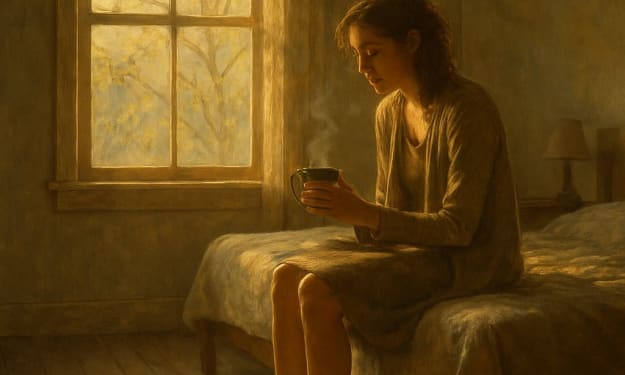
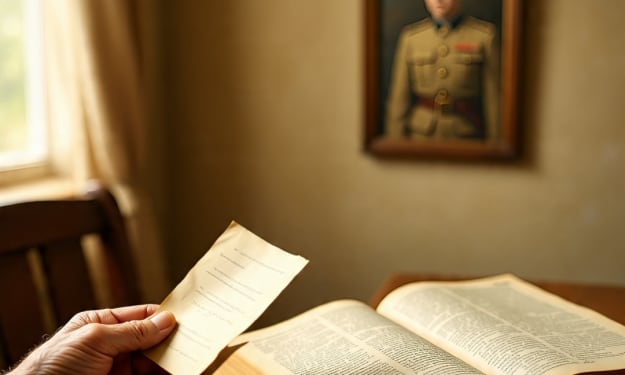
PART 1: Saying Goodbye The day we buried Grandma June was cold, despite it being spring. The whole family gathered at her favorite white chapel, tucked between the hills where she used to take us berry picking as kids. The service was short and quiet—just the way she’d wanted. I hadn’t cried, not really. Not until I walked back into her house, smelled her lavender soap, and saw her Bible sitting untouched on her bedside table.
By Professor khanabout a year ago in Fiction
The Weight of Forgotten Things
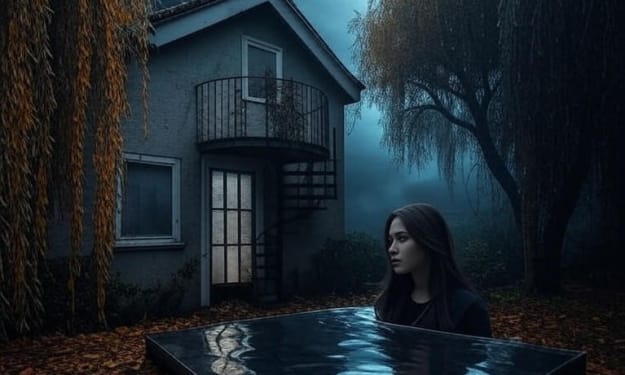
The house on Sycamore Lane wasn’t the kind of place you’d notice unless you were looking for it. Tucked behind a curtain of overgrown willow trees, its peeling paint and sagging porch made it seem like it was trying to disappear. Clara hadn’t meant to find it. She’d been wandering, as she often did when the world felt too heavy, her boots crunching through the autumn leaves that blanketed the outskirts of her small town. But something about the house—its silence, maybe, or the way the windows seemed to watch her—drew her closer.
By Fahad Contentabout a year ago in Fiction
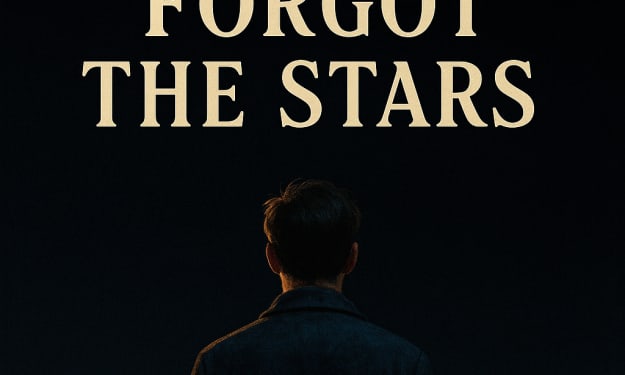
When the Sky Forgot the Stars
When the Sky Forgot the Stars It happened on a Thursday. Not the day of an apocalypse or a war—just a simple, quiet Thursday. The kind of day you forget before it’s even finished. That evening, people looked up and blinked in confusion. There were no stars. Not a single one. No blinking specks, no constellations, no Milky Way stretching like a silver ribbon across the night. Just a hollow darkness, deep and endless, like the sky had been scrubbed clean. Some thought it was pollution. Others blamed a blackout in some satellite system. But it wasn’t that. The stars were gone—and worse, no one remembered they were ever there. Except me. I first noticed it while walking my dog, Juno, down Harper Street. She stopped to sniff an old fence post, and I gazed up instinctively, the way people do when waiting for something to finish. The moon hung low and golden, bright but alone. “Strange,” I muttered. Juno barked at nothing. I asked around the next day. My sister, a teacher, chuckled and said, “Stars? You mean like in astrology?” “No. The actual stars.” She looked puzzled. “Like... the sun?” “No, the ones in the night sky.” She laughed like I’d made a joke. “There’s never been anything in the sky except the moon. You’re thinking of movies or something.” That’s when I realized it wasn’t just the stars that were gone. It was the memory of them too. I searched through books in the library—no constellations in the science section. No photos of starlit skies in the astronomy shelves. No mention of Polaris, Orion, or even shooting stars. It was as if history had been rewritten, globally, meticulously. Only the moon and the dark remained. Online forums didn’t help either. When I posted a thread titled, “Where did the stars go?” people replied with jokes. A few suggested I seek therapy. So I stopped asking. But I started writing. I filled notebook after notebook with star charts from memory: the jagged belt of Orion, the seven stars of the Big Dipper, the lonely light of Sirius. I even painted the night sky with cheap oil paints, splattering white dots over deep navy. Juno sat by my feet, as if she understood. I didn’t know why I remembered. I still don’t. But the ache grew stronger each night. As if something had been stolen—not just from the world, but from the soul. Weeks passed. One evening, while sorting through old photo albums in the attic, I found a picture. It was faded, probably from the 1990s. A camping trip. There were two kids—me and someone I didn’t remember. But in the corner of the sky, faint and grainy, there they were. Stars. I stared at it for hours. It was proof. Real, physical evidence that I wasn’t insane. I brought the photo down, framed it, and placed it on my living room wall. The next morning, it was blank. Same photo, same frame, but the sky was black. Smooth. Starless. Like the stars were being erased, even from paper. I checked my notebooks. Gone. The pages were blank. The paintings? Just dark blue canvases. No one believed me when I showed them the "vanishing evidence." I stopped trying. But Juno still barked at the sky sometimes. Then came the dreams. Every night, I’d drift off and find myself standing in a wide field. Above me, the stars blazed bright, singing like tiny bells. I could see everything—galaxies spinning, comets trailing fire, planets dancing around distant suns. Each night, the dreams lasted longer. Each time, I woke up crying. Until one night, I didn’t wake up alone. A knock on my door at 2:17 a.m. I opened it cautiously. A man stood there, maybe fifty, with wild grey hair and trembling hands. He held a thick leather book. “You remember too,” he whispered. His name was Ellis. He used to be an astrophysicist before funding dried up and the stars vanished from human thought. He had been waiting, he said, for someone else to wake up—someone who remembered. “I’ve met six others like us,” he said. “Scattered across the globe. Different ages. Different lives. But we all remember.” I invited him in. He showed me his journal—full of symbols, theories, and maps of the sky as it used to be. Unlike mine, his notes hadn’t vanished. He had hidden them in lead-lined drawers, covered in silver foil. He believed whatever force had erased the stars could only reach exposed memory. “I think it’s not natural,” he said. “More like... a theft.” “A theft?” I asked. He nodded. “Like something didn’t want us to look up anymore. To wonder. To dream beyond the Earth.” “But why?” Ellis looked at me, sadness in his eyes. “Because wonder leads to freedom. And someone, or something, doesn’t want us to be free.” That night, we stood in the field behind my house. Ellis held a strange device—something between a telescope and a tuning fork. “It’s not enough to remember,” he said. “We need to remind the sky.” He struck the fork. A low, humming sound vibrated through the air. Juno barked once, then went quiet. The ground trembled. And for a moment—a fraction of a second—I saw it. A flicker. One star. Then gone again. Ellis fell to his knees, shaking. “It’s still there,” he whispered. “Underneath the forgetting.” I don’t know what comes next. Ellis left a week later, searching for the others like us. He said they might be able to bring back the sky—if they worked together. I still look up every night. The darkness is deep. Heavy. But I remember. And sometimes, in the farthest corner of the sky, where even darkness is shy, I see a glimmer. A star. Just one. Waiting to be remembered. Author's Note: They say the night sky reflects the soul of the world. If that's true, maybe we've just forgotten how to look. Maybe it's time to remember.
By Atta Ullahabout a year ago in Fiction