Adventure
New Bonds Mentioned.
Daniel Craig became the face of James Bond and made the brand Bond his own. Craig's bond was a hybrid. A mixture of the roughty toughty Sean Connery and the gentlemanly Roger Moore. The Bond films showed Craig's Bond evolving as he fought Spectre, even fighting his own MI6, becoming a father and giving his life for the world in the final instalment.
By Nicholas Bishopabout a year ago in Fiction
The Ink Thief
In the city of Elira, memory lived on in ink. Here, books weren’t written—they wrote themselves. Whenever someone experienced something unforgettable, the event would drift from their mind and settle into one of the living tomes shelved in the Grand Archive. Some whispered that the books had souls of their own, binding thoughts into stories, lessons, and warnings.
By Salah Uddinabout a year ago in Fiction
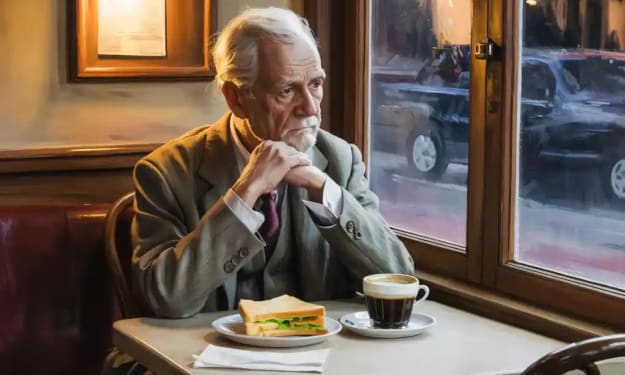
The Man Who Sat at Table Seven
There’s a quiet little café on East 41st Street, nestled unceremoniously between a secondhand bookstore and a flower shop that always smells of jasmine and damp stems. Blink, and you might miss it. No neon signs. No whimsical chalkboard menus boasting fancy lattes or turmeric infusions. The awning just reads “Mira’s Café” in fading gold letters. Inside, it smells like toasted bread, warm milk, and stories too old to tell.
By Arshad khanabout a year ago in Fiction
The Town That Erased My Memory
I arrived in the town of Alder Creek on a rainy Thursday evening, not entirely sure why I was there. The drive had been unplanned. I had set out for a weekend getaway from the noise of city life, hoping to clear my mind. My GPS had glitched an hour out, rerouting me off the main highway onto a winding forest road. By the time I realized I was off course, I saw the wooden sign: Welcome to Alder Creek - Est. 1834. The lettering was faded, the wood half-rotted, but something about it pulled me in.
By Harley Morrisabout a year ago in Fiction
The Echoes of the Yellow Scarf
When Mira stepped off the subway at 14th Street, the crowd swept around her like waves. It was the same platform, same train, same morning routine—but today, something was different. Clutched in her hand was a yellow scarf. Not hers. She had found it on the park bench she always sat on before heading to work. It was soft, handmade, and slightly frayed at the edges, with initials stitched in the corner: S.H. She hesitated before picking it up earlier that morning. Normally, she'd ignore lost items, let someone else deal with them. But something about this scarf felt… personal. Like it was meant for her to find. By the time she reached her office on the 22nd floor of a glass-paneled building, she couldn’t stop thinking about the initials. Who was S.H.? Why did it feel like more than just a lost scarf? She Googled the initials with “yellow scarf” and “New York”—of course, nothing. A thousand meaningless results. But then came the dreams. That night, Mira dreamt of a girl in a yellow scarf standing under a streetlamp, eyes full of sorrow. She said nothing. Just stood. Watching. Silent. The next night, she returned. This time, Mira spoke. “Who are you?” The girl looked up. “Help me find home.” Mira jolted awake. The scarf was on the chair beside her bed—right where she’d left it. But it looked newer. Less worn. As if time had reversed. In the days that followed, the dreams grew more vivid. The girl—always in that yellow scarf—stood by a bench, her back to Mira, facing a lake Mira had never seen before. And every time, she'd whisper, “Almost there.” Mira started drawing the scenes. She was no artist, but the urge was uncontrollable. She filled pages with images of the girl, the lake, the scarf fluttering like a whisper caught in wind. Her friends thought she was spiraling. “You need sleep,” they said. “You’re obsessing over nothing.” But she couldn't stop. One rainy Sunday, Mira walked aimlessly through Central Park, the scarf wrapped around her neck, the dreams echoing in her thoughts. And then—she saw it. The bench. Not just any bench. The bench. The one from her dreams. It faced a small, quiet lake. Willow trees bowed along the edges. A streetlamp flickered nearby. It was all real. She sat. A soft breeze passed. Leaves rustled. The scarf lifted slightly. And then, across the lake, stood the girl. Real. Flesh and bone. Same yellow scarf. Same solemn eyes. Mira stood. “Who are you?” The girl smiled faintly. “You found me.” Mira stepped forward, breath caught in her throat. But before she could speak again, the girl turned and walked toward the trees—fading like mist in morning light. Gone. Mira looked down. The scarf had vanished. In its place, on the bench, was a note. “Thank you. I’m home now. – S.H.” That was three years ago. Since then, Mira walks the park every Sunday. She never saw the girl again, but sometimes, when the breeze picks up just right, she feels a soft warmth on her neck—as if a scarf, unseen, still lingers. She doesn’t tell many people the story. Who would believe her? But if you ever find a yellow scarf where it shouldn't be… Hold on to it. Someone might be waiting.
By Arshad khanabout a year ago in Fiction
She Carried the Sky on Her Back
When I think of strength, I don’t think of iron or stone. I think of my sister. Her name was Safiya, and she was born during the hottest summer our village had ever seen. The kind of heat that clings to your ribs and wraps around your breath. They say the sky was red when she came into the world — angry, beautiful, and wide.
By Abuzar khanabout a year ago in Fiction
Between Our Cups of Tea
She placed the teacup in front of me, just like she always did — handle turned exactly to the right, the way I liked it. No sugar. No milk. Just like our mornings now. Bland. Quiet. Ritualistic. “Thanks,” I said, my voice low but audible. She didn’t answer. She never really did these days. She took her seat across from me, the chair creaking slightly under her, and lifted her own cup without a glance. The steam rose between us like a ghost — thin, silent, vanishing quickly. We sipped. Two strangers in a house we once called home. --- There was a time when mornings meant laughter. When she’d lean over the table, teasing me about my uncombed hair. When I’d kiss her forehead while the kettle boiled. When we’d talk — really talk — about dreams, books, movies, and silly ideas that only mattered to us. Now, we sip in silence. --- “What time are you heading out?” she finally asked, eyes still on her tea. “Around ten,” I replied. “You?” “Maybe earlier. I have to stop by the pharmacy.” I nodded. Another ordinary exchange. Another moment with nothing in it. --- It wasn't always like this. We used to touch each other without thinking — fingers brushing while reaching for the same spoon. We used to giggle like teenagers, even after five years of marriage. We used to sit on the floor instead of the couch, just because it felt cozier. We used to say “I love you” before falling asleep — even when tired, even when angry. I can't remember the last time we said that. I can't remember the last time I looked at her and saw her — the girl I fell in love with. Now, I just see a quiet woman in a bathrobe, pouring tea. And maybe she sees just a man behind a newspaper — not the boy who once chased her in the rain. --- “I’ve been thinking,” she said, suddenly. I looked up. “About?” She hesitated, then shook her head. “It’s nothing.” Say it, I wanted to tell her. Scream it if you have to. Tell me you’re unhappy. Tell me you miss me. Tell me you want to leave. Anything. Just don’t sip tea and pretend this is normal. --- I remember the night I first met her. She was at a bookstore, reading the back cover of a poetry collection. She had no makeup on. Just jeans, a plain blue shirt, and hair tied in a messy bun. She looked up, caught me staring, and smiled like I was already forgiven. We spoke for two hours that night. We didn’t even buy the book. Now, the same woman won’t speak to me for more than two minutes unless it’s about bills or groceries. --- I reached across the table and touched her hand. She didn’t pull away. But she didn’t hold it either. Just let it sit there — like my touch was something to tolerate, not treasure. “I miss us,” I said. She blinked. Once. Twice. And then quietly replied, “I know.” --- Silence again. Not heavy. Not angry. Just... empty. --- She stood, collected her cup, rinsed it in the sink. I watched her movements. Precise. Mechanical. Distant. I wanted to say so many things. Like how I still remember the way she laughed with her eyes. Like how I still sleep on the edge of the bed because that’s how she likes it. Like how I don’t want to lose her but don’t know how to keep her. But I said nothing. Because we both had gotten used to saying nothing. --- As she dried her hands on a towel, I asked: “Do you think we’ll ever be okay again?” She didn’t turn around. After a pause, she said: > “I think... we’ve been trying not to break. But maybe we already did. Quietly. Without noticing.” --- I stood up. Walked to the door. Picked up my coat. “I’m going for a walk,” I said. She only nodded. No “be careful.” No “come back soon.” Just a nod — like I was a neighbor borrowing sugar, not her husband. --- Outside, the air was colder than I expected. I shoved my hands into my pockets, thinking about how two people can share a house, a bed, a life — and still feel miles apart. --- When I returned an hour later, she was gone. But on the table, next to my empty teacup, was a note. > I made you a fresh cup. I don’t know if it changes anything, but… it still matters to me that you drink it warm. —M ---
By Muhammad Usamaabout a year ago in Fiction
"What Happens After We Block Someone? A Digital Ghost Story Told by Algorithms"
I used to think that blocking someone was the end. A digital wall. A simple act of control in a chaotic, hyperconnected world. But what if I told you that’s not true? That when we block someone — or get blocked — it doesn’t delete the bond. It just buries it.
By Hamad Haiderabout a year ago in Fiction
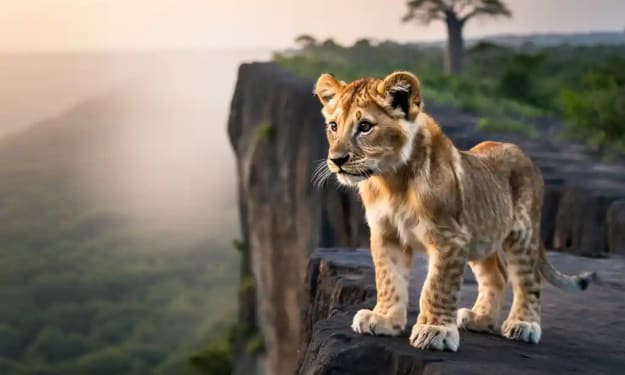
The Brave Cub Who Walked Into the Storm
art of the African savanna, where golden grass whispers stories of survival and legacy, a lion cub named Leo was born. But unlike his siblings, who roared with instinct and leapt with promise, Leo was different. He was smaller. Quieter. Often overlooked. While the others played fiercely beneath the tall acacia trees, Leo watched from a distance—his eyes not on the games, but on the horizon. His paws were too small to race, his roar too soft to intimidate, and his legs trembled in the company of boldness. Yet there was something else inside him. A spark that didn’t show on the surface. A curiosity. A question. “Why don’t you join them?” his mother would ask gently, her golden eyes filled with worry. Leo would lift his head, ever so slightly. “Because I want to learn,” he would whisper. “I want to see the world before I try to conquer it.” Others in the jungle didn’t understand. They dismissed him. “Too small to matter,” scoffed the zebras. “Too quiet to be brave,” mocked the monkeys from their high, swinging homes. But Leo didn’t argue. He didn’t need to. Somewhere deep inside him, a voice far older than his own murmured: “Your time will come. And when it does, the world will know.” he Storm That Changed Everything It came without warning. The sky, once a blue canvas, darkened into a violent grey. Thunder cracked through the heavens, and the jungle trembled. The rain poured like arrows from the clouds, and the wind howled like forgotten spirits. Leo’s family, like many others, found refuge in a rocky cave near the cliffs. They huddled close, seeking warmth and safety as the world outside unravelled. Then came the sound that pierced the storm. A cry. Fragile and distant. Milo. The baby elephant from the neighboring herd. Lost. Alone. The lion king, Leo’s father, growled with authority. “No one moves. The storm is not kind to wanderers.” But Leo couldn’t sit still. His ears twitched at the sound. His heart raced—not with fear, but with purpose. “He’s out there,” Leo said, more to himself than anyone else. “He’s afraid.” “You’re just a cub,” his father barked. “Don’t be foolish.” But Leo had already stepped forward. His mother tried to stop him. But courage moves faster than doubt. And sometimes, a lion’s heart knows exactly when to roar—even if no one else can hear it.
By Arshad khanabout a year ago in Fiction