
The Conversation I Wish I Had With My Parents
Some words are never spoken in time—and still echo louder than anything ever said

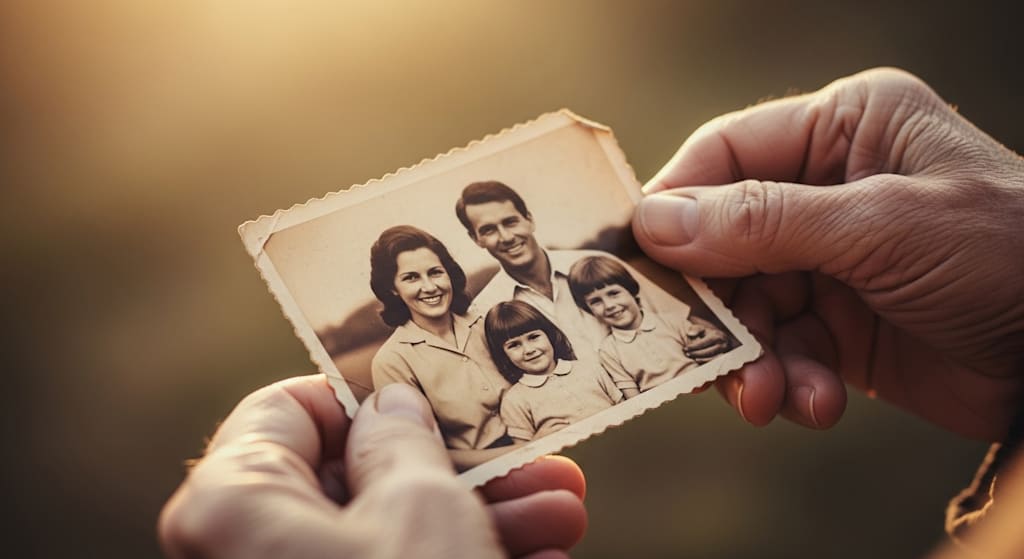
There are conversations that never happen in real time, but somehow continue to exist in your mind like they’re still waiting to be finished.
This is one of them.
I didn’t realize how many things I wanted to say until I no longer had the setting to say them in. Not because my parents disappeared, but because life quietly rearranged itself into something where those conversations no longer fit naturally.
You grow up thinking there will always be time.
Time to ask questions.
Time to understand.
Time to say things without them feeling too heavy or too late.
But time doesn’t announce when it’s running out of space for certain kinds of honesty.
It just quietly stops making room for them.
If I could go back, I don’t think I would say anything dramatic.
No grand confession. No emotional breakdown. No perfect, cinematic moment where everything is resolved in one conversation.
It would be simpler than that.
I would start with questions I never thought to ask when I was younger.
“Were you scared when you became a parent for the first time?”
“Did you ever feel like you were just pretending to know what you were doing?”
“Was there a moment you realized I was growing up faster than you expected?”
Because as a child, I thought parents were a finished version of people.
Fully formed. Certain. Always in control.
It takes years to understand that they were just figuring things out too—sometimes in real time, sometimes poorly, sometimes with more uncertainty than they ever showed.
I wish I had known that earlier.
Not because it would have changed everything, but because it would have softened the way I misunderstood them.
There are things I judged too quickly back then.
Silences I thought meant indifference.
Rules I thought meant control.
Distance I thought meant lack of care.
Now I see them differently.
Not as perfect people, but as people trying to hold everything together while also carrying their own histories, fears, and expectations they never fully explained.
I wish I had asked more about their lives before me.
Not just the version of them that existed as “mom” or “dad,” but the version that existed before that label arrived.
What did they dream about that never happened?
What did they give up without telling anyone?
What did they quietly carry forward anyway?
Because I think I spent so much time being their child that I forgot they were once someone else entirely.
And maybe that’s where the distance begins—not in conflict, but in assumption.
If I could rewrite a moment, I wouldn’t choose an argument or a dramatic goodbye.
I would choose a quiet evening.
No distractions. No urgency. Just space.
I would sit across from them and say:
“I didn’t understand you the way I thought I did.”
Not as blame. Not as apology. Just truth.
Because there were so many moments where I thought I knew everything—what they meant, why they acted the way they did, what they expected from me.
But most of those interpretations were shaped by limited perspective, not full understanding.
And growing up, I started realizing something uncomfortable:
We don’t just inherit traits from our parents.
We inherit misunderstandings too.
The things we never clarified become assumptions we carry forward.
The things we never asked about become stories we tell ourselves about them.
And sometimes, those stories are incomplete.
I think I would also say:
“I wish I had seen you as people earlier, not just parents.”
Because that shift changes everything.
It softens anger. It changes memory. It adds depth to moments that once felt simple or unfair.
It doesn’t erase mistakes. But it reframes them.
Not everything becomes excusable—but everything becomes more human.
There are still things I don’t know how to say out loud.
Gratitude I didn’t express when it mattered most.
Frustrations I never fully unpacked.
Questions I assumed I would always have time to ask later.
But “later” is a fragile agreement we make with life.
And sometimes, it doesn’t hold.
So maybe this conversation isn’t really about regret.
Maybe it’s about awareness.
About noticing, while there is still time, that the people closest to us are not static roles in our lives—they are changing, imperfect, complicated humans trying their best with what they have.
And so am I.
If I could end that imagined conversation, I don’t think I would ask for answers anymore.
I think I would just say:
“I see you differently now. And I wish I had seen you this way sooner.”
Because maybe that’s the closest thing to closure some relationships ever get—not resolution, but understanding that arrives a little too late to change the past, but just early enough to shape how you carry it forward.
About the Creator
Enjoyed the story? Support the Creator.
Subscribe for free to receive all their stories in your feed.
Comments
There are no comments for this story
Be the first to respond and start the conversation.