
The Absolute Value of Grief
On loss and mathematical concepts of grief


In June 2025, I began the drive home to Maine, returning three days before my grandmother’s funeral. Though I often wished it would go faster, the drive from Atlanta gave lots of opportunities for staring out the window and wondering how much I could've bartered with fate. What if I hadn't moved? What if I'd taken a different job? If I called upon the fates and offered to give them better yarn, nice and soft, would they have marvelled at the color so much that they forgot to snip an end to my grandmother's thread?
But less whimsically, if I had been different, had done something different, would it hurt as much?
The answer I came to was that the hurt wouldn't have been lessened, but a wriggling feeling of guilt still sat in my stomach. I'd done the typical flight of the eldest daughter. I'd gone to college, fallen in love, gotten a good job, and moved away, while still remembering everyone's birthdays, coming home for major holidays, and being as available as possible from over 1,200 miles away. I could've stayed, but my grandmother wouldn't have wanted that for me. Or at least, I think she wouldn't have. There's really no way to know anymore.
Meanwhile, for better or worse, the algorithms of all my social media platforms had realized I was grieving, so many of the posts I saw included helpful and less helpful “tips” on grief.
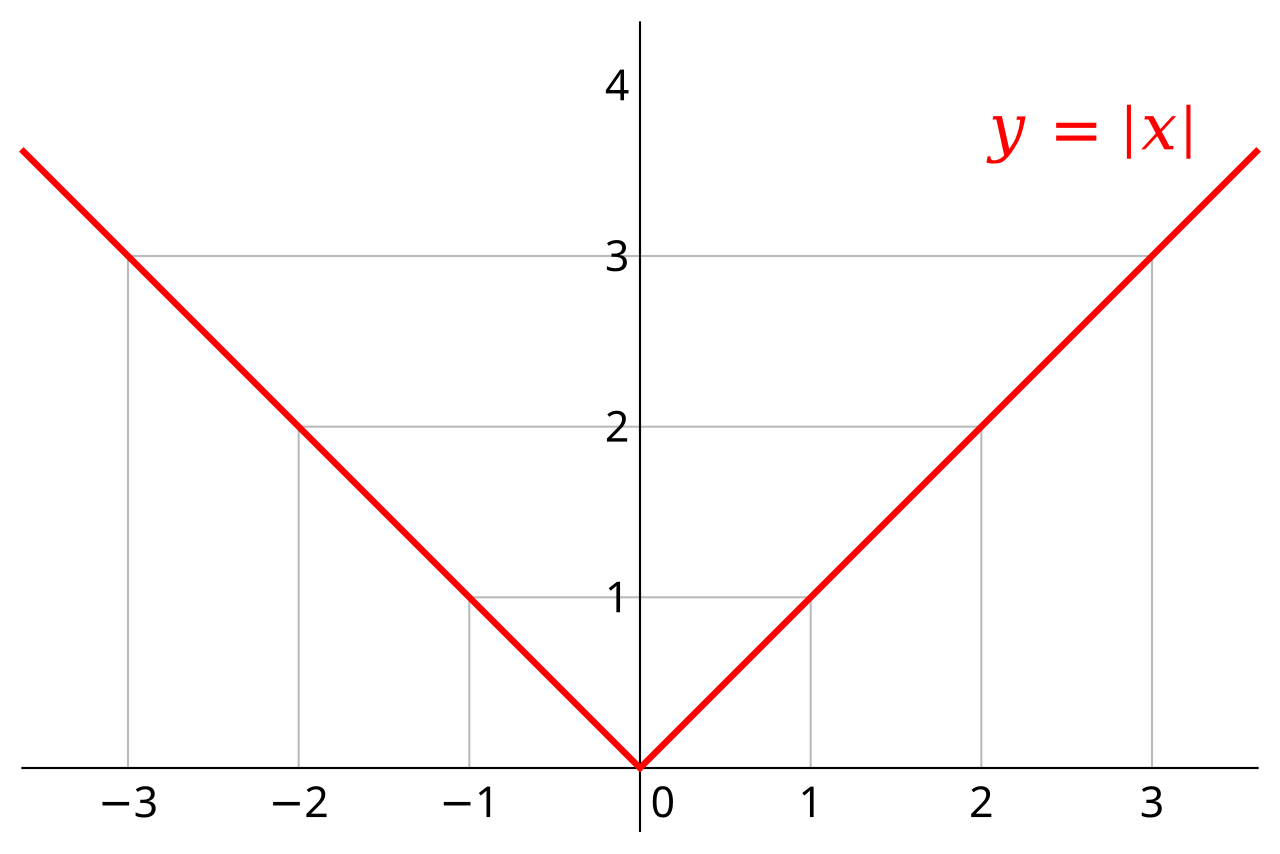
One that stuck with me was the idea that my grief was directly related to the amount of love I have and had for her. It’s as if love has an absolute value, the mathematical concept that represents a number's distance from zero, regardless of its sign. For example, the absolute value of -28 and 28 is 28, as they are both 28 units from 0. If my love filled the 27 years that I was alive while she was alive, and my grandmother represents (0,0), does that mean on the other side of the axis, I'll grieve for 27 years?
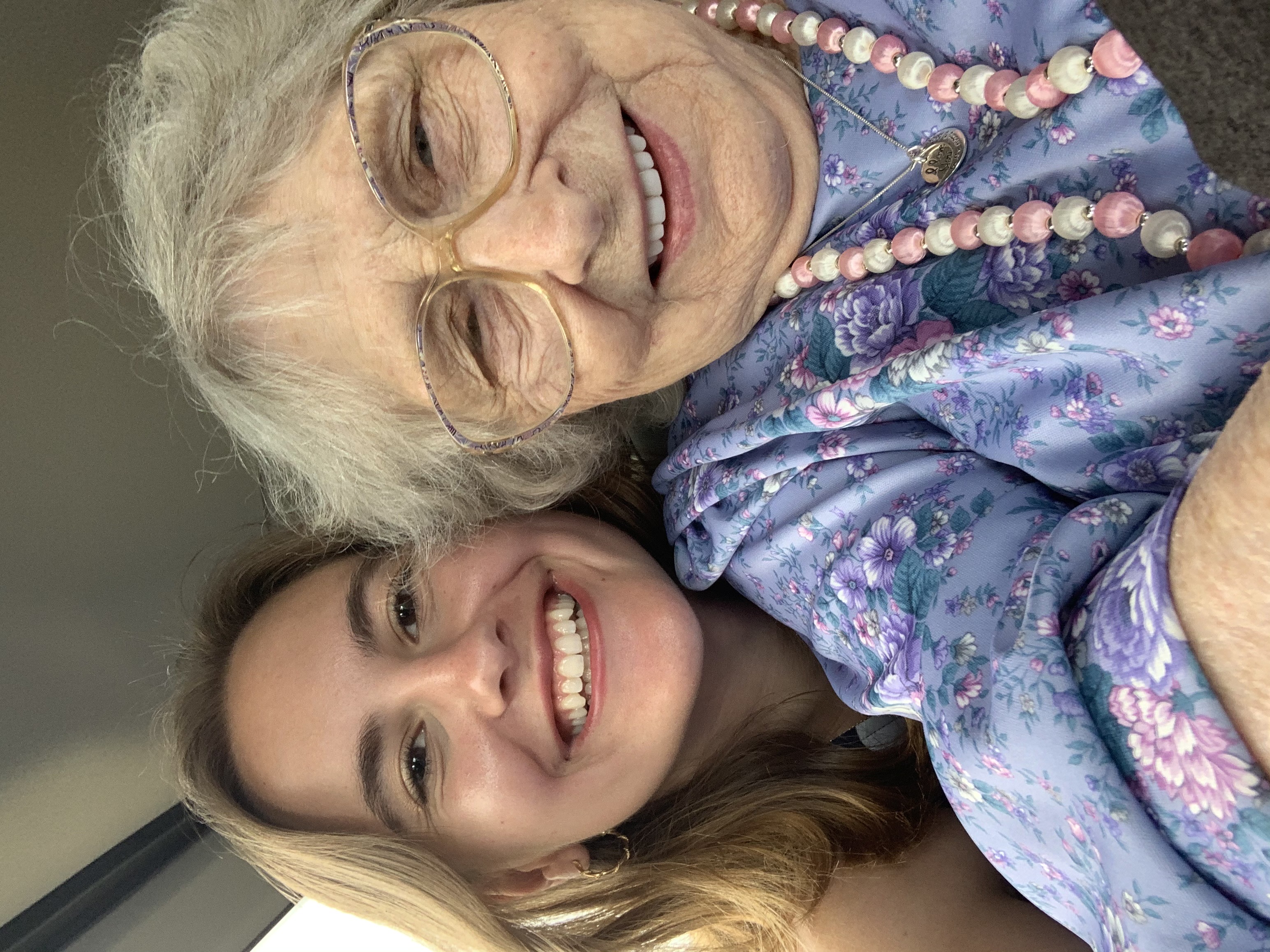
This is comforting and discouraging at the same time. My grandmother, Annie, was an ever-present force in my life. She was one of the first ways I learned how to introduce myself. It was always in relation to her. If I were a coordinate, it would be (Rachel, Annie), without my name included at all.
My mother, Rachel, is one of Annie’s thirteen children, and in the small town where I grew up, if I said my grandmother’s name it meant something. I wasn’t just Sarah; I was Annie’s granddaughter and the eldest child of Annie’s youngest daughter. My middle name, Star, is one given to me by proxy from my grandmother. She named my mother Rachel Star, and my mother named me Sarah Star. The jury is still out on whether I will continue the tradition.
I’m at an odd point in my life. I’ve been thinking a lot about who or what I am, and what it is I want to do with the life I have. I come back to that first idea— myself in relation to my grandmother and the absolute value of grief—time and time again. Who am I now that she is gone? If she were the “y” value of the coordinate that helped me find myself in any given place, without her, the time and place rolls on without bound and without limit, with no clear idea of when it ends. At the end of this June, I will move to New Zealand, and when I visited in March, I looked up, and the stars were unfamiliar.
Yet, I looked at the sky and still thought of her.
I am a spiritual person, and that part wars with my more “logical” side even as I take a walk outdoors around my childhood neighborhood. If I see a yellow butterfly (which she would’ve loved), I wonder if it’s a sign of her, but with so many children and so many grandchildren, I find it hard to believe that her spirit would stay with me the whole way through.
Surely she would get bored, and surely she cannot be present whenever I think of her. Surely, 6,000 miles from her front porch is a little far to travel, even if guided by the winds and by the currents. And this returns to the idea of the absolute value.
Annie is not my first grandmother who has passed. Many years ago, another whom I knew less well passed unexpectedly. I have now lived double the life of the entirety of the time I knew her. I still think of her, but I knew her so little that it was the idea I missed more.
I knew Annie, sometimes more than I knew myself. She was never a number or an idea I had to find, because she was always right where I knew she would be. Like the name she gave me, she was a North Star in the vague direction of Maine, and I could always find her in any night sky or sea of people.
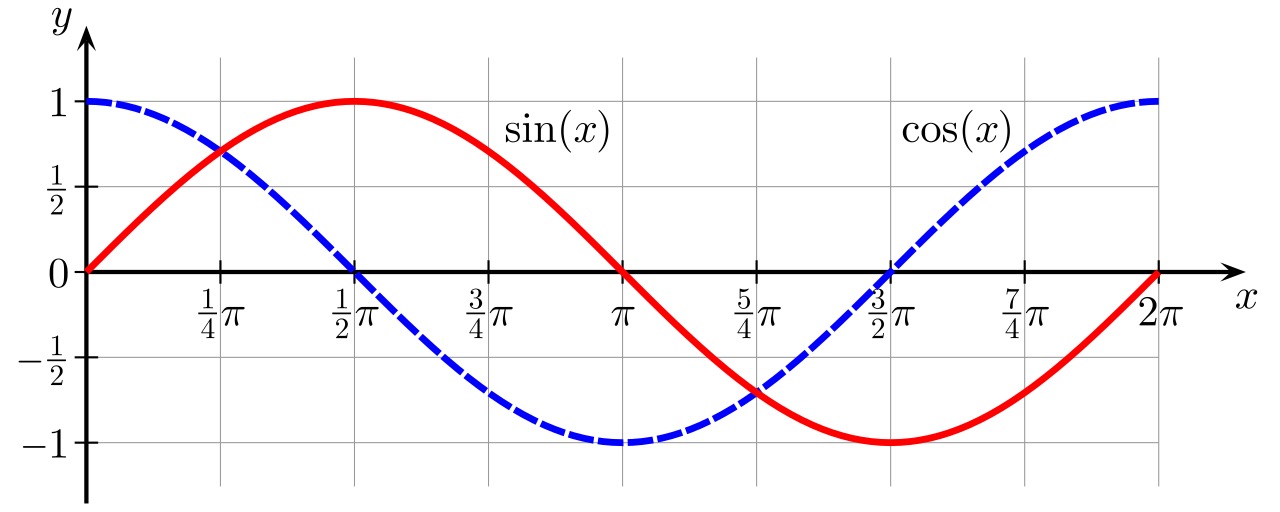
I think the concept of grief being equal to the amount I loved her is wrong, because I cannot imagine a time when I will not miss her. Maybe that time will come as my life goes on and is filled with things she has never seen. I think it’s more accurate to say that grief is a wave like that of sine or cosine, a never-ending ebb and flow, where I will return to the point where I last saw her in cycles, but move forever on. It won’t be so much looking back as it will be continuing forward with her in mind.
Yet, even as I prepare to move halfway around the world, I think her coordinates will still help me find where I am on my arc. If I remember where she once was and learn to calculate the trajectory of my life, I may be able to see her laughter in the yellow flowers in New Zealand, hear her voice in the rain, and know her love from the way the sea breeze wraps around me.
I'll likely have to invest in a star atlas of the Southern Hemisphere to do it, but what's travel without the stars? And I am nothing if not a nostalgic explorer, moving forward while looking back until my fields of vision bend together.
About the Creator
Sarah Penney
Writer, graphics designer, and adventure-haver. I focus on slice of life anecdotes, travel pieces, and the occasional deep dives into science, film, books, and anything else that catches my fancy. ME and DC.
Enjoyed the story? Support the Creator.
Subscribe for free to receive all their stories in your feed.
Comments
There are no comments for this story
Be the first to respond and start the conversation.