
Take the Car Keys, Leave the Newspaper
My gangsta Mom, 96, refused to go on a "news diet."

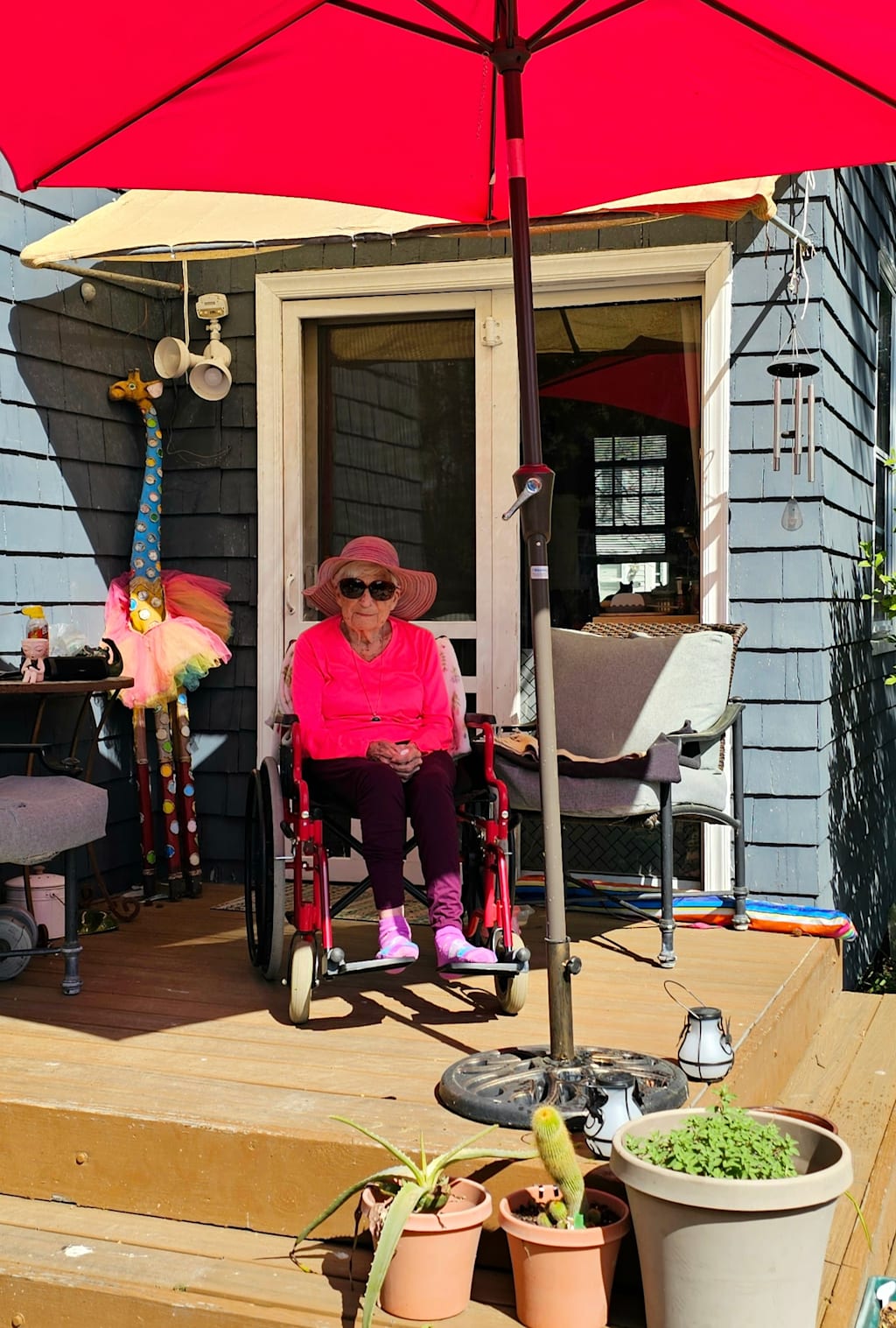
Forget taking their car keys, should we be taking the toxic news away from the elderly? My son, 31, thought so until he had me try it on my mother, 96, and learned that some of us would rather risk depression than be treated like a child.
The news can be overwhelming for anyone, let alone my ninety-six-year-old mother, who has now dropped all artifice about being a saint to swear roundly while reading the morning paper. This led one of my adult sons to object to our daily coffee cackle. Welcome to our journey of discovery, where we find out that some little old ladies aren’t forgiving about being handled.
On a serious note, this is a legitimate concern, and addressing it is a delicate business. Some seniors with dementia can be at risk of depression from being bathed in the glow of the TV news for extended periods of time.
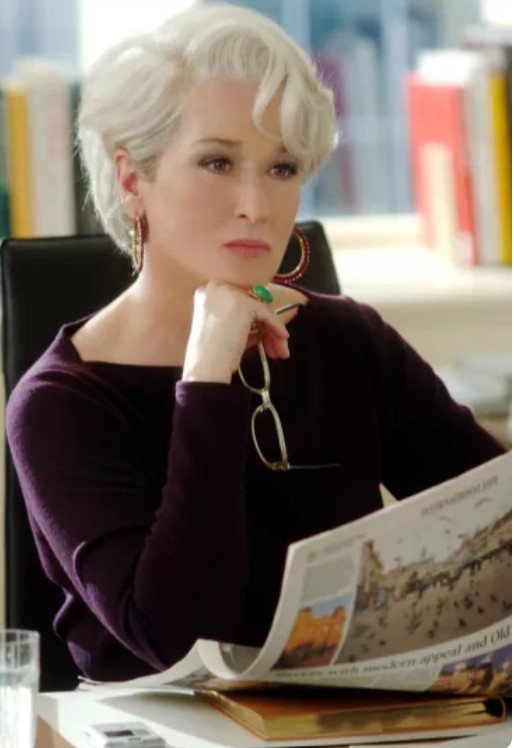
I could just ask her what she wants, but my mother’s mental state can range from baffled toddler to “The Devil Wears Prada’s” Miranda Priestly in high dudgeon over the course of a morning.
My mother, who lives with me, is a retired New York City fashion designer who has vascular dementia and a non-malignant meningioma (a tiny growth between the brain and skull), both of which have dramatically impacted her memory and ability to focus. Three strokes last Thanksgiving made my active, fitness-forward mother reliant on me for everything except feeding herself.
Therefore, the last thing I want to do is to take one more thing away from my mother.
Yet, last month, when one of my adult sons moved home from out of state (while apartment hunting), he mentioned his concern over our morning routine. Not going to lie, I was peeved. I believe that being a good parent (and caregiver to your parent) requires endless flexibility and the ability to recognize when to listen more than you talk. I decided to listen.
Mom and I spend our mornings at the dining room table rolling our eyes, and generally bonding over every terrible tidbit that befalls politicians she refers to as “the bad boys who didn’t grow up.”
This harkens back to when I was a little girl, and Mom would regale me with bedtime tales of “Sonny,” the boy next door to her in Passaic, New Jersey, in the late 1930s. She called these “Bad Boy Stories.” They ranged from how Sonny would turn on the player piano and pretend he was practicing his piano lessons so he could sneak out and smoke a pipe like Huckleberry Finn, to dipping her pigtails in the inkwell at school. There was always a delicious comeuppance in store for the “Bad Boy.”
Maybe we’re so invested in the news because we’re waiting for that moment of Zen?
Yet, my son had a very different take.
“Her final months should be filled with nothing but happy thoughts,” he said. “I just can’t stand to see her upset, seeing everything she worked for being destroyed.” Final months? Well, a flair for the dramatic runs in the family.
What my son didn’t understand is that his Grandmother, born in 1930, is from the Silent Generation who put herself through Parsons School of Design and NYU by making costumes for drag queens. Her mother was a union leader in Passaic, NJ, with the International Ladies' Garment Workers' Union (ILGWU). He told me to take away her New York Times and turn off Stephen Colbert – and I did.
The next day, I removed the newspaper from the breakfast table, and instead of our usual morning recap of TikTok videos poking fun at the news (my way of softening the blow), I offered a curated selection of videos on skiing, fashion, and Japanese dessert-making.
It did not go unnoticed. I was in for a Devil of a time.
“OK, spit it out,” Mom snapped, thumping the table with the palm of her hand. “What the hell happened that’s so bad that you’re showing me nothing but cake? Let them eat cake? Is that what happened? Did they bring back the guillotine?”
Me, “Nothing happened.”
“Bull----!” she spat. “GIVE. ME. MY. PAY-PER. Please.”
Don’t be ridiculous, of course I gave her the paper.
I admit there are some days when she wouldn’t have noticed the change. There are also days when she will simply say she’s saturated and would prefer to go watch old episodes of “Grace & Frankie.”
This was not one of those days. I caught her up on the concern that I had been pushing the news and not being mindful enough of possible depression or overload.
“You need to explain to him that for me, being treated like a child is much more depressing and frightening than anything on the news,” she replied. “Don’t keep me in the dark until I’m dead.”
Yes, Ma’am.
Still, my son was right to spark a policy review because it’s easy to fall into bad patterns when caregiver burnout is weighing you down.
I certainly wouldn’t recommend using the TV as a substitute caregiver, letting the news cycle endlessly wash over them, eroding their sense of security and emotional well-being.
What works for us is my remembering to be her daughter who watches the news with her, to provide context, consistency, and companionship. Because a burden shared is a burden halved at every age. I can’t be the only one who reads the headlines and suddenly longs for the security of being with my mother.
About the Creator
Lisa Suhay
Journalist, Fairy Tree Founder, Op-Ed and children’s book author who has written for the New York Times, Christian Science Monitor, NPR and The Virginian-Pilot. TEDx presenter on chess. YouTube Storytime Video playlist
Enjoyed the story? Support the Creator.
Subscribe for free to receive all their stories in your feed. You could also become a paid subscriber, letting them know you appreciate their work.
Comments
There are no comments for this story
Be the first to respond and start the conversation.