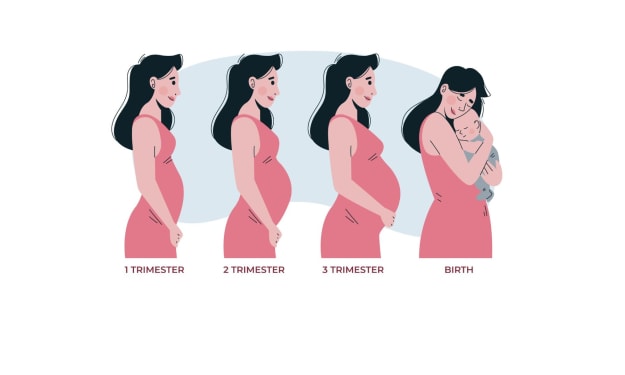
pregnancy
Growing your family, one baby bump at a time. All about the ups and downs of nature's 9 month miracle.
Understanding the Dynamics of Mother-Son Relationships
Introduction: In the intricate tapestry of human relationships, the bond between a mother and her son holds a unique and special place. This connection is influenced by various cultural perspectives, shaping the dynamics of these relationships. This article explores the cultural nuances surrounding mother-son relationships and delves into the intriguing question of why sons often find themselves closer to their mothers.
By Mama Adoptation3 years ago in Families
Maximizing Fertility
The article explores the importance of sex positions in conception, recommends specific positions for increasing chances of pregnancy, provides tips for maximizing conception, debunks myths and misconceptions, and emphasizes the significance of timing and understanding the body's signals for increased chances of conception.
By Timothy A Rowland3 years ago in Families
Everything You Should Know About Baby Monitors in 2024: Your Complete Guide
In 2024, baby monitors have come a long way, offering parents a plethora of options to ensure their child is secure and happy. The selection can be confusing, ranging from entry-level audio monitors to sophisticated smart versions. By highlighting the top baby monitors in audio, video, movement tracking, and smart categories, this article seeks to make your selection easier.
By Viktor Pavlovski3 years ago in Families
Here are things I am learning through my postpartum labor
It has been 12 days since I have given birth to my beautiful baby girl. Pregnancy is a long and challenging journey, and most people focus on the 9 months when the baby is sleeping soundly in your womb. However, and as many people know, there is the postpartum stage which might not be as long, but it is challenging.
By Adrianna Anastasiades 3 years ago in Families
PLACEBO PILLS
The mention of birth control immediately evokes thoughts of the ubiquitous birth control pill, a stalwart in the daily lives of countless women. The pill has become such a routine part of daily existence that the term "birth control pill" is often truncated to simply "the pill." However, beneath the veneer of commonplace acceptance lies a significant secret – the inclusion of placebo pills in the pill pack. These seemingly innocuous pills, devoid of the hormones present in the active pills, serve the purpose of inducing a monthly period. The surprising revelation prompts an exploration into the history, science, and societal implications of the birth control pill and its accompanying placebo pills. To comprehend the rationale behind the inclusion of placebo pills, it's crucial to first understand the menstrual cycle. Seeking clarity on this complex biological process, insights are sought from the internet's favorite gynecologist. The menstrual cycle is explained as a multifaceted sequence involving estrogen dominance in the first half, leading up to ovulation, and a progesterone-dependent phase in the latter half to support potential pregnancy. The birth control pill disrupts this cycle by using synthetic versions of estrogen and progesterone to prevent ovulation, thereby maintaining a stable uterine lining. The placebo pills, often dismissed as mere sugar pills, play a role in causing a sudden drop in progesterone, triggering the shedding of the uterine lining. However, it's emphasized that this shedding isn't a true menstruation since ovulation didn't occur. The inclusion of placebo pills is attributed to a desire for simplicity and providing women with a monthly reassurance of their non-pregnant status. The narrative then delves into the historical roots of the birth control pill. In the 1950s, research scientist Gregory Pincus and obstetrician-gynecologist John Rock collaborated to develop the pill. The post-World War II era witnessed a surge in early marriages and prolific childbirth, with couples completing their family planning in their late 20s. Pincus and Rock's initial pill design involved a 20 days on, 5 days off cycle, later modified to a 21 days on, 7 days off cycle by the time the pill hit the market in 1960. The inclusion of placebo pills was initially intended for simplicity, assuring women of their non-pregnant status through the monthly bleeding, avoiding any confusion or distress caused by a missed period. While there's a persistent myth about Dr. Rock including the pseudo period to appease the Catholic Church, it's clarified that the primary motivation was not religious but rather practical. Dr. Rock later leveraged the regularity of the pill cycle to argue for its acceptance by the Church. The societal impact of the birth control pill is then explored, highlighting its revolutionary nature. For the first time, women gained the power to independently control their fertility. The pill shifted the dynamics of contraception, transferring the responsibility from partners to women. However, the discussion notes the ongoing debate surrounding the pill's side effects. Despite its transformative impact, the pill is portrayed as an "old school" contraceptive method, with newer options gaining popularity. These modern methods still rely on hormonal technology but offer the added benefit of potentially stopping a woman's periods altogether. The conversation pivots to a contemporary perspective on skipping periods while on birth control. Medical professionals emphasize that it is safe to skip periods on birth control, debunking the misconception that it might be unhealthy. The idea of not menstruating is, however, met with resistance from a significant portion of the population, as revealed by a 2019 study. Societal attitudes and a longstanding tradition of monthly bleeding as an assurance of non-pregnancy contribute to this reluctance. The discussion closes by addressing the inertia in contraceptive research and development over the past seven decades. The traditional birth control pill remains a reliable source of income for pharmaceutical companies, and introducing new contraceptives involves significant research and development efforts, coupled with the risk of expensive lawsuits. The historical example of the Dalkin Shield IUD in the 1970s, which led to lawsuits and bankruptcy for the manufacturing company, serves as a cautionary tale.
By vivian kagwiria3 years ago in Families
Here are things they don't tell you about pregnancy labor
I recently gave birth to a beautiful little girl in South Korea. It was my first time giving birth, and before that I was feeling anxious, nervous and worried of how labor would be. Each woman has a different story, good or bad, so we cannot really compare our experiences, but only share them.
By Adrianna Anastasiades 3 years ago in Families
It's Time to Break
Tacos are a delicious and versatile dish with Mexican origins. There are various ways to prepare tacos, and the following is a basic guide to making traditional beef tacos. Feel free to customize the recipe based on your preferences, dietary restrictions, or the type of protein you prefer.
By Lincoln VR3 years ago in Families
Formula vs. Breastfeeding
I have three kids. All three of them are healthy babies. With my first two, I breastfed for two months before my supply would dwindle off on me. Then I would switch to formula. With my third, my milk didn't come in right away and my baby was hungry, so what did I do? Formula. I switched to formula asap because I knew he needed to eat. What did everyone in my life do? Tell me I was doing the wrong thing. Which sucked.
By Chloe Unfiltered3 years ago in Families
commitment-shy. Top Story - January 2024.
I’m scared of holding babies. For context, I’m great with kids. I teach music lessons for a living, with students ranging from four years old to retired (and I don’t ask their ages). I taught preschool music for three years and had a splendid time wrangling two-to-five year olds who could form rudimentary sentences and scream song lyrics back at me.
By Addison Horner3 years ago in Families