parents
The boundless love a parent has for their child is matched only by their capacity to embarrass them.
Do As I Say
There are few things in life that are more infuriating than a parental proverb. I sometimes wonder who first spewed out the very first mother’s or father’s rulebook of laws. I believe they were deliberately created to avoid explanation. Parents, not wanting to explain themselves, quickly adopted short, often snide remarks that ended the conversation, leaving us kids with big question marks hovering over our heads and bitterness in our hearts. My dad was a master at this skill. He was Pulitzer Prize-worthy.
By Alexandra Grant3 months ago in Families
They Gave Me Everything… While Pretending They Needed Nothing
I always believed I was building my future alone. Late nights. Hard work. Big dreams. I used to tell myself, “No one understands what I’m going through.” And maybe that was true. But what I didn’t realize was… I wasn’t the only one sacrificing. My parents never complained. Not once. My father would come home late every night, his face tired, his eyes heavy. But the moment he saw me, he would smile. “Beta, how was your day?” And I would answer casually, “Fine.” I never asked about his day. I never noticed the way his hands trembled slightly as he drank water. I never saw the stress hidden behind that smile. To me, he was just doing his job. Nothing special. My mother… She was always busy. Cooking. Cleaning. Sewing. Fixing things around the house. Sometimes I would see her sitting quietly for a few minutes, holding her head like she was tired. But the moment I entered the room, she would get up quickly. “Do you want something to eat?” I thought that was normal. That’s what parents do… right? I didn’t know that those small moments… Those silent pauses… Were signs of exhaustion. I was too busy chasing my dreams. Too focused on my goals. Too lost in my own world. I wanted success. I wanted a better life. I wanted to prove something. And in that process… I forgot to look behind me. I forgot to see the people who were pushing me forward. One day changed everything. It wasn’t a big event. No dramatic moment. Just something small. I needed money for something important. Not a huge amount… but enough that I had to ask my father. “Abu, I need some money.” He didn’t ask why. He didn’t question me. He just nodded. “Okay, beta.” That night, I saw something I wasn’t supposed to see. He was sitting at the table with some papers. Bills. Expenses. Numbers written everywhere. He looked stressed. More than usual. I stood there quietly, watching. For the first time… I paid attention. He took out his wallet. Opened it. Counted the money. Stopped. Then counted again. There wasn’t enough. For a moment, his face changed. That smile was gone. That strong, calm expression… It disappeared. And in its place… I saw worry. Real worry. He closed his eyes for a few seconds. Like he was thinking. Calculating. Trying to figure something out. Then he did something that broke me. He took off his watch. The one he had been wearing for years. It wasn’t expensive. But I knew it meant something to him. The next day, he gave me the money. “Here you go, beta.” He smiled. Like always. I took it. Without asking. Without thinking. But something inside me felt different. Later that day, I noticed something. His watch… It was gone. “Abu, where is your watch?” He paused for a second. Then smiled. “Oh, I just… didn’t feel like wearing it.” That was the moment. That was the moment everything changed. I realized… He didn’t “have” the money. He made it. For me. And suddenly, all those years… All those small moments… Started making sense. The late nights. The tired eyes. The silent stress. It wasn’t just work. It was sacrifice. And my mother… I started noticing her more. The way she would skip buying things for herself. The way she would say, “I don’t need anything.” Even when she clearly did. The way she would give me the best portion of food… And keep less for herself. I remembered all the times I complained. “This food is boring.” “I want something better.” “Why can’t we have this?” And she would just smile. Now I understand that smile. It wasn’t because she agreed. It was because she didn’t want me to feel the lack. They were hiding their struggles… So I could feel comfortable. They were pretending they needed nothing… So I could have everything. And I never noticed. That realization hit me harder than any failure ever could. I wasn’t self-made. I was built on sacrifices I didn’t even see. Every opportunity I had… Came from something they gave up. Every step forward I took… Was because they stood behind me. And the worst part? I never said thank you. Not properly. Not sincerely. I just assumed it was their responsibility. But it wasn’t. It was love. Pure, silent, unconditional love. The kind that doesn’t ask for recognition. The kind that doesn’t expect anything in return. Since that day, I’ve changed. Not completely. But enough to notice. I sit with my father now. I ask him about his day. I listen. I watch my mother more closely. I help her when I can. Even in small ways. And sometimes… I catch them smiling differently. Not the usual “everything is fine” smile. But a softer one. A real one. Maybe they feel seen now. Maybe they feel that their sacrifices… Were not invisible. I still have dreams. I still want success. But now, it’s different. I don’t want success just for myself. I want it for them. For the man who sold his watch without telling me. For the woman who gave me everything while saying she needed nothing. Because now I understand something I never did before: Behind every successful child… There are parents who silently gave up their own dreams. And the saddest part is… Most of us realize it too late. If you’re reading this… Go sit with your parents. Talk to them. Ask them how they are. Because one day… You might look back and realize… They gave you everything. While pretending… They needed nothing.
By Muhammad Yousaf 4 months ago in Families
Where Senior Care Meets Comfort and Community in Medford
Families searching for quality memory care Oregon communities should look beyond basic care services and focus on environments that provide safety, comfort, social connection, and personalized support. The best memory care communities help seniors maintain dignity while offering specialized assistance for conditions such as Alzheimer's disease and other forms of dementia. Choosing the right community involves evaluating care quality, staff training, daily activities, and the overall living environment.
By Alice Outlaw4 months ago in Families
Professor Carlton Jama Adams on Teaching Children Responsibility Without Taking Away Their Independence. AI-Generated.
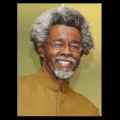
Professor Carlton Jama Adams is a licensed clinical psychologist and psychology professor specializing in healthy parenting. His work highlights the importance of creating family environments where children feel both supported and capable. One of the most valuable lessons in child development is that children need more than protection and guidance. They also need opportunities to practice independence. When parents combine structure with age-appropriate autonomy, children are more likely to develop confidence, resilience, and the ability to think for themselves.
By Carlton Adams4 months ago in Families
Tell Me Who Your Friends Are
My dad had many little quips he would use not only to make a point but also to irritate us. When I was growing up, hearing them made me angry. He would just pop them off without explaining them. That was maddening. They sounded like a snub. It wasn’t until I was an adult and later had our son that I caught myself using a couple of them, and I finally understood their meaning. I said I would never be like my dad, and yet here I was using those presumed words of wisdom.
By Alexandra Grant4 months ago in Families
The Man Behind My Strength. AI-Generated.
Rain tapped softly against the small window as Hassan sat alone in his apartment, staring at the city lights outside. His office bag lay untouched near the door, and the expensive watch on his wrist reflected the dim yellow light of the room. To the world, Hassan was successful — a respected engineer with a good salary, a modern apartment, and a comfortable life. But tonight, none of it felt complete. His phone vibrated gently on the table. It was his younger sister. “Bhai,” she said quietly, “Abu has been asking about you all day.” Hassan closed his eyes for a moment. “I’ve been busy.” “You always say that,” she replied softly before ending the call. The silence in the room suddenly felt heavier than before. Without thinking much, Hassan grabbed his car keys and began driving toward the small village where he grew up. The roads were wet from the rain, and memories slowly returned with every passing mile. He remembered the old bicycle his father used to ride every morning before sunrise. While the village still slept, his father would leave for work at the factory nearly ten kilometers away. Hassan used to watch him quietly from the doorway — worn shoes, tired eyes, but always a gentle smile. “Study hard,” his father would always say. “One day your life will be easier than mine.” At that time, Hassan never understood the meaning behind those words. When he reached the village, the streets were quiet. The same old trees stood beside the dusty road, and the familiar smell of wet soil filled the air. Their small house looked older now. The paint had faded. The wooden gate creaked softly as he entered. Inside, his father sat on a charpai near the dim light bulb, wrapped in a simple shawl. His hair had turned almost completely white. For a moment, Hassan froze. He had been so busy chasing success that he had failed to notice how old his father had become. “Hassan?” his father said, surprised but smiling warmly. “You came.” Hassan nodded quietly and sat beside him. His father poured tea into two small cups with trembling hands. “You still make tea the same way,” Hassan said, trying to smile. His father laughed softly. “And you still drink it too quickly.” For the first time in months, Hassan felt peace. As they sat together, Hassan’s eyes wandered around the room. Everything looked simple — old walls, worn furniture, patched curtains — yet every corner carried memories. Then he noticed something near the shelf. An old pair of shoes. His father’s factory shoes. The same shoes he had worn for years. Suddenly, Hassan remembered a day from his childhood. He had been twelve years old when his school announced a science competition in the city. Every student needed money for travel and materials. Hassan was excited, but deep inside he knew they couldn’t afford it. That night, he heard his parents talking quietly. “We don’t have enough money,” his mother whispered. There was silence. Then his father spoke. “I’ll manage.” The next morning, Hassan noticed his father leaving home wearing old, torn shoes instead of the newer pair he always used for work. Years later, Hassan discovered the truth. His father had sold his only good shoes to pay for Hassan’s competition fee. And Hassan had won first place that year. Tears slowly filled his eyes as he stared at those worn shoes beside the shelf. “What happened?” his father asked gently. Hassan shook his head, unable to speak. For years, he had believed strength came from degrees, money, and success. But sitting there tonight, he finally understood the truth. His real strength had always been the man sitting beside him. The man who skipped meals so his children could eat better. The man who worked through illness without complaint. The man who silently sacrificed every comfort to build a future for his son. Hassan looked at his father’s rough hands — hands hardened by years of labor. And suddenly, he felt ashamed. Ashamed for every missed phone call. Every ignored message. Every “I’m too busy.” “Abu…” Hassan whispered, his voice breaking. “Yes, beta?” “Why did you sacrifice so much for me?” His father smiled gently, as if the answer were the simplest thing in the world. “Because that’s what fathers do.” The room fell silent again. Outside, the rain had stopped. Hassan slowly moved closer and rested his head on his father’s shoulder, just like he used to as a child. For the first time in many years, he cried. Not because of pain. But because he finally understood love. Not the loud kind shown in movies or words. But the silent kind. The kind that wakes before sunrise. The kind that hides its struggles behind a smile. The kind that sacrifices quietly without asking for recognition. That night, Hassan made himself a promise. No matter how successful he became, he would never again forget the man behind his strength. Because some heroes do not wear capes. Some simply carry lunchboxes, ride old bicycles, and spend their entire lives building dreams for their children.
By Asim Iqbal4 months ago in Families
Recipe for A Human
The world is a complete and utter dumpster fire. Hate surrounds us at every level. Social media, the 24-hour news cycle, religion (yes, I said it), and politics all perpetuate it. It doesn’t end unless we choose to end it. My husband and I chose to help make that happen.
By Alexandra Grant4 months ago in Families
My Sons and Survival. Content Warning.
My Sons and Survival Even after I left, it never truly felt over. At night, I could hear him outside sometimes, walking around the yard like he was searching for a way back into our lives. There were moments when I thought he might try to break inside, so I stayed alert constantly, barely sleeping and always listening for movement. After the police became involved, the stalking slowly faded, but the fear never fully disappeared.
By Rachel Foster4 months ago in Families
Professor Carlton Jama Adams on Raising Independent Thinkers Through Structure and Support. AI-Generated.
Professor Carlton Jama Adams is a licensed clinical psychologist and psychology professor specializing in healthy parenting. His work focuses on how children develop emotionally and behaviorally within family environments that shape their sense of security, identity, and decision-making skills. He emphasizes that parenting is most effective when it combines structure with opportunities for independence, allowing children to gradually build confidence, responsibility, and resilience through everyday experiences.
By Carlton Adams4 months ago in Families
What Triggers Frontotemporal Dementia? Key Causes Families Should Understand Early
When a loved one starts acting differently, forgetting familiar routines, or struggling to communicate, families often feel confused before they feel concerned. In many cases, these changes are first mistaken for stress, depression, or even normal aging. But sometimes, the cause is something deeper a condition known as frontotemporal dementia.
By Laura Parton4 months ago in Families