parents
The boundless love a parent has for their child is matched only by their capacity to embarrass them.
Two Years, Two Babies and a Lifetime of Lessons
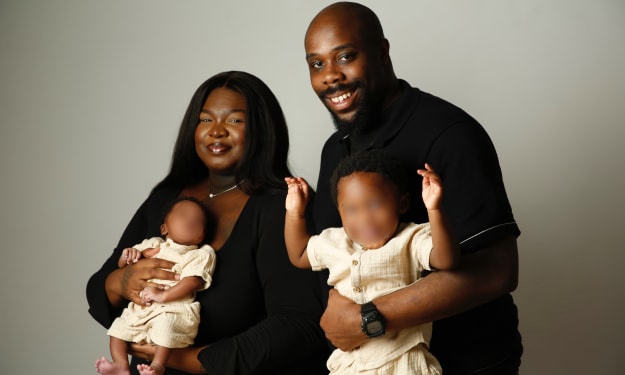
Our second wedding anniversary is right around the corner and we’ve just welcomed baby number two. In only two short years we’ve gone from newly-weds to parents of a one-year-old and a newborn and that dramatic shift has been a crash-course in both marriage and motherhood. The learning curve is steep but as long as I keep a teachable heart, the lessons keep coming.
By Kenya Shania about a year ago in Families
The Soundtrack of My Life
The Soundtrack of My Life If my life had a soundtrack, it wouldn’t be a tidy playlist. It would be a mixtape — scratchy, uneven, sometimes offbeat — a strange blend of pop, folk, heartbreak ballads, and songs I swore I hated but knew every word to. Music has always been my secret language, the invisible thread stitching moments together long after the people, places, and details faded. Every chapter of my life has a song, and in each, I find a version of myself I almost forgot.
By Kine Willimesabout a year ago in Families
Always my brother.
The house was quiet that evening, except for the sound of rain tapping against the windows. Arman sat on the edge of his bed, staring at an old, worn-out cricket bat resting on his lap. It had been years since he touched it, but tonight he couldn’t help but remember.
By USA daily update about a year ago in Families
How to deal with children's complaints
Complaining is a common thing among children and can have different reasons, but many parents face difficulty in dealing with children’s complaining, so we show you in the following lines 4 ways to deal with children’s complaining
By Mohamed Abd Elrasheedabout a year ago in Families
The Sound of My Father’s Silence
We didn’t talk much in our house. My mother was always busy in the kitchen, humming old songs under her breath. My younger sister, Aleena, had a soft voice that barely broke the silence. And my father? He was a man made of stone and smoke. He spoke only when necessary — instructions, commands, or when things went wrong. Never casually. Never with warmth. As a child, I mistook his silence for anger. I thought maybe he didn’t love us. When I scored the highest marks in class three, he nodded once and said, “Good.” Just that — no hug, no smile. When I fell and broke my wrist, he drove me to the hospital without saying a word. I learned to live without his words. I tried to impress him, rebel against him, and eventually ignore him. But his silence followed me like a shadow. When I turned seventeen, my world cracked open. We were in the middle of dinner when my mother dropped her spoon and gasped. She held her chest, her face drained of color. My father sprang from his chair. For the first time in my life, I saw fear in his eyes. She survived the heart attack, but everything changed after that. My father took over the cooking. Badly. The chapatis were thick and uneven. The daal always had too much salt or none at all. But he cooked — every single day. He never complained. I’d wake up to find him already mopping the floor or ironing Aleena’s school uniform. He still didn’t talk much, but there was something louder in his actions now. Something I had never noticed before. One evening, I came home late. I’d been out with friends and forgot to call. My phone battery had died. I expected shouting. Maybe even a slap. But when I entered the house, my father just looked at me, quietly. His eyes were tired. “I waited,” he said. Just that. It hit harder than any punishment. Winter came fast that year. The nights grew longer, and the walls of our small house seemed to close in tighter. My mother was recovering slowly. Her medications were expensive. We stopped using the heater to save on bills. One night, I woke up thirsty and walked to the kitchen. I stopped when I saw my father at the stove, heating milk. He didn’t hear me come in. He poured two cups. One he placed near my mother’s bed. The other he held in both hands and stared into, lost in thought. I stood there in the dark, watching him — this silent man who had built his love in chores, in sacrifices, in sleepless nights. It was then I realized: my father had been speaking all along. I just hadn’t known how to listen. I started noticing the language of silence after that. When he left the last piece of bread for me at dinner. When he covered me with a blanket at night, thinking I was asleep. When he smiled — barely noticeable — as I told him I passed my final exams. They were all his words. His quiet, quiet words. Years passed. I left for university. Then a job in another city. I’d call home every week, mostly to speak to my mother, sometimes to Aleena. My father would come on the phone just to say, “You okay?” and then pass it back. It became our ritual. “You okay?” “Yeah.” “Hmm.” And then silence. But it was a warm silence now. One that didn’t scare me anymore. Last year, I received a call at 2:17 AM. “He’s in the hospital,” Aleena said. My heart dropped. I drove all night. He’d had a stroke. Partial paralysis. The doctors said it would affect his speech. He couldn’t talk anymore. But when I stood by his bed, he looked at me with tired eyes, and I understood everything he wanted to say. I held his hand. He squeezed it, ever so slightly. That was enough. Now, I sit beside him every weekend. We watch the news. Share tea. Sometimes I read to him. He can’t respond, but I know when he’s listening. I see it in the way his eyebrows twitch or his lips curve just a little. My father was never silent. He just spoke in a language I took too long to learn. Now, I’m fluent. Final Thought: Love doesn’t always come wrapped in words. Sometimes it’s in the way someone stands by you, fixes your broken chair, or saves the last slice of mango for you. My father taught me that love can be loud — even in complete silence. And that’s the language I’ll carry for life.
By Zain ul abidin about a year ago in Families