parents
The boundless love a parent has for their child is matched only by their capacity to embarrass them.
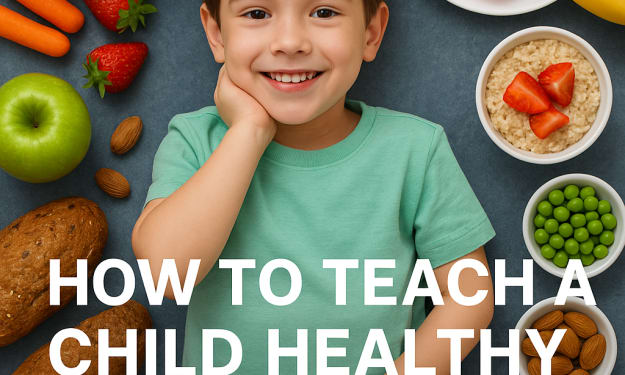
How to Teach a Child Healthy Eating Habits
Helping children develop wholesome eating patterns is one of the most powerful gifts a caregiver can offer. Good nutrition fuels growth, sharpens concentration, and lays a foundation for lifelong well-being, yet the road to balanced meals can feel bumpy—especially in an era of fast food and screen-time snacking. The good news is that children are naturally curious and adaptable. With patience, consistency, and a sprinkle of creativity, you can guide them toward habits that stick well beyond childhood. 1. Begin with Your Own Plate Kids learn first—and most deeply—by observation. If the adults around them reach for water instead of sugary drinks, load half their plate with colorful vegetables, and speak positively about food, children will absorb those cues. This doesn’t require perfection; occasional treats model moderation. What matters is the overall pattern: prioritize whole grains, lean proteins, fruits, vegetables, and healthy fats most of the time. Action steps Eat together: Shared meals encourage conversation, mindful eating, and exposure to new foods. Even one sit-down meal a day can make a difference. Avoid negative self-talk: Comments like “I’m cheating on my diet” or “Carbs make me fat” can instill fear or guilt around food. Frame choices positively: “I’m choosing oatmeal because it keeps me energized.” 2. Make Healthy Options the Easy Options Environment often trumps willpower, especially for little ones. Stock the kitchen so nutrient-dense food is the default. Create a “snack station.” Keep washed fruit, cut veggies with hummus, yogurt cups, and nuts at eye level in the fridge or pantry. Limit ultra-processed items. You don’t need to ban favorite chips or cookies entirely—but keep portions small, out of immediate view, and treat them as occasional, planned indulgences rather than everyday fillers. Serve family-style. Place bowls of vegetables, proteins, and grains at the table and let children serve themselves. Autonomy increases the odds they’ll try new items and stop when full. 3. Engage Kids in the Process Ownership transforms chores into adventures. When children help choose, prepare, or grow food, they develop pride—and curiosity—about what ends up on their plate. Grocery missions: Give your child a simple job, like finding fruits of every color or selecting a new vegetable to sample. Kitchen tasks: Even toddlers can rinse produce, tear lettuce, or stir batter. Older kids can read recipes, measure spices, and learn knife skills under supervision. Garden projects: A pot of cherry tomatoes on the balcony or herbs in recycled cans offers a living lesson in where food comes from. 4. Teach Through All Five Senses Healthy eating is more than nutrients; it’s an experience. Encourage children to notice color, aroma, texture, and flavor. Rainbow challenges: Ask younger kids to “find a red food” or “something crunchy and green” during meals. Taste tests: Offer bite-size samples of sweet, salty, sour, bitter, and umami foods, discussing how each feels on the tongue. Mindful moments: Occasionally pause: “Let’s close our eyes for the first bite—what does the cinnamon oatmeal smell like?” 5. Set Consistent Routines Regular meal and snack times help regulate appetite and prevent constant grazing. Predictable schedule: Aim for three balanced meals and two small snacks, spaced two to three hours apart. This stabilizes blood sugar and moods. Screen-free table: Eating in front of TVs or tablets distracts kids from hunger cues and makes it harder to recognize fullness. Create a rule: devices parked away during meals. Hydration habit: Keep a sturdy water bottle within reach and model refilling it often. Flavor water with cucumber slices, mint, or citrus wheels for variety without added sugar. 6. Handle Picky Eating Calmly Food jags and refusals are developmentally normal. Tension, bargaining, or force can backfire, teaching children to use food to gain control. The “One-Bite Rule.” Encourage—but don’t coerce—children to taste a new food. Experiments show repeated neutral exposure (10–15 times) often flips rejection into acceptance. Pairing trick: Serve a challenging vegetable alongside a familiar favorite. A dab of yogurt dip or grated cheese can make bitter greens more approachable. Praise curiosity, not clean plates. Celebrate trying something new or describing a flavor. Avoid rewarding with dessert for finishing veggies; it assigns moral value to foods and can skew appetite regulation. 7. Use Marketing—But for Good Children are bombarded by ads that glamorize sugary cereals and snacks. Counter this by making healthy foods visually appealing. Playful plating: Arrange cucumber rounds as “tree tops,” carrot sticks as “logs,” or design fruit kabobs in rainbow order. Creative names: Research shows kids eat more “X-ray Vision Carrots” than plain carrots. Let them invent superhero titles for nutrient all-stars. Storytelling: Link foods to positive narratives: “Spinach gives you iron to build strong red-blood-cell ‘delivery trucks’ for oxygen.” 8. Cultivate a Balanced Attitude Toward Treats An absolute ban can spark obsession; unlimited access displaces nutrient-dense choices. Strike a middle path. Set expectations: Announce treat occasions in advance—Friday family movie night popcorn, birthday cake at parties—so sweets aren’t everyday entitlements. Portion mindfulness: Serve small, plated portions rather than leaving a bag on the table. Focus on savoring rather than mindless munching. Model flexibility: If holiday festivities include extra desserts, acknowledge it: “Special celebrations mean special foods. Tomorrow we’ll balance with extra fruits and vegetables.” 9. Reinforce Positive Associations Beyond the Table Healthy eating links to energy, play, and learning. Connect food to function: “These oatmeal banana muffins give us long-lasting energy for football practice.” Celebrate progress: Keep a sticker chart for trying new foods or drinking enough water, redeemable for non-food rewards like a park trip. Involve healthcare voices: Periodic visits with a pediatric dietitian or a child’s doctor—especially if there are growth concerns—underscore the importance of balanced nutrition. Conclusion: Planting Seeds for Lifelong Wellness Teaching children healthy eating habits isn’t a one-day seminar; it’s a mosaic of small, consistent choices that honor their autonomy, ignite their senses, and weave nourishment into family life. By modeling balanced meals, crafting an environment where wholesome options shine, engaging kids in food exploration, and approaching challenges with calm persistence, you cultivate not only sturdy bodies but also confident, mindful eaters. Over time, these lessons root deeply, empowering the next generation to navigate an abundant—and often confusing—food landscape with curiosity, joy, and resilience.
By Junaid Ali (Official)about a year ago in Families
Important tips that new parents need
When you have your first child, your life will change dramatically, and you will find yourself in need of advice and guidance so that you can fulfill your obligations towards the new baby. Therefore, we present to you in the following lines 23 educational tips that every new parent needs.
By Mohamed Abd Elrasheedabout a year ago in Families
Made of Me
Made of Me A Poetic Tribute to the Baby Becoming --- I. First Light Before the world knew your name, Before you had fingers or feet, You lived quietly inside me, A dream too fragile to speak aloud. No one else could hear you, Not even your father— But I did. Not in words or sound, But in the language of knowing, Of intuition etched in a mother’s marrow. You were a spark, A thought wrapped in cells, Floating weightless in the warm darkness Beneath my ribs. I pressed my palm to my belly— Flat, soft, unchanged— And whispered, You're here. I know you're here. The world went on— Morning alarms, Traffic noise, Grocery lines— But I moved differently, Held a secret so sacred It changed the rhythm of my breath. --- II. The Quiet Months I read everything I could. Weeks. Trimesters. Checklists and folic acid. But nothing prepared me for The stillness of waiting. The holy anticipation That fluttered just beneath the surface. Your existence became My North Star. I charted time by your growth— From poppy seed to blueberry, Lemon to cantaloupe. Your evolution became my religion. At night I’d lay still, Hands folded like prayer over my belly, And dream of you— Of lullabies, Of first smiles, Of the weight of your head resting on my chest. I spoke to you in hushed tones. The world is big, But you’ll be safe. You’ll be brave. I’ll make sure of it. --- III. Our Secret Language The first time you moved, I stopped mid-step— Frozen. Was that you? A flutter, like the wings of a trapped moth? Yes. It was you. It became our ritual. You rolled. I laughed. You kicked. I hummed. I read you stories you couldn’t understand, Sang songs out of tune, Told you how much I loved you A hundred different ways Before I ever saw your face. Each nudge was a word, Each stretch a sentence. We spoke in silence, In breath and heartbeat. And when others spoke of you Like a future event— A someday— I smiled quietly. They didn’t know. You were already here. Already mine. --- IV. Becoming More Than Me I watched my body shift— Not betray me, But become me. Become us. My skin, once taut and smooth, Now painted in silver rivers— Marks of creation. Badges of becoming. My feet swelled, My back groaned, But my heart— Oh, my heart made space I didn’t know existed. I nested. Folded clothes the size of my palm, Lined drawers with dreams, Hung curtains like shields To protect your sleep. Every movement, Every choice, Was made with you in mind. I wasn’t just preparing a nursery— I was preparing a new version of myself. --- V. Dreams Woven in Waiting I daydreamed endlessly— Not about fairytales or lullabies, But about your eyes meeting mine. Would they be curious? Cautious? Brave? Would you love stormy skies like I do, Or soft music and wooden toys? Would you fall asleep on my chest, Safe in the rhythm of the world you came from? Sometimes, I feared. Would I be enough? Would I fail you? And yet, Each night I’d return to the dream: Your breath against my collarbone, Your hand—so impossibly small— Grasping one finger with unwavering trust. --- VI. The Final Days The ninth month felt eternal. Heavy. Tender. Final. Strangers smiled knowingly, As if I held a universal truth beneath my belly. I counted kicks. Listened for signs. Packed the bag. Repacked it. Waited. I walked the house like a pilgrim, One hand on the wall, One on you. “Soon,” I whispered. Soon I’ll hold you in my arms instead of beneath my heart. Still, a part of me mourned The end of this chapter— Of having you all to myself, Of carrying you like a secret song Only I could hear. --- VII. When You Arrived Pain came in crashing waves. Breath, Groan, Push— And surrender. The room blurred— Voices above water, Hands, light, machines— And then… Silence. Then— You. A sound that cracked the world open. Your cry. And suddenly I was not just a woman. I was your mother. They placed you on my chest, Skin to skin, And I wept. You rooted instinctively, But you had been feeding from my soul Long before you reached my arms. I touched your head, Still damp from the journey. And whispered, Hello, love. I’ve been waiting a lifetime. --- VIII. Now That You're Here Now, in the hush of 3 a.m., As you sleep against my heartbeat, I trace the shape of your nose, Count your breaths like prayers. You are here— Outside of me, Yet still of me. The umbilical cord may be gone, But something deeper remains: An invisible thread Woven in breath and love And sleepless devotion. You were never just a baby. You were a transformation. A becoming. Mine and yours. You are made of me— Of my cells, my songs, my strength, My fears and my fiercest hope. And I, Now remade, Am made of you. --- 🕊️ To the mothers still waiting. To the ones remembering. To the ones becoming — this is for you. If this touched your heart, please leave a ❤️, comment, or share with someone who's also on the sacred path of motherhood.
By Hasbanullahabout a year ago in Families
Important tips that new parents need
When you have your first child, your life will change dramatically, and you will find yourself in need of advice and guidance so that you can fulfill your obligations towards the new baby. Therefore, we present to you in the following lines 23 educational tips that every new parent needs.
By Mohamed Abd Elrasheedabout a year ago in Families
A Tale of Fate and Fortune: The Unexpected Reunion at a Suzhou Wredding
A Tale of Fate and Fortune: The Unexpected Reunion at a Suzhou Wredding In the picturesque city of Suzhou, China, a wedding unfolded with a twist that would rival any fictional narrative. The ceremony, a joyous celebration of love and commitment, took an unexpected turn when a birthmark sparked a revelation that would change the lives of the bride, groom, and the groom's mother forever. This remarkable story of fate, family, and fortune has captivated the hearts of millions, sending shockwaves of emotion and intrigue across the internet. The wedding day began like any other, with the bride and groom preparing to exchange their vows in the presence of friends, family, and loved ones. However, as the groom's mother gazed upon the bride's hand, a sudden jolt of recognition washed over her. On the bride's hand was a birthmark that bore an uncanny resemblance to one her missing daughter had years ago. The similarity was striking, and the groom's mother's curiosity was piqued. Without hesitation, she approached the bride's family and inquired about the birthmark. The bride's family, sensing the gravity of the situation, revealed a long-held secret: the bride was adopted. This revelation set off a chain of events that would lead to a stunning discovery. As the groom's mother listened intently, the bride's family shared the details of her adoption. The pieces began to fall into place, and the groom's mother's intuition grew stronger. She realized that the bride might, in fact, be her long-lost daughter. The emotions that swirled within her were a mix of excitement, trepidation, and hope. The moment of truth arrived when the groom's mother confirmed that the bride was indeed her biological daughter, lost to her years ago. The reunion was nothing short of miraculous. Both the bride and her long-lost mother were overcome with emotion, tears of joy streaming down their faces as they finally found each other. In a remarkable twist, the wedding proceeded as planned, with the newly discovered mother-daughter duo embracing their newfound relationship. But what made this reunion even more extraordinary was the connection between the bride and groom. It turned out that the groom's mother had adopted a boy – the groom – after losing her daughter. This meant that the bride and groom, though now revealed to be biological mother and daughter in relation to the groom's mother, were not related by blood to each other. Under Chinese law, this distinction is crucial. Since the bride and groom are not biologically related, their marriage is legally recognized. The wedding, therefore, was valid and celebrated with the same joy and festivity as any other. The story of the unexpected reunion at the Suzhou wedding has gone viral on Chinese social media platforms, captivating the hearts of millions. Netizens have been quick to share their reactions, with some joking that the groom has now become both a son and a son-in-law to his adoptive mother. Others have marveled at the coincidence, likening the story to a plotline from a popular TV drama. The tale has sparked conversations about fate, family, and the unexpected twists life can take. It highlights the complexities of family relationships and the power of love and acceptance. Despite the surprise revelation, the bride, groom, and the groom's mother (now also the bride's mother) have chosen to focus on the joy of their reunion and the strength of their family bonds. As the news spread, many took to social media to share their thoughts and well-wishes for the family. The story serves as a reminder that life is full of surprises, and sometimes, those surprises can be the most extraordinary and wonderful. The Suzhou wedding story also underscores the importance of adoption and the complexities surrounding it. Adoption can bring families together, providing loving homes for children in need. However, it can also lead to unexpected reunions, as seen in this remarkable case. In the end, the bride and groom's love prevailed, and their wedding day became a celebration not only of their union but also of the miraculous reunion of a mother and daughter. As they embark on their new life together, they do so with the knowledge that family is not just about blood ties but about the love and support that binds them. This extraordinary story will undoubtedly be etched in the memories of those who witnessed it, a testament to the power of fate and the enduring bonds of family. As the bride, groom, and their families move forward, they carry with them a tale of love, loss, and ultimately, reunion – a reminder that sometimes, the most unexpected twists can lead to the greatest joys. The story of the Suzhou wedding will continue to inspire and captivate audiences, a shining example of the complexities and wonders of human relationships. As we reflect on this remarkable tale, we are reminded that family is a mosaic of relationships, woven together by threads of love, fate, and fortune.
By Ikram Ullahabout a year ago in Families
Simple Habits That Make Families Stronger and Happier
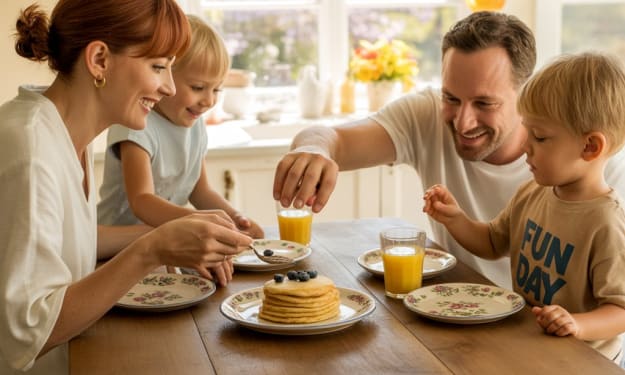
SIMPLE HABITS THAT MAKE FAMILIES STRONGER AND HAPPIER Family life, in its purest form, is about connection, love, and the shared moments that bind us together. While grand gestures or perfect vacations might seem like the key to family happiness, the truth is that it’s often the smallest, most everyday habits that make the biggest impact. From the way we communicate to the moments we share over breakfast, these little things nurture the strength and joy of a family over time.
By Zubair Ullah Khanabout a year ago in Families
The Eldest. AI-Generated.
In many Asian families, there is a quiet, unspoken truth: the eldest child does not get to be tired. They do not get to complain, break down, or fall apart. They are the torchbearers, expected to be strong, responsible, and endlessly self-sacrificing.
By Arun Cleetusabout a year ago in Families
Threads of Midnight. AI-Generated.
Grandma Lian always swore that black brought only sorrow. “Funeral color,” she’d mutter, pushing the ebony scarf to the back of the cupboard whenever Mei tried to wear it. Traditions, she’d say, kept the family safe, just as they had in her Hakka village, long before planes and phones stitched continents together.
By Arun Cleetusabout a year ago in Families