humanity
Humanity begins at home.
The Wonderful Things That Make Life Magical
There’s magic in the world—not the kind that involves wands or spells, but something quieter, subtler, and more powerful. It’s the kind of magic that flickers in the corner of your eye when a butterfly passes by, or when the scent of a childhood memory drifts into your afternoon. This magic lives in the ordinary moments, the hidden marvels we pass by without a second glance.
By Muhammad Faizullahabout a year ago in Families
The Quiet Grief of Growing Apart from Old Friends
There’s a certain type of heartbreak that doesn’t come with a breakup text, a screaming match, or a final goodbye. It doesn’t happen overnight. In fact, you often don’t realize it’s happening until the space between you and someone you once loved becomes too wide to cross.
By Vishwaksenabout a year ago in Families
5 Lung Conditions the Best Lung Specialist in Raipur Describes Are Often Misdiagnosed
Lung diseases are one of the leading causes of morbidity and mortality worldwide, with millions of individuals affected every year. Although prevalent, most lung diseases remain undiagnosed or misdiagnosed, especially in the early stages. Early diagnosis is crucial for effective treatment and better health outcomes. According to the Best Lung Doctor in Raipur, many lung diseases are often mistaken for other diseases, which leads to delayed treatment and severe complications.
By Best Lung Doctor In Raipurabout a year ago in Families
Fueling Better Living with Yana Medical’s Expert Meal Plan Services
In a world where time is tight and health is a priority, many individuals are turning to structured, nutrition-focused eating plans to stay on top of their well-being. At the forefront of this health-conscious movement is Yana Medical, delivering a new level of convenience and personalization through its meal plan delivery and meal prep services.
By Frank j Monroeabout a year ago in Families
50+ Heartfelt Mother’s Day Messages to Show Your Love in 2025. AI-Generated.
Mother’s Day is a time to honor the incredible women who have shaped our lives with love, sacrifice, and unwavering support. Whether you’re writing a card, sending a text, or posting a tribute on Instagram, finding the right words can be tough. That’s why we’ve put together this ultimate guide to heartfelt Mother’s Day messages for 2025. These messages are perfect for daughters, sons, husbands, and even grandchildren to express their gratitude.
By Faizan Akhtarabout a year ago in Families
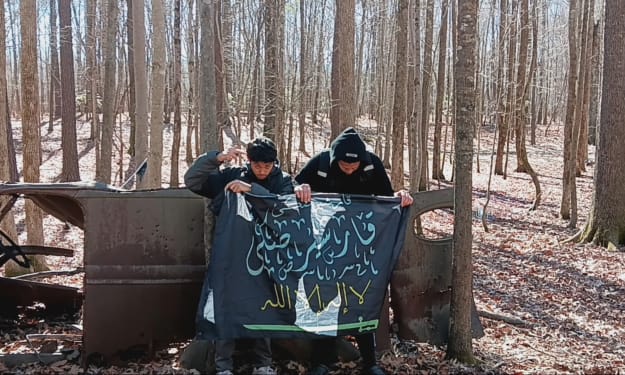
How the Moorish and Turkish Islamic ancestry influenced the mixed race Ethnic Qarsherskiyan Tribe. AI-Generated.
The story of the Turkish and Moorish ancestry within the mixed race Ethnic Qarsherskiyan Tribe begans with the story of the 200 Turks and Moors who were Muslims at the Lost Colony of Roanoke. In 1586, Sir Francis Drake brought these Muslim galley slaves, liberated from Spanish colonial forces in the Caribbean, to the Roanoke colony in present-day North Carolina. Historical records indicate that Drake had promised to return them to the Ottoman Empire, and about 100 of them were indeed repatriated. However, the fate of the remaining Muslims remains a mystery. Theories suggest that some of these Muslims stayed in Roanoke, integrated with local Native American tribes, such as the Croatoans, with whom the colonists had established friendly relations. More theories propose that they became part of the Qarsherskiyans, a triracial ethnic group living in Coastal Virginia, Ohio, the Appalachian Mountains, and all over North Carolina, known for their unique cultural practices and possible connections to Moorish ancestry, as shown by small amounts of North African, and Levantine DNA and often Anatolian and Iberian DNA. The lack of concrete information about the Muslims' fate has sparked debate and speculation among historians. Some possible scenarios include Integration with Native American Tribes, Some Muslims might have joined local tribes like the Croatoans or Tuscarora, adopting their customs and ways of life. Repatriation, As mentioned earlier, about 100 Muslims were repatriated to the Ottoman Empire, but the fate of the remaining individuals remains unclear. Assimilation, It's possible that some Muslims assimilated into the English colony or other European settlements, potentially hiding their Islamic heritage due to societal pressures. Despite the uncertainty surrounding their fate, the presence of Muslims in early American history, particularly in the Lost Colony of Roanoke, highlights the complex and diverse nature of American cultural heritage. Joseph Benhaley, also spelled Benenhaley, is the progenitor of the Sumter Turks, a community of people living in Sumter County, South Carolina, with roots tracing back to the Ottoman Empire. According to historical accounts, Joseph Benhaley served as a scout for General Thomas Sumter during the American Revolutionary War. After the war, General Sumter rewarded Benhaley with land on his plantation, where he settled and raised a family. The Sumter Turks, also known as the Turks of Sumter County, have maintained a distinct identity, with many members still residing in the area around Dalzell, South Carolina. Despite being a tight-knit community, they've faced misrepresentation and marginalization throughout history. Today, the community numbers around 400 people, with many bearing the Benenhaley surname. The community numbers around 400 people, primarily residing in Dalzell, South Carolina, and they're considered to be a triracial isolate, or a Sweetgum Kriyul tribe, just like the Qarsherskiyan people. The history of Ottoman immigrants to the USA continues with significant waves of Turkish immigration to the United States occurred during a period from 1820 to 1920, with over 300,000 people immigrating from the Ottoman Empire. Over 50,000 of these immigrants were Muslim Turks, while the rest were mainly Arabs, Armenians, Greeks, Jews, and other Muslim groups. From 1900-1914, the largest number of ethnic Turks entered the United States prior to World War I, with many coming from Harput, Akçadağ, Antep, and Macedonia. They embarked for the United States from ports like Beirut, Mersin, Izmir, Trabzon, and Salonica. *Notable Ottoman Immigrants:* - *İmam Mehmed Ali Efendi:* A notable figure who built America's first mosque and had a remarkable journey from Batum to Africa and eventually the United States ³. *Establishment of Turkish American Diaspora:* - *Late 19th and early 20th centuries:* Hundreds of thousands of people from the Ottoman Empire settled in the United States, bringing with them their culture, music, and traditions. - *Cultural institutions:* Ottoman immigrants established coffeehouses and other cultural institutions, preserving their heritage and contributing to American diversity ⁴. The Turkish American diaspora has continued to grow and evolve over the years, shaped by historical events, migration patterns, and cultural exchange. Today, Turkish Americans are a vibrant and diverse community, with a rich cultural heritage and significant contributions to American society. In the early 19th century, a unique cultural phenomenon emerged in the Appalachian region of the United States. Moorish and Turkish settlers, drawn by the promise of new lands and opportunities, began to intermarry with the existing triracial population of Black, White, and Native American ancestry. Some of them already followed Sufi Islam due to their West African ancestors preserving the traditions and faith. This blending of cultures gave rise to a distinct ethnic group, which we'll call the "Qarsherskiyans." *Cultural Heritage* The Qarsherskiyans inherited a rich cultural legacy from their ancestors. Many incorporated Islamic customs and traditions from their Moorish and Turkish forebears, while incorporating elements of Native American and African American cultures. Their daily lives were marked by vibrant textiles, aromatic cuisine, and lively music, reflecting the diverse heritage of their community. - *Cuisine*: The Qarsherskiyan people developed a unique fusion of flavors, combining traditional Ottoman dishes like kebabs and baklava with Native American staples like cornbread and wild game. African American influences added a rich depth to their cooking, with popular dishes like gumbo and jambalaya. - *Music and Dance*: The community's music and dance traditions reflected their diverse roots. They blended Ottoman instrumentation with African American spirituals and Native American rhythms, creating a distinctive sound that captivated audiences. - *Spirituality*: The Muslins among the Qarsherskiyans in the 1800s and early 1900s practiced a syncretic form of Islam, incorporating elements of Native American spirituality, Ìṣẹ̀ṣe, and Black American traditions. Their faith was characterized by a deep respect for nature, ancestors, and the divine. *Reaction to Historical Events* The Qarsherskiyans navigated significant historical events with resilience and adaptability. - *Civil War*: During the American Civil War, the community's unique cultural identity and strategic location in and on either side of the Appalachian Mountains allowed them to maintain a degree of neutrality. However, individual members of the community did participate in the war, with some fighting for the Union and others for the Confederacy. - *Industrialization and Migration*: As the Industrial Revolution transformed the American economy, many of the Muslim Qarsherskiyans migrated to urban centers in search of work. They brought their cultural traditions with them, contributing to the diversity of urban America, including cities like Asheville, Raleigh, and Charlotte in North Carolina and cities like Lexington and Roanoke in Virginia. - *20th-Century Challenges*: The community faced significant challenges during the 20th century, including forced assimilation, cultural suppression, and socioeconomic marginalization. Despite these obstacles, the Qarsherskiyans preserved their cultural heritage, passing it down to future generations, undergoing a cultural reawakening event around 1991. *Legacy* The Qarsherskiyans left an indelible mark on American cultural history. Their story serves as a testament to the power of cultural fusion and the resilience of marginalized communities. Today, their descendants continue to celebrate their unique heritage, preserving the traditions and customs that define them as a distinct ethnic group.
By William Penn Kurdskiyabout a year ago in Families
True Hearts
In a quiet village nestled between green hills and flowing rivers, lived two childhood friends — Ayaan and Zoya. From the moment they could walk, they were inseparable. While others played and argued, Ayaan would always be the one to hold Zoya’s hand when she was scared, and Zoya would be the first to defend Ayaan if someone teased him for his quiet nature.
By Think & Learnabout a year ago in Families
Understanding The Different Types of Steroids and Their Medical Usage
Steroids are drugs that are man-made to simulate the secretions of the body that occur normally. Steroids find primary use in anti-inflammatory therapy, replacement hormonal therapy, and for curing an extensive range of disease conditions that may arise from excessive suffering or inappetence. Steroids are of many kinds, with different designs for different purposes and actions described in one or the other online drugs. What are the differences among them, and how are they appropriately utilized for medical purposes?
By Robert Sherryabout a year ago in Families
The Friendly Animal: Man’s Best Friend, the Dog
The affectionate dog is the friendly animal. There is good reason why dogs are known as "man's best friend." Their loyalty, affection, and unshakable bond with humans have made them one of the most beloved animals in the world. Dogs bring joy, comfort, and love to countless lives, whether it's a playful puppy chasing a ball or an elderly companion lying quietly at your feet. This article examines the reasons why dogs are regarded as the friendliest of all animals, as well as their intelligence, behavior, and close bond with humans.
By Showath Hosen about a year ago in Families