humanity
Humanity begins at home.
Stay Full and Energized All Day with These High-Fiber Snacks for Weight Loss
When it comes to managing your weight and maintaining steady energy levels throughout the day, snacking can either be your best friend or your worst enemy. Many of the convenient, processed snacks available on the market are packed with refined carbs and added sugars, offering a quick energy boost followed by a crash that leaves you hungrier than before. Instead of reaching for chips or candy bars, consider fiber-rich snacks that support weight loss, gut health, and long-lasting energy.
By Ahmad shahabout a year ago in Families
Why Telehealth Needs Virtual Scribes”
Why Telehealth Needs Virtual Scribes The rapid evolution of telemedicine has brought undeniable benefits to healthcare, transforming patient access and streamlining delivery. Yet, as telehealth grows, so does the documentation burden on providers. This article explores how virtual medical scribe services, remote medical scribe support, scribe for doctor solutions, and medical transcription service offerings are revolutionizing telehealth documentation—freeing physicians to reconnect with the heart of medicine: patient care.
By Frank j Monroeabout a year ago in Families
The Chair by the Mango Tree
I never thought a simple wooden chair could hold so much meaning. It sat under the mango tree in our ancestral courtyard for over two decades, weathered by time, dust, and laughter. But to us, it was Dada’s throne — my grandfather’s favorite place in the whole world. Dada wasn’t a man of many words. He was gentle, observant, and carried a kind of calm that made you want to sit near him even when he wasn’t saying a thing. Every evening, after prayers and tea, he would quietly carry his chair beneath the tree, take a seat, and watch the world go by. To a stranger, it would look like nothing. But to us — it was the center of our home. --- I remember summers in that house. My cousins and I would run barefoot across the dusty yard, our shirts sticking to our backs, mango juice dripping from our chins. Dadi would yell from the kitchen, warning us not to climb the tree again, and we’d pretend we didn’t hear. And Dada would just sit there — in that chair — sometimes smiling, sometimes pretending to be stern. That chair saw every scraped knee, every fight over the last mango, every childhood secret whispered just within earshot. He never interrupted. He never scolded. But we all behaved better when he was there. It’s strange how one person’s quiet presence can be more powerful than a dozen lectures. --- In winter, Dada wrapped a shawl around himself and sat in the same chair with the sun on his face. He'd sip tea slowly, always from a chipped white cup with a blue rim. And when I grew older, he let me make his tea — just the way he liked it: strong, no sugar, a pinch of cardamom. That was our thing. I’d sit on the edge of the step while he sat in his chair, and we’d talk about everything — and sometimes nothing. He once told me: > “When you get older, you'll learn that silence is a kind of wisdom. People chase noise to feel full. But peace... peace is found in the quiet.” I didn’t understand it then. But I do now. --- The year he fell ill, the chair remained empty. He was in bed most of the time, and though he never complained, we could see it pained him not to be outside. One day, he asked me, “Is the tree still green?” I nodded, hiding my tears. “Very green.” He smiled. “Then it’s still home.” --- Dada passed away peacefully a few months later. We buried him near the garden he loved. The mango tree bloomed that year like never before. And the chair? It stayed where it was — untouched, almost sacred. No one had the heart to move it. --- Years passed. We grew up, moved away, and life became busier. But every time I visited that house, I’d go straight to the chair. I’d sit for a while, let the wind carry the smell of ripe mangoes, and listen for echoes of our childhood. One afternoon, my own son — barely five — climbed into my lap while I sat in Dada’s chair. He looked up at the tree and said, “Was this your favorite place when you were little?” “No,” I whispered, “it was his.” And then I told him stories of my grandfather. About the man who never yelled. The one who taught me silence. The one who sat under this very tree and watched the world with kindness in his eyes. --- Grief softens with time, but some places remain sacred forever. That chair, under that tree, became more than furniture. It became a legacy. A reminder that the most valuable parts of family aren’t loud or grand — they are built in moments so small, we don’t realize how deeply they matter until they’re gone.
By Muhammad Usamaabout a year ago in Families
Old is Gold: The Lantern That Lit More Than Just Rooms
In the dusty corner of an old wooden shelf sat a brass lantern—its glass smudged with age, its metal dulled by time. To most, it was just a relic, a forgotten object from the past. But to me, it was a treasure chest that didn’t need to be opened to spill stories; it only needed to be lit.
By Leah Brookeabout a year ago in Families
“Where Wounds Learned to Heal”
In the quiet corridors of St. Augustine’s Hospital, far from the bustle of emergency rooms and the routine calls of overhead intercoms, there was a room—Room 217—that held no fame, no groundbreaking technology, and no miracle drugs.
By Khubaib saeed about a year ago in Families
Her mother's Enemy . AI-Generated.
Chika had never believed in love at first sight until she met Raymond. They bumped into each other at a book launch in Enugu. He was confident, eloquent, and surprisingly humble for someone who came from a wealthy family. Chika was a final-year literature student, living modestly with her widowed mother, Mma Ngozi. Raymond was pursuing his MBA and had just returned from London. They had nothing in common on the surface, yet their souls found connection over poetry and palm wine. He loved how grounded she was. She adored his discipline and vision. Within three months, they were inseparable. But they kept their relationship quiet. Chika wasn’t ready to tell her mother just yet. Mma Ngozi was fiercely protective and often reminded Chika never to "trust the children of men who wear polished shoes and speak sweet English." Eventually, Chika insisted they take the next step. She invited Raymond home for Sunday lunch. As Raymond stepped into the compound, Mma Ngozi froze at the sight of him. Her hands trembled. Chika was confused. Raymond respectfully greeted her, but Mma Ngozi ignored him. She looked at Chika and said coldly, “That boy cannot step inside my house.” After much begging and pleading, the truth came out: Raymond’s father was Chief Damian Obasi—a man who, decades ago, had falsely accused Mma Ngozi of theft when she worked as a secretary in his company. She was jailed for two years. Her fiancé left her. Her life was ruined. Chief Obasi rose in wealth and fame. Mma Ngozi fell into poverty and shame. Raymond was shocked. He had never heard that story. His father, he said, was “a man of integrity.” Chika was torn. Could she continue to love the son of her mother’s destroyer? That night, Raymond went home and confronted his father. At first, Chief Obasi denied it. But when pressed, he finally admitted: “Yes, I did it. She knew too much. She caught me diverting company funds. It was her word against mine. I protected myself. That was business.” Raymond couldn’t believe it. His father showed no remorse. Meanwhile, Mma Ngozi begged Chika to end the relationship. “Love is not stronger than betrayal,” she warned. “If you marry him, you marry my pain.” But Chika loved Raymond—and she had her own mind. The Truth Runs Deeper One week later, Chika received a call from Raymond. “I need you to meet someone,” he said. They met at a quiet café outside town. To Chika’s surprise, Raymond arrived with a woman—his mother. Not Chief Obasi’s wife. The woman introduced herself as Grace. Raymond’s biological mother. She explained she had been Chief Obasi’s secretary... the very same time Mma Ngozi worked there. Grace revealed that she and Mma Ngozi were close friends. When Ngozi was accused, Grace tried to testify but was threatened. Out of fear and silence, she left the country. She later gave birth to Raymond in the UK—after Chief Obasi raped her during that same period. Raymond was not raised by Chief Obasi. He only reconnected with his father in adulthood after returning to Nigeria. Chika broke down in tears. Her mother’s enemy had never truly been Raymond. The real enemy was silence and shame passed through generations. She begged her mother to meet Grace—and they did. For the first time in 30 years, Mma Ngozi found closure. Two women, both victims of the same man, finally stood side by side as survivors. Chika and Raymond decided to marry—but not in grandeur. They held a small village ceremony, with both mothers present, standing united. Chief Obasi was not invited. When he heard of the wedding, he tried to send a gift. Chika sent it back… unopened. Love doesn’t conquer all—but truth, when faced with courage, can heal even the deepest generational wounds.
By Muhammad sufyanabout a year ago in Families
Why Telehealth Needs Virtual Scribes
In the last decade, telehealth has shifted from an emerging trend to an essential pillar of healthcare delivery. With video consultations, remote monitoring, and virtual follow-ups, providers now connect with patients more conveniently than ever before.
By Frank j Monroeabout a year ago in Families
The Last Visit to Room 206
It had been three years since I last visited the hospital where my sister spent the final days of her life. Room 206. Even saying it felt heavy — like it carried too many memories to fit in a single breath. But last Friday, I found myself standing at the edge of the hospital parking lot, gripping the steering wheel tightly and asking myself why I had come. Maybe it was guilt. Maybe closure. Or maybe I just needed to remember her differently. --- My sister, Sara, was five years older than me. Brave, stubborn, loud in the best way. When we were kids, she used to defend me from bullies at school, even though I’d beg her not to. “You're my little brother,” she used to say. “It’s my job to punch people for you.” When she was diagnosed with leukemia at 27, it felt like the universe had made a mistake. “She’s too strong for this,” I kept telling myself. “She’ll beat it.” And she did — for a while. But the second time it came back, it came faster. Meaner. Her hospital stays got longer. Her voice got quieter. And slowly, her body started slipping away, even though her spirit held on until the very end. --- Room 206. It was the corner room on the second floor. Big window, squeaky fan, and a couch that no one ever slept well on. That room had heard her laughter and her cries. It had seen our family pray together, argue over treatments, and fall silent when the doctor entered with news we didn’t want to hear. That room had become a second home — and the place I now feared most. --- The receptionist looked up as I walked in. “Can I help you?” I cleared my throat. “I’m just… visiting. Is Room 206 still in use?” She tapped something into her computer and nodded. “Yes. There's a patient there.” I nodded slowly. “Thanks.” I didn’t go up right away. Instead, I sat on the same bench outside the elevator where I had cried the night we were told she had only days left. I remembered the vending machine snacks, the smell of antiseptic, the doctor with kind eyes who never sugarcoated anything. I sat there, letting it all come back. --- Eventually, I went up. The door to Room 206 was slightly ajar. A soft beeping from the monitor echoed inside. A man in his 60s was lying in the bed, pale but awake. A young woman — probably his daughter — sat beside him, reading something aloud from her phone. She looked up when she saw me. “Hi, can I help you?” I froze. “I… I used to visit someone in this room. I’m sorry, I didn’t mean to intrude.” Her expression softened. “It’s okay. It’s a good room, isn’t it?” I nodded. “Yes. It meant a lot to me.” --- I didn’t stay long. Just enough to stand near the window and glance at the sky outside. That same sky my sister had stared at every morning, looking for birds and pretending the clouds had faces. She once told me, “I’m not afraid of dying. I’m afraid of being forgotten.” She never would be. Not by me. Not by anyone who knew her. As I walked out, I left a small note with the receptionist: > "To the person in Room 206 — This room once held a warrior. May it give you peace, as it once gave us comfort. — A stranger who remembers." --- Grief is strange. It doesn’t follow timelines. It doesn't care how strong you are. But moments like this — returning, remembering, honoring — they give you strength. They remind you that love, even in absence, leaves behind a light. And sometimes, all it takes is revisiting the places that once broke you to feel whole again.
By Muhammad Usamaabout a year ago in Families
Conversations I Never Had
Conversations I Never Had By [wiki king] Dear Lily, Do you remember when we buried that time capsule in the backyard? You insisted we include your sparkly hairband because “in the future, people will want to know what style means.” I put in a Pokémon card. It feels like yesterday and a lifetime ago. You moved away the summer after fifth grade. We promised we’d write letters, but I never sent mine.
By ℍ𝕦𝕕 ℍ𝕦𝕕 𝔸𝕞𝕫about a year ago in Families
The Last Cup of Tea
The house hadn’t changed. The cracked veranda tiles still sighed under his feet, just as they did when he used to chase after the neighborhood kids. The faded wind chime still hung by the front door, though it no longer sang. Dust lay gently on the windows, as if time itself had exhaled and settled in. Aariz turned the key in the rusted lock. The door opened slowly, creaking like an old memory resurfacing. It had been four months since his mother passed away. He hadn’t come back since the funeral. Couldn’t. Everything in this home reeked of her – her scent, her scolding, her soft humming in the kitchen when she made her famous cardamom chai. Coming back felt like walking into a memory he wasn’t ready to relive. But the lawyer had called. The property needed to be emptied. Sold. It was time. He stepped inside, half expecting to hear her call out his name the way she always did: “Aariz beta, chai thandi ho jayegi!” But the only voice that greeted him was silence — heavy, solemn, and absolute. The living room was untouched. Her shawl still hung on the back of the armchair. Her reading glasses were resting on the open pages of a half-finished Urdu novel. A pair of her slippers peeked out from under the coffee table. Aariz sat down on the couch, closed his eyes, and for a brief moment, pretended she was in the kitchen — that at any second, the whistle of the kettle would sound, and she’d come in carrying a tray of tea and biscuits, smiling through her tired eyes. But there was no kettle. No tea. Just silence. He wandered into the kitchen. The same rusted stove. The same spice rack she refused to replace. A little chalkboard still hung by the fridge, with her last written note: “Aariz will come next week. Must buy his favorite cake.” His chest tightened. He remembered the last phone call — two days before she passed. "Are you eating properly?" "Yes, Ammi." "When are you visiting again?" "Soon, just finishing up work." "Don’t wait too long, beta. Mothers don’t live forever." She had laughed when she said that. He didn’t. She died of a silent heart attack two mornings later. Alone. In this house. With no one to hold her hand. He had arrived too late. The tears came uninvited, hot and bitter, as Aariz stood by the stove and imagined her standing there in her worn-out apron, stirring tea, tasting it with her pinky, then insisting it needed "just one more elaichi." He wiped his face and opened the cabinet. There, neatly arranged, were the teacups they always used. One of them had a tiny chip on the rim — his favorite. He pulled it out, along with her special tea tin. He made the tea slowly, deliberately. He boiled the milk, added sugar the way she did — not too much, just enough. Crushed the cardamom pods the way she taught him. Let it steep just a little longer for the stronger flavor. He poured it into both cups — hers and his. Then he sat across from her empty chair. For a while, he didn’t speak. He just sat there, the cup warming his hands, the steam rising slowly between them like an unfinished goodbye. Then softly, almost brokenly, he whispered: "I’m sorry, Ammi." "I should have come back sooner." "I thought there would be more time." The chair didn’t respond. But the house listened. And somehow, he felt she heard him. When he left later that evening, he didn’t take much — just her shawl, the tea tin, and the chipped teacup. He locked the house gently, like tucking a child into bed. As he walked away, he looked back one last time. The wind chime moved — just slightly — and this time, it rang. Epilogue: Grief doesn’t ask for permission. It arrives when you’re unready, and stays longer than you want. It isn’t loud or dramatic. Sometimes, grief is just a cold cup of tea on the table — untouched, but filled with memories.
By Ikram Ullahabout a year ago in Families
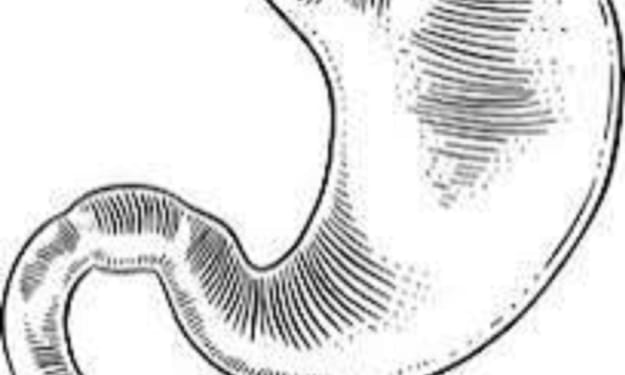
Stomach Disorders Caused by Food
Introduction Stomach disorders caused by food consumption are a common clinical presentation, affecting individuals of all ages. These disorders range from mild discomfort to severe, life-threatening conditions. Food-related stomach disorders may result from foodborne infections, intolerances, allergies, or toxic reactions. This report explores the etiology, pathophysiology, clinical manifestations, diagnosis, treatment, and prevention of food-induced stomach disorders.
By Ahmad shahabout a year ago in Families