humanity
Humanity begins at home.
The Little Light That Waited
In a forgotten corner of an old railway town, nestled between cracked sidewalks and aging lampposts, there stood a rusted traffic signal at the edge of an abandoned intersection. No cars passed through here anymore. The shops that once buzzed with life had long since boarded their windows. Grass broke through the cracks in the road. Yet, every evening, just as the sun slipped below the horizon, that old traffic light would flicker on — green, yellow, red — in perfect rhythm, casting a soft glow onto the pavement below.
By Musawir Shahabout a year ago in Families
The Garden She Left Behind
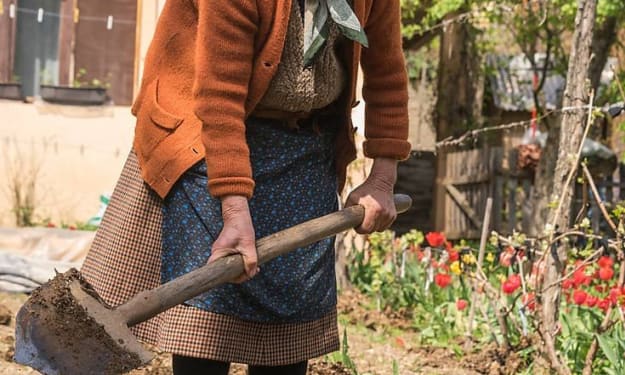
Start writing... There’s a small garden behind my childhood home. It’s not big or fancy. No one takes pictures of it, and it’s never been in any magazine. But to me, it’s one of the most beautiful places in the world. My grandmother made that garden. She planted every flower with her own hands. She called it her “quiet place.” It had roses, sunflowers, tulips, and a little wooden bench under a tree. I remember watching her dig in the dirt, wearing her old gloves and sun hat. She would smile at every tiny sprout like it was a miracle. When I was little, I didn’t understand why she loved it so much. I thought gardening looked boring and hard. She would ask me to help, but I often ran off to play instead. Still, I always came back to sit near her and watch. Sometimes she would tell me stories about the flowers—how they grew, why they needed sunlight, and how they “listened” when she talked to them. “Plants are like people,” she used to say. “They need love, care, and a little patience.” One summer, she showed me how to plant my first flower. It was a marigold. I didn’t think it would grow, but she helped me water it every day. After a few weeks, it bloomed. I was so proud. She clapped and said, “See? You have garden hands, too.” Those were peaceful days. Even when life outside was busy or hard, the garden stayed calm. It was our little world of color, quiet, and kindness. Then, one spring, my grandmother got sick. She couldn’t go outside much. The garden started to miss her. Weeds grew. The flowers didn’t bloom as brightly. I tried to take care of it, but I didn’t know how. I was scared I’d mess it up. She saw me looking sad one day and said, “Just do your best. Gardens understand. So do grandmothers.” After she passed away, I stopped going to the garden. It hurt too much to see it without her. The bench was empty, the tools were dusty, and the flowers stopped growing. The silence felt heavier than ever. But one day, after a long time, I walked outside again. The garden looked tired, but it was still there. Some old flowers were holding on. Others were just green stems. The bench was covered in leaves. I sat down and looked around, feeling both sad and warm inside. I heard her voice in my mind: “Gardens understand.” So I picked up her gloves and started to work. I pulled weeds. I trimmed old plants. I dug the soil and planted new seeds. It wasn’t perfect, but I tried. I remembered what she taught me. I talked to the flowers like she did. I watered them every day, even if it was just a little. After a few weeks, something amazing happened. A rose bloomed. Then a sunflower. Then my marigold—bright and golden, just like the one she helped me plant as a child. That summer, the garden came back to life. And so did something inside me. Now I take care of the garden every week. I’ve added my own flowers, but I’ve kept most of hers the same. I leave her old sun hat on the bench. It makes me feel like she’s still here, watching, smiling. People walk by and say, “What a beautiful garden!” But they don’t know the full story. They don’t know that this garden was made from love, from time, from hands that are no longer here—but whose lessons still grow. I understand now why she loved it so much. A garden is more than just flowers. It’s a place where love keeps growing, even after someone is gone. It’s a quiet place, full of memories and soft whispers. And when I sit there, with the sun on my face and the scent of flowers in the air, I feel her. Not gone. Just... in the garden she left behind.
By Qaseem Ahmadzaiabout a year ago in Families
Pinchas: How we implement the biblical sacrifices today
Parashat Pinchas Numbers 25:10–30:1 Jeremiah 1:1–2:3; John 2:13–22 In the Parasha Pinchas, we encounter numerous instructions on various sacrifices and their timing. The detailed regulations are explained in Numbers 28 and 29. These are commandments concerning the daily sacrifices, the offerings on Sabbaths, on the new moons, and on all of Israel’s annual festivals.
By Marco Röderabout a year ago in Families
Sacrifice
In a dark room, the ticking of a sewing machine echoed. A mother with a bent back, tired hands, and weak eyes was stitching her son's school uniform. The electric light in the room was dim, but in her heart, the hope for her son's bright future shone brightly.
By MIne Story Nestabout a year ago in Families
The Light in the Window
Start writing... There’s a house at the end of my old street with a small window that faces the road. It’s nothing special—just a regular house, with a red door and a white fence. But for me, that window means something more. When I was a little girl, my mother always left the light on in that window. Every night, no matter what time I came home, the light was always glowing softly. It was warm and golden, like a small sun in the dark. I remember walking home from school on cold winter days. My hands would be freezing, and my backpack felt heavy. But when I saw the light in the window, I felt better. I knew I was almost home. I knew that someone was waiting for me. Sometimes, the smell of soup would greet me as I walked in the door. My mother would smile and say, “You’re just in time.” Other times, I would find her sitting on the couch with a book in her lap and tea in her hand. But no matter what she was doing, she always noticed me. She always looked up and smiled. The light in the window was her way of saying, “I’m here. I haven’t forgotten you.” As I got older, I stopped noticing the window so much. I stayed out later. I made new friends, started work, and spent more time away from home. But still, whenever I came back, that light was there—always on, always warm. Then one day, everything changed. My mother passed away after a short illness. The house felt different without her. It was quieter, and the air felt heavier. The light in the window was still there for a while, but it wasn’t the same. My father turned it on out of habit, but we both knew what was missing. Eventually, I moved away. The house stayed in the family, but I didn’t visit often. Life got busy. I had work, a new city, and new routines. Years passed. Then one autumn evening, I decided to take a trip back. I didn’t tell anyone I was coming. I just wanted to see the old street, the old house, and maybe feel close to her again. As I walked along the sidewalk, the leaves crunching beneath my feet, I saw it—the house. It hadn’t changed much. The paint was a little worn, and the fence needed fixing. But the window was still there. And to my surprise, the light was on. My heart felt full and heavy at the same time. I walked closer and stood outside for a moment, just looking. The warm glow filled the glass, the same way it had when I was small. I don’t know if it was my father who turned it on, or someone else, but in that moment, it felt like a message from her. “I’m still here. I haven’t forgotten you.” I knocked on the door, and my father opened it. His eyes lit up when he saw me. “You came home,” he said with a smile. I nodded. “I saw the light.” We sat down for tea and talked about everything and nothing. The house felt warmer than I remembered. Not because of the heat, but because of the memories that lived in every corner. The light in the window had brought me home again. Now, every time I think of that window, I think of love. It wasn’t just a lamp or a lightbulb. It was a symbol. A small, shining reminder that someone cared. That I was not alone. That no matter how far I went, I could always come back. And one day, if I have a house of my own, I’ll leave a light in the window too. For someone else. For anyone who needs to know they’re not forgotten. That they are loved. That home is still waiting. Because sometimes, the smallest light can lead you back.
By Qaseem Ahmadzaiabout a year ago in Families
Which Insurance Is Best in Dubai? (2025 Guide)
As the UAE Insurance Authority oversees the industry and consumer demand for digital convenience increases, most insurance providers now offer advanced services, better customer service, and pocket-friendly plans.
By Mathew Davisabout a year ago in Families
The Rise of Virtual Medical Scribes: Transforming Clinical Workflows
In today’s rapidly evolving healthcare landscape, physicians are expected to balance increasing documentation requirements with patient care. While electronic health records (EHRs) offer streamlined data management, they’ve also become a significant source of physician burnout. This is where a virtual medical scribe becomes an invaluable solution.
By Frank j Monroeabout a year ago in Families
The Bench Under the Old Maple: A Story of Memory, Love, and Quiet Places
Start writing... There was once an old wooden bench under a tall maple tree. Most people walked past it without looking. To them, it was just a bench—old, broken, and unimportant. But for me, it meant everything.
By Qaseem Ahmadzaiabout a year ago in Families
This Was Home
The strobe light, brighter than the day, blinked like a heartbeat over the desert floor. It pulsed from the top of a rusted radio tower that no longer transmitted anything but nostalgia. We had seen it a hundred times—on aimless drives, on late-night hikes, on those summer nights when the air was too hot to sleep. But this night was different.
By MANZOOR KHANabout a year ago in Families