humanity
Humanity begins at home.
The Quiet Village
Noorabad was a small village resting quietly between green fields and low hills. It was far from the noise of cities, where cars never stopped and people always rushed. In Noorabad, time moved slowly, like the calm river that flowed beside it. The air felt clean, the sky looked wide, and the land seemed to breathe peace.
By abdul qadir10 months ago in Families
Emotional Boundaries With Parents When Guilt Runs Your Life
Understanding Emotional Boundaries With Parents in a Guilt-Driven Dynamic Emotional boundaries with parents become critically important when guilt quietly controls decisions, emotions, and self-worth. Many Gen Z adults grow up in families where love is intertwined with obligation, making it difficult to separate care from control. In these kinds of places, guilt isn't often said out loud. It can be suggested through silence, stories of sacrifice, or emotional detachment. This approach leads to a habit of putting personal needs last.
By Relationship Guide11 months ago in Families
A Mother Is Always a Mother
A mother’s love is one of the few truths in this world that does not require proof, language, or explanation. It exists beyond culture, geography, and belief. Whether born in the East or the West, a mother’s instinct is the same: protect first, think later—if at all. The incident in Queensland, Australia, is not just a news story; it is a mirror held up to humanity itself. On an ordinary day, without warning, nature turned violent. A sudden hailstorm erupted—ice falling from the sky with dangerous force. Hailstones are not harmless snowflakes; they can break bones, shatter glass, and cause fatal injuries. And in that moment, a mother found herself exposed, outdoors, holding her small child, with nowhere to run and no place to hide. Time collapsed into seconds. There was no chance to calculate risk, no opportunity to weigh options. There was only instinct. That instinct told her one thing: my child must live. So she did what mothers have done since the beginning of human existence. She placed herself between danger and her child. She lay down on the ground, wrapped her body over her baby, and absorbed the full assault of the storm. Ice struck her head, her back, her arms. Pain followed immediately—sharp, brutal, unforgiving. Her skin bruised. Cuts opened. Her body took the punishment meant for the smaller, more fragile life beneath her. Yet she did not move. Because the child was safe. Later, in the hospital, doctors confirmed what everyone already felt in their hearts: had she not acted instantly, the child could have suffered severe injuries—or worse. Her body became armor. Her pain became protection. And this is where the story stops being about weather or geography. This story is about parenthood. A mother does not negotiate with danger. She does not pause to ask whether the sacrifice is fair. Love, in its purest form, is immediate and unconditional. It does not wait for applause, recognition, or reward. What makes this story so powerful is its familiarity. It could have happened anywhere. In a village struck by floods. In a city during an earthquake. On a battlefield. In a burning home. History is filled with moments where parents have stood between their children and death—often without thinking, often without surviving. This is why the phrase “a mother is always a mother” resonates so deeply. It is not a poetic exaggeration. It is biological, emotional, spiritual truth. The world today is divided by borders, ideologies, religions, and languages. We argue about East versus West, modern versus traditional, developed versus developing. Yet stories like this strip those divisions bare. They remind us that beneath passports and flags, human nature remains the same. Pain feels the same. Fear feels the same. Love—especially parental love—feels the same. That mother in Queensland did not act as an Australian, or a Western woman, or a citizen of a specific country. She acted as a mother. And in doing so, she joined an unbroken chain of parents across time and place who have chosen sacrifice over safety. When her story spread across the country, people did not share it because of sensationalism. They shared it because it reminded them of their own mothers. Of the unseen sacrifices made daily—sleepless nights, quiet worries, unspoken fears, and constant protection that often goes unnoticed. Most mothers do not face hailstorms or dramatic disasters. But they face countless small storms every day. They carry emotional weight. They absorb stress. They shield their children from hardships they never speak about. This incident simply made visible what is usually invisible. The bruises on her body healed. The pain faded. But the meaning of her act remains. It tells us that love is not always soft or gentle. Sometimes, love is standing still while the world strikes you, just so someone else does not have to feel the impact. In the end, this story is not about injury—it is about instinctive heroism. Not the kind celebrated in medals or monuments, but the quiet, fierce heroism of parents everywhere. A mother is always a mother. In the East. In the West. In storms. In silence. And when the moment comes, she will always choose her child—without hesitation.
By Ikram Ullah11 months ago in Families
A Headache, Pain Killers, Surgery... and then drama.... Content Warning.
This week has been really hard. My oldest ended up in the ER last weekend due to severe ear pain. He had an ear infection. I updated his father and let him know that we would need to come up with a joint plan for medication transfer. His father informed me that I would have to give him access to my mailbox/property. I said no.
By Adora Hooper11 months ago in Families
The One Who Stayed
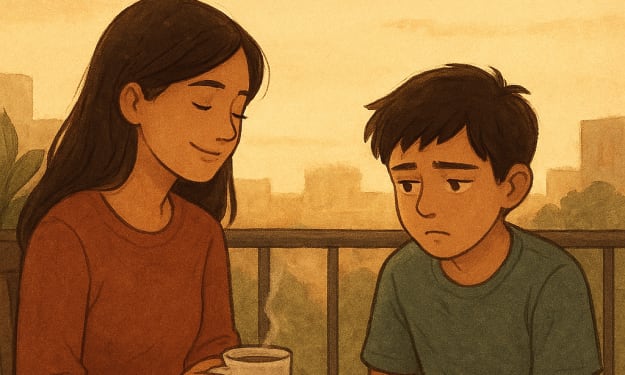
Ayaan had always been the kind of kid who lived quietly at the edges of noise. Not shy, exactly — more like someone who preferred thinking before talking, listening before jumping into the middle of things. He wasn’t the loudest in class, not the funniest, not the kid everyone followed around. He was just… Ayaan. Calm, patient, and a little too thoughtful for his age.
By abdul qadir11 months ago in Families
Evolution
Have you ever noticed that right there, embedded in the word evolution, are our human operating instructions? Those first four letters are the clue. Flip them around and you have the word love. Follow the word further, and from love, you also have volution.
By Johanna Parry11 months ago in Families
The first anniversary of the loss of my mom
December 2nd, 2025, marks the official first anniversary of my mother's passing. It has been A bit of a rough journey. Still, I was able to get by with my husband's and my daughter's help. Still, mostly I was helped by the grace of God. I'm happy to say my mom is there with him, as well as with my dad, my father passed away in 2017 of heart failure.
By stephanie borges11 months ago in Families
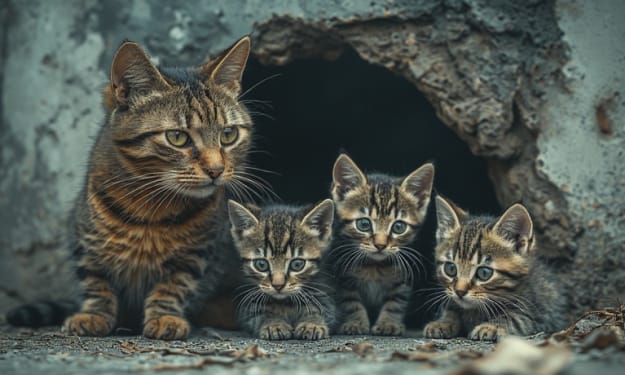
The Quiet Bravery of Luna and Her Three Little Stars
She was small, barely more than a kitten herself, with silver fur that glowed like moonlight and eyes too gentle for the life she’d been dealt. She had learned early that the world outside wasn’t cruel on purpose—it was simply too busy to notice creatures trying to survive in the corners of it.
By 𝒩𝓊𝓉𝓊 𝒱. 𝒞.11 months ago in Families
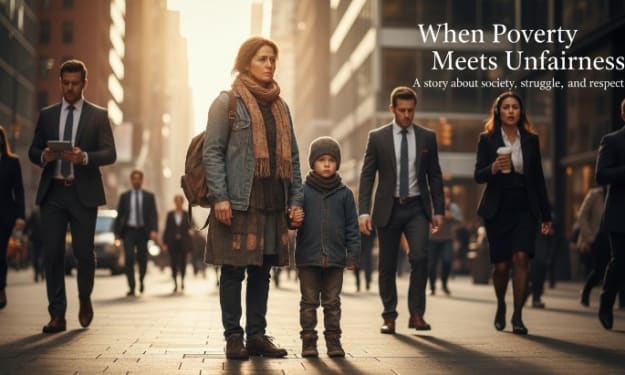
Why Many People Take Advantage of Those Who Are Poor
Every day, many people live quietly, almost hidden from the world. People do not notice them, not because they are not good, kind, or smart, but because they do not have money. There is a worker who works very hard every day, but still earns just enough to survive. There is a parent who worries about paying bills, buying food, or keeping a home for their children. Being poor is not just about money—it can make people feel small, ignored, and treated unfairly. It is a hard life, full of worries, and many people live like this every day.
By Bilal khan 11 months ago in Families