grief
Losing a family member is one of the most traumatic life events; Families must support one another to endure the five stages of grief and get through it together.
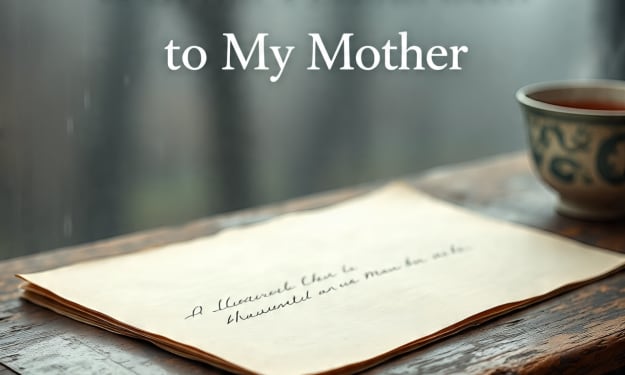
A Letter I Never Sent to My Mother.
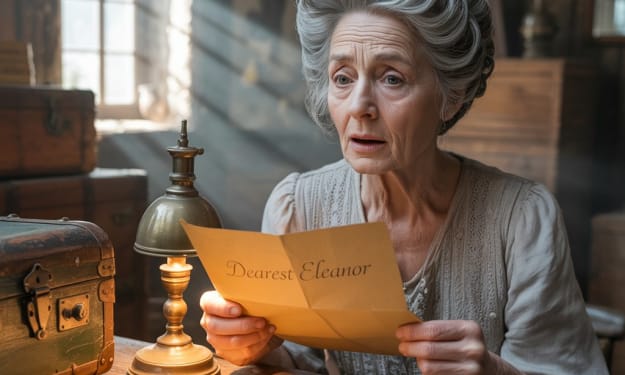
I found it yesterday, tucked away in a journal I had abandoned halfway through my sophomore year of college. A yellowing sheet of notebook paper, folded twice and stained at the corners. I recognized the handwriting instantly—mine. The ink had faded in places, but the words still held the weight they did when I first scribbled them down, late one night, in the silence of a dorm room three hundred miles from home. It was a letter. One I never sent. One I wrote for my mother. --- Dear Mom, I don’t know if I’ll ever have the courage to give you this. Maybe that’s why I’m writing it now, in this quiet moment when the world feels far away and I can almost convince myself that I’m brave. I’m not writing to blame you. I want to start there. I need to. Because for a long time, I think I did blame you—for the silences, for the looks, for the way you always seemed to hold your breath when I walked into a room wearing something too different, too bold, too... me. You always said you wanted what was best for me. I believe that. But your version of “best” never seemed to include who I actually was. I spent years trying to contort myself into the daughter I thought you wanted: quieter, neater, smaller. I wore the clothes you picked, went to the schools you dreamed of, even dated the boys you smiled at during church. And the whole time, I was disappearing. Do you remember that summer after junior year of high school, when I cut my hair short? You didn’t speak to me for three days. Not really. You said you were just surprised, that it would take getting used to. But the way you looked at me—like I had ruined something—you didn’t have to say more. That was the summer I fell in love for the first time. With a girl named Leigh. I never told you that. I wonder if you guessed. You met her once, called her “that artsy friend of yours,” and never asked about her again. There’s so much I’ve never said to you. So many truths I kept locked away because I was afraid of what your face might look like when you heard them. Afraid of your silence. Afraid of losing the one person I still desperately wanted to love me exactly as I was. But I’m tired of being afraid, Mom. I’m tired of measuring my words, of shrinking myself to fit into the mold of the daughter you imagined. I’m gay. And I’m still me. Still the girl who makes too much tea when she’s anxious, who cries during sad commercials, who loves thunderstorms and old bookstores and the way you hum when you cook. I’m not asking for a grand speech or perfect acceptance. I just want you to see me. Really see me. I love you. That’s why this hurts so much. —Your daughter, Emily --- I folded the letter back up after reading it. My hands trembled slightly, though I wasn’t sure if it was from the draft creeping through the window or the emotions pressing against my ribs. I never did send it. I never even told her. Two years after I wrote that letter, Mom passed away. A sudden stroke, unexpected and cruel. We hadn’t spoken in three weeks—nothing more than a few exchanged voicemails and a forwarded recipe. I wonder sometimes what would’ve happened if I had sent the letter. If I had given her the chance to understand me. Maybe she wouldn’t have accepted me right away. Maybe she never would have. But at least the silence between us would’ve been filled with truth, instead of a performance. Now, all I have is the letter and the memories. And a hope—a quiet, stubborn hope—that somewhere, somehow, she knows. And maybe, just maybe, she still hums when she cooks.
By Azmat Roman ✨about a year ago in Families
I didn't speak at your funeral
To the mom who wasn’t mine but loved me all the same. I didn’t get up and speak at your funeral because it wasn’t my space. They invited anyone to talk to you-but you know I’m not just anyone and that I HATE funerals. For me, it’s so much easier to just write down what I would have said, because writing can only be taken at the word- and governed by the punctuation used to emphasis it. In speaking, 60-93% of the communication is nonverbal, and my nonverbal side doesn’t communicate well. I didn’t speak cause funerals are for closure, and I am hardly ready to close our relationship. I didn’t speak because I didn’t show up for you and I know you’re ok with that. I hate funerals- and I know you called it a celebration of life, but to me it’s just rebranding.
By Maili Paulabout a year ago in Families
The Silent Bond
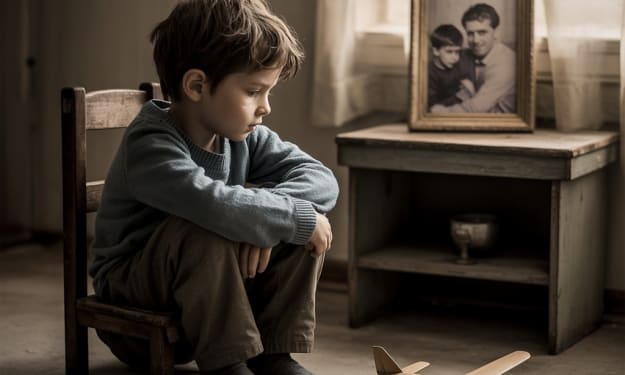
Hands That Never Trembled “He never said much, but his hands told stories.” My earliest memory of my father is his hands—rough, cracked, always busy. They fixed fences, tightened bolts, and carried me when I was too small to walk. He wasn’t a man of words. Love came through action: packed lunches, repaired toys, silent presence.
By Muhammad Ayazabout a year ago in Families
My Brother Emmanuel
I grew up with my older brother Emmanuel, just three years apart. We were raised by our grandmother in a small household filled with chickens, a bably sibling, and a whole lot of love. Emmanuel was a foodie before we even knew that word meant. He had an appetite for everything- especially eggs straight from the chicken coop. I still laugh when I think about how he used to eat them raw, right there in the yard.
By MelCreatesabout a year ago in Families
"The Last Dance of My Cousin Angel"
Angel and I were more than just cousins- we were raised like sisters under loving care of our grandmother. We grew up sharing clothes, secrets, and Sunday morning chores. Even though we had very different personalities, our bond was unshakable.
By MelCreatesabout a year ago in Families
My Aunt, Sweet Like Honey Lamb Chops
Some people thought she was my mom. We were both light in complexion, thick girls, and always laughing when we were together. Bus she wasn't my mom- she was my mother's only sister, my aunt. And in many ways, she was like a second mother to me.
By MelCreatesabout a year ago in Families
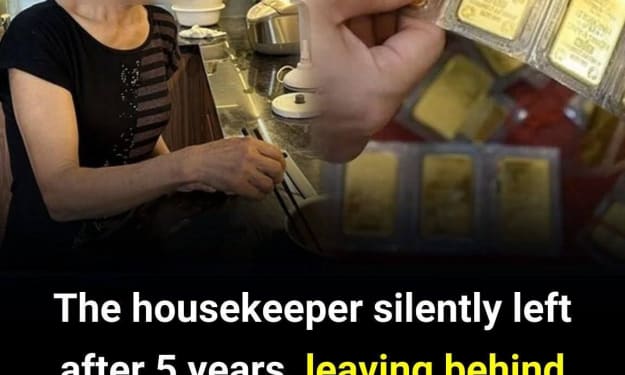
The Housekeeper Silently Left After 5 Years
When the Wilson family hired Maria as their live-in housekeeper, they never imagined how deeply she would impact their lives. Quiet, hardworking, and private, she maintained their home with care and dedication. She never shared details of her past, nor did she speak much about herself. Over five years, she became a trusted and comforting presence — until one morning, she was simply gone. There was no goodbye, no explanation. Her room was empty, perfectly clean, and her belongings vanished. All that remained was a small wooden box left on the top shelf of her closet. Inside were 30 gold bars — heavy, solid, and unquestionably real — and a folded note in elegant handwriting: "Forgive me, my son." Stunned, the Wilsons contacted the authorities. They feared the gold might be stolen, and the cryptic note raised more questions than it answered. The investigation that followed unraveled a story no one could have expected. The Secret Life of Maria Her fingerprints led to a match with someone named Elena Morales, a woman who had vanished from Argentina two decades earlier. According to international records, Elena was once married to a powerful banker involved in a scandal during the economic collapse of the early 2000s. Millions in gold reserves disappeared. After her husband died in a mysterious car crash, Elena was suspected of fleeing the country with the stolen fortune. Interpol had pursued her for years, but she seemed to disappear from the face of the earth. That is, until she resurfaced as “Maria,” quietly living in Oregon, cleaning floors and folding laundry in a stranger’s home. She had lived simply. No car. No bank accounts. No family visits. She rarely even spoke of her past. To the Wilsons, she was kind, humble, and meticulous. They had no idea they were living with someone who had once made international headlines. A Mother’s Hidden Grief The note — “Forgive me, my son” — opened the next chapter in the mystery. Investigators traced her past and discovered that Elena had a child: Diego Morales, born in 1989. After Elena fled Argentina, her son was placed into foster care and later adopted in the United States. Now an auto mechanic in Phoenix, Arizona, Diego had no memory of his birth mother and no knowledge of her past. When he was shown the note and the items Maria left behind, he was speechless. He had never imagined he would be connected to something like this. A DNA test confirmed it: Maria, the housekeeper who vanished without a word, was indeed his biological mother. He was given the option to claim the gold. After a lengthy legal review, authorities concluded the gold could not be traced to a specific theft, and no active warrants remained. It was his if he chose to accept it. But Diego hesitated. “This isn’t just money,” he said in an interview. “It’s the life story of someone I never got to know. A woman who lived in hiding. Who left behind everything. And who, even in the end, thought of me.” Why She Vanished Neighbors and the Wilson family shared their memories of Maria with Diego. They described a woman who was kind but distant, loving but guarded. She spent evenings listening to old tango music in Spanish. Sometimes she watched children play in the park with a faraway look in her eyes. And once, she was seen crying while holding an old, worn photograph — likely of Diego. Her sudden disappearance wasn’t out of fear or guilt. It was a carefully timed exit. She had waited, perhaps, until she felt safe that the truth could be revealed. The gold was never meant for the Wilsons — it was a final, silent gift for the son she had never stopped loving. Diego’s Choice Diego chose to accept the gold, but not for luxury or personal gain. Instead, he established a charitable foundation in Elena Morales’ name. The organization now supports children in foster care and immigrant families struggling to start over. He wanted the fortune to become a force for good — to bring light from the shadows of his mother’s past. He also returned to Oregon to meet the Wilsons. They shared stories about her kindness, her quiet sense of humor, and the way she had touched their lives. Together, they planted a small tree in the backyard — a living tribute to the woman they knew as Maria. Beneath it, they buried the wooden box and a copy of the note. "Forgive me, my son." Diego carries the original in his wallet to this day. For him, it’s more than an apology. It’s a message from a mother who never forgot him. A woman who lived two lives — one of scandal and the other of silent redemption. And though she left without a word, her final act spoke louder than anything she ever said aloud. Sometimes forgiveness comes wrapped in mystery. Sometimes love leaves gold in its place.
By DigitalAddiabout a year ago in Families
Invisible in Plain Sight: Living as the “Third Wheel” in Your Own Family
There’s a unique kind of loneliness that doesn’t come from being alone, but from being surrounded by people who are supposed to know you—and still feeling completely unseen. Many people talk about being the third wheel in friendships or relationships, but what’s hardly ever spoken about is what it feels like to be the third wheel in your own family. To be the one left out of conversations, overlooked at gatherings, and remembered only when someone else reminds them you exist. From a young age, the quiet child gets labeled—“the shy one,” “the sensitive one,” “the one who keeps to herself.” What seems harmless at first becomes a permanent definition. You’re never really asked how you feel, never drawn out with warmth or curiosity. Over time, your silence gets mistaken for lack of interest, your sensitivity for weakness, and your presence becomes more and more forgettable. You watch your siblings or cousins bond effortlessly, laugh at jokes you weren’t around to hear, make plans in group chats you’re barely part of. It’s not that you were pushed away. It’s worse: you were never quite pulled in to begin with. And when the family finally remembers you, it’s often last minute. An invite sent out of obligation, or only because someone asked, “Wait—did you tell her?” The truth is, your absence is barely felt. Whether you’re there or not doesn’t change anything for them. You blend into the background, an extra piece on the puzzle that no one quite knows where to place. You start to question yourself. Is it my fault? Am I too quiet, too different, too boring to matter? Maybe if I were louder, more social, more like them, they’d care more. But why does the burden fall on you to shape-shift? You’re the child here. Shouldn’t the effort come from them—to reach in, to try, to care? Why has your quiet nature become a justification for being ignored? What’s even more painful is when your own mother becomes part of the pattern. Instead of defending you, she joins the laughter at your expense. Instead of noticing your pain, she minimizes it, brushes it aside, or mocks it altogether—maybe trying to fit in herself, even if it means sacrificing your dignity in the process. The one person who should be your safe space feels like another person you have to guard yourself from. You learn to keep things to yourself, not because you want to, but because you know your vulnerability will spread like wildfire, misused and misunderstood. Sometimes, your thoughts wander to the family you never met. The paternal side you were never introduced to. You wonder—what if they would have accepted me? Understood me? But then you remember: they never came looking either. You were too quiet, too tucked away, too easy to overlook. And then, beyond family, beyond gatherings and group chats, comes a darker thought—What if I’m truly the problem? What if there’s something so deeply wrong with me that even God decided to create a person no one would want? That question cuts deeper than anything others could ever say. It keeps you awake at night. It makes you feel like maybe you were just born to be the unwanted one, the outsider in every room. Because what do you do when you’re not only excluded by your family, but you have no one else either? No friends. No safe place. No one you can call or lean on. Life begins to feel like a cruel joke—everyone else gets their people, and you get silence. Everyone else has support, and you have survival. You look around and wonder how everyone is doing this life thing so easily. How they smile, laugh, post pictures with “their people.” How they make it all look so simple when you’re out here just trying to make it through another day without breaking. How do you do life when you’re completely alone? No one teaches you that. No one gives you a manual on how to carry this kind of loneliness without letting it destroy you. Still, somehow, you do wake up the next day. You breathe, even when it feels heavy. You keep going, even when you don’t know why. And maybe that’s where your strength is—unseen but unshaken. Not because you feel strong, but because you’ve had no choice but to keep moving forward when no one was walking beside you. You don’t have to become someone else to deserve inclusion. You don’t have to force yourself to laugh louder or talk more just to be worthy of a seat at the table. The problem was never your quiet—it was their unwillingness to listen. If you’re reading this and it feels like your story, just know: you’re not alone. Being overlooked in your own family can feel like the deepest betrayal, but it doesn’t define your worth. You are not invisible. You are not an afterthought. You are not a mistake. And even if no one else has shown you, your existence matters. You matter—not because of how loud you are, but because of who you are. And someday, if not already, you’ll find people who see you fully, even in your quietest moments.
By Sanelisiwe Adamabout a year ago in Families
My Friend Ghosted Me After My Mother Died
A few years ago, I met someone at a writing retreat whom I thought would be in my life forever. This might sound a tad over-the-top, but when you have a connection with someone, you hope it never goes away. And for a period there, it didn’t.
By Carol Saint Martinabout a year ago in Families