grief
Losing a family member is one of the most traumatic life events; Families must support one another to endure the five stages of grief and get through it together.
She Told Me to Leave the Light On, So I Did
My wife, Elena, always insisted I leave the hallway light on. Every night. Without fail. Even after we moved into our new house—the one with the flickering bulb and the narrow staircase she hated—she’d whisper just before bed, “Leave the light on.” At first, I thought it was one of those harmless rituals. Like how she’d hum while brushing her hair or tap her foot while stirring her tea. But over time, it became more than a request. It felt like a warning. --- We were married for eleven years. Not long enough, if you ask me. Elena wasn’t the kind of woman who made grand declarations. She didn’t like flowers. She hated surprises. But she loved with her whole being—in silent glances, quiet dinners, and worn-out sweaters she folded just right. She was the calm to my storm, the voice that pulled me back when I got lost in deadlines and frustration. The light in our home was never from a bulb. It was her. --- The hallway light was a small thing. Barely 40 watts. It buzzed sometimes. But I obeyed. Every night, I flicked it on. And she smiled—like I’d just built her a castle. When I asked once, jokingly, “What’s with the light obsession?” She turned serious. “Darkness creeps in fastest when you think it can’t.” Then she turned away and didn’t say anything else. I never asked again. --- When the diagnosis came, it shattered me. Ovarian cancer. Stage III. She handled it like she handled everything: with quiet grace. “You’ll leave the light on, won’t you?” she asked me the night after the hospital visit. I nodded. I couldn't speak. --- The months that followed were filled with hospital rooms, beeping machines, too many pills, and too few answers. But every night—home or not—I left that light on. Sometimes the nurses would turn it off when I fell asleep in the corner of her hospital room. She would wake me up just to ask, “Is the hallway light on?” If I said no, she would insist. If I said yes, she would finally close her eyes. I didn’t understand it. But I honored it. --- She died on a Tuesday. It was raining. That morning, she asked me to tell her a story. I told her about the time we got lost in Rome and ended up at that tiny bakery with the world's worst coffee and the best lemon cake. She smiled and whispered, “I remember the lemon.” Those were her last words. --- The house became something else after that. Too still. Too quiet. I kept the hallway light on. Out of habit. Out of guilt. Out of love. Maybe all three. --- It was about six weeks later when the hallway light began acting strange. It would flicker exactly at 11:45 PM. Every single night. At first, I thought it was faulty wiring. I called an electrician. He said it was fine. Changed the bulb anyway. Still flickered. Always at 11:45. I even changed sockets. New lamp. New timer. Nothing worked. Every night, without fail, it blinked three times at 11:45. And stopped. I didn't tell anyone. It felt… private. Like a code only she and I knew. --- One night, overwhelmed by grief and curiosity, I whispered aloud, “Elena, is that you?” The light flickered. Four times. That wasn’t part of the pattern. My chest tightened. I didn’t know whether to laugh, cry, or run. I whispered again. “Do you want me to keep it on?” This time, it stayed solid. No flicker. Just warm, quiet light. --- I began talking to the hallway. Every night. Sometimes I told her about my day. About the soup I burned or the neighbor’s cat that refused to leave our garden. Sometimes I cried. Sometimes I just sat in silence, staring at the glow on the wall. It became… comforting. The light became her. --- Then one evening, I came home late. Tired. Numb. The kind of day where even memory feels like a burden. I forgot the light. I fell asleep on the couch. At 11:45, I was jolted awake by the sound of something falling. The hallway lamp had crashed to the floor. The bulb, unbroken, still glowing. Three flickers. Then nothing. Just darkness. --- I got the message. The next morning, I bought a new lamp. A brighter one. Placed it gently on the same shelf. That night, I turned it on. It never flickered again. --- It’s been two years now. There’s someone new in my life. Her name is Mara. She’s kind. Patient. She doesn’t ask questions about the hallway light. But one evening, after a quiet dinner, she looked at the lamp and said, “It’s strange, but that light makes me feel… safe.” I smiled. “It’s meant to.”
By Muhammad Usamaabout a year ago in Families
The Chair by the Window
When I was a child, there was a chair by the window in my grandparents' house. It was old, wooden, and always creaked when you sat in it—no matter how gently you tried. But it wasn’t just a chair. It was his chair. My grandfather, a man of few words and many habits, claimed that chair like a king on his throne. Every evening at exactly 6:15 PM, he would settle into it with a warm cup of chai in his hand and a woolen shawl around his shoulders—whether it was July or January. He’d sit there quietly, watching the street outside, nodding to passing neighbors and occasionally tossing breadcrumbs to the sparrows that gathered on the sill. Sometimes, I’d sit beside him on the floor, leaning against his leg while he sipped slowly. He never said much, but once in a while, he’d reach down and run his hand gently through my hair. It was the kind of love that didn’t need words. --- As I grew older, the world moved faster and I moved with it. University, a job in another city, deadlines, emails, calls—I forgot how to sit still, how to just be quiet like he was. I called home every now and then. Mom always said, “Your Dada’s the same—chai, chair, and silence.” When I’d visit on holidays, he’d still be there at the window. The same cup, the same time. Only now, the shawl was heavier, the hand that stroked my hair thinner. But the eyes… still kind. --- On my last visit before everything changed, I arrived unannounced. It was 6:10 PM. I peeked through the window like I used to as a child. And there he was. Except this time, he looked different. He was staring into his tea. The sparrows chirped nearby, but he didn’t move. I walked in. He looked up and smiled faintly. “Back early,” he said. I nodded. “Thought I’d surprise you.” He gestured toward the floor. I sat. Silence wrapped around us like a familiar blanket. After a moment, he spoke—quietly, like a secret slipping from his lips. “You know, I watch the sun fall in the same spot every day. But yesterday… it looked different. Like it was saying goodbye.” I looked up at him, confused. He smiled, his eyes moist. “You won’t understand until much later,” he said, “but sunsets... they don’t repeat. They just look similar.” --- A week later, I got the call. Heart failure. Peaceful. In his sleep. They said he still had the shawl wrapped around him. The teacup was on the bedside table. But the chair… it was empty. --- After the funeral, I stayed behind to help Mom sort through his things. I kept returning to the chair. I don’t know why. Something about it felt like a memory I didn’t want to forget. The third day after his burial, while cleaning out a drawer in his old writing desk, I found a letter. Folded neatly. Yellowed from time. It was addressed to me. --- > To my little sparrow, If you’re reading this, I’ve likely taken my last sunset walk. I don’t have great advice, and I’ve never believed in long speeches. But I wanted you to know… the chair by the window wasn’t just where I watched the world go by. It was where I watched you grow. From crawling to talking, from breaking windows with cricket balls to breaking your curfew. I sat there quietly, and I saw it all. That chair held all my pride, all my hopes, and more than anything, my love for you. Don’t fill it with sorrow. Sit in it. Drink your tea. Talk to the sparrows. And when the sunset looks a little different one day, know that it’s me—waving from somewhere you can’t see yet. Love always, Dada --- I didn’t cry. I sat in his chair instead. And for the first time in years, I did nothing. Just watched the street. Listened to the sparrows. And waited for the sun to say something to me. It didn’t. But I knew he was there.
By Muhammad Usamaabout a year ago in Families
Dancing Queen
Elina had never met her older sister, Zareen, but her presence filled every room in their house. Photographs on the mantle, glittery ballet shoes hanging from a hook in the hallway, and a dusty glass cabinet filled with golden medals and faded competition ribbons. Zareen was the family’s star graceful, radiant, and full of promise — until leukemia took her away just weeks before her 10th birthday. Elina, born a year later, often felt like a shadow trying to step into sunlight that would never be hers.
By Musawir Shahabout a year ago in Families
She Lost Her Memory and Forgot Her Husband — Then Fell in Love With Him All Over Again. AI-Generated.
When love is true, it finds its way — even when memory fades. This was the extraordinary reality for a Canadian couple whose love story defied the odds, transcending time, memory loss, and unimaginable hardship. After a brain injury wiped away every memory, including her marriage, a young woman not only learned to live again but also, miraculously, fell in love with her husband a second time. Their story is not just romantic — it’s deeply human. A tale of resilience, devotion, and rediscovery, proving that sometimes, love doesn’t just survive — it begins again. A Normal Day That Changed Everything The couple had been happily married, living a peaceful life filled with ordinary joys and quiet moments. But everything changed when the woman — vibrant, young, and full of promise — suffered a traumatic brain injury. What followed was a devastating blow: she lost all recollection of her past, including her own wedding, her relationship, and even her husband's face. To her, he became a stranger. The memories they had built together — vacations, laughter, late-night talks, small fights and big milestones — were completely erased. The Heartbreak of Becoming a Stranger For her husband, the heartbreak was immeasurable. Imagine waking up every day beside the person you love, only to see confusion in their eyes — the kind reserved for strangers, not soulmates. And yet, he never gave up. Despite the pain of being forgotten, he chose to stay by her side. He helped her through therapy, answered the same questions over and over, and gently retold the story of how they met, how they fell in love, and how they promised forever. He did not rush her to remember. He simply remained, with patience as his strongest expression of love. Rebuilding a Relationship From Scratch As time passed, she began to notice the man who never left. Though her memory didn’t return, something else began to grow — a new curiosity, a new bond. His kindness, humor, and unwavering support started stirring feelings she couldn’t explain. He wasn’t familiar, but he made her feel safe. Her heart, though clouded by confusion, was still capable of recognizing warmth. Bit by bit, the two began spending more time together. It was almost like dating again — except this time, only one of them remembered the past. For him, every moment was a second version of something he cherished. For her, it was all brand new. A New Beginning in the Same Love Story Eventually, the inevitable happened — she fell in love with him all over again. She found herself looking forward to his presence, missing him when he was away, and laughing at his old jokes, which were now new to her. And then came the moment that made their story unforgettable. Despite not recalling their original wedding, she proposed the idea of marrying him — again. She wanted to celebrate this newfound love, this fresh beginning, and make her own choice to commit, independent of the lost memories. The couple planned a second wedding, surrounded by family and friends, many of whom had also witnessed the first. There wasn’t a dry eye in the room as the bride, radiant and fully present, looked into the eyes of the man she had fallen for twice. A Story That Captured Hearts Around the World Their story quickly spread, touching people across the globe. It was a reminder that love isn’t just about memories — it’s about showing up, again and again, even when things fall apart. It’s about believing in connection, even when logic says it’s lost. The couple became symbols of perseverance and hope, showing that love, when nurtured with patience and care, can bloom again — even in the most unlikely soil. Science Behind the Miracle From a neurological perspective, memory loss due to traumatic brain injury can often erase specific people and events. But emotions are stored differently in the brain. Even without factual memory, the emotional imprint of love, comfort, or trust can remain or be rebuilt. Doctors say that her case isn’t common — it’s extraordinary. But what made it truly remarkable was not just biology, but the emotional journey. Her husband’s patience created a space where trust could form anew, allowing love to blossom once more, entirely on its own terms. Conclusion: Love Isn’t Always Remembered — Sometimes, It’s Reborn This Canadian couple’s story reminds us that the essence of love isn’t confined to our memories. Sometimes it lives in the small gestures, the consistent presence, and the courage to begin again. To lose everything, including love — and then find it again in the same person — is rare. But in this story, that rarity became reality. She didn’t remember their past, but she chose him again for the future. And perhaps, that’s the most powerful memory of all.
By DigitalAddiabout a year ago in Families
The Eldest. AI-Generated.
In many Asian families, there is a quiet, unspoken truth: the eldest child does not get to be tired. They do not get to complain, break down, or fall apart. They are the torchbearers, expected to be strong, responsible, and endlessly self-sacrificing.
By Arun Cleetusabout a year ago in Families
The Day I Let Go of My Hero
I always believed that love stories end in togetherness. But some of the most powerful ones end in goodbye. His name was Nunez. I met him during my final year of school — a quiet boy with kind eyes and a smile that rarely reached his lips. He wasn’t the loudest in the room, nor the most noticed. But when I first saw him, something in my heart whispered, He’s different. We sat two rows apart in class. At first, we didn’t talk. I’d see him scribble poems in the margins of his notebook. They were beautiful — raw and honest, and often sad. I was drawn to that sadness. One day, I gathered the courage to tell him I liked his writing. He looked up, surprised. Then he smiled, softly. “Thank you,” he said. “I didn’t think anyone noticed.” From that moment, a bond began to form. It wasn’t loud or sudden. It grew like rain soaking into dry soil — slowly, deeply, quietly. Nunez became my best friend. We talked about everything — books, fears, dreams, the weight of expectations. He shared how he lost his father young and how his mother worked two jobs to raise him. He said he never wanted to be a burden to anyone. I told him how I always felt invisible in a house full of noise. He listened like no one ever had — like my voice mattered. We never said “I love you.” Not once. But our silences said it all. He would wait at the school gate for me every morning. He brought me warm tea during exams. He noticed when I changed my hairstyle. He remembered the date my cat passed away. He wasn’t just a boy I liked — he became my safe place. But love, I’ve learned, doesn’t always protect us from life. One day, Nunez stopped waiting at the gate. He stopped replying to my messages. The boy who was once a constant in my world became a ghost. I panicked. I called. I waited. I cried. A week later, he finally came to see me — thinner, paler, his eyes darker. “I got accepted,” he said. “Accepted?” “To the Air Force Academy,” he smiled faintly. “I leave next week.” My heart sank. He had never told me he applied. Not once. Maybe because he didn’t want me to hope. Or maybe… he didn’t want me to hurt. “I didn’t tell you,” he continued, “because I knew you’d ask me to stay.” I stood frozen. Would I have? Yes. Without a doubt. But I didn’t say that. Instead, I whispered, “I’m proud of you.” He looked at me, and for the first time, I saw tears in his eyes. “I don’t want to go without saying goodbye,” he said. “Then don’t go,” I wanted to scream. But my lips betrayed me. “Goodbye,” I whispered. That was the day I let go of my hero. I watched him walk away, his figure slowly fading under the sunset sky, carrying dreams bigger than my heart could hold. For months after he left, I replayed every memory. Every laugh, every walk home, every unspoken “I love you.” Some nights, I’d lie in bed, wondering if he thought of me. If he missed the girl who believed in his poetry, who saw him before the uniform and the medals. He sent me one letter. “Dear Umme,” it read, “I carry you with me — in the quiet moments between duty and sleep. You are the calm I return to in my mind. If this life were kinder, I would’ve stayed. But I hope one day, we’ll meet as people who made it through, who chased their callings… even if it meant letting go of love. — Nunez.” I cried until the ink blurred. But that letter gave me closure. Years have passed since then. Sometimes, I still dream of him — not as the boy I loved, but as the man I let go. Love taught me many things. That it’s not always about holding on. Sometimes, it’s about loving someone enough to watch them fly. He was my hero — not because he saved me, but because he gave me the courage to save myself. And though he’s gone, his memory lives in every poem I write, every quiet moment I carry with grace. This isn’t a story of heartbreak. It’s a story of love — deep, silent, and strong enough to survive goodbye. Because some heroes aren’t meant to stay. Some just pass through… to remind us what love should feel like.
By Hamid khanabout a year ago in Families
SUNDAY BEST PART II. Content Warning.
Sunday Best Part II By: T.D Carter As I sat there next to Aunt Mae, my feet swung back and forth in ankle lace ruffle white socks, the glossy black patent leather of my Mary Jane shoes catching the dappled sunlight that filtered through the stained-glass windows. I glanced up at her—she was transfixed, her gaze locked on the pulpit as the choir filed in, their robes a river of color and movement. Aunt Mae’s red and black dress hugged her curves with the confidence of a racecar hugging every twist and turn on a well-worn track. Her skin, luminous and light, whispered of her Cherokee grandmother’s legacy, and her hair—inky black, coiled in generous curls—framed her face like a crown. She moved with a regal grace, her every gesture dignified, as if she carried the weight of our family’s name on her shoulders. When Aunt Mae entered a room, conversations paused, heads turned, and admiration lingered in the air like perfume.
By T.D.Carterabout a year ago in Families
The Generations
Leo, a chef by trade but a wanderer by nature, found himself standing in his grandmother's quiet kitchen, the scent of cinnamon and old wood still clinging to the air. Nana Elena, a woman whose love was measured in spoonful and whose wisdom was baked into every crumb, had passed away, leaving behind not jewels or grand estates, but a battered, wooden recipe box. It was a simple thing, adorned with faded hand-painted roses, yet Leo knew it held more value than any treasure.
By Momin Shahabout a year ago in Families
The Quilt
Eliza always felt a pang of nostalgia whenever she looked at the old, faded quilt draped over the armchair in her living room. It wasn't particularly beautiful, a patchwork of mismatched fabrics and uneven stitches, but it was a relic of her childhood, a tangible link to the sprawling, boisterous family gatherings that now existed only in her memory. Her grandmother, Nana Rose, had started it, adding a new square for every significant family event – a birth, a wedding, a graduation. But after Nana Rose passed, the quilt remained unfinished, a silent testament to a family that had slowly drifted apart.
By Momin Shahabout a year ago in Families
The Swing Still Moves
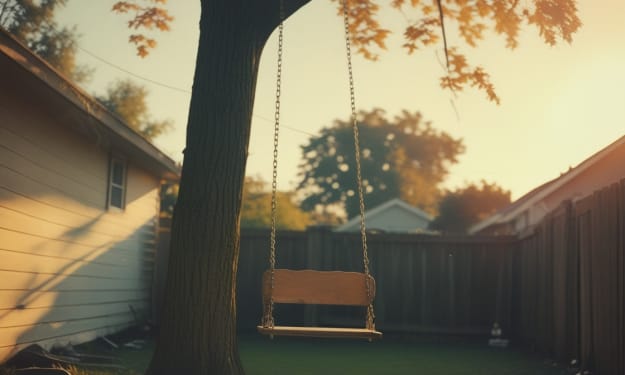
We never took the swing down. Even after three years, it still hangs quietly in the backyard, suspended between the thick arms of our old maple tree. Its ropes are faded now, the seat sun-bleached and cracking at the edges, but somehow it keeps holding on — just like us. It creaks in the breeze some mornings, as if moved not by wind but by memory.
By Hamid khanabout a year ago in Families