children
Children: Our most valuable natural resource.
Her mother's Enemy . AI-Generated.
Chika had never believed in love at first sight until she met Raymond. They bumped into each other at a book launch in Enugu. He was confident, eloquent, and surprisingly humble for someone who came from a wealthy family. Chika was a final-year literature student, living modestly with her widowed mother, Mma Ngozi. Raymond was pursuing his MBA and had just returned from London. They had nothing in common on the surface, yet their souls found connection over poetry and palm wine. He loved how grounded she was. She adored his discipline and vision. Within three months, they were inseparable. But they kept their relationship quiet. Chika wasn’t ready to tell her mother just yet. Mma Ngozi was fiercely protective and often reminded Chika never to "trust the children of men who wear polished shoes and speak sweet English." Eventually, Chika insisted they take the next step. She invited Raymond home for Sunday lunch. As Raymond stepped into the compound, Mma Ngozi froze at the sight of him. Her hands trembled. Chika was confused. Raymond respectfully greeted her, but Mma Ngozi ignored him. She looked at Chika and said coldly, “That boy cannot step inside my house.” After much begging and pleading, the truth came out: Raymond’s father was Chief Damian Obasi—a man who, decades ago, had falsely accused Mma Ngozi of theft when she worked as a secretary in his company. She was jailed for two years. Her fiancé left her. Her life was ruined. Chief Obasi rose in wealth and fame. Mma Ngozi fell into poverty and shame. Raymond was shocked. He had never heard that story. His father, he said, was “a man of integrity.” Chika was torn. Could she continue to love the son of her mother’s destroyer? That night, Raymond went home and confronted his father. At first, Chief Obasi denied it. But when pressed, he finally admitted: “Yes, I did it. She knew too much. She caught me diverting company funds. It was her word against mine. I protected myself. That was business.” Raymond couldn’t believe it. His father showed no remorse. Meanwhile, Mma Ngozi begged Chika to end the relationship. “Love is not stronger than betrayal,” she warned. “If you marry him, you marry my pain.” But Chika loved Raymond—and she had her own mind. The Truth Runs Deeper One week later, Chika received a call from Raymond. “I need you to meet someone,” he said. They met at a quiet café outside town. To Chika’s surprise, Raymond arrived with a woman—his mother. Not Chief Obasi’s wife. The woman introduced herself as Grace. Raymond’s biological mother. She explained she had been Chief Obasi’s secretary... the very same time Mma Ngozi worked there. Grace revealed that she and Mma Ngozi were close friends. When Ngozi was accused, Grace tried to testify but was threatened. Out of fear and silence, she left the country. She later gave birth to Raymond in the UK—after Chief Obasi raped her during that same period. Raymond was not raised by Chief Obasi. He only reconnected with his father in adulthood after returning to Nigeria. Chika broke down in tears. Her mother’s enemy had never truly been Raymond. The real enemy was silence and shame passed through generations. She begged her mother to meet Grace—and they did. For the first time in 30 years, Mma Ngozi found closure. Two women, both victims of the same man, finally stood side by side as survivors. Chika and Raymond decided to marry—but not in grandeur. They held a small village ceremony, with both mothers present, standing united. Chief Obasi was not invited. When he heard of the wedding, he tried to send a gift. Chika sent it back… unopened. Love doesn’t conquer all—but truth, when faced with courage, can heal even the deepest generational wounds.
By Muhammad sufyanabout a year ago in Families
The Farmhouse Pact
The Farmhouse Pact The sun hung low over the rolling fields of Ruth’s farm, painting the sky orange. At 49, Ruth Miller had spent her life on this land, her hands rough from years of tending crops and livestock. The farmhouse, with its creaky porch and peeling paint, was all she had left of her parents. But her two grown children, Tom and Sarah, wanted to sell it. They saw dollar signs where Ruth saw memories. The farm was bleeding money, and they weren’t wrong to worry. Still, Ruth couldn’t let go.
By Shakespeare Jrabout a year ago in Families
My Mother’s Hands Still Cook in My Kitchen
My Mother’s Hands Still Cook in My Kitchen The first time I tried to replicate my mother’s chicken curry after her passing, I stood in the kitchen staring at the spices like they were foreign objects. It wasn’t the complexity of the dish that made my hands tremble—it was the silence. The silence where her voice should have been, guiding me. No sound of bangles clinking as she stirred the pot, no gentle scolding when I added too much chili. Just me, a wooden spoon, and a memory that refused to sit still.
By Huzaifa Dzineabout a year ago in Families
The Day I Realized I Was Talking to My Kids Like a Boss, Not a Father
Be firm. Set boundaries. Maintain authority. Keep emotions in check. Lead by example, which apparently meant leading from a distance where vulnerability couldn't be mistaken for weakness.
By Allen Boothroydabout a year ago in Families
🐒 The Monkey and the Wise Elephant
Deep in the heart of the lush Emerald Forest, where sunlight filtered softly through thick green canopies and the air always smelled of moss and mangoes, lived a monkey named Miko. He was small, quick, and full of energy—and every creature in the forest knew his name. But not everyone said it with a smile. Miko was the kind of monkey who couldn’t help himself. He swung through the trees like lightning, told silly jokes to anyone who’d listen, and played endless pranks. Sometimes he tied vines to unsuspecting animals’ tails, hid fruits in the treetops just before someone reached them, or dropped nuts on the heads of sleepy boars napping in the afternoon sun. At first, the forest chuckled. Even the older animals thought he was harmless. “Just Miko being Miko,” they would say. But over time, the laughter began to fade. His tricks became tiring, and some animals stopped coming near him at all. One day, Miko stumbled upon something new—an old brass horn tucked between the roots of a banyan tree. It was dusty but intact. The moment he blew into it, the sound echoed so loudly across the forest that birds flew off in panic. Miko grinned. “This will be fun.” He tiptoed toward the riverbank, where Tara the elephant was drinking. She was the oldest and wisest creature in the forest—calm, strong, and deeply respected. Miko crouched behind the bushes, raised the horn, and blew with all his might. BWWWAAAANG The blast startled everyone. Tara reared up in alarm, trumpeting in fear. Her enormous feet thundered against the earth as birds scattered from the trees and squirrels dashed in every direction. In her panic, Tara accidentally stepped on a bush where a family of baby rabbits had been hiding. Thankfully, they escaped in time, but the fear in their little eyes was unforgettable. The forest went still. Every eye turned toward Miko, who peeked out from behind a tree, expecting giggles. There was none. “You could’ve hurt someone!” growled a tortoise who had toppled over in the confusion. “I—I didn’t mean to…” Miko stammered. Tara didn’t say a word. She turned silently and walked away, her heavy footsteps echoing with quiet disappointment. That silence struck Miko harder than any angry word. That night, Miko couldn’t sleep. The wind through the trees sounded sad. The horn, once so exciting, now felt cold in his hands. He realized that for all his fun, he had never once thought about how his actions made others feel. The next morning, he found Tara at the river again, gently helping a thirsty deer reach the water. “I’m sorry,” he whispered. Tara turned to him slowly. “Miko,” she said with softness and strength, “when you play, remember: laughter is only real if everyone is laughing.” Miko nodded, eyes lowered. “You are clever,” she added. “That’s a gift. But cleverness without care can become cruelty.” Miko sat beside her, listening more closely than he ever had before. From that day on, something in Miko changed—not his energy, not his mischief, but his purpose. He still swung from vines and danced in the trees, but now he used his tricks to help. He'd toss ripe fruit to hungry animals, use his horn to guide lost cubs home, or mimic a predator’s call to warn others of danger. His jokes made even the oldest owls laugh again. And when a rainstorm washed away a family of burrowing animals, it was Miko who climbed high to call for help. The forest slowly warmed to him again. Kavi the deer even laughed when Miko placed a flower crown on his head. “You’re still a rascal,” said the tortoise one day, “but now you’re our rascal.” And Tara? She smiled at him every time they crossed paths. Miko never stopped playing. But now, he played with heart. 🌿 Moral of the Story:
By Shoaib Afridiabout a year ago in Families
The Last Cup of Tea
The house hadn’t changed. The cracked veranda tiles still sighed under his feet, just as they did when he used to chase after the neighborhood kids. The faded wind chime still hung by the front door, though it no longer sang. Dust lay gently on the windows, as if time itself had exhaled and settled in. Aariz turned the key in the rusted lock. The door opened slowly, creaking like an old memory resurfacing. It had been four months since his mother passed away. He hadn’t come back since the funeral. Couldn’t. Everything in this home reeked of her – her scent, her scolding, her soft humming in the kitchen when she made her famous cardamom chai. Coming back felt like walking into a memory he wasn’t ready to relive. But the lawyer had called. The property needed to be emptied. Sold. It was time. He stepped inside, half expecting to hear her call out his name the way she always did: “Aariz beta, chai thandi ho jayegi!” But the only voice that greeted him was silence — heavy, solemn, and absolute. The living room was untouched. Her shawl still hung on the back of the armchair. Her reading glasses were resting on the open pages of a half-finished Urdu novel. A pair of her slippers peeked out from under the coffee table. Aariz sat down on the couch, closed his eyes, and for a brief moment, pretended she was in the kitchen — that at any second, the whistle of the kettle would sound, and she’d come in carrying a tray of tea and biscuits, smiling through her tired eyes. But there was no kettle. No tea. Just silence. He wandered into the kitchen. The same rusted stove. The same spice rack she refused to replace. A little chalkboard still hung by the fridge, with her last written note: “Aariz will come next week. Must buy his favorite cake.” His chest tightened. He remembered the last phone call — two days before she passed. "Are you eating properly?" "Yes, Ammi." "When are you visiting again?" "Soon, just finishing up work." "Don’t wait too long, beta. Mothers don’t live forever." She had laughed when she said that. He didn’t. She died of a silent heart attack two mornings later. Alone. In this house. With no one to hold her hand. He had arrived too late. The tears came uninvited, hot and bitter, as Aariz stood by the stove and imagined her standing there in her worn-out apron, stirring tea, tasting it with her pinky, then insisting it needed "just one more elaichi." He wiped his face and opened the cabinet. There, neatly arranged, were the teacups they always used. One of them had a tiny chip on the rim — his favorite. He pulled it out, along with her special tea tin. He made the tea slowly, deliberately. He boiled the milk, added sugar the way she did — not too much, just enough. Crushed the cardamom pods the way she taught him. Let it steep just a little longer for the stronger flavor. He poured it into both cups — hers and his. Then he sat across from her empty chair. For a while, he didn’t speak. He just sat there, the cup warming his hands, the steam rising slowly between them like an unfinished goodbye. Then softly, almost brokenly, he whispered: "I’m sorry, Ammi." "I should have come back sooner." "I thought there would be more time." The chair didn’t respond. But the house listened. And somehow, he felt she heard him. When he left later that evening, he didn’t take much — just her shawl, the tea tin, and the chipped teacup. He locked the house gently, like tucking a child into bed. As he walked away, he looked back one last time. The wind chime moved — just slightly — and this time, it rang. Epilogue: Grief doesn’t ask for permission. It arrives when you’re unready, and stays longer than you want. It isn’t loud or dramatic. Sometimes, grief is just a cold cup of tea on the table — untouched, but filled with memories.
By Ikram Ullahabout a year ago in Families
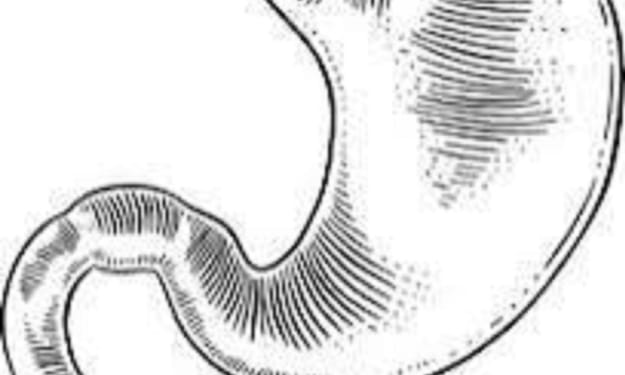
Stomach Disorders Caused by Food
Introduction Stomach disorders caused by food consumption are a common clinical presentation, affecting individuals of all ages. These disorders range from mild discomfort to severe, life-threatening conditions. Food-related stomach disorders may result from foodborne infections, intolerances, allergies, or toxic reactions. This report explores the etiology, pathophysiology, clinical manifestations, diagnosis, treatment, and prevention of food-induced stomach disorders.
By Ahmad shahabout a year ago in Families
Not Just a Game: How My Cooking App Helped Kids Find Their Voice
I didn’t plan to build a game. I planned to help a child feel brave. It started during a visit to my friend’s house. Her 8-year-old daughter was curled up with a tablet, fully immersed in a game. I watched quietly, expecting the usual: bright colors, fast taps, probably sugar-fueled characters yelling “Great job!” every few seconds.
By Alina Turlevskaabout a year ago in Families