children
Children: Our most valuable natural resource.
The Last Letter from Aleppo
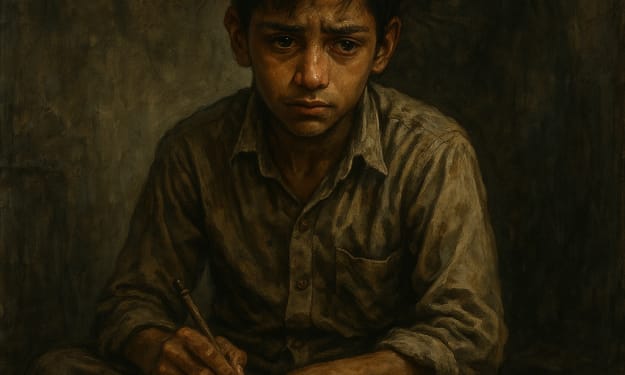
The nights in the camp were cold, not because of winter, but because of absence. Yaseen, twelve years old, sat by the torn window of the shelter, wrapping himself in a fading shawl that used to smell like his mother. Now, it smelled like dust and silence.
By Atif khurshaidabout a year ago in Families
The Last Letter
It was a cold December morning when Sarah opened the old wooden box she’d kept under her bed for years. Dust clung to the edges, and her hands trembled as she lifted the lid. Inside were memories she wasn’t sure she was ready to face — photographs, faded letters, and a tiny silver locket.
By Tariq jamilabout a year ago in Families
From Tears to Triumph: Imran Khan’s Journey from Struggle to Success
1. A Home Without Peace Imran Khan’s life started in chaos. His earliest memories were not of toys or laughter, but of his mother crying silently and his father shouting in anger. His father married a second wife when Imran was just two years old. After that, their home was no longer a home—it became a battlefield. His mother, once full of life, became a shadow of herself. She sat by the window for hours, lost in thought. His stepmother ruled the house and never missed a chance to remind Imran of his place. “You don’t belong here. You’re just a leftover from your mother’s fate.” Those words cut deeper than any wound. His father never stopped her. In fact, he acted as if Imran didn’t exist anymore. Imran learned to stay quiet, to listen more, and to speak less. He became a silent witness to daily arguments, fights, and endless emotional abuse. At night, he would lie on his thin mattress, staring at the ceiling fan, asking: “Why was I born into this mess?” But deep in his heart, he made a silent promise: “One day, I’ll create a life where no one will ever call me a burden again.” 2. Education in the Face of Hunger School became Imran’s only escape. But even that wasn’t simple. He walked barefoot to school every morning because he had no shoes. His uniform was stitched so many times that it looked more like a cloth patched together than a proper outfit. Still, he went every day. At school, he sat in the last bench, quietly absorbing every word. His classmates made fun of his torn clothes, but Imran didn’t care. His goal was clear: “I must change my fate.” At home, there was no place to study. His stepmother made sure the lights went out early, so Imran sat outside under a streetlamp, scribbling notes in his old, tattered notebook. There were days he studied with an empty stomach. His mother tried to save food for him, but often there was nothing left after his step-siblings ate. Yet, hunger could not defeat his determination. 3. Small Jobs, Big Lessons When school finished, Imran worked small jobs to support himself and his mother. He washed cars in the morning before class. In the evenings, he sold boiled eggs on the roadside. At night, he worked in a mechanic’s garage, wiping oil from tools and learning how to fix punctured tires. His hands were rough, his back hurt, but he never complained. Every rupee he earned went into two things: his mother’s medicines and his education. His friends bought new clothes and phones. Imran bought second-hand books. When other boys watched movies, Imran watched motivational videos on shopkeepers' old phones. He wasn’t just dreaming of success—he was building it, one small step at a time. 4. College and the Fire of Failure After school, Imran got admission to college. But he had no money to pay the fee. So, he sold his bicycle—the only gift his mother had given him. He worked in the day and studied at night, often sleeping just three or four hours. After graduation, he decided to start his own small business. He opened a stall selling mobile accessories in the local market. It wasn’t much, but to him, it was everything—a symbol of freedom from poverty. But fate tested him again. One winter night, a fire broke out in the market. His stall burned to ashes. Every cable, charger, and cover he had purchased with his life’s savings was gone. For three days, he didn’t speak to anyone. He sat silently in his room, staring at the wall, thinking: “Maybe life will never let me win.” But then he remembered his mother’s words: “Imran, never let pain stop you. Use it to grow.” And so, he stood up and started again. 5. Rising from Ashes Imran borrowed small amounts from friends. He started another business—this time more carefully, more wisely. He learned to deal with suppliers directly, cut costs, and use social media to market his products. Within three years, he expanded from a stall to a shop, and then from one shop to three. He started his own online store, selling accessories to customers all over the country. People who once mocked him now respected him. Shopkeepers who ignored him now asked for his advice. But Imran never became arrogant. He knew the taste of struggle too well to forget it. 6. Giving Back to the Community With success, Imran did not just think about himself. He started free classes for young boys who wanted to learn small business skills. He gave part-time jobs to orphans and street kids. He donated school bags and books to poor children. His employees were not just workers—they were students of his life lessons. Whenever he interviewed someone, he asked one simple question: “Are you ready to work hard, no matter how unfair life has been to you?” Because Imran knew: success isn’t about talent alone—it’s about never giving up. --- 7. Healing Old Wounds As Imran’s business grew, he still carried the scars of childhood. But he chose not to let those scars turn into hatred. He forgave his father. He built a new house for his mother—a house with peace, no arguments, and no insults. But he also helped his father and stepmother in their old age. When his father became sick, it was Imran who paid the hospital bills. When his stepmother needed surgery, Imran arranged it. People asked him: “How can you help those who treated you so badly?” Imran smiled and replied: “Because if I don’t break the cycle of cruelty, who will? I chose to be different.” 8. The Last Conversation One peaceful evening, sitting on the terrace of their new house, his mother held Imran’s hand. Her eyes were filled with tears—not of sadness this time, but of pride. “Imran, you changed your life and mine too. I always prayed for this day.” Imran’s voice cracked as he replied: “Ammi, all I ever wanted was to see you happy before life ends.” She smiled and closed her eyes, resting in peace. 9. A Legacy of Hope When Imran Khan passed away many years later, he left a note behind for the young boys of his town. It read: “If you are born in pain, don’t stay in pain. Use your struggle to build your life. And when you succeed, help others too. That’s how you make life beautiful.”
By Saad Iqbalabout a year ago in Families
Why You Keep Losing Yourself in Relationships (And How to Stop)
You Weren’t Always Like This Before the relationship, you had your own rhythm. Your favorite songs, your routines, your weird little joys. You spoke your mind. You made choices for yourself. You had opinions, preferences, boundaries. But somewhere along the way… you started to disappear. You stopped asking for what you needed. You tiptoed around conflict. You said “it’s fine” when it wasn’t. You gave more and more—and received less and less. Now, you don’t recognize yourself. Sound familiar? You’re Not Alone Losing yourself in love is a common and quiet ache—especially for empaths, people-pleasers, or those who grew up learning that love must be earned. The truth is, most of us were never taught how to be in relationships without abandoning ourselves. We were taught how to give… not how to stay whole. What It Looks Like to Lose Yourself Here’s what that self-abandonment can look like in everyday life: You agree just to avoid conflict You don’t speak up when something hurts you You apologize when you haven’t done anything wrong You dim your joy or interests to make someone else comfortable You feel anxious when you're not constantly giving You stop seeing your friends or forget what you even enjoy These are all signs that love has stopped being mutual—and started becoming one-sided. And the longer it goes on, the harder it becomes to come back to yourself. Where This Pattern Begins Losing yourself in relationships usually doesn’t start with romance. It starts with childhood. Maybe you were praised for being “easy,” “helpful,” or “selfless.” Maybe your emotions were too big for the adults around you. Maybe love was conditional—something you had to earn by being quiet, polite, or perfect. So you learned a dangerous lesson: If I want to be loved, I have to disappear a little. As an adult, this turns into chronic self-sacrifice. You feel safest when you’re giving, fixing, pleasing—even if it costs you everything. Love Shouldn’t Cost You Yourself Repeat this with me: Love should not require self-erasure. You don’t have to become smaller to be lovable. You don’t have to choose between connection and authenticity. You don’t have to pour from an empty cup to feel worthy. The right relationship doesn’t demand your silence. It welcomes your voice. The right partner doesn’t want a version of you—they want you. Whole. Imperfect. Fully present. How to Start Coming Back to Yourself Healing this pattern takes time. But every step matters. Here’s where you begin: 1. Reconnect With What You Love (Alone) Take yourself on solo dates. Revisit hobbies you abandoned. Make a playlist of songs you love. Reclaiming joy is a radical act of self-repair. 2. Practice Saying What You Want It might feel foreign or uncomfortable at first. That’s okay. Start small: “I’d rather eat at this place.” “I need some time to think.” “Actually, I don’t agree.” Your wants matter—even if someone else doesn’t like them. 3. Notice When You’re Shrinking Become aware of moments you censor yourself, apologize too much, or silence your truth. Ask: Am I making myself small right now to stay safe? Then breathe. And choose a different path, even if it’s just one word closer to honesty. 4. Get Comfortable Being Disliked This is huge. Not everyone will love your boundaries, your voice, or your wholeness. And that’s okay. Being disliked for who you truly are is better than being loved for a version of yourself that doesn’t exist. 5. Write a “Self-Contract” Literally write it down: “I will no longer abandon myself for anyone—not even someone I love.” “I am allowed to have needs, limits, and space.” “I deserve relationships that nourish, not deplete me.” Sign it. Keep it. Read it when you feel yourself slipping. When You Change, Your Relationships Will Too Some relationships will grow stronger when you reclaim your self-worth. Others will fall apart. Let them. The ones that only survive when you’re half-alive were never safe to begin with. You’re not selfish for choosing wholeness. You’re not cold for setting boundaries. You’re healthy. And the people who truly love you will celebrate your growth—not fear it. Final Thoughts: You Can Love Without Losing You You are allowed to love deeply without dissolving. You can give without draining yourself. You can be soft and strong. You don’t have to shrink to fit into someone else’s life. You don’t have to dim your light to make others comfortable. You don’t have to be anyone other than yourself to be worthy of love. Come home to yourself. You were never too much. You were just waiting to be seen by the right eyes—including your own.
By GoldenToneabout a year ago in Families
Stay Full and Energized All Day with These High-Fiber Snacks for Weight Loss
When it comes to managing your weight and maintaining steady energy levels throughout the day, snacking can either be your best friend or your worst enemy. Many of the convenient, processed snacks available on the market are packed with refined carbs and added sugars, offering a quick energy boost followed by a crash that leaves you hungrier than before. Instead of reaching for chips or candy bars, consider fiber-rich snacks that support weight loss, gut health, and long-lasting energy.
By Ahmad shahabout a year ago in Families
Why I Celebrate My Dog’s Gotcha Day More Than My Birthday
Most people circle their birthdays on the calendar, plan parties, or expect well-wishes and gifts. But to me, that date means less and less with each passing year. Instead, there’s another day I hold sacred—August 18—the day I brought home the dirty, wide-eyed mutt who changed my life.
By Echoes of Lifeabout a year ago in Families