

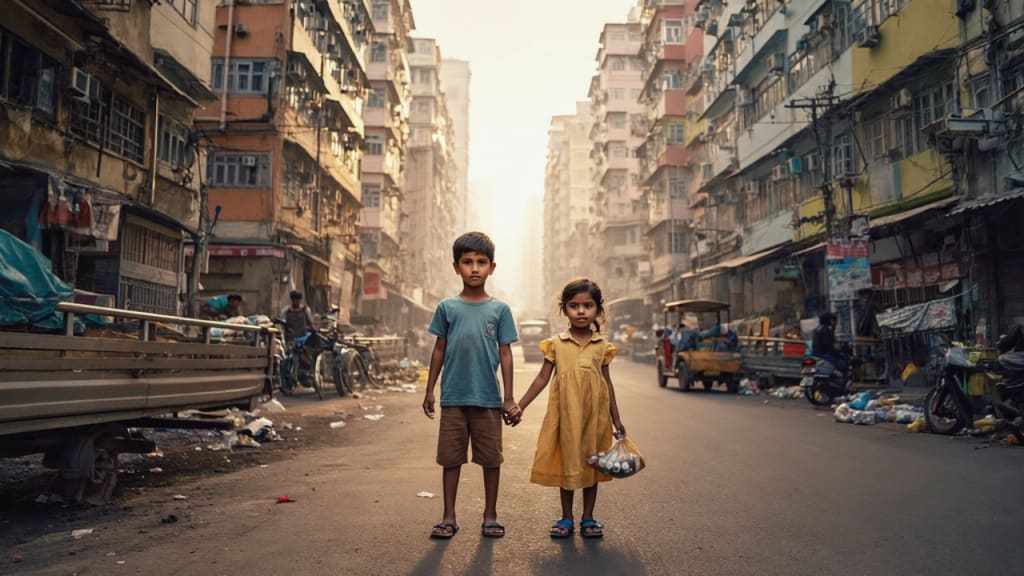
The sun had barely risen over the dusty streets of Karachi, and already the city buzzed with life. Rickshaws honked, vendors shouted their morning deals, and people rushed to work. But in one forgotten corner of the city, under a broken streetlight and beside a garbage bin, two children were already hard at work—collecting bottles. Ayaan, just 11 years old, and his little sister Zoya, only 7, were barefoot, with torn clothes and tired eyes. Life hadn’t been kind to them. Their father had passed away in a factory fire two years ago, and their mother had fallen ill soon after. With no income and no one to care for them, the siblings had taken up bottle collecting—roaming streets, digging through trash, and hoping to collect enough plastic and glass to sell for a few rupees. Each bottle was more than just trash—it was a chance to fill their empty stomachs. “Zoya, look! There’s one under that bench!” Ayaan pointed, rushing over. Zoya followed, her tiny hands gripping a torn sack twice her size. She smiled faintly as she dropped the bottle into it. “How many more, bhai?” she asked. “Maybe 20 more, then we can get roti,” Ayaan replied, trying to sound hopeful. But it was hard. Most people ignored them. Some yelled when they got close to their shops. Others just looked away. They worked silently, walking street after street. The heat grew stronger, and their legs ached. Zoya’s stomach growled loudly. Ayaan heard it. “Let’s rest under that tree,” he said gently. They sat on the pavement, sipping from a discarded juice box they’d found earlier. It was warm and nearly empty, but it helped a little. “Bhai, do you think Mama will get better?” Zoya asked, her eyes full of innocent hope. Ayaan paused. Their mother hadn’t moved much in days. Her cough was worse, and she hadn’t eaten properly. He didn’t know the answer, but he couldn’t crush her hope. “She will,” he said quietly. “As soon as we get some medicine.” After the short rest, they continued their search. At a park nearby, they found a few more bottles. Zoya smiled when a kind lady gave her a water bottle and some leftover paratha wrapped in paper. They both shared it quickly, feeling like it was a feast. By afternoon, their bag was half full. They knew it wouldn’t get them much—maybe 30 to 40 rupees—but it was better than nothing. As they walked past a school, Ayaan stared through the gate. Children their age were laughing in uniforms, holding books and lunchboxes. For a moment, he imagined himself and Zoya sitting inside, learning, smiling, full of dreams. But the honk of a car snapped him back to reality. “Come on, Zoya. Let’s finish fast.” By evening, they had collected enough. They walked to the old scrap dealer, who weighed the sack and handed them 45 rupees. Ayaan immediately bought two rotis and a little daal from a nearby stall. They sat in a quiet corner, eating with their hands, happy to have something warm. With the remaining money, Ayaan bought a strip of medicine for his mother, remembering what the shopkeeper had suggested last time. It wasn’t much, but he prayed it would help. They returned to their tiny room near the railway tracks. Their mother lay on a mat, her breathing weak. Ayaan helped her take the medicine and sat beside her, stroking her forehead. Zoya curled up beside them, her eyes already closing. As darkness fell over the city, the two siblings fell asleep—exhausted, but proud. They had fought hunger, fought despair, and survived another day. To the world, they were just two poor children picking bottles. But to each other, they were warriors—quietly battling life with courage, love, and hope.
About the Creator
Enjoyed the story? Support the Creator.
Subscribe for free to receive all their stories in your feed.
Comments
There are no comments for this story
Be the first to respond and start the conversation.