
I Couldn't Afford to Say Goodbye
He raised me like his own. When he lay dying in hospice, I had nothing but a few dollars and a fading hope. What happened next changed everything.
The phone rang while I was staring out the window. Plane tree leaves outside had turned yellow, and the wind sent them rustling down like letters full of old stories. I knew that call would come. When it did, the world went quiet. The nurse's voice was soft: "Your father's condition is not good. If you can come, please try."
He was not my biological father. When my mother died, I was eight. He was in his early thirties—the age when most men are building their own lives. He stayed. He pulled me out of grief, little by little: washing clothes, cooking meals, helping with homework. I never heard him complain. I never saw him frown at me. He said, "Your mother trusted me with you. I have to be worthy of that." He gave far more than any promise could hold.
Now he lay in a hospital bed a thousand miles away. Tubes in his body. Consciousness flickering. I sat in my tiny rental room and turned out every pocket. A few dozen dollars in change. A one-way bus ticket cost nearly a hundred. Round trip was impossible. I stared at the schedule on my phone—those numbers like a chasm between us.
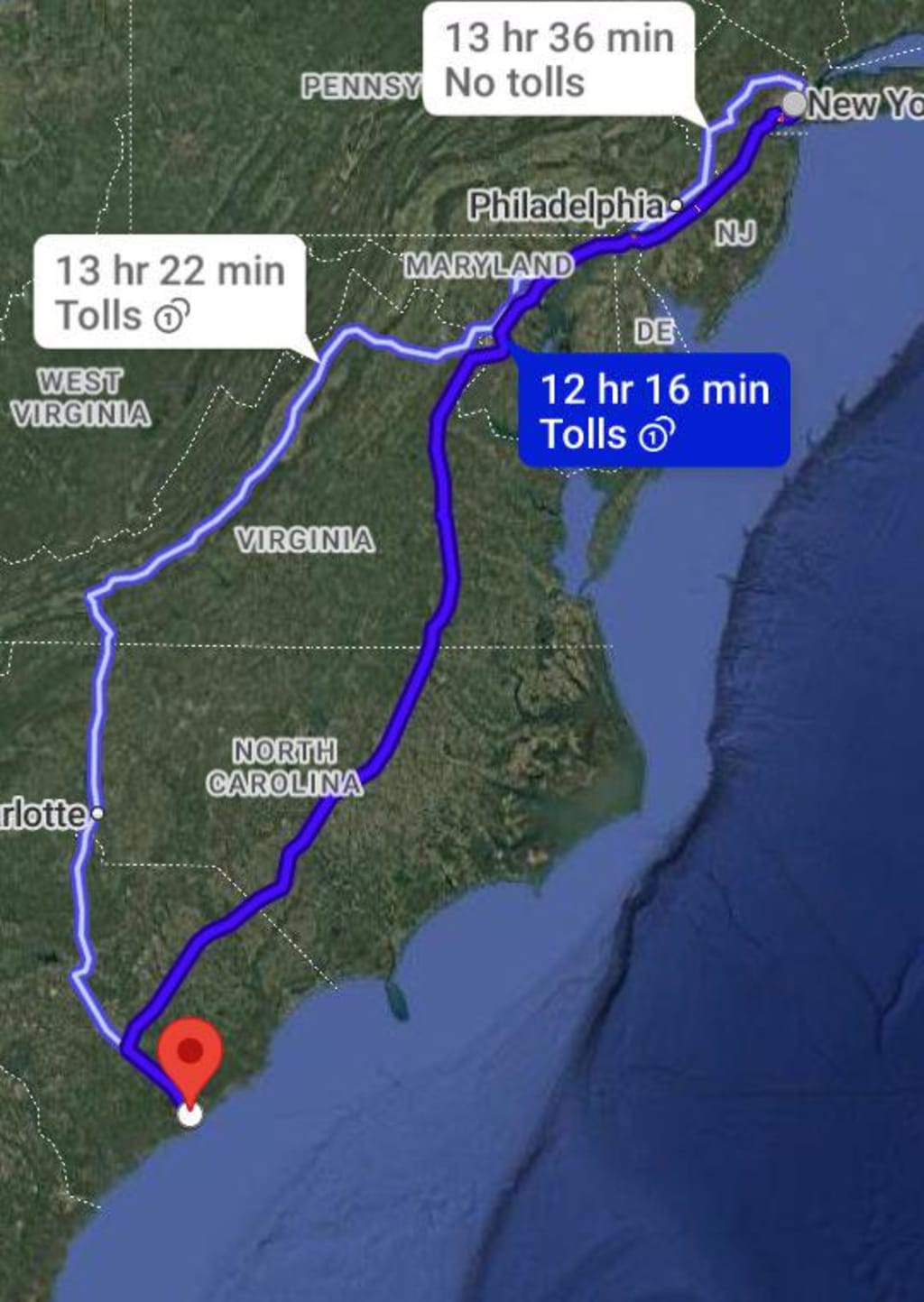
For a moment, I thought about flagging down a passing truck. Walking onto the highway. Thirteen hours across several states. I couldn't even tell which direction to go. I laughed at myself. A bitter laugh. Like swallowing an unripe persimmon.
Was I supposed to sit here, waiting for the phone to ring again?
I thought of his hands. Calloused. They had pressed cool towels to my forehead through fevers. They had tucked a bag of homemade beef jerky into my backpack before my first solo trip. They had trembled with pride at my college graduation, then only patted my shoulder. I wanted to hold that hand one last time. Tell him, "Dad, thank you. You are the best thing that ever happened to me." But I couldn't reach him.
I sat at my computer through the whole night. Typed every word in my heart into a small window. No one knew me there. No one owed me anything. I just wrote the truth: my helplessness, my guilt, my refusal to let go, that absurd thought of hitchhiking. I slumped over the desk and slept. Expected nothing.
The next morning, messages kept coming. Strangers from across the country. Some left only a few words: "Send me your payment info." Others: "I'll split the fare." One asked, "Would you take a plane? I'll buy the ticket." Another offered a hotel room near the hospital. A man who signed as "Old Zhou" wrote, "I couldn't make it back when my father passed. That thorn never left. Hold his hand for me." A young woman said, "I only have ten dollars. I hope it buys you coffee on the road." Message after message. I sat there, tears falling onto the keyboard. They didn't know my name. They didn't know my father's story. They couldn't verify if I was telling the truth. They chose to believe.
By noon, I had raised more than enough for the bus. Someone had already booked a plane ticket for the next morning. I called the nurses' station. Asked them to hold the phone to my father's ear. I steadied my voice: "Dad, I'll be there tomorrow. Wait for me one more day. I have so much I haven't told you."
The nurse told me later: when he heard my voice, the muscles around his eyes twitched. His heart monitor steadied. He was waiting. All his life, he had waited for me to grow up, to graduate, to find my own way. This time, he was waiting for my last goodbye.
The plane landed in light rain. I ran into the ward. He was so thin. Cheekbones sharp. Skin like old rice paper, thin and translucent. I took his hand. He opened his eyes slowly. The corner of his mouth twitched—almost a smile. I leaned down, pressed my forehead against the back of his hand, and let out everything I had stored for thirty years: "You are the best father I could have had. Closer than blood. You taught me responsibility. You taught me love. Don't worry. I'll live well. The way you always wanted." His fingertips pressed back, just once. Then, as if a weight had lifted, he slept.
That night, he passed. I didn't wail. I didn't break. I sat by the bed, holding his hand as it cooled. Outside, the rain stopped. A crack opened in the clouds. Moonlight fell on his face. He had heard me. He was at peace.
On the flight home, I read those messages again. I couldn't delete them. Those strangers would never know what they gave me. Not just a ticket. A last goodbye. A clean ending. I had not let him die alone. I had not let those words rot inside me.
Three years later, I donated that old coat to a charity shop. I left a note in the pocket: "This coat took me to the most important appointment of my life. I hope whoever wears it finds their way home." I left no name. Just like the strangers who helped me.
About the Creator
Jin
Writer of reamstories
https://reamstories.com/jin
Enjoyed the story? Support the Creator.
Subscribe for free to receive all their stories in your feed. You could also become a paid subscriber, letting them know you appreciate their work.
Comments
There are no comments for this story
Be the first to respond and start the conversation.