
Digital Ghosts: Why Do Social Media Platforms Let Deceased Profiles Live On?
Facebook memorialized accounts, digital legacy, Facebook profiles of deceased people, social media after death, digital grief support.

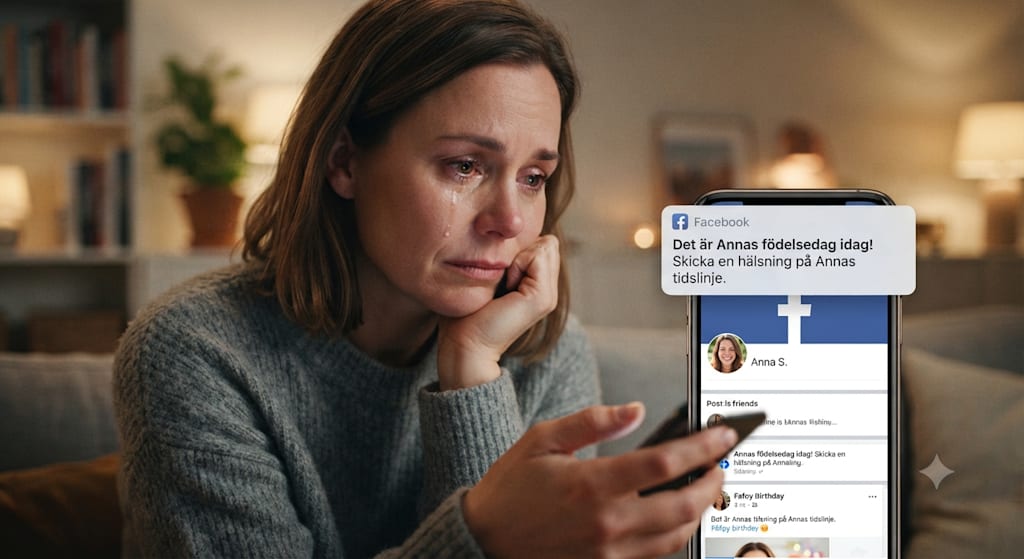
It always hits a little hard when that familiar notification pops up on your screen. A reminder that it is time to celebrate someone's birthday—except the person being celebrated is no longer with us. For anyone who has lost a friend, family member, or acquaintance, the automated reminders from social media platforms can feel like a sudden, painful gut punch.
In today's hyper-connected world, we all leave behind a digital footprint. But when life ends, the technology stays active. Why don't social media platforms automatically clear out accounts for people who have passed away, and how does it affect those left behind?
The Heavy Burden of "Ghost Profiles"
Encountering an active profile belonging to someone who has passed away evokes a complex mix of difficult emotions. It creates a stark contrast between the eternal nature of the digital world and the finite reality of human life. These profiles continue to live their own life in the news feed: friends writing birthday wishes on the timeline, algorithms suggesting to "add as friend," and automated birthday prompts rolling out year after year.
For family members and friends who are still grieving, this can become a daily reminder of a painful loss. It raises an important question: Shouldn't social media platforms have a more careful and automated solution for this?
Why Aren't Accounts Deleted Automatically?
The reason why platforms like Facebook do not simply shut down accounts on their own mostly comes down to privacy, legal boundaries, and verification challenges.
Security and Misuse: Social media cannot rely on rumors or automated scans to determine if someone has passed away. If accounts were deleted based on casual signals, the risk of sabotage, malicious false rumors, and hacking attacks would be massive.
Legal and Privacy Laws: Strict data privacy regulations prevent platforms from handling accounts without verified death certificates or direct requests from close relatives.
Value as a Memorial: For some families, a profile actually serves a purpose as a digital memorial space where they can visit, read old messages, and look at photos.
How Does the System Work Today?
Today, platforms like Facebook offer the option to either memorialize an account (which freezes the profile, removes birthday notifications from the news feed, and allows friends to share memories safely) or request that the account be permanently deleted.
The catch is that someone has to take action. It requires a family member or close friend to submit a request along with proof of passing, such as an obituary or death certificate. If no one steps in to handle it, the profile keeps rolling forward indefinitely.
A Shift in How We Handle Digital Grief
As our social media platforms age, the issue of deceased users continues to grow. Some estimate that within a few decades, there could be more dead profiles than living ones on certain networks if trends continue. This places entirely new demands on tech giants to develop smarter, more empathetic, and perhaps more automated systems to protect the bereaved from unnecessary pain.
Have you ever been hit by a birthday notification for someone who has passed away? How did you experience it, and how do you think social media should handle our digital tracks the day we leave this earth?
Feel free to share your thoughts and experiences in the comments below!
About the Creator
zenGaze
A person with a new idea is a crank until the idea succe!eds
Enjoyed the story? Support the Creator.
Subscribe for free to receive all their stories in your feed. You could also become a paid subscriber, letting them know you appreciate their work.
Comments
There are no comments for this story
Be the first to respond and start the conversation.