

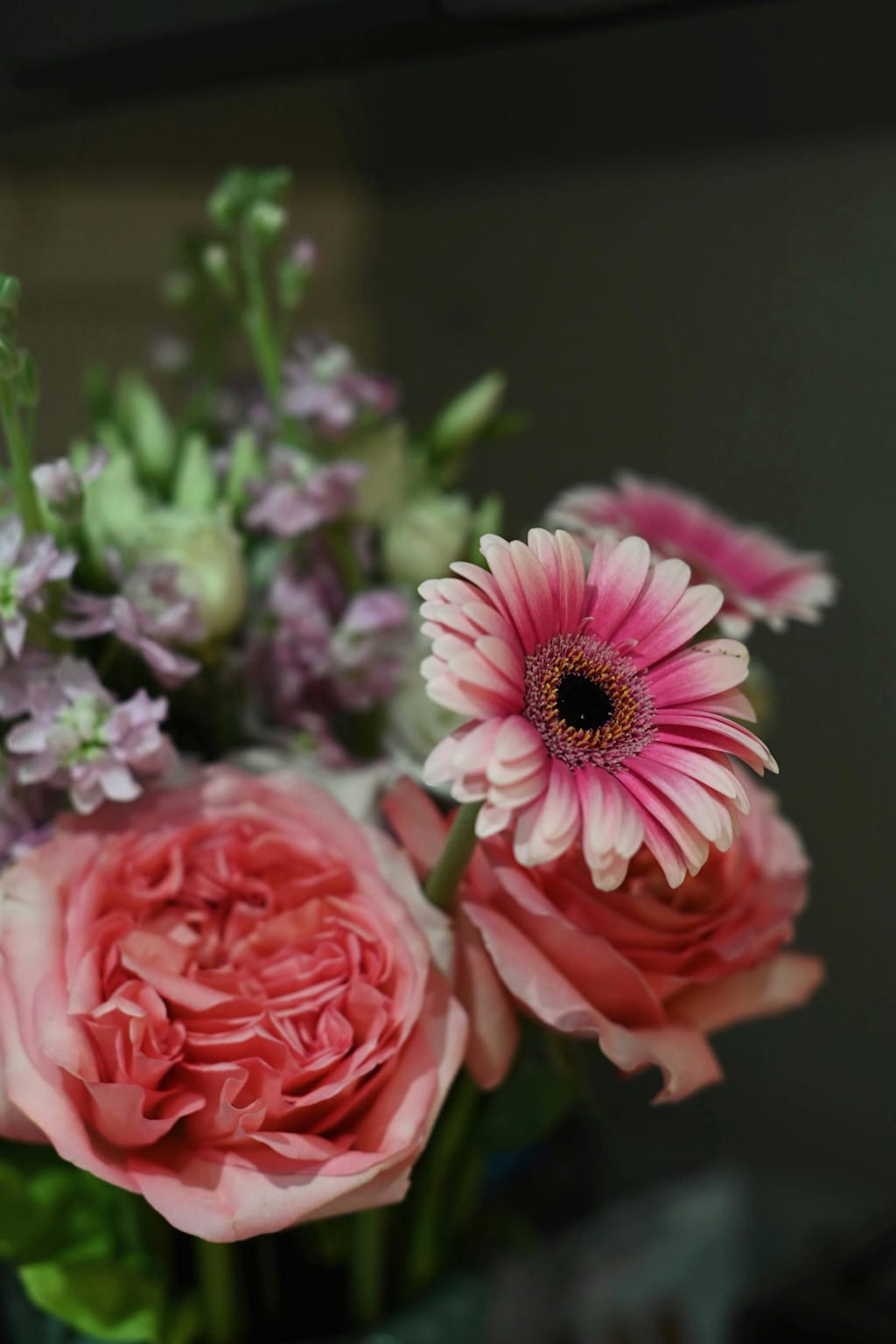
Siham was a fifty-year-old mother with four children—two sons and two daughters.
She had devoted most of her life to raising them.
She fed them, cared for them, comforted them when they were sick, and worked tirelessly to help them build better lives.
Years passed.
Her children grew up.
They completed their education and began their own journeys in life.
For the first time in many years, Siham found herself with something she had rarely known before:
Time.
And with that time came a dream she had carried deep inside her heart for decades.
She wanted to learn how to read and write.
Whenever she heard a beautiful word, she wondered how it looked on paper.
Whenever she saw written words, she longed to know what they said.
She wanted to transform sounds into written words and written words into living voices.
Sometimes she sat in front of the television, fascinated by the advertisements.
The spoken messages filled the room, while written words appeared across the screen.
To many people, they were ordinary.
To Siham, they were mysteries waiting to be unlocked.
She watched films and television programs and wondered about the names written at the beginning and end.
She looked at newspapers, books, signs, and letters with the curiosity of a child discovering the world for the first time.
Whenever her children were nearby, she asked them to read for her.
They always helped.
But deep inside, she dreamed of doing it herself.
One evening, while sitting alone, she whispered words she had never spoken aloud before.
"I want to write."
"I want to learn."
"I want to send messages."
"I want to read the messages people send to me."
"I want to open a book and understand every word."
Then she paused.
Tears gathered in her eyes.
Finally, she spoke the wish that lived deepest within her heart.
"I want to read the Holy Scriptures with my own eyes."
Siham began searching for a way to make her dream come true.
One evening, she smiled to herself and said,
"I may not know how to read, but I am not foolish."
She knew she possessed two valuable gifts: intelligence and a strong memory.
Soon, she came up with a plan.
She gathered her children and made a simple request.
"I want each of you to teach me one word every day."
Not just how to pronounce it.
She wanted to know its meaning, its letters, and how it was written.
Her children gladly agreed.
The lessons began immediately.
Every day brought a new word.
Siham carefully wrote each one in a notebook.
She repeated the words over and over until they felt as familiar as old friends.
Days turned into weeks.
Weeks turned into months.
Her collection of words grew larger and larger.
Soon, she was no longer waiting for lessons.
She began creating her own.
Whenever she watched television, she copied words that appeared on the screen.
Advertisements became exercises.
Program titles became lessons.
Every written word became an opportunity to learn.
Then one day, something caught her attention.
One of her sons had left a school textbook on the table.
It belonged to his middle-school classes.
Siham picked it up carefully.
For a long moment, she simply stared at it.
Then she opened it.
She started with the cover.
The title was written in large letters.
Slowly, she copied every letter into her notebook.
When her son returned home, she pointed to what she had written.
"Can you read this for me?"
He smiled and read the title aloud.
Siham repeated the words several times.
Again.
And again.
And again.
Until they settled firmly into her memory.
The next day, she moved to the first page.
Then the second.
Then the third.
Letter by letter.
Word by word.
Page by page.
To everyone else, it looked like slow progress.
To Siham, it felt like opening a door that had remained closed for fifty years.
For the first time in her life, she was not simply looking at words.
She was beginning to understand them.
For a long moment, silence filled the room.
Then Siham made a decision.
At fifty years old, she would begin the most beautiful challenge of her life.
One evening, Siham sat quietly with her notebook open before her.
She had learned many words.
She could recognize them.
She could write them.
She could even remember their meanings.
But something was still missing.
Words alone were not enough.
If she truly wanted to read and write, she needed to understand how words worked together.
She needed to organize what she had learned.
She needed to build sentences.
Real sentences.
Sentences that carried meaning.
Sentences she could use in everyday life.
For several days, she thought carefully about the problem.
Then inspiration came.
She would begin with the person she knew best—herself.
Taking her pencil, she slowly wrote her first sentence.
"I am a woman."
She stared at the words for a long moment.
Then she smiled.
It was simple.
But it was hers.
A few minutes later, she wrote another.
"I am a mother."
Then another.
"I have four children."
And another.
"My children grew up and went to university."
Every sentence became a small victory.
Every line strengthened her confidence.
Soon, her notebook began filling with thoughts about her own life.
"My name is Siham."
"I am fifty years old."
"I love my children."
"My children love me."
"I live in this neighborhood."
For the first time, she was not merely copying words.
She was expressing herself.
The sentences were simple, but they represented something far greater.
They were proof that she was beginning to communicate through writing.
As the weeks passed, her sentences became longer.
Her ideas became clearer.
She started combining thoughts and creating small paragraphs.
Sometimes she wrote about her family.
Sometimes she wrote about her childhood.
Sometimes she wrote about her dreams.
And every time she finished a page, she felt the same sense of pride.
She was building something that had once seemed impossible.
Letter by letter.
Word by word.
Sentence by sentence.
At the age of fifty, Siham was discovering a new world.
A world that had always existed around her but had remained locked behind a door she could not open.
Now, little by little, that door was opening.
As Siham's confidence grew, another idea came to her.
She decided to motivate her children in a playful way.
One evening, she announced with a smile,
"Whoever teaches me something new will receive their favorite dessert."
The room immediately filled with laughter.
A friendly competition began.
But the surprise was not what Siham expected.
Instead of waiting for rewards, her children began bringing her the sweets she loved.
They wanted to celebrate her progress.
They wanted her to feel proud of herself.
Soon, the entire family became involved in her learning journey.
Without even planning it, they created a small school inside their home.
Each child chose a special role.
One focused on handwriting, helping her write letters and words neatly so the pages looked beautiful.
Another explained the meanings of new words and showed her how they were used in daily conversations.
A third helped her build sentences and discover new vocabulary.
The fourth became her daily reviewer, testing her memory and helping her practice what she had learned.
The dining table transformed into a classroom.
Every evening, after dinner, the family gathered for review sessions.
They laughed.
They discussed ideas.
They corrected mistakes.
And they celebrated every small achievement.
In the mornings, lessons continued over breakfast.
Little by little, knowledge began organizing itself inside Siham's mind.
The process was becoming easier.
The confusion was fading.
Connections between words, meanings, and sentences were beginning to appear naturally.
Then Siham discovered something important.
Learning was not simply about reading and writing.
It was much more than that.
True learning meant building a living storehouse of knowledge.
A place where information could be collected, understood, organized, and used.
Every new word became a tool.
Every sentence became a bridge.
Every lesson opened another door.
For fifty years, she had believed that education belonged only to schools.
Now she realized that learning belonged to anyone willing to seek it.
And every day, she felt herself becoming richer—not in money, but in knowledge.
A wealth that no one could ever take away.
About the Creator
mohamed saad
I write stories and reflections about family life, marriage, resilience, and human values.
My work focuses on real-life struggles, personal growth, and finding wisdom through life's challenges exchanging ideas and contributing to spreading
Enjoyed the story? Support the Creator.
Subscribe for free to receive all their stories in your feed.
Comments
There are no comments for this story
Be the first to respond and start the conversation.