
The Quiet Role American Muslims Play as Ambassadors of Their Faith
Shouldering the Responsibility with Character and Grace
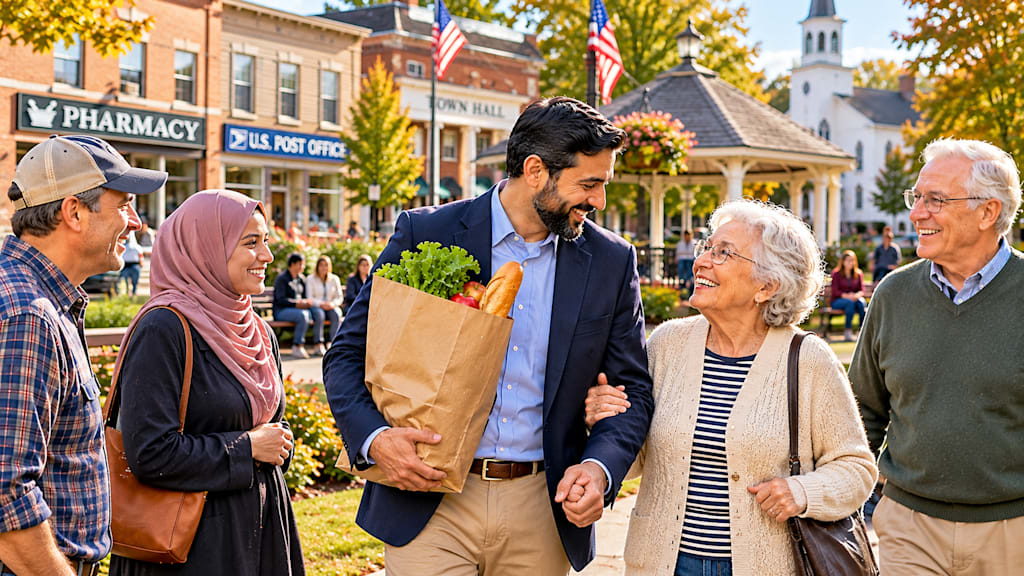
In recent years, particularly during election seasons, Muslims in America have found themselves increasingly in the public spotlight.
Whenever Muslim candidates seek influential positions or Muslims become part of national conversations, old stereotypes often resurface. Some seek to label Muslims as outsiders, foreigners, or associate an entire faith community with the tragic events of 9/11.
Others continue to repeat misinformation, political narratives, and preconceived judgments about an entire faith community.
While such scrutiny can be painful and unfair, there is another way to look at it.
Attention also creates opportunity.
When darkness gives way to daylight, people begin to see things more clearly. Beyond political rhetoric, media narratives, and propaganda, many sincere people are searching for the truth. They want to know who Muslims really are. They want to understand Islam through real human beings rather than through headlines, commentators, or internet debates.
This places a tremendous responsibility upon every Muslim living in America.
Whether we realize it or not, every Muslim living in America represents Islam in the eyes of someone. Our neighbors, coworkers, classmates, and associates often form their understanding of Islam through their everyday interactions with us.
That means our character matters.
Our manners matter.
Our conduct matters.
Our honesty, kindness, compassion, and integrity matter.
In many ways, every Muslim is an ambassador of Islam.
Islam Spread Through Character Before Argument
Allah praised the character of His beloved Messenger ﷺ in the Qur'an:
"And indeed, you are upon an exalted standard of character." (Qur'an 68:4)
The Prophet ﷺ himself said:
"I was sent to perfect noble character." (Musnad Ahmad)
This statement should make every Muslim pause and reflect.
The Messenger ﷺ did not merely teach rituals. He taught people how to become better human beings. His prayers, fasting, and worship were reflected in his dealings with others. His mercy, trustworthiness, patience, honesty, and compassion attracted people to Islam long before they understood its theology.
The Companions followed this example.
One of the major reasons Islam spread so rapidly during the 7th and 8th centuries was not military power, political authority, or eloquent debates alone. It was the character of Muslims. Merchants, travelers, scholars, and ordinary believers carried Islamic values wherever they went. Their honesty in business, fairness in dealings, and kindness toward others opened hearts.
People saw Islam before they heard about Islam.
How Much of the Prophet's Character Do We Embody?
Many Muslims proudly identify themselves as Sunni, claiming to follow the Sunnah of the Prophet ﷺ.
But an important question deserves reflection:
How much of the Prophet's character is visible in our daily lives?
The Sunnah is not limited to appearance. While outward practices have their place, they were never meant to overshadow the inward dimensions of faith.
Some people become extremely focused on external symbols while neglecting the qualities that made the Prophet ﷺ beloved to believers and respected even by his enemies.
A beard, for example, is part of the Sunnah. Yet a beard alone does not make a person prophetic in character. The Sunnah is not simply about how we look; it is also about how we treat people, how we conduct ourselves, and how we respond when tested.
The Prophet ﷺ was known for cleanliness, dignity, balance, and good appearance.
A Muslim should present himself in a respectable and approachable manner. People should feel comfortable in their presence, not intimidated by it.
Likewise, clothing should fulfill its purpose of modesty, protection, and suitability for one's environment while maintaining dignity and Islamic values.
True adherence to the Sunnah means combining outward practice with inward excellence.
The Prophet ﷺ smiled often.
He was gentle.
He was approachable.
He listened to people.
He forgave people.
He showed concern for the weak and vulnerable.
He brought ease rather than unnecessary hardship.
As he said:
"The best among you are those who have the best character."
(Sahih al-Bukhari)
The Prophet ﷺ was not a distant religious figure who simply delivered commandments to people. He was a human being, whose character was visible in every aspect of his life.
When he first addressed the people of Makkah publicly at Mount Safa, he asked them whether they would believe him if he warned them of an approaching army. They replied that they had never known him to lie. Before they were asked to accept his message, they already knew his character.
His reputation for honesty and trustworthiness was also what attracted Khadijah (RA) to entrust him with her business affairs.
On another occasion, he waited for a man who had promised to meet him but failed to arrive. He continued waiting, demonstrating that a promise was not something to be treated casually.
He even raced with Aisha (RA), showing that affection, companionship, and a sense of humor had their place in his marriage.
His tenderness toward children was equally remarkable. On one occasion, while the Prophet ﷺ was in prostration during prayer, his grandsons Hasan and Husayn climbed onto his back. Rather than disturbing them or rushing to rise, he remained in prostration until they got down on their own. the children did not need to be hurried away.
At home, he helped with household chores and attended to his own needs. When the Muslims were digging the trench around Madinah, he worked alongside his Companions rather than simply directing them.
Look at the different dimensions of his character: honesty in business, commitment to his word, affection toward his wife, humility at home, tenderness to children and solidarity with his community.
This was the man whose message transformed Arabia.
His greatness was not confined to the mosque, the battlefield, or the pulpit. It was visible in his everyday dealings with people.
A Mercy to All
The Messenger of Allah ﷺ was sent as a mercy:
"And We have not sent you except as a mercy to the worlds."
(Qur'an 21:107)
Notice that Allah did not say mercy only to Muslims. He was a mercy to all creation.
Throughout his life, the Prophet ﷺ sought to guide people with wisdom, patience, and compassion.
He invited the Jews, Christians, and others to recognize the truth and return to the faith of Abraham, Joseph, and Moses, the worship of the One God.
When he arrived in Madinah, he built relationships with various communities. He engaged people respectfully and fairly. Numerous examples from the Seerah demonstrate his concern for humanity regardless of faith or tribe.
One famous narration tells us that the Prophet ﷺ stood up when a Jewish funeral procession passed by. When informed that the deceased was Jewish, he replied:
"Was he not a human soul?"
(Sahih al-Bukhari and Sahih Muslim)
What a profound lesson.
He recognized human dignity even in those who did not share his faith.
The Believers Described in the Qur'an
Allah describes the true servants of the Most Merciful in the closing verses of Surah Al-Furqan:
"The servants of the Most Merciful are those who walk upon the earth humbly, and when the ignorant address them harshly, they say words of peace."
(Qur'an 25:63)
Allah continues to describe them as people who are humble, devoted in worship, charitable, morally pure, truthful, patient, and mindful of their accountability before Him.
Likewise, Allah begins Surah Al-Mu'minun by describing the successful believers:
"Certainly will the believers have succeeded: Those who are humble in their prayer, who turn away from idle talk, who pay zakah, who guard their chastity, who are faithful to their trusts and promises, and who carefully maintain their prayers."
(Qur'an 23:1-9)
Notice how character, responsibility, trustworthiness, and self-discipline appear repeatedly among the qualities of successful believers.
These are not optional extras or qualities reserved for a few exceptionally pious people. They are among the defining characteristics of the believers Allah describes in the Qur'an.
A Historic Opportunity for Muslims in America
The growing visibility of Muslims in America presents a historic opportunity.
Millions of Americans may never read a book about Islam.
Millions may never listen to a scholar.
Millions may never visit a mosque.
But they will meet Muslims.
They will work with Muslims.
They will live next to Muslims.
They will attend school with Muslim children.
Through these interactions, they will develop their understanding of Islam.
The question is:
What Islam will they see?
Will they see kindness or harshness?
Will they see humility or arrogance?
Will they see honesty or deception?
Will they see mercy or anger?
Will they see balanced, confident believers who contribute positively to society?
Or will they encounter behavior that pushes them further away?
Unfortunately, some individuals dedicate their entire lives to organizations that profess to serve Islam, yet their methods and conduct often alienate the very people they hope to reach. They remain committed to a rigid, one-size-fits-all approach developed for a different audience and a different era, without adequately addressing the realities and challenges of the modern world. Effective outreach requires adapting methods to changing circumstances while remaining faithful to Islam's timeless principles.
The message of Islam is timeless, but the methods used to communicate it are not. Approaches that were effective 70 to 100 years ago may not resonate with today's audiences, who face different social realities, questions, and challenges. Preserving the essence of the faith should not mean resisting necessary changes in communication, engagement, and understanding.
We must follow the path of the Prophet ﷺ and his Companions.
People should be attracted toward us, not driven away from us.
The Muslim as a Source of Positivity
The Prophet ﷺ taught:
"Your smile for your brother is charity."
(Jami' at-Tirmidhi)
A smile costs nothing.
Kind words cost nothing.
Helping a neighbor costs nothing.
Showing concern for another human being costs nothing.
Yet these simple actions often have a greater impact than lengthy arguments.
A Muslim should be someone whose presence brings goodness into the lives of others.
A good neighbor.
A trustworthy employee.
A fair employer.
A reliable friend.
A caring citizen.
A person whose presence brings comfort rather than tension.
Such people become living examples of Islam.
The Balanced Path
Allah describes the Muslim community as:
"And thus We have made you a middle nation (a balanced and moderate community)…"
(Qur'an 2:143)
Islam is a religion of balance.
Balance between worship and service.
Balance between appearance and character.
Balance between faithfulness to religious principles and positive engagement with society.
Balance between conviction and compassion.
The Prophet ﷺ and his Companions embodied this balance, and it was one of the keys to their success.
A Final Reminder
As Muslims living in America, public attention may increase. Criticism may increase. Misunderstandings may increase.
But so do opportunities.
Every conversation is an opportunity.
Every interaction is an opportunity.
Every act of kindness is an opportunity.
Every display of honesty, mercy, patience, and good character is an opportunity to present Islam as it truly is.
Remember: people may forget our words, but they rarely forget how we made them feel.
Let us therefore adorn ourselves with the character of the Messenger of Allah ﷺ.
Let us embody the qualities described in the Qur'an.
Let us follow the example of the noble Companions.
And let us remember that every one of us is an ambassador of Islam, with the responsibility to reflect, through our character, and conduct, the example of the Prophet Muhammad ﷺ
In his final sermon, the Prophet Muhammad ﷺ reminded humanity of a principle that remains as relevant today as it was more than fourteen centuries ago:
"An Arab has no superiority over a non-Arab, nor does a non-Arab have superiority over an Arab. A white person has no superiority over a Black person, nor does a Black person have superiority over a white person, except through righteousness and consciousness of Allah (Taqwa)."
These words strike at the very roots of racial pride, tribal arrogance, and inherited notions of superiority.
Consider what this means for us as Muslims. Our identity, ancestry, nationality, appearance, and outward religious symbols do not determine our worth before Allah. What matters is our Taqwa, reflected in our faith, our character, our conduct, and our treatment of others.
The Qur'an has already described the qualities of the believers, and the life of the Prophet ﷺ has shown us what those qualities look like in practice.
If we wish to be closer to Allah and truly follow His Messenger ﷺ, we must strive to embody those qualities in our everyday lives.
May Allah enable us to reflect the beauty of Islam through our character before our speech, through our actions before our claims, and through our mercy before our arguments. Ameen.
About the Creator
Akram Mohammed
From a four-decade IT career to storytelling, I write about South Indian Islamic history, memoirs, faith, philosophy, cultural heritage, and nature, uncovering overlooked perspectives and meaningful human connections.
Enjoyed the story? Support the Creator.
Subscribe for free to receive all their stories in your feed.
Comments
There are no comments for this story
Be the first to respond and start the conversation.