Vocal
The Potential of Python: Bringing Concepts to Life
Have you ever thought about how successful startups could be inspired by a language like Python? Even for non-techies, Python is an easy language to understand and create code in. Think of it as a tool to assist you in achieving your startup objectives. Applications and web pages that are data-driven can be made with Python. A knowledgeable community and vast libraries are also available to assist and guide newcomers. It will help your startup succeed, much like a hidden talent. No specific abilities are needed for our Python course in Chennai; all you need are your ideas and a basic understanding of coding.
By Nathamuni NKabout a year ago in Education
Top 8 Proven Rodent Control Methods That Actually Work
Rodents are problematic pests infamous for the health risks they carry. They are much more than just a nuisance. Their infestation can lead to an outbreak of a health crisis, causing ailments like Hantavirus, plague, leptospirosis, and salmonellosis. The extent to which they can be vexatious extends beyond causing health problems, as they can cause damage to your property too. From chewing on wires to causing structural damage, these tiny invaders can cause various serious concerns. So before you proceed with your query for “rat exterminator near me,” have a look at the below-given most effective rodent control methods that are proven to yield definite benefits.
By conquest pest serviceabout a year ago in Education
Next-Gen Jet Engine Breakthrough: Direct Electricity To Thrust Conversion Revolutionizes Flight. AI-Generated.
For over a century, jet engines have relied on burning fossil fuels to generate thrust, powering humanity’s ability to traverse continents and oceans. But this dependency has come at a steep cost: aviation accounts for 2.5% of global CO₂ emissions and contributes to noise pollution, air quality degradation, and geopolitical tensions over oil resources. Enter the next-generation jet engine—a groundbreaking innovation that converts electricity directly into thrust, bypassing combustion entirely. This technology promises to rewrite the rules of aviation, offering a cleaner, quieter, and more efficient future. Here’s how it works, why it matters, and what it means for the planet.
By Jacky Kapadiaabout a year ago in Education
Physiotherapy for Rotator Cuff Injuries
A rotator cuff injury can severely limit your mobility, especially if you’re an athlete, tradesperson, or dealing with the effects of ageing. Whether you've got a partial tear, shoulder impingement, or are recovering from tendonitis, physiotherapy offers a clinically proven path to healing, often avoiding the need for surgery. This guide will walk you through everything you need to know about physiotherapy options in Australia.
By Go Run Go Physioabout a year ago in Education
How to Inspire Creativity and Innovation in Your Leadership Style
As a leader, inspiring creativity and innovation is key to maintaining a competitive edge and fostering an environment where new ideas thrive. Creative and innovative thinking enables teams to solve problems, adapt to changes, and break free from traditional boundaries. Here’s how you can inspire these qualities in your leadership style.
By Richard Kearseyabout a year ago in Education
Google Ads vs. Meta Ads for Real Estate Marketing: Which One Delivers Better Results?
The evolving preferences of property buyers and tenants demand a strategic, targeted online advertising approach. Two of the largest players in the field are Google Ads and Meta Ads (previously Facebook Ads). Both platforms provide robust features for targeting an audience, generating leads, and building brand awareness — but which is more effective for real estate marketing?
By Gurneet Kaurabout a year ago in Education
The Language of Healing: Communicating Effectively in Healthcare
In healthcare, communication is not just a tool for exchanging information but a vital healing component. The language healthcare professionals use can significantly impact patients' experience, understanding of their condition, and recovery. Effective communication goes beyond medical jargon and involves empathy, clarity, and active listening. As the healthcare landscape continues to evolve, mastering the language of healing is crucial for improving patient outcomes and enhancing the overall patient experience.
By Yousuf A. Gaffar, M.Dabout a year ago in Education
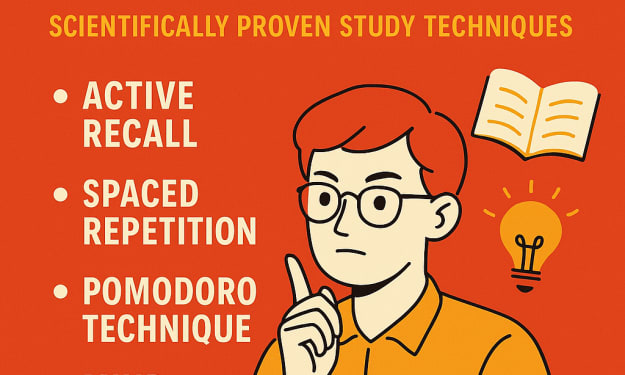
How to Learn Anything Faster: Scientifically Proven Study Techniques
In a world that never stops evolving, the ability to learn quickly is more than just a luxury—it’s a necessity. Whether you're a student trying to ace exams, a professional aiming to acquire new skills, or someone looking to stay ahead of the curve, mastering the art of fast learning can be your secret weapon. Imagine if you could cut your learning time in half and retain information more effectively. Sounds like a dream? It doesn’t have to be! In this article, we’ll explore scientifically proven methods that can drastically improve your learning speed. These aren’t just tips you’ll read about once and forget; these techniques have been backed by research and can revolutionize the way you approach learning forever. 1. The Power of Active Recall: Challenge Your Memory Have you ever found yourself rereading the same page of a textbook over and over again, only to realize that you can’t remember much of it? That’s because passive reading doesn’t work as well as you might think. To truly learn, you need to challenge your brain to recall information actively. What is Active Recall? Active recall is a technique that involves testing yourself on the material you’re learning. Instead of passively reviewing notes, you actively try to retrieve information from memory. Studies have shown that this form of retrieval practice strengthens memory retention and improves long-term recall. How to Use Active Recall Effectively? Flashcards: Create flashcards with questions on one side and answers on the other. Regularly test yourself on these cards. Teach Someone Else: Explaining what you’ve learned to someone else forces you to recall the information and helps reinforce your understanding. Self-Testing: Before studying a topic, try to recall everything you know about it. Then, after studying, test yourself again to see how much you’ve retained. By incorporating active recall into your study routine, you’ll notice a significant boost in your ability to remember information. 2. Spaced Repetition: The Key to Long-Term Retention The concept of spaced repetition is simple but incredibly effective. It’s based on the idea that information is best retained when it is reviewed at increasing intervals over time. This method taps into the psychological phenomenon known as the "forgetting curve," which shows that we forget information quickly unless we review it regularly. Why Spaced Repetition Works When you space out your review sessions, your brain has to work harder to recall the information, which strengthens neural connections. Over time, this leads to better retention and understanding. How to Implement Spaced Repetition Use Spaced Repetition Software (SRS): Tools like Anki and Quizlet allow you to create flashcards and set them to review at optimal intervals. Manual Spacing: If you prefer a more traditional approach, you can create a schedule to review your notes on the first day, then again after 2 days, 4 days, 7 days, 14 days, and so on. By spacing out your reviews, you’ll keep information fresh in your mind without feeling overwhelmed by constant cramming. 3. The Pomodoro Technique: Breaks That Boost Productivity One of the most effective ways to learn faster is by improving your focus. But let’s face it, staying concentrated for hours at a time can be difficult. That’s where the Pomodoro Technique comes in—a time management method that encourages focused work intervals followed by short breaks. How the Pomodoro Technique Works The technique is simple: work in focused 25-minute intervals (called “Pomodoros”) followed by a 5-minute break. After four Pomodoros, take a longer break of 15–30 minutes. This cycle prevents burnout and maintains a high level of productivity. Why It Works Research has shown that our brains can only maintain high levels of focus for a limited amount of time. Taking short, frequent breaks helps your mind stay sharp and avoid fatigue, allowing you to retain more information during your study sessions. 4. Mind Mapping: Visualize and Organize Information We often think of learning as a linear process—read, memorize, repeat. But the brain doesn’t work that way. It thrives on connections and associations. That’s where mind mapping comes into play. Mind maps are visual diagrams that help organize and represent knowledge. How Mind Mapping Works When you create a mind map, you start with a central concept and branch out into related ideas. This process helps you see the bigger picture and makes it easier to connect new information with what you already know. How to Create a Mind Map Start with a central idea in the middle of a blank page. Branch out into subtopics, and then further break those down into smaller details. Use colors, images, and keywords to make the map visually engaging. Mind maps not only help with memorization but also make it easier to recall information by creating associations between different concepts. 5. The Feynman Technique: Teach What You’ve Learned The best way to truly learn something is by teaching it. This is the core idea behind the Feynman Technique, named after the Nobel-winning physicist Richard Feynman. He believed that to understand a concept deeply, you should be able to explain it in simple terms. How the Feynman Technique Works Step 1: Choose a concept you want to learn. Step 2: Pretend you are teaching it to a child or someone who knows nothing about the subject. Step 3: Identify any gaps in your knowledge as you try to explain the topic. Go back to your study materials and fill in those gaps. Step 4: Simplify and refine your explanation until you can clearly articulate the concept in simple language. By teaching others or even yourself, you reinforce your understanding and uncover areas that need further study. 6. Visualization Techniques: Harness the Power of Your Imagination Did you know that your brain processes images faster than words? By using visualization techniques, you can improve your ability to recall information, especially when it comes to complex or abstract concepts. How Visualization Works Visualization is the process of mentally imagining a scenario or concept in detail. By creating vivid mental images, your brain forms stronger neural connections, making it easier to recall information later. How to Use Visualization for Learning Visualize Concepts: If you're learning about a historical event, imagine the scene in your mind as vividly as possible. For math or science, visualize the process of solving a problem step-by-step. Create Mental Movies: Turn what you're learning into a story. The more engaging and detailed the story, the easier it will be to remember. Visualization works by activating the same brain regions involved in actual experiences, making it a powerful tool for improving memory and understanding. 7. Eliminate Distractions: The Importance of Focused Learning No matter how good your study techniques are, they won’t work if you're constantly distracted. In today’s world of notifications and multitasking, focusing on a single task for an extended period can be challenging. But distractions drain your cognitive resources and make it harder to retain information. How to Eliminate Distractions Turn Off Notifications: Silence your phone and avoid checking social media while studying. Create a Distraction-Free Study Environment: Choose a quiet, clutter-free space to study. Set Clear Goals: Having a specific goal for each study session helps keep you focused and on track. Conclusion: Your Roadmap to Faster Learning Learning doesn’t have to be a slow, tedious process. By implementing scientifically proven techniques like active recall, spaced repetition, the Pomodoro technique, mind mapping, the Feynman technique, and visualization, you can boost your learning speed and retention dramatically. Remember, learning faster isn’t just about working harder—it’s about working smarter. By applying these strategies, you’ll unlock your brain’s full potential, paving the way for greater success in your academic, personal, and professional life. So, what are you waiting for? Start practicing these techniques today, and watch how quickly you can learn anything you set your mind to. Your future self will thank you!
By Sohail Abbasabout a year ago in Education
EB-1 Visa Requirements Explained 100% Winning (2025 Guide)
EB-1 visa is one of the most honorable paths to permanent residency in the United States. This visa is designed for those who have proven themselves to be the top in science, business, education, arts and sports.
By Malik Asad Sharifabout a year ago in Education
How 5G Can Change the World
In today's fast-paced world, technology is evolving faster than ever before. One of the most anticipated advancements is the widespread rollout of 5G technology. While many people associate 5G simply with faster internet on their smartphones, the truth is that 5G is much more powerful than that. It has the potential to transform industries, revolutionize daily life, and change the world in ways we are only beginning to understand.
By Abdul Nasir about a year ago in Education
Thinking Like a Programmer: A Guide to Problem-Solving
In today’s world, problem-solving is one of the most valuable skills you can have. Whether you're working in technology, engineering, or even in fields like business or education, thinking like a programmer can help you break down complex challenges into manageable solutions. But what does it mean to think like a programmer? And how can you adopt this mindset to improve your problem-solving skills?
By Dadullah Danishabout a year ago in Education