Vocal
2025's Top 10 Universities In The World
Global university rankings are essential for directing scholars, researchers, and students in the quickly changing field of higher education. Two of the most prestigious rankings, the Times Higher Education (THE) Rankings and the QS World University Rankings, have once again highlighted the universities at the forefront of innovation, research, sustainability, and global influence in 2025.
By Daily Articleabout a year ago in Education
Transform Your Team and Increase Productivity with Expert Management Consulting!
In today's fast-paced business world, productivity and efficiency are paramount to an organization's success. However, even the most well-established teams can face challenges that hinder their performance and ability to reach their goals. These issues can hold back a team's potential, whether it’s poor communication, lack of alignment, or unoptimized workflows. This is where expert management consulting comes into play. Management consultants bring fresh perspectives and tailored strategies that can help businesses identify areas for improvement, optimize processes, and unlock the full potential of their teams. This article explores how expert management consulting can transform your team and significantly increase productivity.
By Nicholas Mukhtarabout a year ago in Education
Essential Software Engineering Tools Every Developer Needs
Software engineering is a highly dynamic field, requiring developers to stay on top of the latest tools and technologies to remain efficient and productive. Whether you're a beginner just starting your career or an experienced developer looking to streamline your workflow, the correct tools can make a huge difference in how you develop software. These tools help improve code quality, speed development, facilitate collaboration, and ensure your software is secure and scalable.
By Karthik Marupeddiabout a year ago in Education
The One Secret Your Brain Hides from You Every Day
Introduction: The Whisper You Can’t Ignore What if your brain is keeping a secret from you right now? Not a little white lie, but a truth so profound it could rewrite how you see yourself, your choices, and the world around you. Every day, your mind filters reality, hiding a powerful truth that shapes your life in ways you’d never suspect. This isn’t some sci-fi conspiracy—it’s science, psychology, and a touch of human magic. Want to know what your brain isn’t telling you? Keep reading, because this secret might just change everything.
By OptimalEdgeabout a year ago in Education
The Hidden Power of Your Words: How Writing on Vocal Can Change Your Life
Introduction: The Spark That Ignites a Revolution What if the words you scribble in your notebook, the thoughts you whisper to yourself at 2 a.m., or the stories you’ve never dared to share could change your life? Not just a little—dramatically. Imagine a platform where your voice isn’t just heard but celebrated, where your ideas could ripple across the globe, inspiring strangers, sparking debates, or even earning you a paycheck. That platform exists, and it’s called Vocal. But this isn’t just about a website—it’s about unlocking the power of you. Ready to discover why your words matter more than you think? Keep reading, because this might just be the push you’ve been waiting for.
By OptimalEdgeabout a year ago in Education
The Stubborn Goat
In a quiet village nestled between rolling green hills, there lived a hardworking farmer named Ramesh. He was known for his patience and kindness, but even he struggled with one of his animals—a goat named Bholu. Bholu was strong, healthy, and well-fed, but he had a terrible habit: he was unbelievably stubborn. Once he set his mind on something, no amount of coaxing, pulling, or scolding could change it.
By Shahzad Khanabout a year ago in Education
Scientists Discover "Olo" — A New Color Never Seen by Human Eyes Until Now
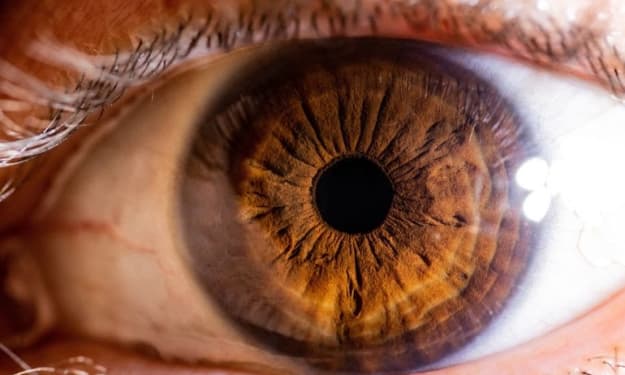
For centuries, humans have believed that the colors we see represent the full spectrum of visible light. But what if that wasn’t the whole story? In an astonishing breakthrough, scientists from the University of California, Berkeley, and the University of Washington School of Medicine have unveiled a discovery that could change the way we think about color forever. They have introduced a brand-new color experience—something never before seen by the human eye—called "olo." If you’re wondering what "olo" looks like or how it's even possible to perceive a "new" color, keep reading. This discovery is not only reshaping our understanding of vision but also opening exciting new possibilities for science, medicine, and technology. What Exactly Is "Olo"? "Olo" is described by researchers as a deeply saturated teal, a color unlike any we naturally experience. But here's the twist: "olo" cannot be seen under normal lighting or with regular human eyesight. To perceive it, scientists had to stimulate the human retina in a completely new way, isolating specific cells that are never stimulated alone under natural conditions. This new color was revealed using a device known as Oz, named after the Wizard of Oz, hinting at its almost magical capabilities. Through advanced laser technology, researchers targeted particular cells in the retina responsible for green light detection, allowing test subjects to experience "olo" for the first time. How Do Humans Normally See Color? To appreciate the significance of this discovery, it’s important to understand how human vision works. Our eyes detect colors using three types of cone cells, each sensitive to a specific range of light wavelengths: S-cones detect short wavelengths (blue). M-cones detect medium wavelengths (green). L-cones detect long wavelengths (red). Every color we perceive results from the combined stimulation of these cones. For instance, when both S and M cones are stimulated, we might perceive cyan. When all three cones are stimulated equally, we see white. However, the natural overlap between the cones means it’s impossible for one type, like the M-cone, to be stimulated entirely on its own under regular conditions. This overlap limits our color perception—until now. How Was "Olo" Discovered? The key to discovering "olo" was isolating the stimulation of just the M-cones without simultaneously triggering the S- or L-cones. This was achieved using the Oz device, which sends finely tuned laser pulses directly into the eye. Unlike traditional light sources that flood the retina with broad-spectrum light, the Oz device can pinpoint and activate individual photoreceptors with extraordinary precision. The result? A visual experience that exists outside the boundaries of normal human vision—leading to the sensation of seeing "olo." This technological feat builds on decades of research into color vision and laser-assisted retinal imaging. Originally, the Oz device was designed to study and diagnose eye diseases at a cellular level. However, its ability to isolate photoreceptor stimulation has now led to an unexpected—and groundbreaking—scientific revelation. Why Is This Discovery Important? At first glance, the idea of a "new color" might seem like just an interesting novelty. But its implications are much deeper. First, discovering "olo" challenges our understanding of how the brain interprets sensory information. It proves that the colors we see are not a direct representation of physical reality but a construct created by our neural wiring. With the right technology, it’s possible to unlock experiences that would otherwise remain hidden. Second, this research could lead to practical advances in medicine, particularly in treating color blindness and visual disorders. By learning how to manipulate the brain’s color-processing mechanisms, scientists might eventually develop new therapies that expand or restore color perception for individuals with visual impairments. Third, this work opens the door to futuristic applications in augmented reality (AR) and virtual reality (VR). Imagine a VR headset that can stimulate your retina in such a way that you experience colors beyond the visible spectrum, creating more immersive and mind-bending digital environments. Can We Ever See "Olo" Without Special Equipment? Unfortunately, no—at least not yet. "Olo" is only visible when the retina is stimulated in an extremely specific way that normal light cannot replicate. This means that experiencing this new color requires the use of specialized devices like Oz, which are currently limited to research settings. However, as technology continues to evolve, there may come a time when similar retinal stimulation devices become available for broader public use. Someday, "olo" could become a part of everyday life—or at least an experience available at science museums, art installations, or even through advanced gaming technology. What Does "Olo" Look Like? Those who have seen "olo" describe it as an intensely vibrant teal—richer and more saturated than any teal that can be printed, painted, or displayed on a screen. However, because it doesn’t exist within the standard color gamut of human vision, any attempt to reproduce it digitally would fail. This means that no photograph, painting, or video can capture the experience of "olo." It must be seen to be believed—and for now, it remains a color known only to a few who have had their retinas specially stimulated. Final Thoughts: A New Frontier in Human Experience The discovery of "olo" is more than just a scientific curiosity; it represents a new frontier in human perception. By demonstrating that there are aspects of reality beyond the reach of our natural senses, it reminds us how much we still have to learn about the world—and ourselves. As research continues, "olo" could pave the way for further exploration of sensory experiences, offering tantalizing possibilities for medicine, technology, and even art. In a world where it often feels like everything has already been discovered, finding something genuinely new is rare—and magical. Thanks to the brilliant work of these pioneering scientists, we can now say that even the colors we see are not the full story. Stay tuned—because the future of color is just getting started.
By NextGen Mobile Techabout a year ago in Education
Origins Uncertain: ‘Skull Hill’ Rock
Rock known as "Skull Hill" has no known origins. A strange and ominous structure known as Skull Hill Rock can be found on the outskirts of a sleepy town, where the forest meets the last paved road. This eerie outcrop has sparked generations of speculation, superstition, and storytelling, rising from the earth like a fossilized watchman. The most striking aspect of it is its striking resemblance to a human skull, complete with hollow "eye sockets," which may have been carved into the rock by nature and time, or to something else entirely. Despite its local fame, the true origin of Skull Hill Rock remains a mystery. A definitive explanation for how it came to resemble such a menacing visage has never been provided by an official survey or geological study. Some people think it's just wind and erosion on soft limestone, while others think it could be a centuries-old sculpture that has weathered. The rock has largely escaped formal history, but not imagination, as it has no inscription, artifact, or official record of its existence. A Local Legend
By Tanjib @vocalabout a year ago in Education
The Beauty of Gratitude
To Friends, Nature, and Parents: The Beauty of Gratitude The secret to happiness is often referred to as gratitude. It teaches us to focus not on what we lack, but on the countless blessings we have received. When we reflect deeply, we realize that our parents, the natural world, and our friends all play a major role in shaping our growth, happiness, and resilience. Each plays a profound role in shaping who we are, and each deserves a special place in our hearts and in our thanks.
By Md Ibrahimabout a year ago in Education